
Growing Sweet Peas in a Greenhouse for Earlier Blooms
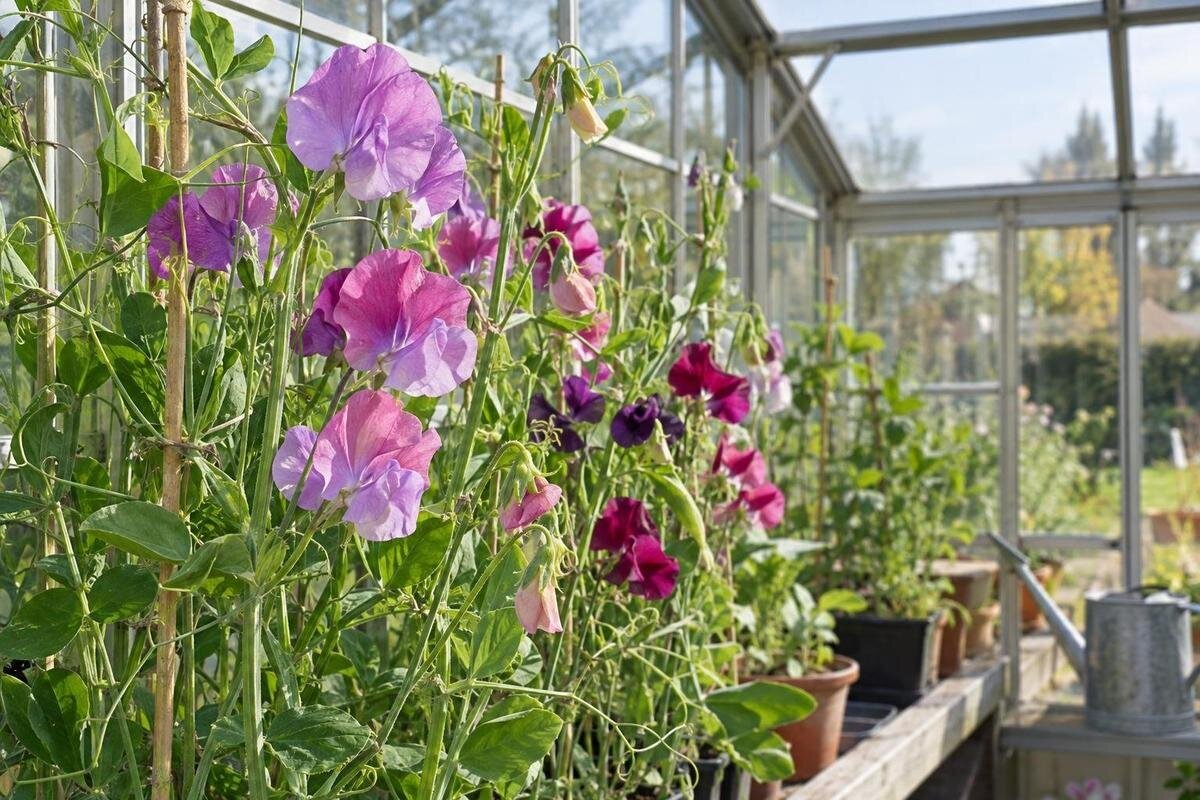
Greenhouse growing guide
Sweet peas are cool-season climbers, so a greenhouse can help you sow earlier and protect young plants—but it is not a reason to keep them warm. Earlier flowers depend on a variety suited to cutting, bright light, room for vertical growth and ventilation before spring sun overheats the space. In Canada, sowing dates shift with local conditions and the greenhouse’s overnight temperatures. Plan for cool growth, then use your own temperature and flowering notes to refine the timing.

What a greenhouse changes for sweet peas
Sweet peas (Lathyrus odoratus) are annual climbing flowers, not heat-loving greenhouse crops. Under glass, you can sow earlier because trays and young plants are sheltered from wind and heavy rain, and can be protected from some short-term weather changes. That protected start may bring the first stems forward, particularly if seedlings get enough light and are moved on before their roots become crowded. It cannot guarantee a bloom date: cultivar, day length, root health and changing weather all affect progress. An unheated greenhouse may still cool sharply overnight, so daytime warmth should not be mistaken for dependable frost protection. A roof changes exposure; it does not change the crop’s preference for cool growing conditions.
The useful aim is not to produce the tallest seedling as early as possible, but to establish a compact, healthy plant that can continue growing as spring light improves. If this is your first year, sow a modest early batch and keep a later sowing as insurance; one unusually dim or cold spell can hold back an entire tray. Record sowing and germination dates, first flowers, daytime highs and overnight lows. Note which plants produced good stems as well as the earliest blooms. Those observations help show whether timing, light or greenhouse conditions affected the crop, and give you a practical basis for adjusting next season’s calendar.
Choose a variety for the flowers you want
Sweet pea varieties differ in height, flower form, scent and stem length. If bouquets are the aim, look for a climbing variety described as early flowering or suitable for cutting, and check its mature height before planning a support. A compact patio type can be attractive but may not produce the long stems expected for a vase. Fragrance is also cultivar-dependent, so look for it explicitly rather than assuming every sweet pea is strongly scented. Seed catalogues may group several colours together, so read the individual cultivar notes for flowering time and stem qualities. Check whether the packet gives spring, autumn or winter sowing guidance.
Work backwards from a realistic first-bouquet window, using the packet’s sowing advice and your local weather as reference points. Many sweet peas respond to lengthening days, so very early seedlings can stay vegetative while winter light is weak; sowing weeks sooner does not always mean flowering weeks sooner. Bright, cool conditions help plants establish, but poor light cannot be corrected by keeping them warmer. Consider two small sowings a couple of weeks apart rather than committing all your seed at once. Keep later batches only while the greenhouse can stay cool enough as the season advances, and let cultivar-specific packet directions take precedence over a generic calendar.
Sowing under glass and germination
Use deep root trainers or tall individual pots filled with free-draining seed-starting mix; sweet peas form long roots and are easier to move before they become tangled. Sow one or two seeds per pot about 2.5 cm deep, then keep the medium evenly moist rather than saturated. A cool germination range around 13–18°C is a practical starting point, but follow the seed packet if it gives different directions for your cultivar. Some seeds have firm coats, yet soaking or nicking is not essential for every lot. If you soak them, follow the packet’s directions rather than leaving seeds in water for an extended period.
Allow enough staging room for this early batch. Deep pots occupy more shelf space than shallow plug trays, and seedlings should not be kept crowded in a dim corner while waiting for a bed to open. The Pyramid Greenhouse has listed floor-area choices from 5.53 to 18.9 m²; use the chosen configuration’s product information alongside a sketch that reserves space for propagation, a support row, a path and harvesting. The listed floor area is not the same as free bench space. If the available area is limited, sow fewer plants rather than packing them tightly together. Write the expected pot count into your plan before deciding how many seeds to start.
Keep seedlings cool, bright and undisturbed
Once shoots emerge, move them to the brightest available spot and keep them cool. Warm, dim conditions encourage stretched, weak growth; turn pots if light comes from one side, and leave enough space for air to move around the leaves. Water when the surface begins to dry, then let excess drain: roots need moisture, not a pot that stands in water. If two seeds germinate in one pot, snip the weaker one off at soil level instead of pulling it out and disturbing its neighbour. Check the base of each pot too; roots showing through a drainage hole are a cue to move the plant on before they coil.
Sweet peas dislike having their roots broken, so handle the root ball gently at transplanting and avoid teasing it apart. Set plants into a prepared greenhouse bed at the packet spacing, or move them to a deeper container before roots circle the pot; water in without burying the stem. If you are raising plants for outdoor beds, harden them gradually rather than taking soft greenhouse growth straight into wind. Propagation trays, labels and a potting surface also take space. The Limited-Edition Aluminum Greenhouse with Built-In Storage is one configuration to compare when storage is part of the brief; check the chosen plan for room to tend seedlings and walk past them.
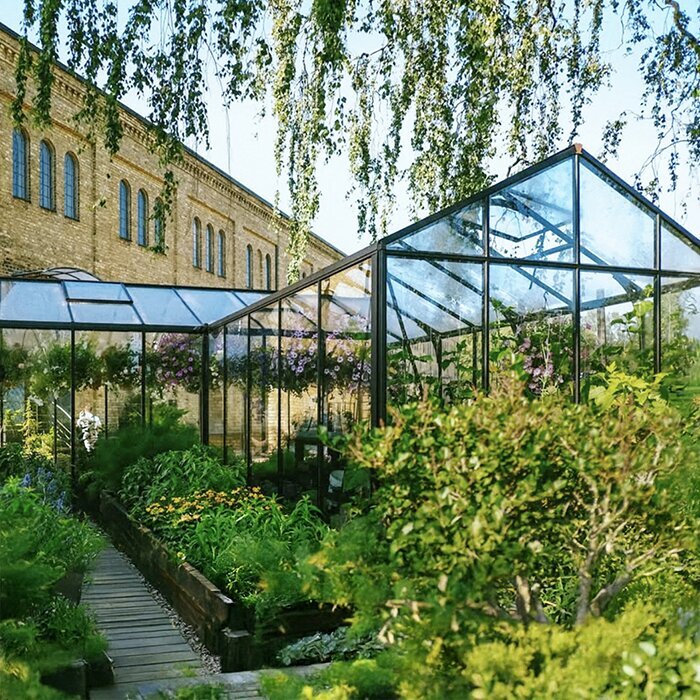
Light and temperature for a cool-season crop
Sweet peas are cool-season plants; a growing range around 10–18°C is a useful guide, not a rigid thermostat setting. Repeated or prolonged temperatures above about 21°C can reduce stem quality and shorten flowering, although cultivar, water and light all influence the response. A greenhouse can warm quickly in direct sun even when outside air feels cool. Put a max–min thermometer near the crop canopy, away from a door, heater or roof, and check both morning lows and the warmest part of the day. Keep it near plant height as vines grow, since conditions at the roof can differ from those beside a seedling tray.
Give the vines the brightest position the site allows, ideally around six hours of direct sun once spring light strengthens. Many cultivars respond to longer days, but an early start in a shaded or cloudy spot may produce soft stems and fewer flowers. If seedlings lean or stretch, improve light or reduce crowding instead of increasing heat. The Bloomcabin Prestige Greenhouse has listed floor-area options from 3.77 to 28.08 m²; those figures do not indicate how much sun a particular bed receives. Check the site’s shade pattern and the proposed layout separately, especially if walls, benches or other plants could block light.
Support climbing plants without losing access
Put the support in before planting or while vines are small, so fitting it later does not damage roots. Many climbing sweet peas grow well above 1.5 m, but height varies by cultivar; use the packet’s mature-height information and compare it with the greenhouse’s usable clearance, not just its highest point. Vertical netting, taut garden twine or a trellis can give tendrils something to catch. Leave room to reach both sides of the row and keep stems clear of doors and vents. If you plan to attach a support to the greenhouse, confirm that the selected structure permits the fixing; otherwise, use a separate frame.
For a home cutting patch, netting lets several stems climb with relatively little training. If long, straight stems matter more than the greatest number of flowers, grow each plant as a cordon: guide one leader up a string and remove or redirect extra side growth as it appears. This method needs frequent tying and inspection, while a loosely trained plant can branch and fill more of the support. Keep stems separate enough to cut without pulling on their neighbours. The Spacious Greenhouse (Orangerie) is listed in 47 to 70 m² options; treat that as a floor-area comparison only, and verify the chosen structure’s height and layout before designing multiple support rows.
Soil, drainage and watering
Sweet peas need root depth, drainage and steady moisture. Prepare a greenhouse border before planting, loosening the soil and incorporating well-rotted compost to improve its structure. Avoid waterlogged ground; persistent saturation can harm roots. Excess nitrogen can encourage leafy growth at the expense of flowers, so heavy nitrogen feeding is not a shortcut to larger vines. For containers, choose deep pots with drainage holes rather than shallow bowls, and use a suitable potting mix. A generous root volume is especially important when plants will stay in the greenhouse through a long flowering period.
Keep the root zone evenly moist from establishment through flowering, adjusting for the weather and whether plants are in a bed or pots. Small containers can dry quickly; check below the surface instead of watering by the calendar. Direct water to the soil rather than repeatedly wetting leaves, and make sure excess can drain away. Good spacing also makes it easier to spot dry patches or stems that need tying. The Classic aluminum greenhouse range lists floor-area options from 3.77 to 28.08 m²; when comparing a footprint, sketch a bed, watering access and an aisle before treating the full area as planting space. Keep the watering can or hose accessible without crossing the support row.
Ventilation on sunny spring days
Check the temperature before the crop begins to wilt. On sunny days, open suitable vents or doors early enough to keep the temperature around the leaves from rising into the low 20s °C; sweet peas usually do better in cool air than in a sealed greenhouse. Use the thermometer at plant height, because a reading near the roof may not match conditions beside the bed. Air movement also helps foliage dry after watering and reduces stagnant, humid pockets. Adjust as clouds pass and the sun returns rather than relying on the same ventilation routine every day.
Night conditions need a separate check. Close openings before temperatures fall if the house is unheated, but do not assume that closing the door makes it frost-proof; time planting according to local conditions and your growing method. Vent placement and control differ between greenhouse configurations, so compare the actual opening details and how easily you can reach them. The Lean-To Greenhouses listings span 3.69 to 14.34 m², but area alone cannot tell you how air will move through a chosen model. Confirm its specific ventilation information before relying on it for an early, cool-season crop.
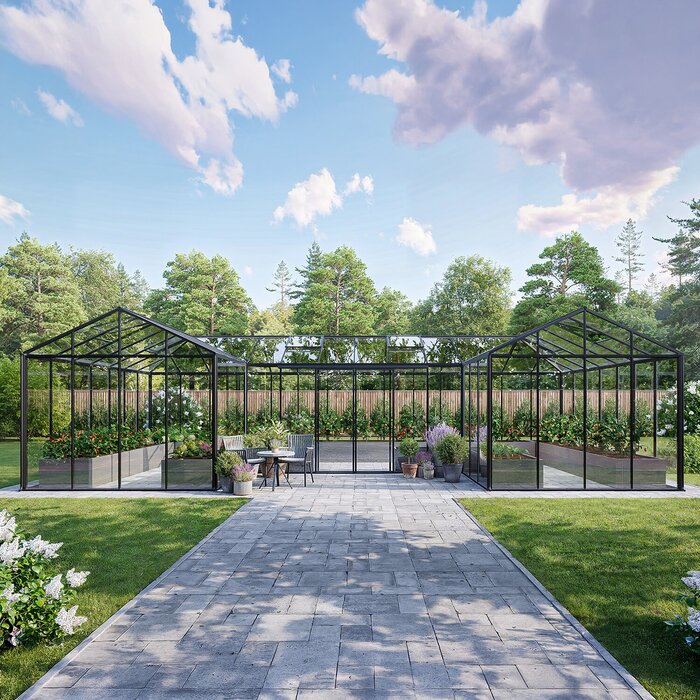
Harvest regularly to extend flowering
Harvest as the lower flowers on a stem open, while the upper buds are still coloured, for a useful balance of appearance and vase life. Cut in the morning when possible, use clean, sharp snips and place stems straight into water; leaving them in a warm greenhouse while you finish other work can shorten their display. Follow the stem down to a point that does not damage the next shoot, and avoid pulling hard on vines fixed to shared netting. If the greenhouse is already warm, collect flowers before the hottest part of the day. A narrow bucket near the exit saves repeated trips through the planted row.
Frequent cutting encourages continued flowering. Remove faded blooms before seed pods develop, since setting seed signals the plant to wind down. Check the row every few days during its main flush, and remove damaged leaves or tangled stems while they are still easy to reach. Leave enough healthy foliage to support new growth. A cut-flower layout needs somewhere to stand and sort stems as well as a place to grow them. The Limited Edition Aluminum Greenhouses list floor areas from 3.77 to 28.08 m²; compare the footprint with a clear aisle and a bucket-handling area rather than giving every square metre to vines.
Greenhouse layout for growing and cutting sweet peas
Before selecting a greenhouse for sweet peas, draw the intended crop at scale. Mark the bed or containers, full-height support, aisle, seedling bench and the space needed to turn with a bucket. Then compare usable length and width, door access, clear height, ventilation openings and the sun-and-shade pattern at the site. Ask how supports may be installed without interfering with glazing or openings, and verify dimensions for the exact configuration rather than relying on a model name or broad area range. Consider whether you can reach both sides of a planted row; a vine wall can be hard to manage from one narrow path.
The T-Shaped Orangery Greenhouse has listed floor-area options from 16.52 to 30 m², which can help you compare a different size range; it does not establish usable height, ventilation or growing suitability by itself. Review the specific variant and site layout together. For an early sweet-pea crop, the useful combination is enough vertical room, strong natural light, a support system and openings you can operate before heat builds. A smaller, well-planned row can be easier to keep cool and harvest than a large house with poor access. Choose a footprint that leaves enough room for the regular work.
Frequently asked questions
Can sweet peas grow in an unheated greenhouse?
Yes, if the timing suits your local night temperatures. Sweet peas prefer cool conditions, but an unheated greenhouse can still fall below freezing. Check overnight readings and do not treat glazing as frost protection; delay planting or use an appropriate temporary cover if a cold snap threatens.
What temperature is suitable for germinating sweet peas?
Around 13–18°C is a practical starting range. Keep the growing medium evenly moist, then move seedlings to a bright, cooler spot after they emerge. Follow the seed packet if it gives different directions for your cultivar.
How much light do greenhouse sweet peas need?
Give them the brightest position available, aiming for about six hours of direct sun where the site allows. Lengthening spring days help many varieties flower. Extra warmth will not make up for weak light and may lead to soft, stretched growth.
How can I grow longer stems for cutting?
Choose a climbing variety described as suitable for cutting, give it vertical support and guide stems so they do not tangle. Training one main stem per plant can produce straighter stems, but it takes regular attention. Keep the crop cool and harvest flowers often.
When should I ventilate the greenhouse?
Check the temperature at plant height on sunny days and open suitable vents or doors before the air becomes too warm. Sweet peas prefer cool conditions, so ventilation matters even in spring. Check night temperatures separately, especially in an unheated greenhouse.
For earlier sweet peas, the goal is a steady cool start rather than maximum warmth. Choose a climbing cut-flower variety, sow when seedlings can get enough light, and give vines support before they tangle. Keep an eye on night lows and sunny-day temperatures, then harvest regularly before pods develop. A few simple records of sowing dates, first flowers and greenhouse temperatures will make next season’s timing more reliable.
