
Growing Turmeric in a Greenhouse
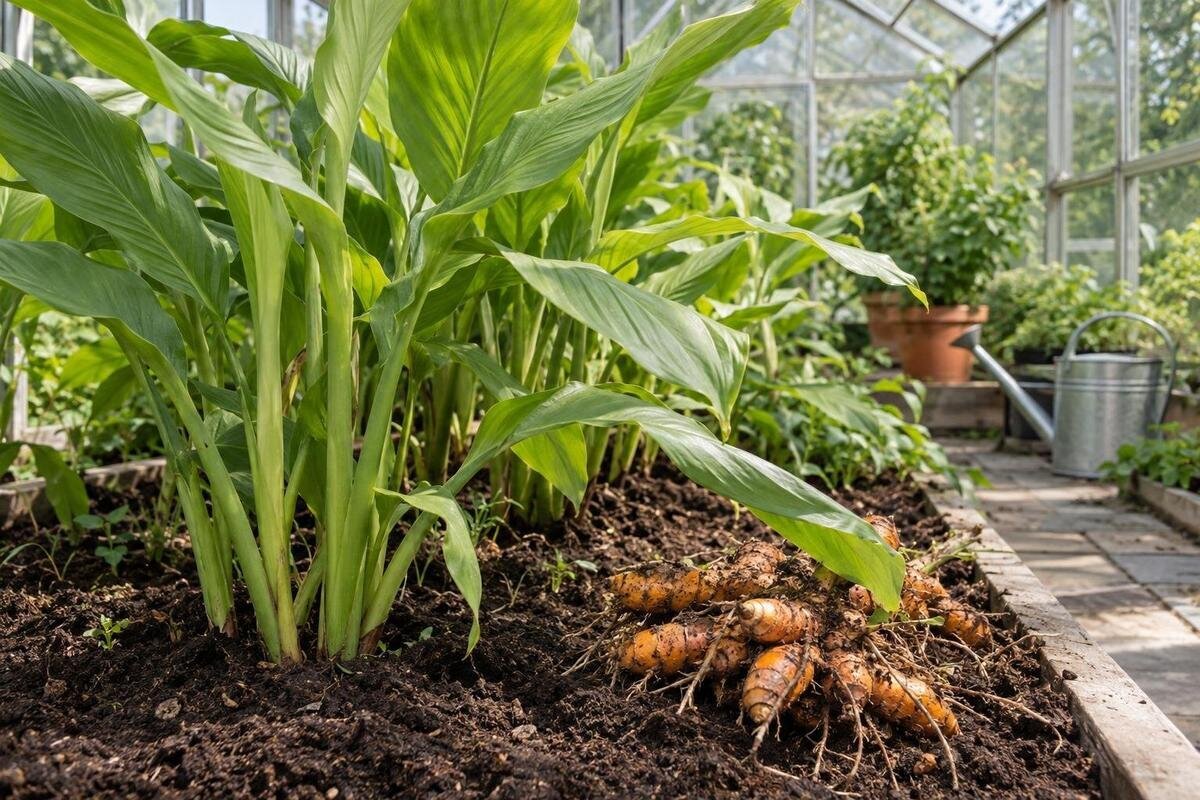
Crop guide
Turmeric's lush foliage can make it look like an easy greenhouse crop, but the edible rhizomes need months of sustained warmth beneath the leaves. In Canada, the key question is not simply whether a greenhouse extends summer; it is whether the mix around the rhizome can stay warm long enough, especially through cool nights and autumn. This guide explains the season length, indoor starting, container and moisture needs, and how to decide whether to harvest or overwinter the rhizomes.

01
Turmeric needs a long, warm growing season
Turmeric (Curcuma longa) is grown for its underground rhizomes, not for a quick leaf harvest. It is a tropical perennial, but in a Canadian greenhouse it is usually best treated as a long-season container crop: its leaves must stay active for months so the rhizomes can enlarge before the plant naturally slows or becomes dormant. A few weeks of summer heat may keep the foliage alive without producing a useful mature rhizome. In reliably warm growing conditions, allow roughly eight to ten months from planting to a mature harvest; cultivar, starting rhizome and the length of warm weather can shift that estimate. The first green shoot signals sprouting, not a harvest-ready crop.
That long cycle changes how you judge a greenhouse. Protection from a late frost can extend spring and fall, but glazing alone does not create a tropical growing season. A rhizome started indoors in late winter may gain useful time before it moves outside; one planted after local nights are already warm may still have too little time before autumn cools. Decide whether you want mature rhizomes, a smaller immature harvest or foliage only, because the heat and calendar commitment differ. The lean-to greenhouse area range is 3.69–14.34 m²; listed floor area alone does not establish whether a space stays warm enough.
An unheated greenhouse may not provide enough warmth
An unheated greenhouse can warm rapidly in spring sunshine, then cool sharply overnight or during a cloudy stretch. Turmeric slows in prolonged cool conditions; frost can damage its leaves, and a cold, wet container can harm the rhizome. A high afternoon reading is not evidence that the mix around the rhizome stayed warm all night. Put a min–max thermometer near the pots at leaf level and check it over several nights. If you have a soil thermometer, compare the air reading with the container mix. Make the move according to a pattern of readings, not the calendar or one sunny day.
During active growth, aim for sustained warmth, broadly around 20–30°C; this is a planning range, not a hard pass-or-fail line. A structure that cannot hold warm nights may still work as a summer location if pots are moved indoors before conditions turn cool. If you plan to heat the greenhouse, ask a qualified greenhouse or heating professional whether a system can maintain suitable conditions in your actual structure and local weather. Do not infer heat retention from a model name or footprint. The Limited Edition greenhouse size range is listed as 3.77–28.08 m², but those figures describe floor area, not temperature control.
02
Start with viable rhizome pieces
Turmeric is normally started from rhizome pieces with at least one visible bud or eye, rather than from ordinary seed. Choose pieces that feel firm and plump; avoid ones that are shrivelled, soft or mouldy. A grocery-store rhizome may sprout, but freshness, storage and dormancy vary, so sprouting is not guaranteed. When available, planting stock sold for growing is a clearer starting point. If you are comparing sources, label each piece so later differences in growth can be traced to its origin and handling. A piece without a viable bud may sit without producing a shoot.
Start indoors in late winter—often February or March, adjusted to your local season—so the plant can establish before the greenhouse is reliably warm. If space permits, start it directly in its final container; otherwise use a starter pot and move it gently after shoots and roots are established, avoiding repeated disturbance. Keep the mix lightly moist while you wait for growth, not wet. Warmth and bright light matter more than the earliest possible date, since a cold windowsill can delay sprouting. The T-Shaped Orangery area range is listed as 16.52–30 m²; floor area alone does not show whether a greenhouse is suitable as a warm starting space.
Choose a wide container and free-draining mix
Choose a broad, deep pot because turmeric rhizomes spread sideways and the leafy plant needs room to develop. For one planting piece or a small cluster, a container around 30 cm deep and at least 35 cm across is a practical starting size; use more room for several pieces or a long growing period. Treat those measurements as a guideline, not a promise of yield. A narrow pot can fill quickly, while a very small one dries faster and is harder to keep evenly moist. Make sure drainage holes are open and consider how you will handle the container once it is filled.
Use a loose, fertile, moisture-retentive potting mix that still drains freely; garden soil often compacts in containers. Set the rhizome horizontally or with its bud facing upward, cover it with roughly 5 cm of mix, then water lightly. If planting several pieces, space them rather than pressing them together, leaving room for the rhizomes to grow. The Pyramid Greenhouse footprint options are listed from 5.53–18.9 m²; when comparing any footprint, allow room around large pots for access as well as their actual diameter.

03
Keep the pot moist without leaving it saturated
While the plant is actively making leaves, keep the mix consistently moist but not saturated. Water thoroughly enough to wet the root ball, then let the excess drain away; turmeric does not benefit from a pot that stays waterlogged. There is no dependable daily schedule for every greenhouse: frequency changes with pot size, mix, leaf area, sunlight, temperature and ventilation. Check a few centimetres below the surface or lift the pot to judge its weight, then water when the mix is beginning to dry rather than waiting for the whole container to become dusty. Warm, sunny spells can dry pots much faster than cool, cloudy weather.
Yellowing of a few lower leaves near the end of the season can be normal, but widespread yellowing during active growth can also follow cold conditions, dry mix or stagnant wetness. Check moisture before adding water: a sour smell, persistently wet surface or water left in a saucer points to excess water or poor drainage; a very light pot and dry mix suggest a shortage. Clear blocked holes and empty any catch tray. As the leaves die back naturally, reduce watering. The Limited-Edition greenhouses with built-in storage are listed across 5.52–28.08 m²; if storage takes part of a floor plan, check how much room remains for pots and a practical watering route.
Balance bright light with greenhouse heat
Give turmeric bright light and warmth so it can support a full canopy; deep shade can leave stems weak and limit the energy available for rhizome growth. In a greenhouse, watch how direct sun falls through the day rather than assuming the brightest corner is always best. Leaves that stretch or lean may indicate insufficient light, while bleached patches, crisp edges or midday drooping can also signal excessive sun, heat or dryness. Treat those signs as clues, not a diagnosis, and check moisture and overnight temperatures before moving the pot. Leaves shaded by neighbouring crops may also reduce the light reaching the plant.
Strong sunshine can drive greenhouse temperatures higher than the crop needs, even when outside air feels mild. Use available ventilation and temporary shade when readings show excessive heat, then check again as conditions change. Keep a thermometer near the canopy, not only by the door or in direct sun, and avoid cooling the greenhouse by leaving the plant exposed to a cold night draft. The Prestige Greenhouse size range is listed as 3.77–28.08 m²; usable openings and glazing details, not floor area, determine what light and ventilation adjustments are possible.
04
Allow room for pots, leaves and access
Map container positions before the planting season. A turmeric plant can occupy more room than its pot rim because its leaves spread; several large containers can quickly narrow an aisle or block access to doors, vents and neighbouring crops. Leave enough space to inspect both sides of the leaves, water without splashing other pots and remove a container when autumn arrives. Keep tall turmeric where it will not cast a lasting shadow over shorter, light-hungry plants. A plan that allows for both container dimensions and the spread of mature plants is more useful than counting empty floor tiles.
Also decide where an indoor-start pot will live and whether a mature container can be moved without tipping or straining. Wet mix makes a pot heavier, so use a stable floor position unless a bench supplier confirms it is suitable for the filled weight. The Spacious Greenhouse area range is listed from 47 to 70 m², a large footprint compared with a few turmeric pots; assess it against a wider growing plan rather than the crop alone. Catalogue area is not the same as clear planting space, so check internal measurements and access routes.
Plan the season around local night temperatures
Build the season around actual temperatures. Start the rhizome indoors in late winter; move it to the greenhouse only when overnight readings and the mix around the rhizome stay warm enough for active growth. Keep it growing through the warm months, then watch the forecast and thermometer as nights lengthen and cool. A local last-frost date helps with frost risk but does not guarantee turmeric-friendly warmth. In a cool or short season, an unheated greenhouse may serve as a summer stop between indoor growing spaces, but each move adds handling and changes in light. Decide before autumn whether you will harvest, bring the plant indoors or heat the greenhouse.
If you need many extra warm months, weigh the ongoing energy and operating needs of heating against the value of a full-sized rhizome crop; do not choose a heating system from floor area alone. A qualified professional can assess the structure and the conditions you need. The Classic Aluminum Greenhouse area range is listed as 3.77–28.08 m², but that number does not define how long the greenhouse can maintain warmth or how many pots fit around its access routes. An earlier indoor start, a smaller harvest or planned overwintering may be more practical if heating is not.

05
Harvest when growth naturally slows
In a long, warm growing period, turmeric is generally ready when most foliage yellows and dies back naturally after many months. That seasonal decline is more useful than a calendar date, but check the context: leaves can yellow from cold, drought, waterlogging or pests before the rhizomes mature. If you are unsure, gently uncover an edge of the pot to inspect a rhizome before lifting the whole root ball. Mature rhizomes are plump and branched. Harvest carefully so you do not bruise pieces you hope to store or replant, and keep firm pieces with visible buds if you want planting stock for another cycle.
If cold weather arrives before natural dieback, you can accept a smaller, less mature harvest or move the plant to a protected space for dormancy. Bring the pot to a frost-free place before the mix becomes cold; as foliage dies back, reduce watering so dormant mix is not kept wet. For lifted rhizomes, avoid sealed, damp storage that encourages rot; inspect them occasionally and discard soft or mouldy pieces. Rhizomes do not all reach the same size in a short season, so set expectations accordingly. If you want the plant to keep growing rather than go dormant, it needs a warm indoor space.
Check growing conditions before changing care
Slow or uneven sprouting does not automatically mean the rhizome is dead. Check that a bud is present and that the mix is warm, lightly moist and aerated; a cold pot can delay growth, while a waterlogged one can rot before a shoot appears. Resist repeatedly digging the piece up to inspect it. If it becomes soft, foul-smelling or visibly mouldy, discard it and correct the wet conditions before planting a replacement. If it remains firm, correct the conditions and give it time. Starting with a visibly viable piece reduces uncertainty, but it cannot make a short or cool season longer.
During growth, record overnight lows, watering and changes in leaf colour for a week before making several adjustments at once. Inspect leaf undersides if leaves curl, look mottled or become sticky; aphids and spider mites can occur under cover. Isolate an affected container if practical and use only a pest product labelled for edible crops, following its directions. If foliage looks healthy but rhizomes stay small, likely limits include a short warm season, inadequate light, crowding or overfeeding—not simply a need for more water. A balanced container fertilizer used according to its label during active growth is more sensible than extra doses.
Frequently asked questions
Can turmeric grow in an unheated greenhouse in Canada?
It can grow there during warm weather, but an unheated greenhouse does not guarantee enough warmth or season length for mature rhizomes. Start indoors and use overnight readings to decide when to move the pot outside and when to bring it back in.
How long does greenhouse turmeric take to produce rhizomes?
Allow roughly eight to ten months in reliably warm growing conditions. Cooler periods can slow growth, so a plant may remain healthy without reaching full maturity before autumn.
Can I plant turmeric from a grocery store?
Possibly. Choose a firm, plump rhizome with a visible bud or eye. Grocery-store pieces vary in freshness and storage, so sprouting is not guaranteed; planting stock sold for growing is a more predictable starting point when available.
What size pot does turmeric need?
For one planting piece or a small cluster, a pot around 30 cm deep and at least 35 cm across is a practical starting point. Choose a larger container for more pieces or a longer growing period, and make sure it drains freely.
Can I leave turmeric in the greenhouse over winter?
Only if conditions remain suitable for the plant or its dormant rhizome. An unheated greenhouse can become too cold; protect the rhizome from frost, reduce watering as the plant goes dormant, or bring the pot indoors.
A successful greenhouse turmeric crop depends on matching a tropical, slow-growing plant with warmth that lasts and a container roomy enough for its rhizomes. If your greenhouse cannot stay warm through cool nights, use it as a summer growing space and start indoors; plan for a smaller harvest or overwinter the plant rather than assuming an unheated structure will produce mature rhizomes. A viable planting piece, free-draining pot, steady moisture and a realistic season plan make it easier to decide whether the crop suits your conditions.
