
Insect Screens for Greenhouse Vents: Balancing Airflow
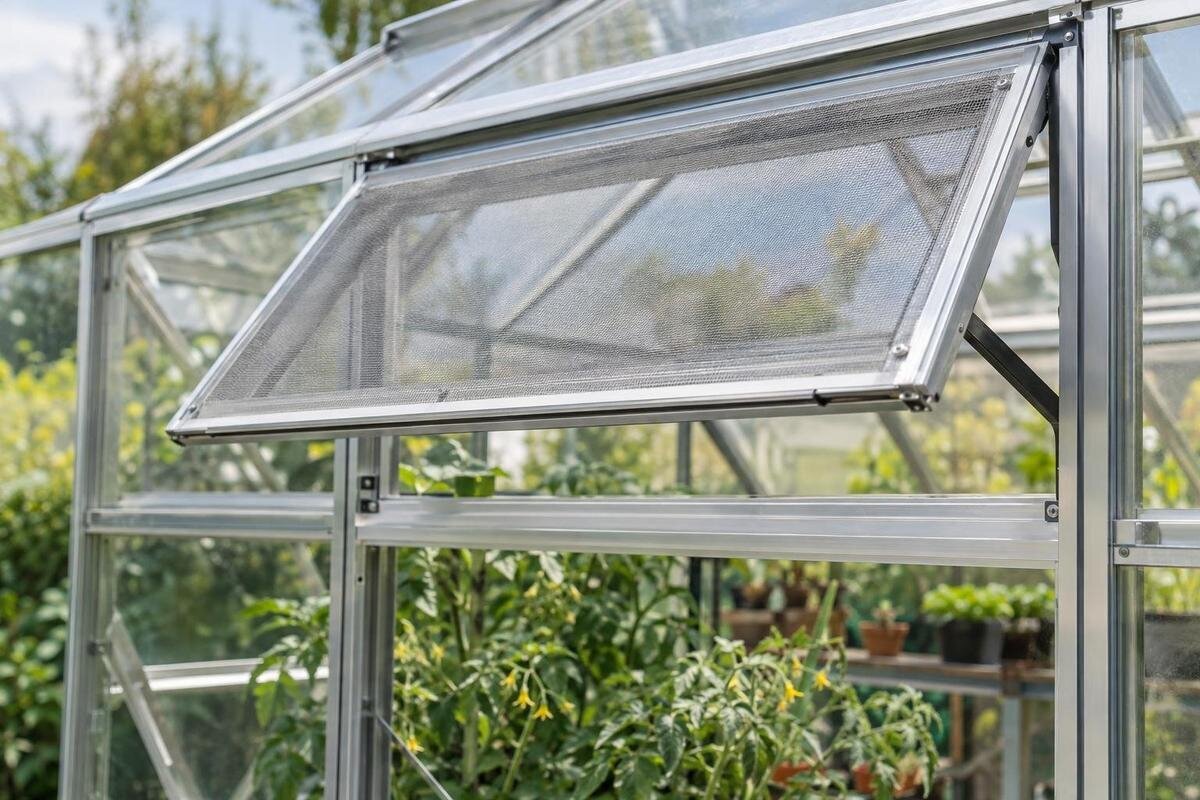
Greenhouse ventilation
An insect screen on a greenhouse vent creates a trade-off: smaller openings can keep out more of a target pest, but a denser screen also makes it harder for air to pass. Choosing the finest mesh available is not automatically the safest option, because restricted ventilation can work against the conditions your plants need. Start by identifying how the pest is entering and what size opening must be blocked. Then check the screen’s clear aperture, the total vent area it covers, and whether it fits the greenhouse’s specific vents. A useful screen addresses a real entry route without being treated as a substitute for adequate ventilation or a complete pest-control plan.

Before choosing a screen 1
What an insect screen can—and cannot—block
An insect screen is a physical barrier, not a repellent. It can reduce entry through the vent area it covers when its openings are too small for the pest to pass and the perimeter is sealed. It will not stop insects coming through an open door, a gap around another vent, a damaged panel, or on incoming plants and growing media. Nor will it remove insects already inside, including eggs or larvae on plants or in growing media. If pests remain after screening, they may be using another route; finer mesh can add airflow resistance while leaving that route untouched. Before buying, note where insects are first seen and whether the relevant vent or door is open at that time.
Look at the greenhouse as a set of possible entry points, not just the vent where the first insect happened to appear. Note openings that stay unscreened, gaps at corners, and whether plants or supplies are carried through the door. For an accessory enquiry, record the greenhouse model, size or variant, and vent type; a T-Shaped Orangery Greenhouse product name can identify a family, but the screen must match the actual opening. A clear photo of the vent and frame, along with the model label, gives a supplier more useful information than a generic request for greenhouse mesh. This also helps distinguish an entry-route problem from a screen-fit problem.
Match the mesh opening to the pest
Start with the insect, not the mesh catalogue. A label such as small fly can cover pests with different body widths and life stages, so identify the likely species where possible using a reliable pest guide or local horticultural extension service. Compare the clear mesh opening with the smallest stage likely to reach the vent, not the insect’s wingspan or total length. Body shape and ability to find gaps also matter; a simple size comparison is a guide, not a guarantee. If a product gives only a vague size range, seek pest-specific advice rather than guessing at the boundary.
Finer mesh may also prevent beneficial insects or pollinators from entering. If a crop depends on insect pollination, account for that before screening the vents; the trade-off is not limited to pest entry and airflow. When choosing a screen for the Oasis Pyramid Greenhouse, base the aperture on the target insect rather than the greenhouse’s shape. Keep pest identification and pollination needs together in your comparison so that an exclusion measure does not work against the crop’s requirements. Aim for the least restrictive opening that reliable pest guidance supports, rather than choosing the smallest mesh on offer by default.
Before choosing a screen 2
Mesh count, aperture and airflow specifications
Mesh count is useful only when you know what is being counted. A count over a set length does not, by itself, give the clear width of each opening, because strand thickness and weave vary. Ask for the actual aperture measurement, ideally in a unit you can compare, such as millimetres or microns, and confirm that it describes the clear opening. If a listing gives only a count, ask the seller or screen manufacturer for the aperture and material details before comparing it with pest-size guidance. Two screens with the same count can leave different free openings.
Ask how the finished screen is specified, not just how the base mesh is described. A frame or attachment can affect the area available for air to pass through. A clear aperture helps assess exclusion; open-area or air-permeability information helps assess ventilation. Those are different questions, and one number cannot answer both. When comparing screen options for a greenhouse with built-in storage, request these details for the proposed screen assembly. Keep the aperture measurement and airflow information in separate columns so neither is mistaken for the other. Comparing written specifications side by side is more reliable than relying on a product title or photograph.
How mesh changes airflow through a vent
Every screen adds resistance to air moving through an opening. In general, smaller apertures and more material across the screen face leave less open area for air, so a fine barrier can reduce the effective ventilation of an otherwise open vent. The size of the change is not determined by mesh count alone: it also depends on screen construction and area, vent dimensions and position, and the conditions driving air movement. Wind, temperature differences, how far the vent opens and how clean the mesh is all affect what you experience. Without test data, avoid assuming a fixed percentage reduction.
Ask the screen supplier for airflow or air-permeability information, and ask the greenhouse maker about the vent in the proposed configuration. A greenhouse’s stated area is not an airflow rating: the Bloomcabin Prestige Greenhouse is listed in area options from 3.77 m² to 28.08 m², but those figures do not show how much air a screened vent can pass. Compare available screen data with the exact vent area and arrangement in your greenhouse. If relevant data are unavailable, treat the effect as uncertain and observe the setup carefully rather than assuming a fine mesh is harmless.

Before choosing a screen 3
Look at every opening in the ventilation path
Consider the ventilation path as a whole. List each opening that contributes to air exchange—roof or side vents, doors when used for ventilation, and any other designed intake or exhaust—and note which ones will be screened. Record the opening dimensions, how far each vent can open and whether openings can operate together. Screening only one vent can still affect the route air takes through the greenhouse; screening every opening can create a larger restriction. The size, location and number of screened vents matter alongside mesh choice, so do not treat one panel as a complete system test.
If a fan, automatic opener or other ventilation equipment is part of the setup, check its instructions and ask whether the screen changes the required intake or airflow. For the Spacious Greenhouse, make a vent map of the actual configuration, identifying where air can enter and leave and which openings serve the equipment. Use that map when discussing the proposed screens with the supplier; total greenhouse area alone does not describe the ventilation path. If the equipment maker cannot confirm performance with a screen, ask a qualified greenhouse professional to review the proposed arrangement before relying on it in demanding conditions.
Check screen fit against the exact greenhouse model
A screen needs to fit the moving vent, not merely cover a rectangle of glass or an outer frame. Verify the dimensions and shape of the opening identified by the manufacturer, along with the frame profile, hinge side, latch and room needed for the vent to open fully. Check that the mesh or its support will not catch on a moving part, block a handle or limit the vent’s travel. If the screen is meant to move with the vent, confirm that arrangement in the product instructions. A close measurement and clear photograph are more useful than a broad description such as medium-sized roof vent.
Prefer a screen kit or attachment method that the greenhouse maker or supplier confirms for the exact model and vent version. Ask whether dimensions refer to the opening or outer frame, and whether fit depends on a particular configuration. When enquiring about a screen for the Classic aluminium greenhouse, include the model size and vent details so the supplier can identify the correct attachment. If a proposed fit requires cutting or drilling the frame, altering a hinge or interfering with an opener, do not improvise; ask the manufacturer or a qualified installer for an approved option. Clarify whether the screen is fixed or removable, since that affects access for cleaning and replacement.
Before choosing a screen 4
Seal the perimeter and protect other entry points
A fine mesh cannot exclude insects if there is a gap around it. Check corners, joins, overlaps, seams and the points where the screen meets the vent frame, then look again with the vent both open and closed. Movement can reveal gaps that are hidden when the panel rests in one position. The screen should remain secure without sagging into the vent, snagging on the frame or stopping the vent from closing. Inspect the perimeter as carefully as the mesh itself; a bypass may matter more than choosing a still finer fabric.
Include the door and the routes between screened panels in the check. An open door can bypass screened vents, while a poorly closed screen door or a gap where two sections meet can undo exclusion. When choosing a screen for a lean-to greenhouse, ask the supplier to assess the actual vent and adjoining frame, including the corners and joins where the screen will meet them. Confirm that the finished screen closes around the full perimeter in the positions where it will be used, without interfering with everyday access. If some entry routes remain unscreened, factor that into your pest-control goal.
Screen cleaning, inspection and replacement
Mesh condition affects both exclusion and ventilation. Dust, pollen, leaves and other debris can cover openings, leaving less area for air to pass; a tear, loose corner or separated seam can create a route for insects. Inspect the screen when you install it, at the start of the period when vents are used regularly, and after handling, cleaning or rough weather. Clean it only as the screen maker directs, since the appropriate method depends on the material and attachment. A surface that looks coated deserves attention even if the mesh itself appears intact.
Keep the screen maker, aperture, kit number and fit notes with the greenhouse model so a replacement can be matched. For a Limited Edition greenhouse, record the exact size and vent version alongside those screen details rather than relying on the product name alone. When asking about replacement mesh, provide a photo of the attachment and any original label. Ask whether the replacement has the same clear opening and is intended for that screen assembly; visual similarity alone does not establish equivalence. A brief cleaning and damage log can also help explain later changes in airflow and distinguish routine maintenance from a need to replace the mesh.

Before choosing a screen 5
Compare conditions before and after screening
A simple before-and-after log can show whether screening changes conditions in your greenhouse. Before fitting, note temperature and humidity at the same representative location, along with the time, outside conditions, vent positions and whether a fan or opener is running. Repeat those notes after screening under comparable conditions, with the same sensor placement and similar vent settings. One warm afternoon before installation and a cool day afterwards cannot isolate the screen’s effect. The aim is not to prove a laboratory result; it is to see whether the screened setup behaves acceptably in your own growing conditions.
If readings move outside the range you already use for your crops, check first for a blocked or damaged screen and confirm that vents still open fully. Then review the greenhouse and screen makers’ guidance, including any stated limits for screened operation. A repeated change under comparable conditions is more informative than one unusual reading. If the cause remains unclear or the ventilation path seems inadequate, ask the supplier or a qualified greenhouse professional about an approved alternative, such as a different screen specification or vent arrangement. Do not compensate by forcing moving parts or altering the frame.
Choose which vents to screen
Decide how much exclusion is needed before selecting mesh. If observations point to a particular vent as the entry route, screening that opening may be a more manageable change to evaluate—but only if the remaining openings are not also access routes for the pest. If all vents need protection, give greater weight to airflow information and the greenhouse’s ventilation requirements. Crop pollination needs, the pest’s smallest relevant stage and how often the screen can be cleaned also affect the compromise. There is no universal mesh that suits every insect and every greenhouse.
Before ordering, make sure the supplier can answer three separate questions: what clear aperture the screen provides, what is known about airflow through the finished screen, and whether the attachment suits your exact greenhouse model and vent. Ask how to inspect, clean and replace it as well. A mesh count without an opening measurement, a compatibility claim without a model match or an airflow claim without a stated configuration leaves an important gap in the decision. If information is missing, seek clarification rather than covering the whole ventilation system with an unverified fine screen.
Frequently asked questions
Will a finer screen stop every greenhouse pest?
No. A screen excludes insects only when its clear openings are too small for the pest to pass and its perimeter is intact. It will not seal a gap elsewhere or remove pests already in the greenhouse. Identify the target pest and the smallest stage likely to enter. If several pests are involved, one mesh may not be a practical solution for all of them.
Does insect mesh always reduce airflow?
A screen adds resistance, but the effect varies with its opening size, strand thickness and area, as well as vent position, wind and how far the vent opens. Ask for airflow or air-permeability information for the finished screen when available. Mesh count and greenhouse area alone cannot predict ventilation in your setup.
Can I choose a screen by mesh count?
Not reliably. Mesh count does not tell you the clear width of each opening unless you also know details such as strand thickness and weave. Ask for the actual aperture measurement and, separately, information about the screen’s open area or airflow. Those specifications answer different questions.
Can I fit a universal screen to any greenhouse vent?
Do not assume so. Vents can differ in dimensions, frame shape, movement and attachment points, even within a product family. Check the exact greenhouse model and vent against the screen instructions, and confirm that the screen will not block the vent’s full travel. Ask the manufacturer or supplier if compatibility is unclear.
How can I tell if screened vents are restricting ventilation too much?
Compare temperature and humidity notes from before and after screening under similar conditions, with the same vent settings and sensor location. Also check whether the screen is dirty or damaged and whether the vent still opens fully. If a repeated change persists or conditions no longer meet your crop’s needs, consult the greenhouse or screen supplier about an approved alternative.
Insect screens are most useful when mesh openings suit a known pest, the edges close around the actual entry route and enough air can still pass through the vent system. Mesh count and greenhouse area do not answer all three questions. Treat screen specifications and greenhouse fit as separate checks, then use a simple before-and-after log and regular inspections to see whether the compromise holds. If airflow data or compatibility is unclear, seek manufacturer confirmation rather than guessing with the finest screen.
