
Can Water Barrels Warm a Greenhouse at Night?
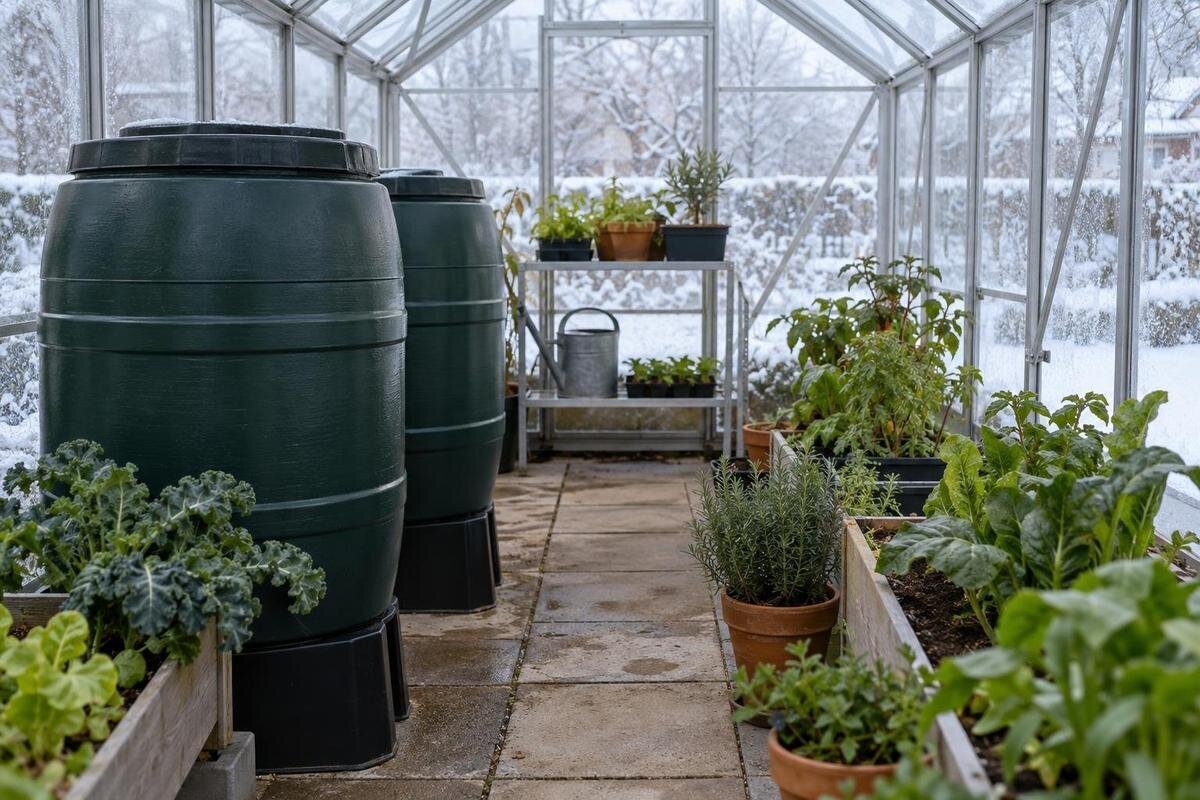
Greenhouse heating and winter energy
Water barrels can slow a greenhouse’s overnight cooling, but only by returning heat they absorbed earlier. Sunlight and the warmed greenhouse charge the water during the day; after sunset, it releases energy as it cools. Whether that keeps the plant zone above a chosen temperature depends on the water’s starting temperature, its usable temperature drop, the greenhouse’s overnight heat demand and how quickly energy can move from the barrel into the space. A heat-capacity calculation gives a theoretical ceiling; consistent temperature records show what a particular setup actually achieves.

What to check before relying on water barrels 1
What a barrel can do after sunset
During daylight, sunlight warms the greenhouse air, soil, plants and interior surfaces. A water barrel can absorb some of that energy directly if sunlight reaches it, or from warmer air and surfaces around it. Because water stores considerable energy for each degree of temperature rise, its temperature changes more slowly than air’s. After sunset, water that is warmer than its surroundings gives some energy back, helping slow the rate of cooling. This is a time shift: energy gathered earlier becomes available later, although the air can still cool substantially before morning. The benefit depends on how much heat the water actually gained.
That distinction matters on a long cold night. As the barrel cools toward the surrounding temperature, the difference driving heat transfer shrinks and its output slows; if water starts close to the temperature you need around plants, little useful heat is available above that threshold. A barrel that stays warm while plants become cold may be holding energy but releasing it too slowly or too far from the area that needs it. Water can moderate a temperature swing, but it cannot guarantee frost protection or maintain a minimum without enough stored energy and effective heat exchange.
Calculate the heat stored in the water
For liquid water, specific heat is about 4.186 kJ per kilogram per °C. For a simple estimate, one litre of water weighs about one kilogram, so the energy released across a temperature drop is E (kWh) ≈ volume (L) × temperature drop (°C) × 0.00116. Use the amount of water actually in the barrel, not its outside dimensions. The estimate assumes the water cools through the whole stated interval; it does not tell you how quickly the energy reaches the growing area.
For example, 200 L cooling by 10°C contains about 200 × 10 × 0.00116 = 2.32 kWh of theoretical heat. Half that temperature drop gives half the energy; twice the water volume gives twice the energy at the same drop. Measure the water before sunset rather than assuming it reached a particular temperature. Write down the starting and ending temperatures alongside the volume, so the calculation can be traced back to your readings. The 10°C drop in this example is an input, not a temperature change every barrel will achieve. When planning a purchase, the Limited-Edition greenhouse with built-in storage is listed across floor areas from 5.52 to 28.08 m². Use the exact planned size when assessing demand, not a barrel-per-greenhouse rule.
What to check before relying on water barrels 2
How much of that heat is usable?
The theoretical figure counts the full temperature drop you enter. In practice, water can only help maintain a target while it is warmer than the greenhouse air around the plants. If the water at sunset is only slightly warmer than that target, only a small part of its stored heat is available above the threshold. As water and air temperatures approach one another, the difference that moves heat into the space gets smaller, so the release rate slows. Energy left in water that has cooled below the temperature you are trying to maintain does not help hold that target.
The barrel’s exposed surface, its position and air movement affect how quickly heat passes into the greenhouse. A large volume may hold a lot of energy but release it too slowly for a sharp overnight drop; more exposed surface may change the rate, while taking up space needed for growing or access. This separates two buying questions: how much water can fit, and whether the proposed arrangement can release useful heat where the plants are. Answering the first does not settle the second. Measure water and plant-zone temperatures to check the actual effect before committing growing space to more barrels. The Prestige greenhouse is listed in floor areas from 3.77 to 28.08 m²; assess the selected size and layout, because floor area alone does not describe heat retention.
Estimate overnight heat loss from heater records
A practical comparison uses heat supplied on a representative night, rather than an assumed heat-loss figure for an unspecified greenhouse. If a greenhouse is already held at a chosen temperature, use the heater’s documented heat output and its recorded operating time to estimate the heat delivered. For a cycling heater, count the intervals it actually ran, not its full rated output for every hour. Record whether barrels were present: heating demand with barrels already reflects some of their contribution.
Treat that total as an estimate for the tested conditions, not a universal specification. Keep the target temperature and door and vent settings consistent, and note outdoor temperature and wind; these change the result. Keep heater output, operating time and temperature readings together in the same record. If an overnight total lacks those details, it is difficult to judge whether a later comparison uses similar conditions. Without suitable heater records, a temperature logger can show whether the space stayed above your chosen threshold, but a fall in air temperature alone cannot be converted into kWh without information about the structure and its thermal mass. For buyers considering the Spacious Greenhouse range, the listed 47 to 70 m² floor areas identify the available scale, not the heat loss of a particular size. The heating estimate still needs to describe the greenhouse being assessed.

What to check before relying on water barrels 3
A worked comparison for one night
Suppose, for illustration only, a greenhouse’s records show that a documented heater supplied an average of 0.9 kW over a 12-hour night while holding the chosen target. The estimated heat delivered is 0.9 × 12 = 10.8 kWh. A 200 L barrel cooling through 10°C has a theoretical store of about 2.32 kWh, or roughly one-fifth of that example’s demand. These are assumed figures, not a typical greenhouse result or a forecast for a particular model.
The comparison is an upper-limit check, not a promise that the barrel will deliver one-fifth of the heat when it is needed. Its starting temperature, usable temperature drop and release rate all matter. Matching 10.8 kWh with water cooling through 10°C would take about 930 L even before allowing for those limits. That theoretical volume is useful for judging the scale of the proposal, but it is not a recommendation to install that much water. First consider whether the assumed temperature drop is supported by your readings and whether the barrels could release the heat during the hours of greatest demand. The Classic aluminum greenhouse listing covers floor areas from 3.77 to 28.08 m². Apply the example to the actual size you are considering, with its own demand estimate, rather than treating the catalogue range as a heating specification.
Why results change with weather and layout
The daytime charge depends on how warm the water becomes, which can vary with sunlight, cloud and the barrel’s exposure. Overnight demand changes with the outdoor temperature, the length of the night, wind, ventilation and air leakage. A barrel charged on a sunny afternoon may contribute more than one that begins a cold evening only slightly warmer than the air. Several cloudy days can reduce the available charge even if the barrel’s volume has not changed.
Use conditions from your own site rather than applying a single result to every season or location. Note outdoor readings, wind, cloud, vent and door use, and the water temperature at sunset. Keep a successful sunny-day trial separate from records for overcast weather: it shows what the arrangement achieved under those conditions, not what it will achieve every night. If your main concern is a long cold night after little daytime warming, that is the comparison that matters to your decision. Layout matters too: identify which greenhouse surfaces are actually exposed instead of assuming an adjoining wall changes heat loss. The aluminum lean-to greenhouse is listed from 3.69 to 14.34 m². Assess the intended installation and its exposure rather than inferring thermal performance from the model name.
What to check before relying on water barrels 4
Record temperatures over several nights
A useful record includes the water temperature before sunset and near morning, the temperature at plant height, and an outdoor reading for comparison. Keep the indoor sensor away from direct sunlight during the day and from contact with the barrel, glazing, soil or a heater. If possible, record at consistent intervals through the night; a continuous curve shows when the greenhouse cools and whether the water is cooling at the same time. Note the weather and any changes to doors, vents or heating.
Compare several nights with broadly similar conditions, and keep the setup and sensor positions the same. Look at the lowest plant-zone temperature and how long it remained near or below the threshold you selected, not only the air temperature beside the barrel. If the barrel cools while the crop area stays steadier, it may be contributing; if it stays warm as the crop area falls, its heat may not be reaching that area quickly enough. Record changes to the arrangement rather than relying on memory. Moving a barrel or changing the heating settings makes the next night a different comparison, so label it accordingly. A warmer reading by itself does not isolate the barrel’s contribution when the weather or setup also changed. The Limited Edition greenhouse is listed from 3.77 to 28.08 m²; keep measurements tied to the particular size and setup you are assessing.
Allow for barrel weight, access and freezing
Water takes up meaningful space and is heavy: 200 L of water is about 200 kg before adding the container. Do not assume a shelf, bench, raised base or greenhouse floor can support a filled barrel. Confirm that the intended support is suitable with the structure’s manufacturer or a qualified professional, particularly if the barrel would sit above ground level. A leak can also damage crops or stored items, so plan for a stable position that can be checked and accessed.
Keep barrels from blocking doors, ventilation openings, walkways or access to plants. A location with good heat exchange is of little use if it makes routine work difficult or interferes with ventilation. Draw the proposed arrangement with the barrels, growing areas and access routes shown together. This makes the space trade-off visible before you choose the number of containers: room occupied by water is no longer available for plants or movement. If the greenhouse may fall below freezing, the liquid-water calculation no longer describes the full behaviour of the water, and freezing can damage a container. Follow the container maker’s guidance rather than assuming it is suitable for those conditions. The T-shaped orangery greenhouse is listed in floor areas from 16.52 to 30 m²; map the barrels and clear routes within the specific footprint, not just the total floor area.

What to check before relying on water barrels 5
When a heater is still necessary
Thermal mass can supplement heating when it absorbs useful warmth and releases enough of it during the hours it is needed. It cannot provide an unlimited or controllable supply. If a crop needs a dependable minimum temperature through cold or overcast nights, compare measured overnight demand with a heater’s documented output and seek site-specific advice on suitable equipment. Do not count on barrels alone for a temperature that must be maintained.
For an operating-cost comparison, use the energy required in kWh and the applicable rate and charges on your own utility bill; do not substitute a general price or assume that stored heat guarantees savings. Water warmed by a heater still required energy to charge it, while heat absorbed from sunlight may shift some daytime warmth into the night. Keep the barrel’s calculated energy separate from any measured reduction in heater use. The first describes a theoretical store; the second is the relevant comparison when assessing operating costs under similar conditions. Counting the entire stored amount as a saving would overlook how it was charged and how much useful heat it released. If comparing greenhouse options, check the selected model’s documented ventilation and insulation options rather than assuming they are included. The Oasis pyramid greenhouse is listed from 5.53 to 18.9 m², but floor area does not establish heater compatibility or heat retention.
Make the decision for your greenhouse
Start with the temperature the plants need and the kind of night you want to cover. Record temperatures in the growing area and outside, then measure the barrel’s temperature before and after the night. If you already heat the greenhouse, use documented heat output and run-time records to estimate demand for comparable conditions; note whether barrels were in place. Calculate the water’s theoretical kWh from its actual volume and useful temperature drop, then compare that upper limit with the observed demand.
A barrel is worth considering as a buffer when daytime conditions charge it and records show that its heat reaches the growing area at the right time. If the stored energy is only a small share of demand, the water stays warm while plants cool, or cloudy nights leave it uncharged, it is not a dependable way to meet the target on its own. Repeat the comparison under the conditions that matter to you. The result is specific to the greenhouse, barrel arrangement and weather you measured.
Frequently asked questions
Can one 200 L barrel keep a greenhouse above freezing?
It cannot be relied on to do so. A 200 L barrel cooling by 10°C contains about 2.32 kWh of theoretical heat, but the greenhouse may lose heat faster than the water can release it. Compare the usable amount with records from your greenhouse on similar nights.
How do I estimate how much water I need?
First estimate the overnight heat demand for the temperature and conditions you need. Then divide that energy in kWh by 0.00116 × the useful water-temperature drop in °C to get a theoretical volume in litres. This is an ideal minimum; delivery rate and heat losses mean the actual requirement may be higher.
Will barrels help during a run of cloudy days?
They can release heat stored earlier, but they do not recharge themselves. If the water does not warm enough during the day, it has less energy to give back overnight. Track the water temperature at sunset over several days; use a separate, suitable heat source if a minimum temperature must be maintained.
Does a barrel need to be dark-coloured?
Colour alone does not show how much heat a barrel will store in your greenhouse. Sun exposure, starting water temperature and the amount of water all matter. Measure the water temperature before sunset to see whether the placement is providing a useful daytime charge, and avoid blocking light or access you need.
Can water barrels replace a greenhouse heater?
Treat them as thermal storage, not a dependable replacement when plants must stay above a particular temperature. Their available heat is finite and depends on daytime charging and overnight losses. For a critical minimum, compare measured demand with documented heater output and get site-specific advice on suitable equipment.
Water barrels can shift some daytime heat into the night, but barrel volume alone cannot show whether that contribution is enough. Compare the water’s usable temperature drop with observed overnight demand, and check plant-zone and water temperatures across representative nights. If the logs show only a modest contribution, treat the barrels as thermal mass rather than dependable heating. That measured result—not a generic barrel count—shows what the arrangement can do in your greenhouse.
