
Overwintering Oleanders: Greenhouse Care and Safety
OLEANDER WINTER CARE
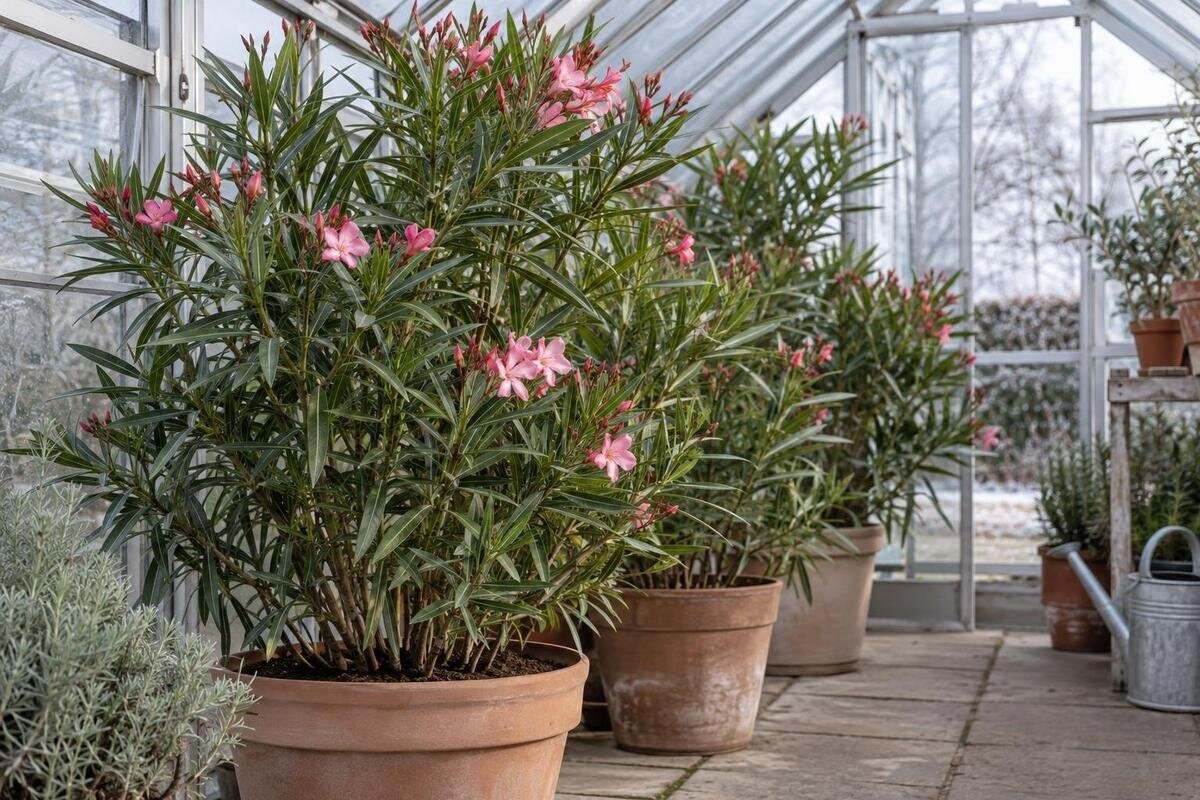
Overwintering an oleander in a greenhouse is less about carrying on with summer care and more about holding the plant in a bright, cool, frost-free place without leaving its pot wet. A greenhouse can offer shelter and daylight, but it is not automatically frost-proof; winter sun can also warm it sharply before the temperature falls again. This guide covers temperature monitoring, light, ventilation, watering, pest checks and safe handling of this toxic plant.

Will a greenhouse keep an oleander safe through winter?
An oleander (Nerium oleander) is an evergreen, sun-loving shrub, not a plant to leave in its container through a cold outdoor winter. A greenhouse can shelter it from wind and rain, but an unheated structure can still approach outdoor temperatures overnight. In many parts of Canada, that means the greenhouse alone will not guarantee frost-free conditions. Decide first whether you can maintain a bright, cool, frost-free space; if not, use another protected indoor location rather than risk a freeze. Move the plant before hard frost, while it is manageable. The goal is to slow winter growth, not to coax a summer display from a warm, dim corner.
Before carrying it in, clear fallen leaves and weeds from the pot, inspect the plant for pests, and note its current height and width. Check the route through doors and between benches so the canopy will not catch or snap. For a footprint reference, the Lean-To Greenhouses listing spans 3.69 to 14.34 m². Published floor area alone cannot tell you usable headroom, door clearance or winter temperature. Compare the exact model dimensions with the pot, canopy and room needed to inspect all sides. Also plan for drainage and leave enough access to water or move the plant without pushing foliage against walls or glazing.
Aim for cool, frost-free winter conditions
Temperature needs vary with cultivar, acclimation, plant health and how long cold lasts, so no single minimum can be guaranteed for every oleander. For a container kept dormant, a practical planning example is a bright, cool range of about 5–10°C (41–50°F). Treat it as a working target rather than an absolute survival boundary: a brief dip and a prolonged cold spell are not the same exposure. Avoid freezing, and avoid keeping the shrub warm enough to push soft new growth when winter light is limited. If you do not know the plant’s history, choose stable conditions over testing its cold tolerance.
Use a min–max thermometer near the leaves, not tucked under the roof, and note the low as well as the sunny-day high. If the pot sits on a very cold surface, a second reading near root-ball height can reveal a different microclimate. Check over several weather changes; one mild afternoon says little about the next night. If forecast or logged lows approach freezing, move the plant to a reliable frost-free place or consult a qualified professional about suitable greenhouse heating. Keep a simple record so you can spot recurring cold dips and decide whether the greenhouse can provide dependable conditions.
Choose the brightest suitable position
Winter light still matters when an oleander’s growth slows. Put it where daylight is strongest and least obstructed through the short days. A spot beside glazing may look bright, but nearby buildings, evergreen trees, stored supplies or greenhouse framing can cast shade. Check the proposed position at different times of day and again after autumn leaves have fallen. Keep foliage from pressing against cold glazing, and do not crowd the plant behind taller pots, where its lower branches may receive little light or airflow. A larger greenhouse will not compensate for a shaded site.
Plan for the whole plant, not just the pot diameter: stems spread sideways and need room for safe inspection. Measure its current height and width, then allow for likely growth and space to reach the back of the canopy. The Limited Edition Aluminum Greenhouses collection lists floor areas from 3.77 to 28.08 m², but that range does not establish internal height or daylight at your site. Check the drawings for the exact configuration and compare them with the plant’s measured crown, door opening and the position of other plants.
Ventilation during winter temperature swings
A greenhouse can warm rapidly in winter sun, even when the outdoor air is cold, then cool quickly after sunset. Watch maximum and minimum readings instead of assuming the plant experiences a steady temperature. When sunny-day heat rises above your chosen cool range, ventilate with controlled openings; avoid directing a cold stream straight at the shrub. Close or reduce openings before evening or during a sharp cold spell, while allowing sensible air exchange on milder days. Leaving vents wide open overnight when frost is expected can undo the protection you expected the structure to provide.
Ventilation should be practical: you should be able to reach and operate it without climbing over pots or disturbing branches. The T-Shaped Orangery Greenhouse listing spans 16.52 to 30 m², but its published area does not say where vents are, how they open or whether they are easy to operate. Check the exact model information before buying, then position the oleander away from likely cold drafts while preventing warm, damp pockets around dense foliage. Condensation and stagnant air are reasons to adjust airflow, not to keep the plant wet. Check readings after clear sunny days as well as cold nights.

Water less, but do not let the root ball dry out
Watering should follow the plant’s winter growth and actual potting mix, not a summer timetable. In cool, bright conditions, an oleander grows slowly and takes up less water. Check the upper few centimetres of mix with a finger and, if the pot is manageable, lift it to gauge its weight. Water when the surface has begun to dry, before the whole root ball becomes bone-dry. A constantly wet mix is particularly unhelpful in a cool greenhouse, where roots use water slowly. Do not interpret a limp leaf or a single yellow leaf as an automatic request for more water.
Water slowly enough to moisten the root ball, then let excess drain completely. Empty saucers and trays rather than leaving the pot standing in cold water, and check that drainage holes are not blocked. Frequency changes with container size, greenhouse temperature, sunlight and ventilation, so there is no reliable number of days between waterings. If the plant is cool and not making new growth, pause routine feeding; fertilizer will not correct low light, chilled roots or pests. Resume feeding when active growth returns, following the fertilizer label, and increase watering as the plant begins using more.
Inspect for pests before bringing the plant in
Inspect the oleander before it goes beside other greenhouse plants, because outdoor pests are harder to contain in a closed collection. Look along stems, branch forks, leaf stalks and both leaf surfaces; check the pot rim and drainage holes too. A hand lens can help you examine suspected scale insects and look more closely at leaves with fine stippling that may indicate mite feeding. Look for webbing, cottony clusters, sticky residue or curled new growth, but remember that one mark is not a diagnosis. If you find anything suspicious, keep the plant apart and identify the problem before treating it.
Remove fallen leaves, weeds and dead plant material from the pot and nearby floor; wipe down the container exterior and clean the place where it will sit. Keep a clear gap from neighbouring plants during an initial observation period, and repeat the inspection after the oleander has settled in. A Pyramid Greenhouse listing covers 5.53 to 18.9 m², but published floor area does not establish a separate quarantine space. Base your layout on the room you need to examine leaves and isolate a plant, not on the model name or area alone. Avoid applying pesticides as a routine precaution to a healthy-looking shrub.
Recognize common oleander pests
Common greenhouse pests on oleander include spider mites, scale insects, mealybugs and aphids. Spider-mite feeding can leave pale stippling on leaves and fine webbing when an infestation is established; warm, dry conditions can help mites multiply. Scale insects appear as small fixed bumps on stems or leaf veins, while mealybugs leave white, cotton-like clusters in joints. Aphids often gather on tender new growth. Check the undersides of leaves with a hand lens and compare several areas of the plant. Sticky honeydew may point to sap-feeding insects, but yellowing alone is too general to identify a pest.
If you find insects, isolate the pot first and avoid brushing infested foliage against neighbouring plants. Remove fallen or badly affected material carefully, wearing gloves because of the plant’s sap, and bag it for disposal. Identify the pest before choosing a treatment; use only a product labelled for the plant and greenhouse setting, follow its instructions and check for plant-safety guidance. The Limited-Edition Aluminum Greenhouses with Storage collection lists floor areas from 5.52 to 28.08 m². If storage matters for tools or treatments, check the exact layout and keep supplies inaccessible to children and pets. Reinspect the oleander, since one treatment may not address every life stage.
Safe pruning and handling
Treat every part of an oleander—including leaves, flowers, stems and dried material—as poisonous if swallowed. Its sap can irritate skin and eyes, so do not handle cuttings bare-handed or touch your face while working. Wear gloves, long sleeves and eye protection for pruning or removing fallen material, and keep children and pets out of the work area. Use dedicated pruning tools rather than kitchen equipment, then clean them before putting them away. Never burn oleander clippings: smoke from the plant is hazardous. These precautions matter even when the shrub looks healthy and the pruning is minor.
Before winter, remove only what is necessary, such as dead or broken material. Heavy pruning creates more sap exposure and waste, and pruning timing can affect flowering. If the pot is heavy, clear a route and use a suitable plant trolley or ask another adult to help; never pull the plant by its stems. The Prestige Greenhouse listing spans 3.77 to 28.08 m². Use the exact floor plan to confirm you can reach around the pot safely rather than assuming the area range provides a working aisle. Bag clippings, keep them away from animals and check local green-waste guidance for disposal.

Monitor the plant and plan its spring move
Keep a short winter record of minimum and maximum temperatures, watering, pest observations and changes in the leaves. A brief weekly inspection is useful, with an extra check after a sharp cold spell or a sunny period that warms the greenhouse. An occasional old leaf may yellow, but widespread leaf drop or soft, blackened growth deserves a closer look. Check moisture and drainage, light exposure, temperature history and pest signs before changing several things at once; excess water, poor light, cold roots and insects can produce overlapping symptoms. A record helps show what changed before the plant did.
Plan the spring move as a gradual transition, not a date on the calendar. Wait until the local risk of frost has passed, then increase outdoor exposure to brighter sun and moving air over several days; bring the plant back under cover if cold returns. If an oleander shares the greenhouse with other plants, check that their winter temperature needs do not conflict. For a larger collection, Spacious Greenhouse listings run from 47 to 70 m², but floor area alone cannot create separate climates. Plant groupings still need suitable light, temperatures and access. Resume watering and feeding as active growth returns.
Check the greenhouse against the plant’s full size
Before selecting a greenhouse for an oleander, measure the whole plant and its pot, then measure the route from the door to its winter position. Check internal clear height, opening width, space to turn a large container and whether you can reach each side to inspect pests and prune safely. Consider the brightest usable position, ventilation you can operate in cold weather, and how the greenhouse will stay above freezing overnight. If it needs heating, choose equipment intended for the setting and get installation advice from a qualified professional. Do not use floor area alone to judge winter suitability.
The Classic Aluminum Greenhouses collection lists floor areas from 3.77 to 28.08 m². Treat that as one catalogue comparison, not evidence of insulation, usable headroom, vent layout or guaranteed winter temperature. Review specifications and installation documentation for the exact configuration, and ask a qualified installer about site suitability where needed. The right winter space is one that lets you maintain suitable conditions and safely reach the plant—not simply the greenhouse with the largest published footprint.
Frequently asked questions
Will an unheated greenhouse keep an oleander frost-free?
Not reliably. A greenhouse can provide shelter and collect daytime warmth, but its temperature may fall close to outdoor conditions overnight. Use a thermometer to check conditions where the plant sits. If you cannot keep the plant frost-free, move it to another bright, protected location.
What temperature should I aim for when overwintering an oleander?
A bright, cool range of about 5–10°C (41–50°F) is a practical planning example for a dormant container plant, not a guaranteed limit for every oleander. Consider the plant’s condition and temperature history, and track both overnight lows and daytime highs.
How often should I water an oleander in winter?
There is no dependable fixed schedule. Check the growing mix and water when its upper layer has begun to dry, before the root ball becomes completely dry. Let excess water drain and empty the saucer. Cooler temperatures and slower growth usually mean less frequent watering.
Why are my oleander’s leaves yellowing or falling?
Leaf changes can have several causes, including low light, cold roots, overly wet mix or pests. Check the temperature record, drainage, moisture and both sides of the leaves before changing care. An isolated older yellow leaf is less concerning than widespread or sudden leaf loss.
Is it safe to prune an oleander indoors?
Take precautions: all parts are poisonous if swallowed, and sap can irritate skin and eyes. Wear gloves and protective clothing, keep children and pets away, and bag clippings safely. Never burn oleander material, because its smoke is hazardous.
Overwintering an oleander means maintaining cool, frost-free conditions, adequate daylight, regular air exchange and potting mix that is not kept wet. Regular checks can catch pests and changing temperatures before the plant is badly stressed. Wear gloves when handling the plant and dispose of clippings carefully, even when removing only a few leaves or stems. If your greenhouse cannot remain bright and frost-free, choose another protected place rather than relying on the structure alone.
