
Growing Okra in a Greenhouse
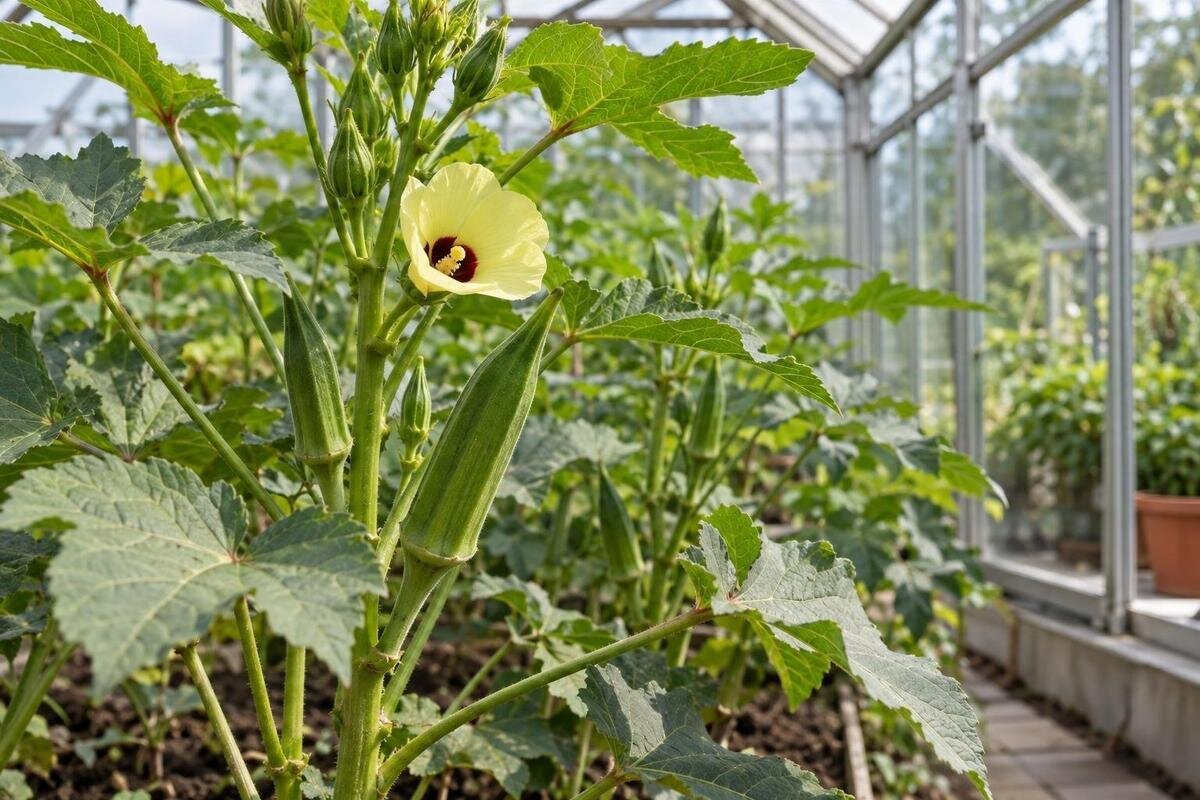
Greenhouse growing guide
Okra is a heat-loving crop, and greenhouse cover helps only when the growing space stays warm long enough to support flowering and pod development. In a short-season garden, a sunny afternoon can be followed by a cold night, so an unheated greenhouse does not automatically provide summer conditions. The practical decisions are when to sow, whether the structure offers enough light and room, how often to pick pods, and whether supplemental heat is worth paying to run.

Before choosing a greenhouse 1
Why okra needs more than daytime warmth
Okra is a heat-loving annual, not a crop that merely prefers a warm corner. Seed germination is strongest in warm soil, around 24–29°C, and plants make little progress when the root zone and nights stay cool. For transplanting, aim for soil at least about 18°C and wait until frost risk has passed unless you can reliably protect plants from cold. Overnight temperatures consistently in the mid-teens or warmer are a better signal than one sunny afternoon. These are working guides, not guarantees: varieties and local conditions differ. Check the seed packet and measure the bed itself, because greenhouse air can warm long before the soil. A brief warm spell does not cancel a cold forecast.
Greenhouse cover does not ensure consistent warmth. In sunshine, enclosed air can warm quickly; after sunset, an unheated structure may cool close to outdoor conditions. A midday reading therefore cannot tell you whether okra will keep growing overnight. Repeated cold nights can stall young plants and delay flowering and pod set, even without frost injury. Put a minimum–maximum thermometer near the future canopy, shaded from direct sun and away from a vent; in a soil bed, check the root zone too. Record readings over several nights, including cloudy days, before moving seedlings. A frost-free forecast is useful, but it does not show by itself that conditions in the greenhouse are warm enough for sustained growth.
Plan around the local warm season
Use your own frost-free calendar and summer pattern rather than a single Canadian planting date. In a short season, compare the cultivar’s stated days to maturity with the time your greenhouse can stay warm enough, then leave a buffer for cloudy, cool spells. Seed catalogues may count days from sowing or transplanting, and published figures describe favourable conditions; read the listing rather than treating it as a guaranteed first-pod date. Compare varieties on the same basis where possible. An early-maturing variety is often the safer trial, but it still needs warmth. Starting too far ahead does not solve a short summer if seedlings wait in small pots or go into cold soil.
Cover can extend the useful window at either end only when the structure supports warm growth. An unheated greenhouse captures sun and shelters plants from wind and rain, but does not reliably protect them from cold nights. Work back from when the bed and overnight air are likely to be warm, and decide how late you will keep the crop as autumn cools. While sketching a planting plan, the Classic aluminium greenhouse listing gives floor-area choices from 3.77 m² to 28.08 m². Use that range to compare space for plants and paths; it says nothing about heat retention or a frost-free growing season. If you have no temperature records for the site, gather them before committing a full bed.
Before choosing a greenhouse 2
Sowing and transplanting okra
Okra seed coats can be slow to absorb water. A brief soak before sowing may speed germination; follow the seed supplier’s directions, and if you nick a coat, do so lightly so the seed itself is not damaged. Sow at the depth recommended on the packet in an individual pot or deep cell filled with seed-starting mix. Keep the mix evenly moist and warm, ideally around 24–29°C, rather than waterlogged. Once seedlings emerge, give them strong light and enough space that their leaves are not crowded. Label each pot with its cultivar and sowing date. If germination is slow, check the mix temperature before assuming the seed is no longer viable.
Start only a few weeks before the likely transplant window; in many gardens, three to four weeks is enough, but local conditions and packet instructions should guide timing. Okra develops a strong taproot and can sulk after root disturbance, so avoid pricking seedlings out or keeping them root-bound. Individual pots let you move the complete root ball; compostable pots can reduce handling if the whole pot is planted as directed. Harden plants gradually on mild days, then bring them back under cover if nights turn cool. Moisten the root ball before transplanting and handle the pot or soil, not the stem. When comparing footprints for both crop and propagation space, the aluminium lean-to greenhouse listing shows options from 3.69 m² to 14.34 m²; confirm bed and staging dimensions before planning.
Allow room for tall plants and clear access
Okra often grows as a tall, upright plant with broad leaves, so crowding affects more than floor area: leaves can shade one another, access gets awkward, and air circulates less freely. As a starting layout, allow roughly 30–45 cm between plants and about 75–90 cm between rows where a row arrangement fits; follow the cultivar’s label if it calls for more room. In a narrow greenhouse, one well-spaced row may be easier to manage than squeezing in two. Leave a path wide enough to reach both sides of the bed without stepping into it, and keep doors, vents and harvest routes accessible.
Plan for the mature canopy and height, not the small seedlings you are setting out. Okra needs bright direct light, so consider whether its eventual shade will fall on shorter crops or block access to vents, glazing or work areas. Check a variety’s expected height where the seed supplier gives it, and allow overhead clearance; add a stake only if the plant leans or its instructions recommend support. Drawing beds and paths to scale makes the plant count clearer than measuring the greenhouse floor alone. The Limited Edition aluminium greenhouse listing includes floor-area options from 3.77 m² to 28.08 m²; compare its published footprint with your layout, then verify interior bed width, headroom and access.

Before choosing a greenhouse 3
Prepare a fertile bed or a deep container
Okra does best in fertile, loose, well-drained soil. A bed that stays saturated can damage roots, while soil that dries repeatedly makes steady flowering and pod growth harder. Loosen compacted ground before planting and use mature compost if the bed needs organic matter. A soil test is a better basis for correcting pH or nutrients than adding amendments by guesswork; aim for a well-drained, mildly acidic to neutral growing medium. Raised beds may warm sooner in spring, but they can dry more quickly, so check moisture below the surface. Avoid putting seedlings into a fresh, heavily fertilized mix, which can supply more nutrients than the young plants need.
Containers can work if a greenhouse bed is unavailable, but choose a deep, stable pot with drainage and enough volume for one mature plant; follow the cultivar or container supplier’s guidance rather than crowding several plants together. Small pots heat and dry quickly, so they need more frequent checks, and their mature canopy still takes room around the path. Keep drainage outlets clear and avoid leaving a pot standing in water. The T-shaped orangery greenhouse listing covers floor areas from 16.52 m² to 30 m², a reference when comparing beds, containers and walkways. The listed area does not show bed shape or guarantee that any particular number of plants will fit.
Manage greenhouse heat by day and night
Sunlit greenhouse days can become hotter than expected even when outdoor weather feels mild. Use a thermometer at plant height and open the available vents or doors as needed to limit excessive heat; do not leave a sealed space closed simply because the morning began cool. Air movement helps prevent stagnant conditions and lets wet foliage dry, but it does not replace checking readings. Warm daytime highs also cannot fully compensate for cold nights, so watch both ends of the daily range rather than one maximum. If cool-season crops share the space, consider where each crop sits and when it will need ventilation. Adjust openings to conditions rather than following a fixed routine.
An unheated greenhouse can help during sunny spells, but it will not hold a chosen minimum temperature through prolonged cold weather. Supplemental heat may protect growth overnight and lengthen the useful season; it also adds running costs and must be appropriate to the structure and crop area. Heating air does not instantly bring a cool bed to the same temperature, so continue to monitor the soil. The Bloomcabin Oasis Pyramid Greenhouse catalogue lists floor areas from 5.53 m² to 18.9 m²; area is only one input when estimating the space to heat. Ask a qualified heating professional about the exact structure, controls and safe installation rather than relying on a model name.
Before choosing a greenhouse 4
Water consistently and avoid excess nitrogen
Once plants are established, aim for even moisture through flowering and pod filling. Water deeply enough to moisten the root zone, then check below the surface before watering again; the top layer can look dry while deeper soil is still damp. In a greenhouse, a container may dry faster than a bed, especially on bright days. Water at soil level rather than routinely wetting foliage, and use mulch to slow evaporation without burying the stem. If foliage does get wet, watering early gives it more time to dry. A plant wilting at midday may be reacting to heat as well as dry soil, so check the root zone before adding more water.
Okra does not need a heavy nitrogen dose to set a crop. Start with fertile soil, and use a soil-test result and fertilizer label to guide any feeding; excess nitrogen can produce lush leaf growth at the expense of flowers and pods. Keep a simple log of watering, feeding and flowering so you can distinguish nutrition problems from cold nights or shade. Allow space to store watering and feeding supplies without obstructing access to the crop. The Limited Edition aluminium greenhouse with built-in storage is listed in floor areas from 5.52 m² to 28.08 m². Check how storage and access affect the actual planting area instead of counting the whole footprint as crop space.
Pollination and pest checks in a greenhouse
Okra is self-fertile, so a single plant can set pods; a second cultivar is not required simply for pollination. Insects can visit the flowers, but limited insect activity in a greenhouse does not automatically mean fruit set will fail. If flowers drop, check overnight cold, excessive heat, irregular moisture and plant vigour before assuming pollination is the cause. Watch several flowers over time rather than reacting to one dropped bloom. Keep a brief note of when flowering starts and whether pods follow; those observations can help distinguish an occasional dropped bloom from a recurring problem with pod set.
Inspect growing tips and leaf undersides weekly for aphids, whiteflies and spider mites, which can build up in warm protected spaces. Check new plants before bringing them into the greenhouse, remove weeds and spent leaves, and avoid overcrowding. Keep a clear route to plants so you can spot changes early; good airflow helps, though it does not guarantee pest prevention. Identify a pest before choosing a response, especially while edible pods are being harvested. For access planning, the Bloomcabin Prestige Greenhouse is listed in sizes from 3.77 m² to 28.08 m²; compare the footprint with inspection and harvest lanes, and verify ventilation details separately.

Before choosing a greenhouse 5
Pick pods while they are young and tender
Harvest is time-sensitive: okra pods become fibrous as they grow large, and they can lengthen quickly in warm conditions. For many varieties, pick pods when they are about 5–8 cm long and still tender, but use the cultivar’s guidance because shape and ideal length vary. Inspect every day or two once production begins; waiting for a weekly harvest can leave oversized pods. Cut rather than yank fruit from the stem, using clean snips if pods are firmly attached. If a pod feels tough, shorten the interval between checks and pick the next ones smaller. Keeping a harvest container nearby makes it easier to remove pods promptly.
Some okra plants have fine hairs on stems, leaves or pods that irritate sensitive skin; gloves and long sleeves are sensible if you notice discomfort. Handle cut pods gently, and do not leave mature pods on the plant unless you deliberately want seed; regular picking keeps the harvest focused on edible pods. As nights cool, flowering and new pod growth slow, so gather remaining tender pods before the season ends rather than expecting a greenhouse to produce indefinitely. Record sowing date, first flower and first harvest alongside the cultivar and overnight temperatures. Those notes show whether next year’s adjustment should be an earlier variety, a later transplant date or added heat.
When supplemental heat may be worthwhile
Before heating, decide what result you need: an earlier transplant, fewer cold interruptions or continued production later in autumn. A heater can address temperature; it cannot provide sunlight, correct poor drainage or shorten a variety’s time to maturity. If the greenhouse is already kept warm for other crops, sharing that heated period may make an okra trial more sensible. Heating a space solely for one short okra crop is difficult to justify without estimating energy use against the likely harvest. In an unheated structure, a small trial with an early cultivar can show whether your local season is long enough before you make a larger commitment.
Get an estimate based on the exact greenhouse, not floor area alone: construction, glazing, air leakage, enclosed volume, local temperatures, target minimum and hours of operation all affect demand. Ask a qualified professional to assess a suitable heating approach and controls; the greenhouse listing does not certify thermal performance or heating compatibility. For scale, the Bloomcabin Orangerie is listed with a floor area of 47 to 70 m². That figure can help compare planned growing space, but it is not an energy estimate; request performance information for the exact structure before treating heat as a crop solution.
Frequently asked questions
Can I grow okra in an unheated greenhouse in Canada?
Yes, if your local summer is warm and long enough, but an unheated greenhouse does not guarantee warm nights. Monitor soil and overnight air temperatures, and use your local frost timing as a guide. In a short or cool season, growth may stall and plants may not produce a useful harvest before autumn; try an early variety before relying on a large harvest.
How warm should the soil be before planting okra?
Wait until the growing medium is around 18°C or warmer, frost risk has passed or you can reliably protect the plants, and nights are mostly in the mid-teens or warmer. For germination, warm soil around 24–29°C is a useful target. These are practical guides; check the seed packet and conditions in your greenhouse.
How far apart should greenhouse okra plants be?
As a starting point, allow about 30–45 cm between plants and 75–90 cm between rows where the layout allows. Follow the variety’s directions if they call for more room. Include the mature canopy, a path for picking and access to vents when deciding how many plants will fit.
How often should I pick greenhouse okra?
Check plants every day or two once pods begin to form. Many varieties are tender when pods are about 5–8 cm long, but the best size varies, so use the seed supplier’s guidance. Large pods can become fibrous quickly; frequent picking helps you catch them while they are still tender.
Is it worth heating a greenhouse just for okra?
It is hard to justify without estimating the seasonal energy cost and likely harvest. Heating may make more sense if the greenhouse is already kept warm for other crops, or if a local estimate supports a longer productive season. An early-variety trial in an unheated greenhouse can help you judge the opportunity before investing.
Okra is most reliable when warm soil, mild nights and a long enough season line up. An unheated greenhouse can help, but its daytime warmth is not proof that nights will suit the crop. Choose an early variety, give plants room, monitor actual conditions and pick pods often. If the local season still falls short, compare the cost of heat with the harvest you can reasonably expect before investing in supplemental heating.
