
Large or Small Glass Panes for a Greenhouse?
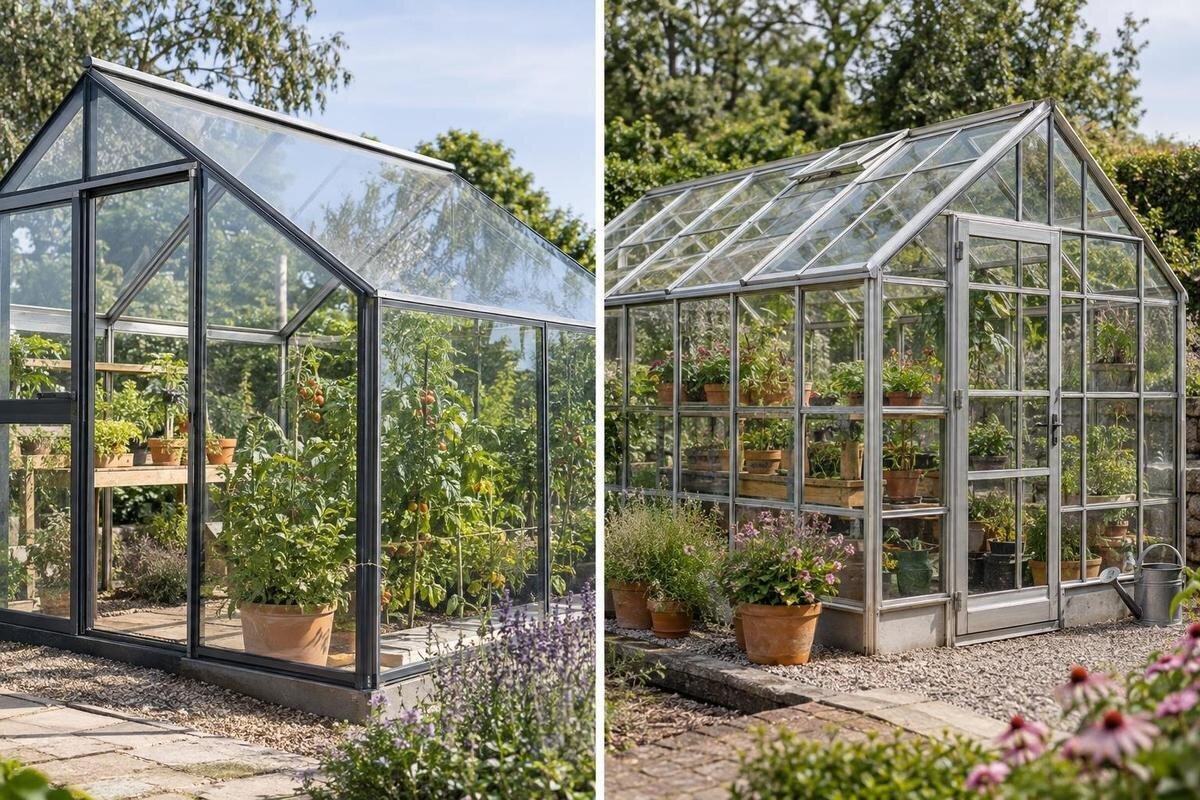
Greenhouse glazing guide
Choosing greenhouse glass by pane size is as much a question of handling and future repairs as appearance. One broad sheet can leave a clean, uninterrupted view, while several smaller panes create a visible grid and more separate pieces. Neither layout is automatically brighter, stronger or easier to live with. Compare layouts using the exact frame and glazing drawings, along with the replacement arrangements for the model you are considering.

What counts as a large or small greenhouse pane?
“Large” and “small” are relative terms in greenhouse glazing; there is no universal cutoff. Judge panes by the dimensions of one piece and the opening it fills, not only by the number across the building. A frame may use one broad sheet in a wall bay, a series of smaller pieces, or different sizes on the walls and roof. A pattern with repeated modules also differs from one with many unique shapes. Vents, doors, a ridge and changes in roof shape affect the layout. Two greenhouses with similar floor areas can therefore have very different pane patterns. Pane count describes how the glass is divided; by itself, it says little about total glazed area or performance.
Compare the same overall model size, elevations and glass specification before deciding that one option has larger panes. A compact frame with fewer openings is not directly comparable with a larger building containing more glass. Ask for a drawing tied to the model and selected size, showing walls, roof sections, frame members and any doors or vents. A Classic aluminium greenhouse listing can identify a product family, but its name or overall photo cannot confirm the dimensions of each glass piece. Check whether openings are listed separately and keep the drawing version that matches the configuration you are considering. Drawings at a consistent scale help with visual comparisons; listed dimensions confirm actual sizes.
How pane size changes a greenhouse’s appearance
With one broad sheet in a comparable opening, fewer bars interrupt the view, and the frame can look more open and contemporary. Several smaller panes create a regular grid that may feel more traditional or detailed. Neither layout is inherently more attractive: bar width and spacing, frame colour, greenhouse shape and the garden behind it all contribute. Repeated bars can echo divisions on nearby buildings, while a broad pane places more emphasis on reflections and the scene beyond it. At a distance, the outline and pane pattern read together; up close, each bar frames a smaller view. If you want to see across the greenhouse into the garden, judge the sightline from where you will actually spend time, not just from outdoors.
Consider roof and wall layouts separately. Roof crossbars can be prominent from outside, while side panes shape the view from inside; doors and vents interrupt both. Compare complete front, side and end elevations rather than a cropped product image. The Oasis Pyramid greenhouse is an example of how the overall greenhouse form can influence a design impression, but its name does not specify pane dimensions. Look at how bars line up at corners and across adjoining roof sections, and how the pattern appears from the garden’s main viewing point. A balanced front elevation may look different when the end or roof is visible as well.
Pane count does not measure daylight
Pane count alone does not tell you how much daylight reaches plants. That depends on total glazed area, the glazing specification, frame area, greenhouse orientation and surrounding shade. When the outside dimensions and glass are comparable, dividing an opening into smaller panes can introduce more frame divisions; how much clear glazing remains depends on the actual frame design. A broad sheet is not automatically a higher-light option, and a tight grid is not automatically darker. If technical documents give a light-transmission value, check that it applies to the selected glazing rather than inferring performance from the pane pattern.
Separate visual openness from growing conditions. Fewer bars can make glass look more continuous, but that does not prove that plants receive more useful light or that growth will improve. Nearby buildings and trees, seasonal sun angles and the glazing itself can matter more than the number of pieces. When considering the Limited Edition greenhouse with built-in storage, compare the glazing and frame details for the exact size with the site’s shade pattern. If a growing plan depends on particular light conditions, seek advice based on the plants and location rather than judging brightness from a product photograph.
Handling glass on the way to the frame
Glass has to travel from the delivery hand-off to the frame. All else being equal, a single large pane is generally more awkward to lift, turn and carry than a smaller individual pane; actual weight depends on its dimensions and specified construction. Check the narrowest gate, path, stairs, corners, overhead clearance and any storage area between the drop-off point and the greenhouse. Pay particular attention to tight turns: straight-line clearance alone can be misleading. A route that works for boxed components may not work for an oversized sheet. Smaller panes make each unit less bulky, but increase the number of pieces to receive, identify and move, so they do not necessarily reduce the total work.
Ask for the largest pane’s dimensions and, if available, its weight, along with details about packaging and where the delivery hand-off occurs. For the Prestige greenhouse, use measurements for the selected layout and size to assess the route. Confirm who is responsible for moving glass beyond the delivery point and whether a professional installer should handle it. A manageable floor area does not guarantee manageable glass. Conversely, a small-pane pattern still needs a clear, organized place to stage separate pieces so they are not confused or left in the way.

Installation logistics for different pane sizes
Pane size affects installation logistics, but it does not predict installation time on its own. A large unit may require more room, coordination and suitable handling equipment; smaller units involve more individual placements and careful sorting. Frame design, glazing method, site access, crew experience and the supplier’s instructions all affect the work. Ask who is expected to install the glass, what site preparation is needed, and whether the chosen configuration has a manufacturer-approved assembly method. Clarify whether one installer is responsible for both the frame and glazing or whether separate arrangements are needed. Do not treat pane size as a reason to alter the frame or substitute glass.
Roof access and working room are part of the same decision. A glass section on a sloped roof raises different handling and access concerns from a pane at ground level, regardless of width. If you are considering an aluminium lean-to greenhouse, ask the supplier or a qualified installer to assess the site access and working space against the specified glazing layout. Use installation information for the exact greenhouse and arrange qualified help where required. If access is restricted, share the relevant site details with the installer in advance so they can assess how the glass will be positioned in the frame.
What happens when a greenhouse pane breaks?
If one pane is damaged, ask whether that unit can be replaced on its own. In a system designed with separately retained panes, damage to one piece may be limited to that piece; replacing a large sheet, however, involves moving a larger replacement. Neither result can be assumed from pane count. The glazing retention system may affect whether adjacent components need attention, and damage to the frame can change the scope. The manufacturer may also have a specific procedure. The practical benefit of smaller panes may be a more localized repair, but pane count does not establish repair time or cost. Confirm what is replaced when one pane breaks and who assesses the surrounding frame.
Find out how to identify and order a replacement, whether the glass is a standard module or made for a particular opening, and whom to contact after damage. Keep the selected layout drawing and product identification with your records, and label the wall or roof location clearly. For a Limited Edition aluminium greenhouse, confirm replacement compatibility for the actual model, size and configuration. If glass breaks, keep people away from the area and contact the supplier or a qualified professional instead of improvising a repair. A photo taken from a safe distance can help show which bay is affected.
How to match replacement glass
Matching replacement glass involves more than measuring the visible opening. It must suit the greenhouse’s glazing system and the exact pane position; dimensions, glass type and thickness, edge details, any cut-outs or finish, and the way the pane is retained can all matter. Roof panes may have different shapes or orientations from wall panes, so a similar-looking piece from another bay is not automatically interchangeable. A photo with a ruler is not enough to verify a part, especially when the frame covers the glass edge. Have the manufacturer or a qualified glazier confirm the required specification from model records rather than ordering by rough measurement.
Before a replacement is needed, save the order confirmation and a dated copy of the pane drawing, along with any model or configuration reference the supplier provides. Record which wall or roof bay each pane belongs to; repeated openings can still differ. When reviewing a T-shaped orangery greenhouse, use the drawing for the exact version to identify the glass specified for each position. If you receive a revised layout before construction, keep the latest agreed copy and note what changed. This record is more useful years later than relying on memory or a photograph alone.
Compare pane schedules, not product labels
For a fair comparison between models or quotes, request the same views and level of detail: front and side elevations, roof layout, pane count, dimensions for each piece or a size schedule, and the glazing specification. Mark doors, vents and non-glazed sections separately so the total does not hide differences. Ask for separate details for roof, side and end-wall panes if they are not clear. If a drawing shows only the outer frame, request the glazing breakdown. Compare like with like: if overall size or glazing type differs, record that separately rather than attributing every change to pane size. Compare the actual pieces, not labels such as “panoramic” or “traditional grid.”
Put practical details beside the visual impression: the largest pane, number of different pane sizes, total piece count and information needed to identify replacements. One oversized pane can affect handling even if most of the greenhouse uses smaller pieces. For the Spacious Greenhouse, check that the drawing matches the exact model, selected size and options in the quote, and have unclear dimensions confirmed. If the drawing omits pane weight, ask whether it is available for handling planning rather than estimating from area alone. Confirm whether listed dimensions refer to the glass or the opening.

Cleaning and inspecting different pane layouts
Pane layout changes the pattern of ongoing care as well as appearance. Larger panes leave fewer internal divisions across a comparable opening, while small panes create more edges and frame intersections to inspect. That does not prove one layout needs less maintenance. Exposure, the glazing system, accessibility and frame condition also matter. Ask what the manufacturer recommends for routine checks and how to identify a visibly loose or damaged retaining component. Count roof and wall pieces separately, since their positions affect access. Follow instructions for the actual greenhouse instead of assuming that every frame is cleaned or maintained in the same way.
Cleaning is a reach-and-access question, too. Broad roof panes can be awkward to reach even when there are fewer of them; many small roof panes can mean more frame edges and separate surfaces. Consider whether vents, mature plants or nearby structures could make access difficult later, not just during installation. Do not lean on or climb on greenhouse glass. For high or hard-to-reach roof glazing, ask the manufacturer or a qualified service provider about safe cleaning and inspection. Pane count cannot substitute for a realistic maintenance plan, especially where the roof is not comfortably accessible.
Can roof and wall panes use different sizes?
A manufacturer may design different pane sizes for wall bays, end walls and roof sections; a drawing can show this without making the pattern a buyer-selectable option. If you prefer broad side glazing but want more manageable individual roof pieces, ask whether the exact model is offered in a manufacturer-approved layout that meets both priorities. Do not assume glass can be split, combined or moved between positions because the frame looks similar. Pane pattern, openings and retention system are designed together, so variations need confirmation for the precise greenhouse. A mixed pattern can also mean more pane sizes to identify for future replacements.
Review the full layout before treating a mixed pattern as a compromise. Compare the view from the main entrance, the appearance of roof bars outdoors and the largest sheet that must reach the site. Confirm which elements are fixed glazing, vents or doors, and ask whether the manufacturer documents different glass specifications for those positions. Request an updated drawing with each pane labelled and the agreed configuration listed. If no approved alternative is available, choose among the layouts actually offered or reconsider the model; this avoids turning a design preference into an unverified modification.
Frequently asked questions
Do larger panes automatically make a greenhouse brighter?
No. Pane size alone does not determine how much light reaches plants. Compare the total glazed area, frame divisions, glazing specification, orientation and shade around the greenhouse. A broad, uninterrupted view can look more open without proving that plants receive more light.
Are smaller panes easier to handle?
They can be easier to move one at a time, but the weight of each piece depends on its dimensions and glass specification. Smaller panes also mean more pieces to receive, sort and position. Ask for the largest pane size and plan around the actual delivery route.
If one pane breaks, can it be replaced on its own?
That depends on the greenhouse’s glazing system and the extent of the damage. Some designs allow individual panes to be replaced, but nearby retaining parts or the frame may also need attention. Confirm the process and replacement details with the manufacturer or a qualified glazier.
Does a grid of smaller panes make a greenhouse stronger?
Pane count alone cannot establish strength or suitability for a particular site. Those depend on the designed frame, glazing and installation details. Use the manufacturer’s information for the exact model, and get qualified advice for site-specific structural questions.
Can I change the pane layout after purchase?
Only if the manufacturer confirms the change is approved for your exact greenhouse. Pane positions relate to the frame, openings and glazing system, so do not assume that panes can be split, combined or moved between bays. Request an updated drawing before proceeding.
Neither one large pane nor many small ones is universally better. Large panes favour broad, less interrupted views but can be harder to move and replace; small panes can be easier to handle individually while creating a busier grid and more units to track. Compare the exact pane schedule with the handling route, approved installation information and replacement process. Choose the layout whose appearance and practical demands suit your greenhouse plans—not simply the one whose product photo looks most appealing.
