
Protecting Plants in an Unheated Greenhouse During a Late Frost
Late-frost planning
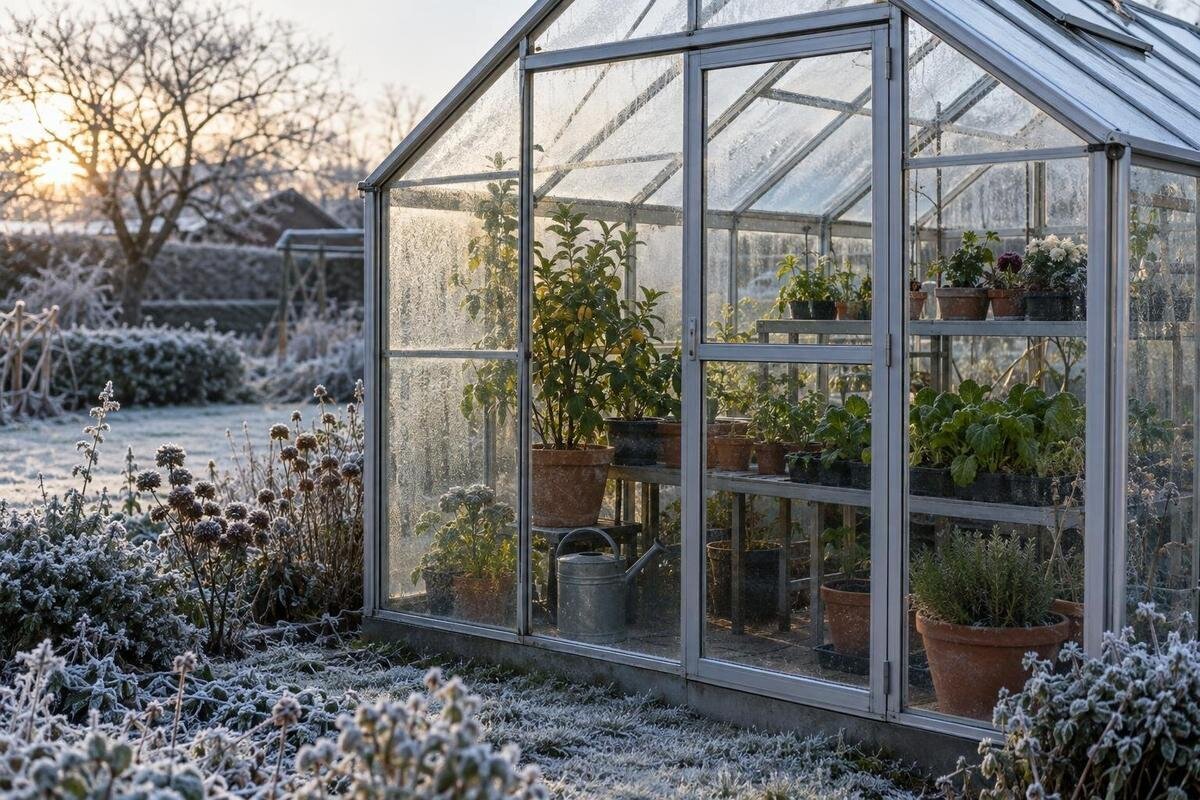
An unheated greenhouse can shelter plants from wind and rain, but it cannot promise a frost-free night. A practical late-frost plan combines the local forecast with temperatures measured beside vulnerable crops, then focuses effort on plants most likely to be damaged. Supported covers can reduce exposure, but they do not create heat. If temperatures are expected to fall below what a crop can tolerate, move it to a reliably protected place rather than trusting the greenhouse alone.

How an unheated greenhouse cools overnight
An unheated greenhouse changes exposure; it does not guarantee warmth. Its roof and walls can reduce wind and rain, while daylight may warm the air, soil, pots and benches inside. After sunset, that stored warmth begins to leave through the covering and openings. A door left ajar, a vent that remains open or gaps around fittings can speed cooling, and plants close to a cold surface may experience different conditions from those in the middle. The greenhouse can also heat quickly on a sunny afternoon and cool after sunset, so the day’s high does not predict the night’s low. A sheltered feeling is not a temperature reading.
Conditions depend on the structure, its condition, the weather and the surface beneath the crops, so there is no reliable indoor-to-outdoor temperature difference to apply to every greenhouse. Clear skies can encourage radiative cooling at exposed plant surfaces; cloud, wind and nearby shelter change the pattern. Daytime sun does not promise stored warmth for a long night. When comparing structures, review the Limited Edition Aluminum Greenhouse for the available configuration and confirm its operating instructions. A model name does not establish an overnight frost rating. Air and leaf temperatures can differ, and readings at a door may not match those at a far bed.
Use the forecast as a warning, then check conditions inside
Check the local forecast for overnight lows and frost or freeze alerts early enough to move trays and prepare covers before dusk. Treat it as an outdoor warning, not an indoor measurement: a forecast point may be some distance from your garden, while wind, cloud, elevation, hard surfaces and surrounding shelter can change conditions around the greenhouse. Pay attention to duration as well as the lowest figure; several hours of cold can matter more than a brief dip. When the forecast approaches a crop’s stated tolerance, act conservatively. Frost can form on leaves even if the reported air temperature does not describe the coldest surface in your growing area. Recheck if the forecast changes during the day.
Before sundown, inspect doors and vents, and note whether a bench sits beside glazing or near a draft. Take a reading at the plants you are most concerned about, then compare the greenhouse minimum with an outdoor reading if you have one. If you are planning a future growing area, review the T-Shaped Orangery Greenhouse configuration with plant placement in mind. Check the listed openings for the exact setup, then verify actual temperatures once the structure is installed. A quick walk-through also helps you gather covers before it gets dark instead of searching after the temperature has already dropped.
Prioritize crops by frost sensitivity and growth stage
Make a short list before deciding what to cover. Rank each crop using its plant tag, seed packet or a trusted growing reference, and note its stage: a newly emerged seedling, a recently transplanted start and a well-established plant may not respond alike. Warm-season crops such as basil, tomatoes, peppers and cucumbers are generally vulnerable to frost; cool-season crops may tolerate colder conditions, but hardiness varies by species, variety and growth stage. Do not assume that a crop labelled hardy can withstand every late freeze, especially when new growth is exposed. Tolerating a cool night is not the same as surviving ice on tender leaves. If a tray contains several varieties, check each label rather than assuming they share the same tolerance.
Mark the most vulnerable plants and those that would be difficult to replace. Move or cover these first, then use labels and observed condition to decide whether other crops need attention. If groups have different cold limits, avoid treating the greenhouse as one uniform growing zone; keep plants you may need to relocate easy to reach. When considering the Pyramid Greenhouse for your crop layout, check the exact configuration before assuming it will accommodate separate crop zones and supported covers. Organize plants into groups to move, cover or monitor so you can focus effort instead of treating every pot alike.
Move tender pots and seedlings to a safer space
Movable plants are the simplest to protect because you can take them out of the unheated space altogether. Shift tender pots and seedling trays to a location that you have reason to believe will stay within their needs; a heated room may work, but an unheated garage, shed or porch is not automatically frost-free. Check an alternative space with a thermometer if its conditions are uncertain. Move plants before the coldest part of the night, rather than waiting for symptoms, and keep them away from cold drafts and abrupt heat sources. Carry trays level and leave room between pots so leaves are not crushed. If indoor space is limited, put the most sensitive or hardest-to-replace plants first.
If plants must remain in the greenhouse, move small pots away from known cold edges only when your readings show a better location; the centre is not universally warmer. Grouping containers can make it easier to place one supported cover over several plants, but grouping itself adds no dependable heat. Keep a walkway clear so you can inspect and uncover them later. If a dedicated storage area would help you prepare, review the Limited-Edition Aluminum Greenhouses with Storage range. Check the actual storage arrangement and whether your covers, clips and thermometer will fit. Store supplies according to their care instructions so they are ready when a frost warning arrives.

Use supported covers without pressing them onto leaves
Use a breathable frost cloth or a purpose-made plant cover, and put supports between it and the leaves. Material resting on foliage can transfer cold where it touches and may crush or tear tender growth. Drape the cover over the whole plant and down close to the soil so it can hold a pocket of air warmed by the ground; covering only the top leaves leaves lower growth exposed. Secure the edges gently without tying to delicate stems, sealing a plant in an airtight bag or blocking access for inspection. Put the cover in place before the coldest hours, once daytime ventilation is no longer needed. A cover reduces exposure; it is not a heater.
Check the cover before nightfall: it should stay off the foliage, remain secure and put no pressure on glazing or vents. If using more than one layer, keep space between layers where practical; extra fabric cannot make up for an uncovered gap or temperatures far beyond a plant’s tolerance. Open or remove covers when the greenhouse warms, but check conditions if frost risk continues into the morning. When assessing the Bloomcabin Prestige Greenhouse, check whether the exact layout leaves room for your plants and freestanding cover supports. Do not assume its frame or glazing is an approved attachment point for improvised supports.
Protecting pots and the limits of stored warmth
Pots and trays need separate attention from beds. A small container holds less growing medium and is exposed around its sides, so it can cool differently from soil in a bed. Wrap the outside of vulnerable pots with insulating material if practical, leaving drainage holes open, and keep the foliage under its own supported cover. Move containers away from glazing, a draft or a cold floor only if another spot measures better; a bench, concrete slab or centre aisle is not automatically safer. Do not water solely because frost is forecast. Watering decisions should follow the plant’s actual needs, not serve as a substitute for protection.
Daytime-warmed soil and other substantial materials can release some stored warmth overnight, but how much depends on sunlight, volume, exposure and the length of the cold spell. Do not flood a bed or wet leaves in an attempt to make an unheated greenhouse frost-proof. If you use water containers as thermal mass, treat them as a modest buffer rather than an emergency heat source. When reviewing the Spacious Greenhouse range, use the configuration details to plan access and crop zones. Floor area alone does not identify cold pockets or establish frost protection; readings at plant level are more useful. Relocating vulnerable pots may matter more than rearranging the whole space.
Managing vents and shading during a late frost
Manage openings around the transition from day to night. When daytime ventilation is no longer needed, close doors and manually operated vents as the greenhouse instructions recommend; check an automatic opener’s normal operation rather than assuming it has closed. Reducing unnecessary air exchange can help retain some warmth already inside, but it cannot seal every structure or stop heat leaving through its covering. Do not block a vent permanently or alter its mechanism to chase a warmer reading. Use the controls as designed and note their positions so you can interpret your temperature readings the next morning.
Vents may need to be reopened once the sun raises the inside temperature; an unventilated, sunlit greenhouse can overheat even after a frosty night. Shading material is intended to limit strong daytime sun, not act as an insulating frost cover, and leaving it in place can reduce solar warming. Follow its maker’s directions and keep it distinct from a supported plant cover. If comparing options in the Aluminum Greenhouses range, check which vents are included in the selected configuration and how they operate. Verify shade accessories for compatibility with that specific model rather than assuming they will fit.
Measure temperatures at plant level
Use a minimum/maximum thermometer or suitable data logger to learn what the plants experience. Position its sensor near the foliage of the crop at risk, shaded from direct sun and not touching glazing, a pot or a cover. A sensor mounted high on a wall, in a sunny beam or beside a door may give a reading that does not represent the bed. If plants occupy a bench and the floor, or opposite ends of the structure, take readings at more than one position on a cold night. Follow the instrument’s placement instructions, and check the recorded minimum after the coldest part of the night, not just at bedtime.
Keep a simple log of the date, outdoor forecast or reading, indoor minimum, crop location, door and vent positions, and covers used. Humidity readings can help describe greenhouse conditions and condensation, but they do not replace temperature when judging frost risk. A quick photograph can show where a sensor sat, whether fabric touched leaves and which opening was closed, making comparisons more useful than memory. If considering a Lean-To Greenhouse for a future site, verify the exact layout and vent details, then plan where to measure each intended crop zone. Record whether damage appears beside a panel or near a draft.

When plants need a more protected space
An unheated greenhouse has no dependable minimum. If the forecast or your own log points to conditions below a crop’s tolerance for long enough to cause damage, move pots and trays to a reliably protected space, delay transplanting or keep tender starts indoors until the risk passes. Several layers of fabric may reduce exposure, but they do not supply heat and cannot guarantee safety in a severe or prolonged freeze. Use the crop’s own guidance rather than one universal frost threshold, because varieties and growth stages differ. When expected cold is beyond the protection available, relocation is the more dependable choice.
If recurring cold makes active heat necessary, use equipment intended for that setting and follow its manual; do not improvise with open flames, cooking appliances or unverified electrical equipment. Questions about safe fuel, electrical capacity, clearances or installation belong with a qualified professional who can assess the actual greenhouse and equipment. Keep the response practical: know which plants can be moved, which cover goes where and which crop-specific reading means a plant needs better shelter. For some crops, delaying the move into the greenhouse is more dependable than asking an unheated space to do a job it cannot do.
Assess frost damage after plants have thawed
After the coldest period has passed, let frozen foliage thaw before handling it. Frost injury may become clearer over time, so avoid cutting back every limp or darkened leaf at first light. Once damage is clear, remove tissue that is fully dead or rotting, using crop-specific guidance for plants you want to keep. Do not try to force recovery with extra fertilizer; return to the usual watering routine as the plant and growing medium require, and watch for new growth over the following days. A photograph before pruning can help you compare how the affected area changes. Keep plants protected from another forecast frost while you assess them.
Record which plants were exposed, the lowest readings at their locations, how long the cold lasted and whether covers touched foliage or openings stayed ajar. Compare affected and unaffected areas instead of judging success from one plant or one indoor reading. A photograph taken from the same position can help distinguish initial injury from later changes. For the next late-frost warning, move plants that fell outside their limits, adjust cover placement and keep sensitive seedlings in protected conditions until the forecast and logged temperatures support a safer move. Those details make your plan specific to your greenhouse and crops.
Frequently asked questions
Will an unheated greenhouse stay above freezing overnight?
Not reliably. Sunlight and shelter can moderate conditions, but warmth escapes after sunset and temperatures can vary across the greenhouse. A minimum/maximum thermometer placed near vulnerable plants will show what happens in your setup. Use those readings alongside the forecast to decide whether plants need moving before the next cold night.
Which plants should I move first?
Prioritize frost-sensitive warm-season plants such as basil, tomatoes, peppers and cucumbers, along with young seedlings, recent transplants and valuable potted plants. Check crop labels and growing guidance: tolerance varies by species, variety and growth stage.
Can I put a plastic sheet directly over plants?
Avoid letting plastic rest on leaves. Use supports to keep a cover off the foliage and extend it down near the soil. A cover can reduce exposure but cannot guarantee protection during a severe or prolonged freeze.
Should I close greenhouse vents overnight?
Close doors and manually operated vents when daytime ventilation is no longer needed, following the greenhouse instructions. Check whether an automatic opener has closed as expected. Reassess in the morning, when sun can quickly raise the temperature inside.
Does shade cloth protect plants from frost?
No. Shade cloth reduces sunlight; it is not an insulating frost cover and can reduce daytime solar warming if left in place. Use a separate, supported plant cover for temporary frost protection and follow the shade product’s instructions.
An unheated greenhouse provides shelter, but it cannot guarantee a safe minimum temperature for every crop. Sort plants by their needs, measure where they sit and use supported covers where they can help. Move vulnerable plants when the expected cold is beyond the protection available. A record of one cold night can make the next late-frost decision more specific to your plants and growing space.
