
Why Are Greenhouse Strawberries Misshapen?
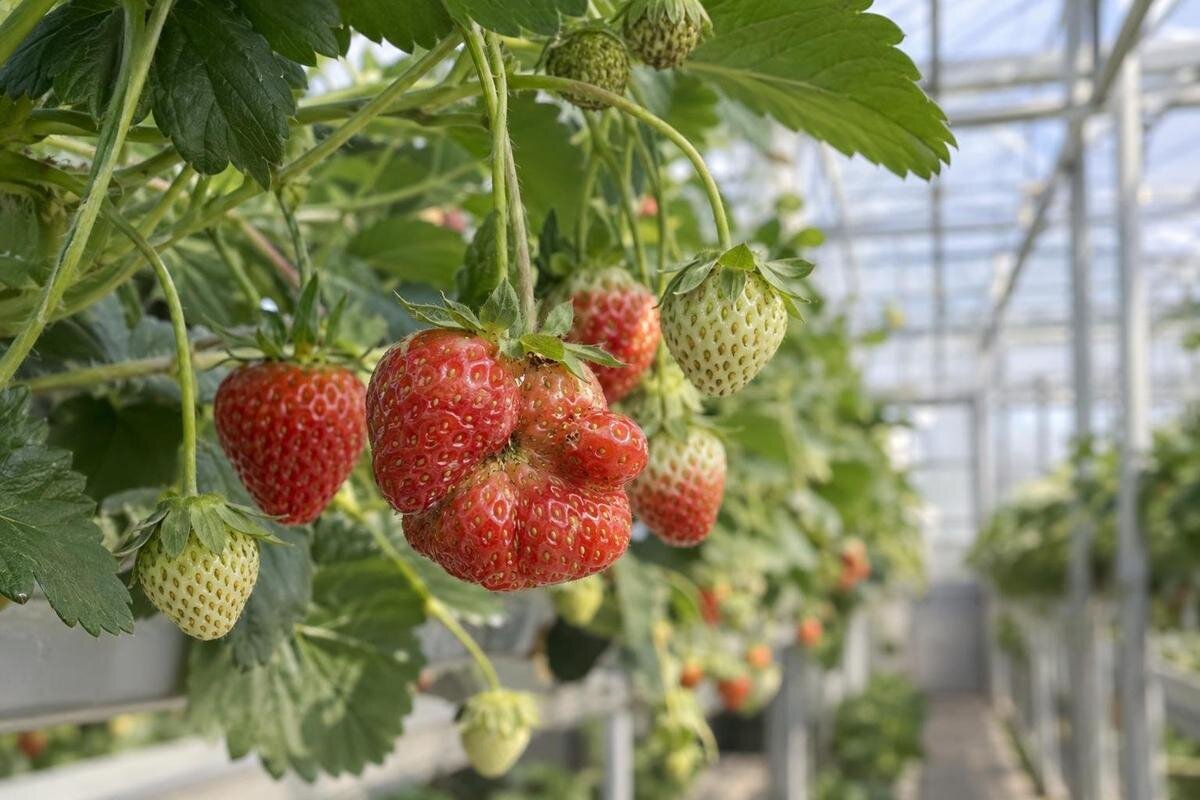
Greenhouse growing
Misshapen greenhouse strawberries often reflect something that happened while a flower was developing, but an uneven berry does not identify one cause on its own. Incomplete pollination is one possibility: parts of the flower may not develop into the same amount of fruit tissue. Temperature injury, inconsistent root-zone moisture, pests and normal cultivar differences can produce similar results. The strongest clues come from comparing flowers, young fruit, patterns across plants and conditions at bloom—not from judging one ripe berry in isolation.

What fruit shape can and cannot tell you
Strawberries are aggregate fruits. Their red flesh is the enlarged receptacle of a flower, while the small, seed-like achenes on the surface develop from individual fertilized ovules. As the achenes develop, they help signal nearby receptacle tissue to expand. If development is uneven across a flower, the flesh beside some achenes may grow less than the rest. The result can be a flattened side, a narrow tip, shallow hollows or an irregular outline. That pattern makes pollination worth checking, but it points to uneven development rather than identifying its cause.
Compare fruit from the same cultivar, flowering cluster and stage of ripeness. Cultivars naturally differ in shape, and fruit from different positions in a cluster may not match. One crooked berry is weak evidence of a pollination problem; repeated distortion across several flowers or plants is more informative. Note whether the fruit is uniformly small or whether one area has failed to fill, since those are different observations. Keep normal and affected berries in the comparison. Without a baseline, ordinary variation can be mistaken for damage. Describe the shape precisely in your notes: a narrow tip, a flattened side and a generally small berry are not interchangeable descriptions. Also record how many fruit are affected out of those examined. This gives you a clearer comparison than selecting only the most unusual berry from each plant. Mature shape is an endpoint, so use it as a clue to what happened earlier, not as a diagnosis on its own.
How pollination shapes a strawberry
A strawberry flower has many pistils, each with a stigma that receives pollen. Pollen must reach those stigmas for fertilization and normal development of the achenes. Because each achene is associated with a small area of the receptacle, incomplete development in parts of the flower can leave neighbouring flesh less expanded. A flower can look open and intact but still have uneven pollen transfer; a healthy-looking bloom is not proof that every pistil was fertilized. Later, a ripe berry may show the result, even though the process took place while the flower was open.
Greenhouse conditions change the opportunities for pollen transfer, not the flower’s basic biology. An enclosure may limit insect visits, while air movement can move some pollen; neither outcome should be assumed without observation. During flowering, watch whether insects visit open blooms and whether flowers in different positions receive similar access. If comparing a Limited Edition Aluminum Greenhouse, check the openings and access to flowering rows for the exact configuration you are considering. Include the planned crop positions in that comparison so you can assess access to the flowers once the beds or containers are in place. Self-fertility does not guarantee complete pollen transfer.
Inspect the flowers and young fruit
Look at several newly opened flowers, not only at old blooms or ripe berries. Check whether the petals and central receptacle appear intact, and note any darkening, bruising or other visible injury. A flower’s appearance cannot confirm that pollination is complete, but it can reveal damage that happened before fruit developed. Observe flowers in more than one part of the greenhouse and compare them with blooms on plants that later produce normal fruit. Keep separate notes for unopened buds, open flowers and flowers whose petals have fallen, rather than grouping them all as blooms. Record when you first notice an injury, even if its cause is unclear. This preserves the sequence of events instead of attributing every mark to the conditions on the day you inspect the ripe fruit. If there are few insects, record that too; a single glance at one flower is not enough to judge activity over the flowering period.
Take a clear photo of an open flower and its centre, then photograph a young green fruit from the same cluster and the berry again as it ripens. Include both a typical and a misshapen example, and label each image with the date, cultivar and plant location. On developing fruit, look for areas that remain poorly filled and for achenes that appear unusually small or undeveloped. These signs can support a pollination hypothesis, but injury and feeding can create similar patterns. Photos taken at several stages are more useful than a close-up of a ripe berry alone, because they preserve clues about when the distortion began.
Heat and cold during flowering
Temperature stress can interfere with flower function and fruit development. A greenhouse may warm quickly on a sunny day, even when outside air feels cool, and conditions at the flower canopy can differ from those near a door or at floor level. Record the minimum and maximum temperature close to the flowering plants, along with dates, ventilation changes and outdoor conditions. Avoid relying on one reading from elsewhere in the structure. A series of readings around bloom is more useful for diagnosis than a remembered hot afternoon, particularly if only some rows or flowering clusters are affected.
Cold snaps can slow flower development, and frost can injure exposed flowers before any fruit is visible. A brown or blackened flower centre shortly after a cold event raises suspicion of injury, though an old flower can darken as it ages. Fruit that develops unevenly after a spell of extreme conditions may reflect flower stress, incomplete pollination or both. If you are comparing layouts such as a Pyramid Greenhouse, consider the actual exposure and temperature readings at the crop; a structure’s shape does not establish how warm or cold a particular flower became. Cultivar and flower stage also affect how a given event shows up.

Water and root stress can affect fruit development
A plant under water stress may not support steady flower and fruit development. Both a root zone that becomes too dry and one that stays saturated can affect plant function, but neither produces a distinctive strawberry shape that proves the cause. Check moisture below the surface in several places, rather than judging by the top layer alone. Look for other clues, such as wilting, weak growth or leaves that differ from those on healthy plants. In beds, containers and other growing systems, drainage and the way water reaches each plant can vary, so compare affected and unaffected areas before adjusting irrigation. Include the timing of your checks: a moisture observation just after watering is not the same comparison as one made before watering. When checking two areas, use similar timing and note which plants share an irrigation routine. Otherwise, differences in when you looked can be mistaken for persistent differences between beds.
Do not respond to irregular fruit by automatically watering more or adding fertilizer. Note recent watering, inspect the growing medium and check whether symptoms appear across the whole plant or only on fruit from particular flowers. Nutrient problems can affect vigour, but fruit shape by itself is not a nutrient test. If planning a Prestige Greenhouse with Metal Base, assess the intended growing beds and their drainage separately from the structure. Include beds and containers in your plan, with enough access to inspect their growing medium and compare plants. A soil or growing-medium test is a better basis for changing fertilizer than one unusual berry.
Pests, flower injury and cultivar variation
Incomplete pollination is not the only cause of poorly filled fruit. Plant bugs, including tarnished plant bugs where they occur, can feed on flowers or developing achenes and leave areas that do not expand normally. Inspect blossoms and very young fruit for insects or signs of feeding, and check several plants rather than relying on one berry. A deformed fruit alone does not confirm a pest. Keep observations of insects separate from your interpretation of the damage: finding an insect and identifying it as the cause are different steps. If you seek help, include a clear description or photograph of what you found, not just the affected berry. Note whether the same kind of distortion appears on many plants, whether it follows a particular flowering period and whether you can find insects at the relevant stage.
Physical injury and cultivar traits are other possibilities. Compare the same cultivar at a similar stage, and notice whether an unusual shape is typical across its fruit or limited to a few flowers. If a growing area includes storage, mark crop rows separately when mapping symptoms. For instance, with a limited-edition greenhouse with built-in storage, distinguish the planted area from the storage area; the overall structure footprint does not show where the affected flowers were growing. This record helps connect symptoms to the crop’s location without treating the greenhouse itself as a diagnosis.
Look for patterns across plants and greenhouse zones
Map which plants and flowers are affected. Record the row or bed, the flower cluster, the date of bloom and whether nearby fruit developed normally. A few distorted berries in one cluster suggest a different pattern from similar fruit across an entire row or greenhouse. Compare positions near doors, walls, vents and shaded areas, but treat location as a clue rather than proof: several factors can overlap. Note watering differences and any cold or hot spell at the same time. A simple sketch with affected and unaffected plants marked can make a scattered pattern easier to see.
For a growing space with distinct areas, keep records for each planted zone rather than treating the whole greenhouse as one environment. In a T-shaped orangery greenhouse, for example, label each planted area on a sketch and take readings where the flowers are. A measurement at the entrance may not represent conditions elsewhere. Match photos and temperature notes to the same bed or cluster, and compare fruit from similar flowering dates. That lets you test whether distortion tracks a particular location, event or cultivar instead of relying on memory after the berries ripen.
Air movement, ventilation and crop layout
Air movement can help pollen move, but ventilation is not a guarantee of complete pollination. It also matters for managing heat: a crop can experience different conditions depending on where it sits relative to openings, shade and other parts of the structure. Observe the plants during the day and note when ventilation changes. Compare conditions near the flowers with those in another part of the greenhouse. A single sunny or sheltered spot does not, by itself, explain a misshapen berry; interpret it alongside the distribution of affected fruit and your flower records.
When comparing aluminum greenhouse options, check the documented vent positions, access and usable growing layout for the exact model you are considering. Mark the proposed crop rows in relation to those openings rather than comparing overall dimensions alone. In an existing greenhouse, note which vents are open and where flowers are relative to them; do not assume one setting suits every day or location. If a temperature issue is suspected, use crop-level readings to guide changes and compare the next flowers that open. Keep the date of any ventilation adjustment with those readings so you can distinguish conditions before and after the change.

What to change when pollination seems limited
If flowers look intact but there are few pollinator visits, observe open blooms over several days and in different parts of the greenhouse. Where hand-pollination is appropriate, gently move a clean, soft brush across the centre of an open, dry flower to carry pollen between its parts. Avoid pressing on the flower or disturbing wet blooms. Try this on a limited group and compare the resulting fruit with fruit from flowers left untreated. Choose flowers of the same cultivar opening at a similar time, and label their clusters clearly enough to recognize them later. Record which flowers you brushed rather than relying on their position from memory. Include all the resulting fruit in the comparison, not only those that look better. The exercise can help you assess whether improving pollen transfer makes a difference; it does not establish that pollination was the only problem.
Include practical access in any layout review. When comparing a lean-to greenhouse, plan how you will reach flowers on both the wall side and the aisle side, and verify the openings and access for the exact setup. Allow for the planted layout when assessing that reach, rather than judging access in an empty structure. If notes instead point to heat, cold or root-zone moisture, address the condition you actually observed and follow subsequent blooms. Avoid changing several factors at once: if fruit shape improves, a simple record of what changed makes it easier to understand why.
When to ask for a local diagnosis
Seek local horticultural help if distortion is widespread, keeps recurring or appears alongside unusual plant or flower symptoms. A crop adviser, local extension service or plant diagnostic clinic can assess signs that are hard to distinguish from photos, including possible pests or injury. Bring images of open flowers, young fruit and ripe berries, plus the cultivar, dates, affected locations and temperature and watering notes. If you are asked to provide a sample, follow the service’s instructions so it arrives in a useful condition. Avoid choosing a pest treatment from fruit shape alone.
If the pattern points to a persistent layout or temperature issue, map the crop before planning a structural change. The Spacious Greenhouse listing gives a range of 47 to 70 m²; confirm the exact option and treat its footprint as different from the area available for planting. Mark beds, paths, access and the intended position of flowers before drawing conclusions about space or airflow. More floor area alone does not guarantee even conditions or better pollination. Keeping this planning separate from the immediate diagnosis helps you avoid replacing a structure when the evidence instead points to bloom-time stress or another cause.
Frequently asked questions
Can poor pollination cause misshapen strawberries?
Yes. A strawberry flower has many pistils, and uneven fertilization can leave parts of the receptacle less developed. It is a possibility when lopsided fruit recurs and some areas appear poorly filled, but shape alone cannot rule out cold injury, pests or other stress.
How can I tell incomplete pollination from cold damage?
A ripe berry may not provide a clear answer. A flower centre that turns brown or black after a cold event raises suspicion of frost injury, while uneven development across several fruit can point to incomplete pollination. Photograph open flowers and young fruit, and compare them with your temperature notes; the causes can overlap.
Do greenhouse strawberries pollinate themselves?
Strawberry flowers are generally self-fertile, but pollen still has to reach their many stigmas. In a greenhouse, fewer insect visits or limited pollen movement can leave some parts unfertilized. Self-fertility reduces the need for pollen from another plant; it does not guarantee complete pollination of every flower.
Should I hand-pollinate every flower?
Not automatically. First observe pollinator visits and compare several blooms. If visits are scarce, you can gently move pollen across the centre of open, dry flowers with a clean, soft brush. Avoid pressing on the flower, and check whether fruit from later blooms develops more evenly.
Should I add fertilizer or water if the berries are irregular?
Not on the basis of fruit shape alone. Check root-zone moisture, drainage, leaves and overall plant vigour, and compare affected plants with healthy ones. Correct a demonstrated watering issue; use an appropriate soil or growing-medium test before changing fertilizer.
Misshapen strawberries are best read as a pattern, not a verdict. Repeated lopsided fruit with uneven development may point towards pollination, while a cold event, flower injury, feeding evidence or broader plant stress can change the picture. Compare fruit from the same flowering period, keep close-up photos and notes, and adjust only a condition supported by what you observe. If the clues remain mixed or distortion continues, a local crop specialist can assess the plants and growing environment together.
