
Can a Greenhouse Have a Glass Roof and Polycarbonate Sides?
Greenhouse glazing guide
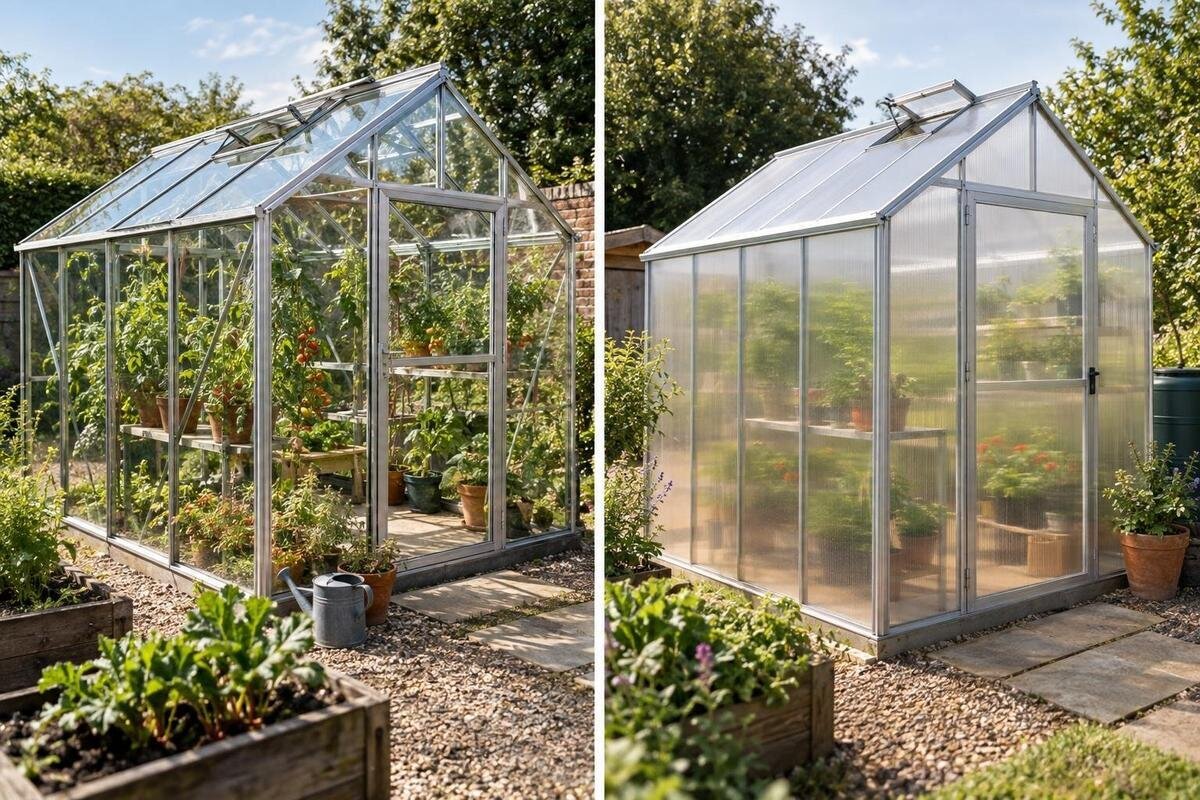
Yes—a greenhouse can have a glass roof and polycarbonate sides, but only when the manufacturer designs and documents that combination for the specific model. It is not a simple swap of one panel material for another: the frame, glazing supports, seals, drainage and roof specification all need to suit the supplied parts. Before comparing appearances or prices, identify the exact model and size, ask for the glazing layout in writing, and confirm the configuration is suitable for your site. A material name or product photo alone cannot establish compatibility.

Before you choose 1
Yes, if the greenhouse is designed for the combination
A greenhouse does not have to use the same glazing material on every surface. A manufacturer can design a glass roof with polycarbonate side walls, but both materials must form part of one complete, approved system. Roof panels and wall panels occupy different positions, meet the frame in different ways and face different exposure. The frame profiles, glazing bars, retainers, gaskets and drainage paths have to suit the specified panels. Approval needs to cover the combination as an assembly, not merely state that each material is available separately. A photograph—or a general statement that the frame is aluminum—does not prove that your chosen model accepts the mix.
Ask whether mixed glazing is available for the greenhouse model and version, selected size, and any openings or options you want. The Limited-Edition Aluminum Greenhouses with Storage listing gives an area range from 5.52 to 28.08 m²; that identifies a product family, not the glazing choices available in every size. Establish which variants support the combination before comparing their appearance or price. A list offering glass and polycarbonate separately does not tell you whether they can be ordered together, or which surfaces each option covers. If the combination applies only to certain sizes or layouts, have that limitation stated clearly so that you compare eligible configurations rather than assume every model in the range offers the same choices.
How the mix changes light and the view
Putting glass above and polycarbonate at the sides changes both the view and the way daylight enters. Clear glass usually gives a more open view through the pane; polycarbonate ranges from relatively clear sheet to panels that visibly soften or diffuse the view, depending on construction and finish. There is no reliable brightness ranking from the material names alone: tint, coatings, surface condition, thickness, glazing bars and shade all affect the result. For growing, ask for comparable light-transmission figures and whether each one describes direct transmission, diffusion or another measured property. Figures produced on different bases may not be directly comparable.
Think separately about the view at eye level and the light reaching the plants. A diffusing side panel may soften the view across a path; a clear roof keeps the upward view more open, but the exact effect is product-specific. Ask to see the proposed panel type, not a photograph of another greenhouse. For the Bloomcabin Prestige Greenhouse, request the selected variant's glazing map and panel descriptions; its name does not confirm a glass roof or polycarbonate walls. Samples viewed outdoors can help you judge appearance and privacy, while measured light data is a better basis for comparing light transmission. Consider the sightlines from your planned seating or working position, as well as the view into the greenhouse from the garden.
Before you choose 2
Check the frame and glazing system for both materials
Glass and polycarbonate panels are not interchangeable simply because their dimensions appear similar. Their weight, stiffness, edge details and movement as temperatures change differ by panel type and dimensions. A glazing system must support each panel appropriately, retain its edges and allow any movement specified by its designer. That involves more than whether a sheet can be pushed into a channel: rebate depth, gasket shape, glazing-bar spacing, clips and the transition between roof and wall may be material-specific. A panel that appears to fit can still have inadequate edge support or the wrong retaining components, affecting the fit and seal.
For the Classic aluminium greenhouse, or any model you compare, ask for a drawing showing a roof bay and roof-to-wall junction for the requested combination. It should identify the glass and polycarbonate types, panel thicknesses, retainers, gaskets and support details rather than label both areas only as glazing. Confirm that the drawing applies to the exact size and version, since a general model page does not establish that another panel will fit. Ask whether the specified parts are supplied as a matched set and whether the panel sizes are listed for that frame. Do not assume a similar-looking profile or sealant is interchangeable; the transition is a designed joint, not just a finishing strip.
Confirm the glass roof suits the site
A glass roof must be assessed as part of the complete greenhouse structure, not by looking at a pane in isolation. Roof glazing, its supports, frame connections and the base all participate in carrying site forces. Snow accumulation and wind exposure vary with location and site conditions, so the approved roof package and configuration matter. Ask what type of glass is specified and whether the manufacturer intends it for that roof application. Request documentation that applies to the exact model, size and glass-roof/polycarbonate-side combination at your location. A generic pane description, a neighbour's greenhouse or an online rule of thumb cannot confirm site suitability.
The Limited Edition Aluminum Greenhouses range is listed from 3.77 to 28.08 m²; its area range helps identify a size but is not a snow or wind rating. Ask what site conditions the manufacturer's documents cover and whether they apply to the complete greenhouse, including its openings and supports. Canadian sites can have very different winter exposure, so a broad label such as all-season is not a substitute for relevant documentation. If the information does not cover your location, or the supplier cannot identify the roof specification for the selected configuration, pause rather than estimating a safe limit yourself. A qualified building professional can clarify what further review is appropriate.

Before you choose 3
Consider light at plant level and along the sides
Side glazing contributes light from lower angles that a roof-only description misses. The amount reaching a bench or low-growing plants depends on panel transparency or diffusion, orientation, seasonal sun, nearby buildings and trees, and where shelving or tall plants stand. A glass roof cannot automatically compensate for a shaded wall or a side panel that transmits less light than you expect. Sketch the main growing zones and note which sides receive morning, midday or late-day shade; observe the proposed footprint at more than one time of day if possible. Then ask for light information for the exact panels proposed for those sides. Material labels do not promise a particular growing result.
If you are evaluating the Aluminum Lean-To Greenhouses, include the adjoining wall and existing shade pattern in the comparison; side light depends on the structure's real surroundings. The same check applies beside a fence, hedge or building. Consider the view from inside as well: clear panels may suit a sightline, while diffusing panels alter transparency without necessarily blocking all daylight. Ask whether the quoted polycarbonate is solid or multiwall, and get a sample or product description tied to the selected option. If plants will be trained against a wall, record their height and access needs before deciding which panels should be clear.
Ask how the joints, drainage and ventilation work
Roof and wall panels meet at joints that must shed water and keep the glazing seated. With a mixed system, ask which gaskets, flashings, edge treatments and drainage paths belong at the junction, and whether the manufacturer provides a drawing for them. Do not assume an extra bead of sealant can correct an incompatible fit or improve an unapproved design. Greenhouses hold moist air, so condensation can appear on cool surfaces; glass-and-polycarbonate choices alone do not control it. Ventilation, drainage and the complete enclosure design all matter. Ask how the proposed layout manages moisture and keeps the specified openings and drainage channels clear.
A model's outline does not reveal its joint details. For the Pyramid Greenhouse, for example, request the roof-to-side section and a panel schedule for the exact version rather than assuming details from a different roof form transfer. The drawing should show how the material change is treated, where water is directed and how any vented openings interact with the glazing. If the selected polycarbonate is multiwall, ask how its edges are finished and whether specific moisture-management details apply. Get the manufacturer's clarification before ordering; do not improvise a joint on site. This is a design and assembly question, not a cosmetic choice.
Before you choose 4
Plan for cleaning and replacement panels
Care requirements depend on the particular glass, polycarbonate construction and any surface treatment. Ask which cleaners and tools are approved, whether a coated or UV-protected face must point a particular way, and how the manufacturer says to clean the roof without standing on the glazing. Avoid assuming that every product labelled polycarbonate has the same scratch resistance, coating or cleaning tolerance. Keep care instructions with the model and panel schedule. An abrasive pad or unsuitable cleaner can damage a surface, and removing a film or label without checking its purpose may create avoidable problems. Confirm what the manufacturer says about routine inspection of seals and edges too.
Replacement planning is equally model-specific. Ask whether individual roof panes and wall panels can be identified by part number and what dimensions and material details are needed to match them; do not assume any sheet sold under the same material name will fit. The Spacious Greenhouse range is listed from 47 to 70 m², but area does not identify a replacement panel or confirm its future availability. Keep the selected model, size and configuration on file, with roof and side materials recorded separately. Ask the supplier where replacement guidance is documented and which panel identifiers you would need when ordering a replacement for a particular roof or wall position.
Compare complete glazing specifications
A useful comparison records glass type and thickness, polycarbonate construction and thickness, coatings or tint, light information, panel locations, frame and glazing components, ventilation openings, seals and drainage details. It should also state whether the mix is a standard manufacturer configuration or an individually reviewed option, and which components are included in the quoted package. Keep material descriptions specific: two offers that both say glass roof and polycarbonate walls may not describe equivalent panels or glazing systems. If cost matters, request comparable written quotes for the same size, openings and approved configuration; mixed materials do not automatically mean a lower or higher total price. Note any exclusions or substitutions before comparing totals.
Area alone cannot make two greenhouses like-for-like. The T-Shaped Orangery Greenhouse listing spans 16.52 to 30 m²; use the selected size as an identifier, then compare its plan, elevation and glazing schedule with the alternative. Ask whether the roof and side panels appear together in the documents, whether separate approval is needed and whether any option changes support or junction details. Two offers using the same material labels may describe different panel constructions. Record unanswered items instead of filling them in from a catalogue image. A fair comparison describes the configuration that would actually be supplied, not a hypothetical panel mix.

Before you choose 5
Do not modify a standard greenhouse without approval
It can be tempting to swap the side panels in a standard kit because a sheet seems to fit, or to buy a glass roof and separate polycarbonate walls. Appearance and nominal dimensions do not establish that the frame will support, retain and seal both materials as one system. Changing panel material can alter edge support, clearances and how a joint behaves as temperatures change; an unapproved substitution may put the greenhouse outside the configuration its maker designed. Do not choose by thickness alone or follow instructions for another model. Avoid altering bars, clips, channels or seals unless the manufacturer has authorized that exact change.
If you already own a greenhouse, record its make, model, size and version, then ask the manufacturer whether the proposed change is an approved conversion and what revised parts and drawings are required. A qualified greenhouse professional can help review an older structure when records are missing, but that does not automatically make a conversion part of the manufacturer's design. If written approval cannot be obtained, retain the original specification or choose a greenhouse supplied for the desired mix rather than experimenting with panels. Identify the roof and each side separately in your request, and ask for any revised assembly instructions along with approval.
Get the configuration documented before ordering
Ask for a document set that ties the offer to the design: model and version, selected dimensions, a plan or elevation marking the glass roof and polycarbonate walls, a cross-section of the transition, and a panel schedule with material descriptions. Include the manufacturer's information on site loads, assembly, maintenance, ventilation and drainage. The documents should identify whether the panels, gaskets and retainers shown are part of the quoted configuration or additional selections. A document for a glass roof on one greenhouse and a polycarbonate wall option on another does not establish that the combination is approved on yours.
Read the documents against the final order rather than treating a verbal assurance as enough. The model, size, glazing positions and required options should match across the quote, drawing and specification; ask the supplier to correct any mismatch before purchase. Check that the drawing has a version or revision identifier and refers to the configuration being supplied. If site conditions, roof capacity or connection details remain uncertain, pause for the manufacturer or a qualified building professional to clarify them. When local review is applicable, confirm requirements with the relevant local authority or professional instead of assuming a generic greenhouse specification answers every site question. Keep the final records for assembly, care and future replacement.
Frequently asked questions
Can I add polycarbonate sides to a greenhouse that has a glass roof?
Only if the manufacturer confirms that combination for the exact model and size and provides compatible parts and instructions. Similar-looking panels or a frame that accepts glass do not prove the change is approved.
Will polycarbonate sides make the greenhouse warmer?
Not necessarily. The result depends on the specific panel construction, thickness, joints, ventilation and other parts of the enclosure. Ask for performance information for the exact configuration instead of assuming that the material name predicts the temperature inside.
Does a glass roof let in more light for plants?
Not in every greenhouse. Light depends on the glass and polycarbonate specifications, coatings, diffusion, glazing bars, shade and orientation. Compare information for the proposed panels and consider how light reaches both the roof and sides.
What should I check for a greenhouse in Canada?
Ask for documentation covering the complete greenhouse, the proposed glazing combination and your site conditions, including relevant snow and wind exposure. If the documentation does not cover your site, have the manufacturer or a qualified professional clarify the design.
Can I use any polycarbonate sheet as a replacement side panel?
No. The sheet must match the approved panel specification and work with the frame, edge support, retainers and seals. Ask the manufacturer to identify the correct replacement; the word polycarbonate alone does not establish a fit.
A glass roof with polycarbonate sides is possible, but the material pairing itself is not proof of compatibility. What matters is the complete, approved greenhouse specification: the frame and joints, the panels, the roof documentation and the conditions at the site. Compare those details together, and treat an undocumented mix as unverified rather than as a straightforward upgrade.
