
Planning a Greenhouse for Cacti and Succulents
Greenhouse growing guide
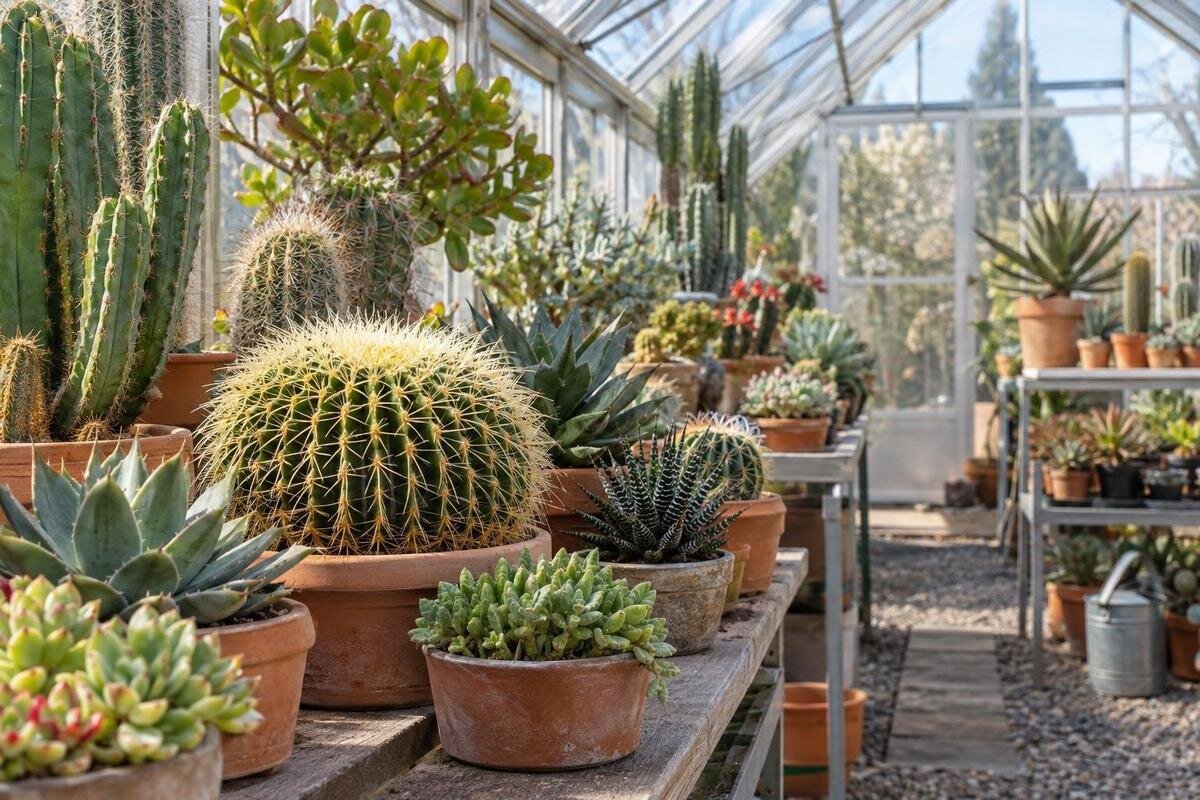
Planning a greenhouse for cacti and succulents begins with the plants, not with a fixed desert setting. A collection may include sun-loving desert cacti, frost-tender rosette succulents and forest cacti that prefer filtered light and more regular moisture. A greenhouse can keep some rain off pots and extend the growing season, but it can also overheat quickly and is not automatically frost-free or dry. Map light, airflow, watering and winter needs by plant group before selecting a footprint or equipment.

Decide what the greenhouse needs to do
Conditions should follow the plants, not the other way around. Cacti belong to the succulent group, but succulents grow in habitats with very different light, rainfall and seasonal temperatures. Desert species, high-elevation plants, frost-tolerant stonecrops and forest cacti are not interchangeable. A greenhouse can reduce direct rainfall and extend the growing period, yet sunlight can raise temperatures quickly and humid air can slow drying. Glazing does not keep pots dry by itself, and an unheated structure is not automatically warm in winter. Treat it as an environment you manage, not a ready-made desert.
Choose a main purpose before comparing models: shelter a collection from prolonged rain, provide a bright spring-to-autumn growing space, hold tender specimens through winter, or combine these jobs in separate areas. They require different conditions. Rain shelter can be useful even when plants spend part of the year outdoors; overwintering frost-sensitive pots needs dependable temperature management; encouraging winter growth also requires suitable light. Write down which plants must stay inside, when pots need to move, and whether some need a cooler seasonal rest. If you want active winter growth, include the available light as well as temperature in your plan. In Canada, compare these needs with conditions at your site rather than assuming one winter profile fits every region.
Group plants by light, water and cold tolerance
Make an inventory by botanical name before choosing a size or setting. For each plant, record its light preference, active-growth period, watering pattern, sensitivity to damp or cold, and the lowest winter conditions recommended for that species or cultivar. Use a reliable plant-specific reference where a nursery tag is vague; common names and care labels can cover several different plants. Note whether a stated cold limit assumes a dry root zone or a particular seasonal rest. Keep the name beside the pot and flag anything uncertain. Then sort the collection into workable groups, such as strong-light and filtered-light plants, winter-dormant and actively growing plants, and those that can remain cool versus those that need frost protection.
Examples show why a blanket setting fails. A cold-adapted Opuntia fragilis may tolerate outdoor cold that would damage many Echeveria, while Sempervivum often handles outdoor cold better than a frost-sensitive rosette; species, cultivar, drainage and pot exposure still matter. Schlumbergera, a forest cactus, generally calls for bright filtered light and more regular moisture than an arid desert cactus. These are useful contrasts, not universal temperature guarantees. The listed area options for Lean-To Greenhouses run from 3.69 to 14.34 m²; compare the selected plan with your pot and bench count, since total floor area is not all clear growing space.
Plan bright light without sudden exposure
Set light by plant group and season rather than treating full sun as universal. Many desert cacti and sun-loving succulents need strong light to maintain compact growth, but Haworthiopsis and Gasteria often suit bright, filtered conditions better than prolonged, scorching afternoon sun. A plant moved from a dim indoor location into direct greenhouse sun may scorch. Stretched, leaning growth can point to insufficient light; bleached or browned patches after a sudden move can indicate excess exposure, though watering and heat can also contribute. Treat these signs as reasons to check conditions, not as a diagnosis from appearance alone.
Look at the site at different times of day and through the growing season. Trees, fences and nearby buildings can block low winter sun or cast afternoon shade, while summer sun through glazing can create stronger heat than an outdoor reading suggests. Acclimate plants to brighter conditions gradually, and use adjustable shade where a group needs protection; permanent heavy shade may leave other benches too dim. For a mixed collection, mark the brightest, intermediate and least-exposed positions, then assign plants accordingly. If comparing Limited Edition Aluminum Greenhouses, whose listed area options run from 3.77 to 28.08 m², remember that floor area does not describe the light reaching each shelf. Sketch bench positions and tall plants, then confirm the exact dimensions.
Use ventilation to manage heat and humidity
Sun through greenhouse glazing can heat the interior quickly, especially on clear days. Ventilation helps release accumulated heat and moisture, but leaving one door open may not move air evenly through a crowded space. Where the design offers them, high and lower openings can support circulation; their number, position, outside wind and obstructions all affect the result. Keep leaves and tall specimens from blocking airflow paths, and avoid pressing pots tightly together. A hygrometer can add context if damp air persists, but humidity is not a single target for every plant group. Ventilation cannot compensate for waterlogged mix or a plant placed in the wrong temperature group.
Use a thermometer at plant height, shaded from direct sun, and check it during the hottest part of a clear day as well as before cool nights. A simple record of maximum and minimum readings shows whether your opening routine works. Vent early enough to prevent overheating and adjust openings as outdoor conditions change; greenhouse air that feels comfortable to you does not confirm that a shelf is suitable for a particular plant. Before choosing a model, review its exact doors and vent configuration. The listed footprints for the T-Shaped Orangery Greenhouse range from 16.52 to 30 m², but area and model name alone do not establish how much ventilation a particular version provides.

Keep watering and drainage suited to each group
Rain exclusion and irrigation are separate controls. Pots under cover may receive little natural rainfall, but splashes, condensation, blocked drainage and frequent watering can still leave root zones wet. Use containers with unobstructed drainage and a growing medium suited to the plant, and empty standing water rather than letting pots sit in it. Check moisture in the medium itself; a dry-looking surface can conceal damp mix lower down. A mix sold for cacti is not automatically right for every species, so observe how quickly it dries in your conditions. Water according to plant type, growth and weather rather than giving every pot the same amount on a fixed weekly schedule.
Keep plants with different moisture needs apart so watering one bench does not routinely soak another. Desert cacti and many arid succulents often need a drier rest than actively growing forest cacti; seasonal timing still depends on the species. A separate watering area helps keep splashes away from dry benches, labels and stored supplies. Make a note of which pots need attention when the seasons change, rather than watering a whole group by habit. If you are considering the Pyramid Greenhouse, compare the selected model’s product information with the space needed for both benches and wet work. Its name or footprint range does not establish how drainage or airflow will work in your layout.
Allow space for benches, access and supplies
Draw the interior before buying benches. Allow room to reach every pot without leaning over a crowded row, carry larger containers through the door and turn safely in the aisle. Check usable interior height for tall columnar cacti and for plants on raised benches; exterior height may not be the working clearance you need. Place shelving so it does not shade lower plants or block vents, and leave enough separation to inspect a plant or remove it without disturbing its neighbours. Mark door access and the route for seasonal moves on your plan. A layout also reveals whether potting work will reduce the space available for growing.
Plan a dry place for labels, hand tools and unused pots, and decide where potting mix and watering supplies will go so they do not crowd the growing benches. The Limited-Edition Aluminum Greenhouses with Storage listing identifies a built-in-storage version and offers area options from 5.52 to 28.08 m². Check the exact storage dimensions, access and how the selected layout changes usable growing space; do not assume a named storage feature has room for a particular item. Leave some temporary staging space for a plant you are inspecting or moving. Keep the main aisle clear enough that routine watering and seasonal moves do not require shifting an entire shelf.
Plan winter protection plant by plant
Cold tolerance belongs to the plant, not to the greenhouse label. An unheated greenhouse can still approach outdoor winter conditions, particularly overnight, and daytime sun does not guarantee a safe minimum. Some hardy Opuntia and Sempervivum can remain outdoors in suitable conditions, while tender Echeveria and other frost-sensitive succulents may need a warmer place. Pot culture changes exposure: roots above ground are more exposed to temperature changes, and winter wetness can be as important as cold. Confirm thresholds for the exact species and growing method rather than assuming that every cactus needs warmth or every succulent tolerates frost.
Make a winter list that states which pots can stay, which must be moved and where they will go before cold weather arrives. If plants need a cool rest, separate them from groups that need warmer conditions; if they need frost protection, a greenhouse without confirmed heating may not be enough. Plan a clear route for carrying containers to their winter location, and avoid abrupt changes in light when they move. The Bloomcabin Prestige Greenhouse listing covers area options from 3.77 to 28.08 m², but that range is not an overwintering rating. Check the selected structure’s documented performance and any heating plan with the supplier; have a qualified professional assess heating or electrical needs rather than improvising.
Measure the site before choosing a footprint
Measure the site and the growing space separately. Note the available footprint, door approach, path and room to access the exterior, then sketch benches, large pots, a water station and winter staging inside. Leave working clearance around the arrangement rather than filling every square metre with shelving. Consider how shade changes over the year and where water drains after rain or watering. If the collection is likely to grow, allow for additional pots without blocking vents or aisles. The best position balances usable light, access and manageable exposure; the sunniest point may not be practical if ventilation or daily entry would be difficult.
Compare a product’s stated floor area with its exact outside dimensions, interior layout and the space required around it; area alone cannot show whether the door, benches and pots will fit. The Spacious Greenhouse listing shows options from 47 to 70 m², useful as a scale comparison for a large collection, not as proof that a site can accommodate them. Ask the supplier or a qualified installer about the selected model’s site preparation and suitability for local wind and snow conditions. Do not assume that a greenhouse’s size or appearance establishes its foundation or weather rating.

Verify height, doors and ventilation details
Once you have a footprint, check the details that determine daily use: interior height, door width and position, available ventilation openings, any screen or shading options, and how benches can be arranged. Confirm specifications for the exact size and configuration under consideration; options can vary within a model family. Measure specimen height with its pot and stand rather than comparing plant height with the exterior ridge. Think about whether you can reach the vents and carry a pot through the door, and whether the openings can be managed from a safe standing position. Catalogue images and model names do not confirm these details.
The Aluminum Greenhouses listing spans area options from 3.77 to 28.08 m², so identify the exact size before checking its drawings and specifications. Ask what is included and what is optional, and confirm glazing, base, anchoring and local structural requirements with the supplier or a qualified installer; do not infer these details from catalogue images. If winter operation depends on added heating, have the equipment and electrical requirements reviewed by a qualified professional. A clear list of questions makes model comparisons more reliable than looking at floor area alone.
Keep records and adjust through the seasons
After planting, manage the greenhouse as a changing collection. Keep a log of maximum and minimum temperatures, vent settings, watering dates, unusually wet weather and each group’s response. Place readings near representative plants and add another sensor if separate areas heat or cool differently. Check during changing weather, not just on a mild day; a brief sunny spell can alter conditions inside quickly. At the end of each season, review the log alongside plant labels and note which positions, watering routines and winter arrangements worked. This record helps distinguish a recurring site problem from a plant-specific response and makes next season’s layout easier to plan.
Inspect plants regularly for stretched growth, sun damage, soft or discoloured tissue, pests and persistent dampness, but do not assume one symptom has only one cause. Compare it with recent changes in light, temperature, watering and airflow, then adjust the relevant group rather than changing everything at once. Isolate a newly acquired or troubled plant when practical so you can monitor it and reduce the chance of spreading pests. Reassess shade, venting and bench spacing as plants grow. A successful cactus-and-succulent greenhouse is one that can be adjusted to the collection’s real seasonal behaviour.
Frequently asked questions
Can desert cacti and forest cacti share one greenhouse?
They can share a structure, but not necessarily the same shelf or care routine. Many desert cacti prefer stronger light and a drier seasonal cycle than forest cacti such as Schlumbergera. Group them by their actual light, watering and temperature needs, and use separate areas where those needs differ.
Will an unheated greenhouse protect succulents through a Canadian winter?
Not reliably. Some cold-hardy species can overwinter in suitable conditions, but an unheated greenhouse may still freeze, and winter wetness can add risk. Check the exact plant’s tolerance against conditions at your site; move tender plants or provide an appropriately managed, professionally assessed environment.
Do all cacti need direct sun?
No. Many desert cacti need strong light, but forest cacti such as Schlumbergera generally prefer bright, filtered light. Match the exposure to the species, and acclimate plants gradually when moving them into brighter greenhouse conditions.
How often should greenhouse succulents be watered?
There is no reliable schedule for every plant. Watering depends on species, growth stage, temperature, pot and how quickly the growing medium dries. Check moisture in the root zone, keep drainage clear and avoid watering a whole collection by habit.
What should I measure before choosing a greenhouse?
Measure the available site and plan the usable interior separately. Check the exact model’s dimensions, interior height, door access and ventilation details, then allow room for benches, plants and a clear aisle. Ask the supplier or a qualified installer about site requirements for local conditions.
A useful greenhouse plan accounts for differences among your plants rather than relying on a general care label. Keep groups with different cold tolerances, light preferences and watering needs clearly identified, and make room to adjust shade, vents, watering and seasonal placement as conditions change. A structure can support a cactus and succulent collection, but it cannot erase differences among species. When the plant inventory, site measurements and winter plan agree, the greenhouse becomes easier to manage without imposing one climate on every pot.
