
How to Overwinter a Potted Olive Tree in a Greenhouse
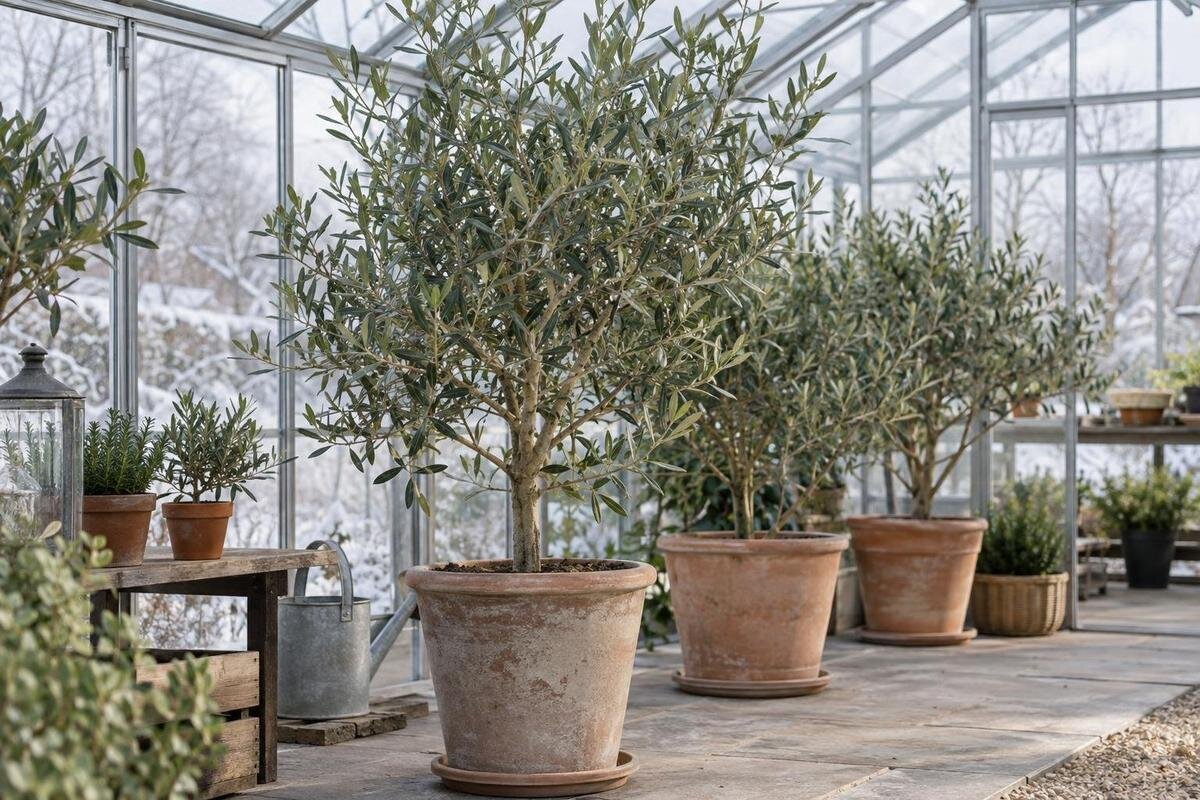
Greenhouse winter care
A potted olive may overwinter in a greenhouse, but the structure alone does not make conditions safe. The tree needs a bright position, protection for its root ball and enough ventilation to manage sunny-day warmth. In a Canadian winter, an unheated greenhouse can change temperature quickly, so the useful question is not simply whether it is enclosed; it is whether conditions at the tree suit that particular olive.

01
An olive tree’s winter requirements
Olive trees (Olea europaea) are evergreen Mediterranean plants, not tropical houseplants. In winter, a bright, comparatively cool setting is generally preferable to a warm, dim corner, though cold tolerance varies by cultivar and by the tree’s history. A recently purchased tree may not be acclimated like one that has spent autumn outdoors in cooler conditions. Its age and recent growing conditions can also affect how it responds. Check the label or ask the supplier for advice specific to the cultivar, rather than relying on the word “olive” alone. Explain where the tree has been growing and whether your greenhouse is heated or unheated so the advice addresses your actual situation. Keep the cultivar name and care guidance with your winter notes. If the cultivar is unknown, make that uncertainty clear rather than treating guidance for another olive as an exact match for yours.
Treat a greenhouse as shelter from weather, not a guarantee of stable temperatures. An unheated structure may warm in winter sun, then cool sharply after sunset, and its readings can differ from the outdoor forecast. A container adds another vulnerability: its roots have less surrounding soil to buffer temperature swings than roots planted in the ground. A brief dip below a limit is not the same exposure as repeated cold nights, so record both the minimum and how long it lasts. Compare those observations with cultivar-specific guidance before settling on a winter location.
Find the brightest winter position
Olive foliage stays on the tree through winter, so put it in the brightest available position rather than under a bench or behind stored supplies. Growth may slow in cold weather, but low winter light still matters. In Canada, the sun follows a lower path in winter than in summer, and the days are shorter; a spot that seems open in July can be shaded by a fence, evergreen, house or roof edge later in the year. Glazing and frame members can also affect how much light reaches the leaves. When assessing the space, distinguish shade from the surrounding site from shade caused by things you can move inside. A shelf, stacked pots or a neighbouring plant may obstruct the canopy even where the greenhouse itself receives sun. Consider the whole tree, not just a bright patch on the floor, and keep its intended winter position clear of stored supplies.
Check the proposed pot position from inside the greenhouse at several times on clear days, not just from the doorway, and note which parts of the canopy receive direct sun. Assess the site during the season you will use it; a summer shadow check can be misleading. If comparing greenhouse forms, the Pyramid greenhouse is one listed format, not a promise about light at a particular site. Review the selected glazing details and the real winter sun path together.
02
Measure temperatures beside the tree
Measure conditions where the olive will sit rather than treating the outdoor forecast as the greenhouse reading. Place a minimum/maximum thermometer near the canopy, out of direct sun, and another close to the pot. A unit in the doorway or on a sunny bench may record a misleading high. If you use a soil thermometer to check the root zone, follow its instructions and keep the probe location consistent so readings can be compared. Label your records clearly: air beside the pot and temperature within the mix are different measurements, even when taken close together. Note the time of each check and reset a minimum/maximum unit according to its instructions after recording the readings. If you relocate the tree or a sensor, mark that change in the log so you do not mistake a different measuring position for a change in the weather.
Keep a log through clear days, cloudy spells and cold nights, noting daytime peaks, overnight lows and whether vents were open. Compare the pattern, including how long low temperatures last, with advice for the identified cultivar. A run of readings tells you more than a single check on a mild day. If supplementary heat is part of the plan, monitor the actual temperatures rather than assuming they will stay steady through every cold spell.
Plan space for the canopy and pot
Plan the space around the whole plant. Measure from the pot base to the highest branch, the widest point of the canopy and the pot itself; then allow room to reach the soil and leaves, water, and fit an insulating sleeve if needed. Branches pressed against glazing are harder to inspect and may be exposed to colder surfaces. Leave enough height for current growth and a clear route from the door. A tight fit that depends on hard pruning can make winter care awkward. Include any support or trolley that will remain beneath the pot in your height measurement. Check the route through the doorway as well as the final standing position: a tree that fits inside may still be awkward to move past benches or other containers. On your layout, distinguish the space occupied by the pot from the wider area occupied by its branches.
Catalogue area is only one part of the check. The Classic aluminium greenhouse range is listed from 3.77 m² to 28.08 m², but that span covers different options; it does not tell you whether a particular size gives your tree the headroom, door access or clear floor space you need. Check the dimensions for the exact configuration, then map the pot, other plants and a walking route before deciding where everything will go.

03
Check the greenhouse site and access
Choose a location where winter light and regular care can both work. A bright spot that is difficult to reach can mean missed checks; a convenient spot under an overhang may be shaded. Look at the roofline, fence and nearby evergreens when the winter sun is low, and consider whether the door opens onto a clear approach. Think through how you will carry water and reach vents without brushing against the tree or leaving it exposed to a direct draught. Walk the intended route with the greenhouse layout in mind, including where you will stand while opening the door and where a watering can can be set down. Assess access under the winter conditions you actually encounter, rather than only on a clear summer day. Convenience matters most when it allows you to make brief, regular visits without rearranging the space each time.
If you are weighing an attached arrangement, assess the exact wall and roof above it rather than assuming a building will keep the space warm. The aluminium lean-to greenhouse is one category to compare, but its name does not establish the light, temperature or ventilation of a particular placement. Check the chosen configuration against the site’s shade pattern and access, as well as the relevant product details. The tree will still need temperature monitoring.
Protect the container and root ball
Container roots need particular attention because they are not insulated by a deep bed of surrounding soil. A dry insulating wrap around the pot can slow rapid cooling, but it cannot guarantee that the root ball will stay within the tree’s safe range. Keep drain holes open and the container out of standing water; saturated mix is especially undesirable when conditions remain cold. Avoid placing the pot against cold glazing, an exterior door or a spot that receives repeated blasts of outside air. Plan the protection around the container you already have, including its drainage openings and any saucer beneath it. You should still be able to check the mix and see whether water has drained after watering. Make a note when you add or remove insulation, then interpret subsequent temperature readings in light of that change rather than assuming the wrap has solved the cold-exposure problem.
Leave enough clearance around the wrapped container to see the base, check drainage and water without disturbing the insulation each time. Use a stable surface, and do not cover the tree in an opaque wrap as a substitute for root protection; the leaves still need light. When reviewing a greenhouse plan, the Limited Edition aluminium greenhouse is one model family to compare. Use the exact option’s layout to check that the pot and its protection fit away from walls and openings.
04
Water according to the potting mix
Water use usually falls as light and temperatures drop, but an olive in a pot should not be left completely dry for the whole winter. Check the mix below the surface with a finger or wooden stick; the top can dry while the root ball remains damp. When the upper portion has begun to dry, water evenly enough to moisten the root zone, then allow excess to drain. How often that is needed depends on the pot, mix, foliage and greenhouse conditions. Use the same checking method each time so you can recognize the difference between a dry surface and drying mix below it. Record whether the pot needed water, not merely the date you visited. Over several checks, those observations help you understand this particular container without turning the interval between past waterings into a rule that overrides its present condition.
Skip a fixed weekly schedule, and do not add water automatically when a few leaves fall: low light, cold, pests and excess moisture can all affect foliage. Empty saucers after watering and avoid leaving the pot in drainage water. If you keep a watering can and care notes nearby, compare the Limited-Edition greenhouse with built-in storage category. Check where storage sits in the selected layout so it does not crowd the space needed to reach and inspect the olive.
Ventilate without chilling the tree
Sun can raise greenhouse temperatures on a winter day even when outdoor air remains cold. Check the thermometer before opening vents; if the interior becomes too warm or condensation builds up, ventilate enough to exchange air and reduce excess heat or moisture. Open gradually where possible and keep a strong cold stream from blowing directly across the tree. As outdoor temperatures fall, reduce or close openings rather than leaving a door or vent open overnight by habit. Note which opening you used and check conditions again after the adjustment, instead of assuming that opening a vent completes the task. Where the available opening directs air towards the olive, consider that airflow when arranging the pot’s position. The aim is to manage conditions around the plant, so assess both the temperature reading and whether foliage is in the path of incoming air.
Ventilation and cold protection need to be managed together. Before selecting a greenhouse, check the exact model’s vent locations and operating method, and consider whether you can reach them for adjustments. The Bloomcabin Prestige Greenhouse name identifies a model, not its ventilation capacity. Use the option-specific details and plan how you will monitor the tree as the weather changes; no opening pattern works for every site.

05
Inspect foliage and keep the layout open
Make a brief inspection part of each watering check. Look over both sides of leaves, tender shoots and the soil surface for scale-like bumps, sticky residue, fine webbing or unusual speckling. These clues do not identify a problem on their own, but they help you notice changes early and look more closely. Inspect the tree before bringing it inside, since plants can carry pests into the greenhouse, and remove fallen leaves from the pot surface. If something changes, note where it appears: on a few leaves, throughout the canopy or mainly on one side of the tree. A dated photograph can help you compare the same area at the next inspection. Describe what you can see rather than immediately assigning a cause, and keep those observations alongside your moisture and temperature notes when seeking advice about the plant.
Leave enough access to check the canopy and pot without shifting other containers every time. If you plan to house more than one plant, draw their positions and the walking route before filling the floor. The T-shaped orangery greenhouse is one available format; check the exact layout and access points rather than inferring usable circulation from the name. A clear route makes regular winter checks easier, whatever model you choose.
Ease the olive back outdoors in spring
Do not move the olive outside just because the calendar says spring. Greenhouse temperatures may rise quickly in brighter weather, while nights can still be cold. Keep monitoring daytime peaks and overnight lows, and ventilate on sunny days. Wait until local conditions and the tree’s own cold tolerance support a change. When the move is appropriate, acclimate it gradually to outdoor light, wind and temperature instead of placing it straight into a full day of sun after months behind glass. Choose an initial outdoor position with that transition in mind, rather than treating the tree’s eventual summer location as the only option. Keep its return route to shelter clear while the move is still being assessed. Use the changing weather and the tree’s condition to guide the transition; one mild afternoon does not tell you what the following nights will bring.
After the transition, keep checking the pot’s moisture as warmth and airflow increase; it may dry faster than it did in midwinter. If the greenhouse will hold other plants as well, plan the olive’s place, containers and access across the seasons. The Spacious Greenhouse range is listed from 47 to 70 m², but area alone does not show the usable arrangement or suitability for a particular site. Compare the exact plan and access details.
Frequently asked questions
Can an unheated greenhouse overwinter an olive tree in Canada?
Sometimes, but an enclosed greenhouse is not automatically frost-free. Check the tree’s cultivar guidance and record overnight temperatures at the pot and canopy through cold spells. Compare both the low readings and how long they last with the advice for your tree. If conditions fall outside that guidance, use a more suitable protected location.
Does a potted olive need direct sun in winter?
Place it in the brightest suitable position you have, with as much winter sun as the site allows. Avoid a dim corner behind stored items or taller plants. Direct sun is helpful, but a sunny daytime greenhouse does not guarantee safe temperatures overnight.
How often should I water an olive tree in winter?
There is no reliable weekly schedule for every pot. Check the mix below the surface and water when the upper portion has begun to dry, then let excess drain away. The interval depends on the pot, growing mix, temperature, light and airflow.
Should I wrap the whole tree on cold nights?
A cover is not a substitute for checking temperatures or protecting the root ball. An opaque or damp covering can reduce light and trap moisture around foliage. If measured conditions fall outside the tree’s recommended limits, move it to a more suitable location rather than relying on a cover.
When should I ventilate the greenhouse in winter?
Check the temperature inside, especially on bright days when a greenhouse can warm quickly. Ventilate when needed to reduce excess heat or condensation, while avoiding a cold stream of air across the tree. Reduce or close openings as outdoor temperatures fall; do not leave a door open overnight by habit.
Good winter care comes from responding to the conditions around the tree: keep it bright, protect the exposed pot, and adjust watering and ventilation as temperatures shift. Use the olive’s cultivar-specific guidance alongside readings from its actual position. That approach is more dependable than assuming every greenhouse—or every potted olive—will handle winter in the same way.
