
Rain Shelter or Greenhouse: Which Growing Space Works?
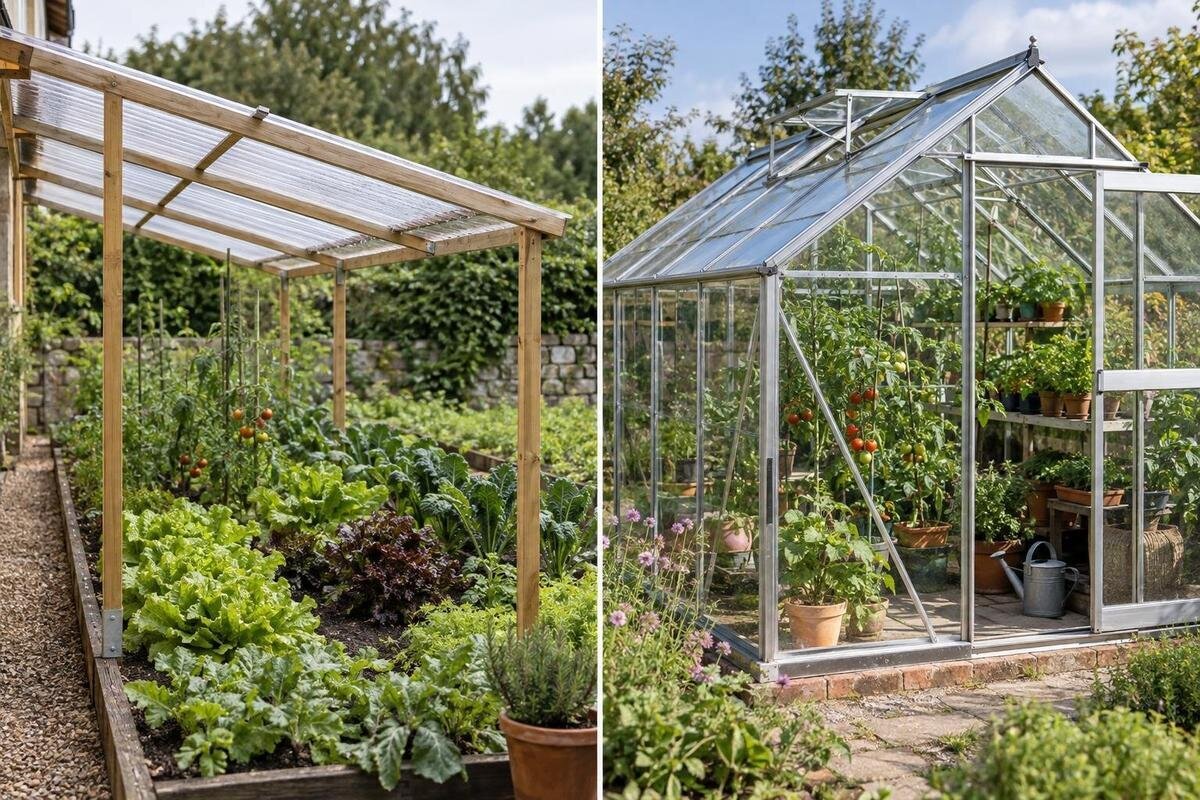
Growing space comparison
Choosing between a rain shelter and a greenhouse starts with the job you want the structure to do. An overhead cover can keep direct rainfall off crops while leaving them in outdoor air; an enclosed greenhouse creates a growing space whose conditions you can influence through ventilation and other design choices. The trade-off is protection versus management, not a guarantee of perfect weather.

Questions to ask before choosing 1
Choose by the weather problem you need to solve
The useful comparison is not simply covered versus uncovered; it is rain reduction versus a more enclosed growing environment. In this guide, a rain shelter means an overhead cover over plants, usually with open or substantially open sides. It intercepts rain falling from above while keeping crops in outdoor air. A greenhouse has a roof and enclosing sides that create a distinct growing space. Designs vary: some covers include side panels, and greenhouse openings differ, so confirm what the actual configuration includes instead of relying on the label alone. The structure’s details and position on your site affect how much protection you get.
Start with the problem you want to solve, not with the structure’s appearance. If repeated rainfall is the main concern—wet foliage, rain-splashed soil or fruit exposed to persistent wet weather—a roof may address it while leaving airflow and outdoor conditions largely unchanged. If you also want to start plants under cover, reduce exposure to wind or use the space in cooler shoulder seasons, an enclosed greenhouse may offer more scope. That flexibility brings work: sunlight can warm the interior quickly, and humidity can build when air is not exchanged. A simpler cover still needs attention to watering and runoff. Choose a structure that fits both your crops and the time you can spend checking conditions.
What an open-sided rain shelter leaves exposed
An open-sided shelter’s main job is to interrupt direct rainfall. That can matter when repeated showers wet leaves or splash soil onto lower foliage. Less direct wetting may reduce some rain-related problems, but it is not disease control and does not protect a crop from every source of moisture. Wind-driven rain can enter at the sides; irrigation or condensation can still wet plants; airborne spores and pests are not automatically excluded. The amount of cover, its height and the direction of wind-driven rain on your site all affect what stays dry. In an exposed location, consider how wind carries rain beneath the roof.
Because air and weather still move through an open-sided shelter, crops remain exposed to outdoor temperatures, wind and surrounding humidity. That can be an advantage if you want to reduce rain without creating an enclosed climate, but it limits how much you can moderate growing conditions. Plan where roof runoff will go: concentrated flow at an edge can make a path muddy, erode soil or collect beside a bed. Covered soil may also receive less natural rainfall, so irrigation needs can change. A shelter’s roof can affect light too; check the shade it casts at crop height and at the times your plants need sun.
Questions to ask before choosing 2
What an enclosed greenhouse can change
With a roof and enclosing sides, a greenhouse can separate crops from much of the immediate outdoor weather. Its roof and sides can keep direct rainfall from reaching plants and reduce wind exposure, depending on openings and conditions. Sunlight can raise interior temperatures, but this is not automatic climate control: temperature, humidity and airflow still respond to weather, glazing, openings, shading and any heating used. A door or vent allows air exchange, and opening arrangements differ by design. Treat a greenhouse as a space you manage, not as a sealed room with a fixed temperature. Check its ventilation details before planning around a particular crop.
A greenhouse may serve several tasks in one season, such as raising seedlings and growing more mature plants under cover, when its conditions suit them. The enclosure also creates more variables to monitor: warm sunny spells, stagnant air, condensation and watering that differs from an exposed bed. For a size reference, the Classic aluminum greenhouse listing gives a range from 3.77 to 28.08 m². Consider how you would divide the selected space between seedlings, mature plants and access, including periods when both groups need shelter. Review the configuration’s temperature and ventilation information before planning those uses.
Match the cover to your crops and calendar
Separate crops by what rain is doing to them. If the main aim is to reduce wet foliage during repeated showers, an overhead shelter may be sufficient, provided side exposure does not defeat the cover. If a crop needs a longer period of sheltered conditions, a greenhouse may fit better—but only if ventilation and temperature management can match its needs. Consider whether plants will stay in beds, grow in containers or move in and out; each arrangement changes the area and access required. One garden may reasonably use both: open beds for most crops and a protected zone for early starts or the crop that suffers most from rain.
Use your planting calendar to make the choice concrete. List the crops, the months you expect to cover them and the recurring risk you want to reduce; then rank rain, wind, cool nights, starting seeds early and easier working access. A roof-only shelter directly addresses overhead rain, not all those other needs. An enclosed greenhouse may address more of them, but only as far as its design and day-to-day care allow. The lean-to greenhouse size options range from 3.69 to 14.34 m². Compare the drawing for a chosen configuration with your crop plan, allowing for plants that will move in and out as well as those that will remain under cover.

Questions to ask before choosing 3
Ventilation and humidity require regular attention
Air movement is a central difference in the day-to-day routine. An open-sided cover leaves crops exposed to outdoor airflow, although its roof and nearby barriers can alter conditions immediately below it. With sides closed, a greenhouse limits some direct air exchange, and its interior can become warmer or more humid when sunlight is strong or openings remain closed. Observe conditions regularly and use available vents or doors as the design allows; the approach depends on the structure, season, crop and weather. A ventilation feature matters only if you can reach it and use it without disrupting the growing layout.
Stagnant, humid air can prolong leaf wetness even when rain no longer reaches a crop. A greenhouse does not guarantee dry foliage: condensation, watering, crowded planting and limited ventilation can all keep plants wet. An open shelter cannot stop all moisture carried in from outside either. The Limited Edition Aluminum Greenhouses listing covers 3.77 to 28.08 m². When reviewing a configuration, check where its openings are and how you would reach them with plants in place. Leave room to inspect leaves and move through the space without squeezing past pots or stored supplies; access to ventilation should remain practical throughout the growing season.
Plan watering, soil moisture and runoff
Reducing rainfall changes how water reaches roots; it does not remove the need to water. A covered bed receives less direct rain, so monitor the soil and supply water in response to the crop and conditions. In a greenhouse, in-ground beds and containers can dry at different rates, and a warm, sunny day can change demand. Do not use rainfall outside as a proxy for moisture under cover, or assume one routine suits every crop and season. Choose a method you can check consistently, and avoid leaving the root zone persistently dry or waterlogged.
Trace excess water both inside and outside the structure. Roof runoff can collect along an edge; irrigation can wet paths; and floors or growing beds need to drain without turning routes into mud. Plan hose access, a place for water containers if you use them, and clear paths before filling the space with plants. The T-model orangery greenhouse listing gives areas from 16.52 to 30 m². Use the selected configuration’s drawing to mark your watering routes and growing zones. Consider how you will reach each bed or container, where the hose will run and whether watering will interfere with access through the space.
Questions to ask before choosing 4
Season extension depends on the full setup
A greenhouse may make the edges of a growing season more usable by reducing direct exposure to wind and rain and gaining warmth from sunlight, but the effect depends on location, structure and crop. An unheated greenhouse does not guarantee a stable minimum temperature overnight, and a simple, open-sided rain shelter offers little protection from cold air. Neither label guarantees frost protection. Match an early- or late-season plan to local conditions and crop tolerance. If you need heating or specific cold-weather performance, confirm that the full structure is specified for it. Ventilation remains important when daytime sun warms the interior, even in a cool season.
Define what a longer season means before paying for more enclosure: starting seedlings earlier, keeping mature plants going later and protecting a crop during a particular cold spell are different objectives. A greenhouse may support the first two in suitable conditions, but planting dates still depend on weather and management; an overhead cover should not be treated as a warmer room. The Pyramid Greenhouse listing gives an area range of 5.53 to 18.9 m². Use that range to compare the scale of the available options, then review insulation, heating provision and winter performance separately if cold-weather use matters. Monitor conditions before relying on the space for your planned planting dates.
Plan usable space and access
Draw the growing layout before choosing a structure. Mark permanent beds, paths, containers, trellises if needed, a place to turn while carrying a watering can, and the space required to open doors or vents. A rain shelter’s roofed area is not all plantable, while an enclosed structure also uses floor space for access and maintenance. Think about how you will reach plants at the back and carry soil or tools in and out. A nominal area is only a starting point; usable space depends on the layout, opening clearance and how much floor area you need for movement.
Keep storage separate from planting area in your calculations. The Limited-Edition Aluminum Greenhouses with Storage listing gives areas from 5.52 to 28.08 m²; check the chosen drawing to see how storage is arranged and what clear working area remains. Also check that doors, paths and the outdoor approach will not conflict with fences, beds, downspouts or daily routes. If wind or snow exposure is a concern, confirm the selected structure’s documented suitability with the supplier or a qualified professional rather than estimating from its appearance.

Questions to ask before choosing 5
Compare drawings and specifications on the same basis
Compare the two options using the same questions: total footprint, usable area, crop layout, access, which weather conditions each option leaves crops exposed to, and the tasks needed to manage it. For a greenhouse, review the exact configuration’s dimensions, openings, glazing, ventilation information and any stated limitations for your intended use. For a rain shelter, establish which sides are open or screened, how runoff is directed and how the structure is supported. Ask whether the details apply to the precise size you are comparing. Product names alone do not answer these questions.
Read area ranges as catalogue choices, not as a promise that every layout is available or that the whole footprint will grow crops. The Prestige Greenhouse listing ranges from 3.77 to 28.08 m²; compare the exact plan and specifications rather than relying on a collection range. Check what each quoted area measures and whether it represents roofed, external or internal space. Measure the site and review stated base requirements and clearances around the structure. For local site rules, foundations or weather-load questions, consult the relevant supplier or a qualified professional; do not infer safe installation from a product label.
Use crop priorities to make the final decision
If the answer is still unclear, test the crop problem before planning a larger growing programme. Keep notes on which plants suffer during rain, whether the issue is leaf wetness, soil saturation or storm damage, how often it occurs and what protection you wish you had. A small temporary cover may help you observe crop response, but it must be stable and safe for its intended use; do not assume an improvised cover meets the requirements of a permanent structure. This trial can reveal whether intercepting rain is enough or whether wind, cold and access remain bigger problems.
Then work backwards from the next few seasons: list how many plants need protection, how much access and storage your routine requires, and whether you will monitor ventilation and watering regularly. More enclosed area can widen your options, but it also asks for more management; extra space is not automatically better. As a scale reference, the large orangery greenhouse is listed from 47 to 70 m². Consider whether your planned crops and working layout call for that much space, rather than choosing a larger structure simply to leave options open. A rain shelter can also protect one priority crop while the rest remain outdoors. Choose by the tasks, site and verified configuration you can support.
Frequently asked questions
Can a rain shelter extend the growing season?
A roof can reduce direct rain exposure, but an open-sided shelter provides little protection from cold air and does not guarantee frost protection. Its main benefit is rain management. Earlier or later planting still depends on local conditions, crop tolerance and the shelter’s actual design.
Will a greenhouse keep crops dry?
It can keep much direct rain off plants, but watering, condensation and wind-driven rain through openings can still make them wet. Ventilation and plant spacing affect how quickly foliage dries. Plan irrigation separately and check how the chosen configuration handles openings and runoff.
Which structure suits crops that are sensitive to wet foliage?
If direct rainfall is the main problem, a rain shelter may address it while retaining outdoor airflow. A greenhouse can also keep rain off, but its ventilation needs attention. Neither structure prevents every source of moisture or guarantees control of crop disease.
Does a greenhouse need heating?
Not necessarily, but enclosure alone does not maintain a particular temperature. Whether heating is needed depends on the crop, season, location and structure. If you plan to grow in colder conditions, confirm the configuration’s stated capabilities and any heating requirements before relying on it.
What measurements should I compare?
Look beyond the stated area. Compare the exact footprint, usable growing space, access routes and room for containers, supports or storage. Check what a quoted area measures and review the drawing for the configuration you are considering; roofed area does not automatically equal plantable area.
Choose a rain shelter when reducing direct rainfall is the main goal and outdoor airflow suits your crops. Choose a greenhouse when a more enclosed space can address several recurring growing problems and you can manage ventilation, watering and seasonal limits. In both cases, plan around the crop calendar, runoff and usable access, then verify the selected structure’s actual configuration. The right growing space is the one that addresses your real needs without adding more management than you can sustain.
