
Is Your Greenhouse Worth Moving to a New Home?
Greenhouse moving decisions
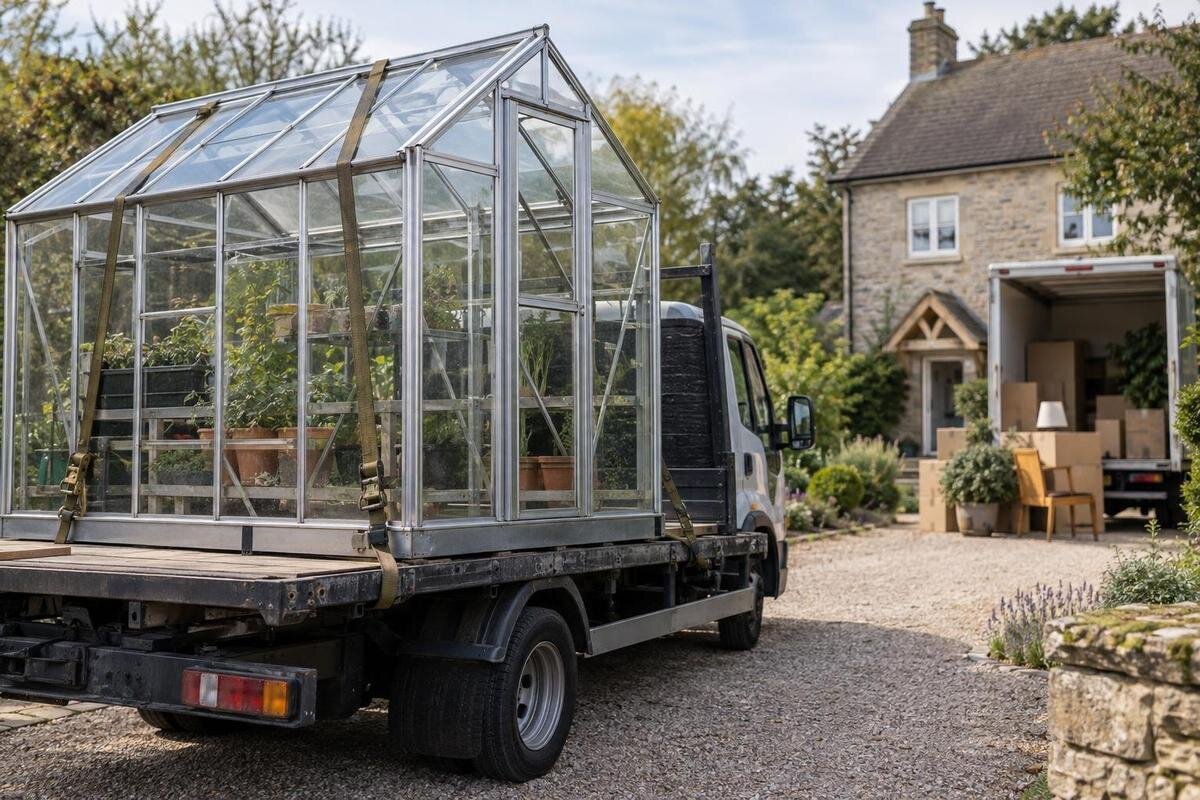
When you move to a new home, deciding whether to take your greenhouse means weighing its condition, site fit, labour and cost—not simply whether its frame can be taken apart. A structure that has served you well may be worth moving, but uncertain parts, transport risk or a very different garden can make replacement a better option. This guide focuses on how to weigh those choices, not on the physical process of dismantling or transporting a greenhouse.

Compare the full relocation cost with replacement
Begin with the cost of keeping the existing greenhouse, not the amount originally paid for it. Relocation can involve professional dismantling, packing, transport, temporary storage if your move dates do not line up, reassembly, replacement components and work to prepare the new site. Ask which items each estimate includes. Compare the total with a replacement of similar usable area and layout, rather than with the least expensive option you can find. As one catalogue reference, the Classic aluminum greenhouse range is listed in areas from 3.77 m² to 28.08 m². That span helps frame a search, but it is not a price quote or proof that a particular configuration matches yours.
Keep the comparison consistent. A relocation estimate that excludes repairs or site work cannot be fairly compared with a replacement estimate that includes them; ask for the scope of each in writing. Include any cost to deal with the old structure if you replace it, and allow for the time during which the greenhouse may not be usable. The right question is not simply whether moving costs less than a new purchase. It is whether the full cost of moving leaves you with a sound, usable greenhouse at the new home for an amount you are prepared to spend.
Assess the greenhouse’s condition before pricing a move
Inspect the structure as a whole, including the frame, joints, base, fasteners, doors and vents, as well as its glazing or other panels. Look for cracked or chipped panes, distorted members, loose connections, damaged seals, recurring leaks and signs of past repairs. If the frame is metal, note corrosion; if it is timber, look for rot. These observations do not establish whether the greenhouse can be safely dismantled or rebuilt, but they give a supplier or installer useful information when assessing its condition.
Age by itself is a poor measure of whether relocation makes sense. A well-maintained structure may be a better candidate than a newer one that has been altered or damaged, while hidden wear can make an apparently tidy greenhouse costly to reuse. Note which parts have been replaced and whether a repair has lasted. If the frame is visibly out of alignment, the base appears unstable or the glazing is difficult to identify, get a qualified assessment before treating the structure as reusable. Price likely repairs as part of the move, not as an afterthought.
Identify the model and check whether parts are available
Find any original paperwork, assembly guide, invoice, manufacturer’s name, model number or parts list. Details from a previous owner can help too, particularly if the greenhouse has been modified or repaired. Keep the information together with clear notes about the parts already replaced and any damage you have observed. A general description such as “aluminum greenhouse” may not be enough to identify compatible glazing, connectors or seals; components that look similar are not necessarily interchangeable.
Ask the manufacturer, supplier or a greenhouse installer whether the model can be identified and whether compatible parts and technical support are available. If the answer is uncertain, ask what that means for a move: could a broken or missing component prevent reassembly, and can a suitable replacement be confirmed before you commit? Separate parts you already know need replacing from those that might need attention during relocation. This gives you a clearer basis for discussing both repairs and uncertainty in the estimate. A structure that is intact today may still be a poor relocation candidate if its parts cannot be matched. Where records are missing, a professional who can assess the actual system is more useful than an estimate based only on a description. Keep any answers with your model information so that everyone quoting for the move works from the same details.
Check the new site’s dimensions and conditions
Compare the greenhouse’s actual outside dimensions with the space available at the new home. An area figure alone does not tell you its width, length or height. Allow for practical clearances around the entrance, the route to reach it and room to work nearby. Check gates, paths, overhangs and other fixed features that could limit access or use. A structure may fit on paper yet leave too little space for the way you need to move around it. Ask for the dimensions of the exact configuration you are considering rather than relying on a model name or a broad size range.
The site matters beyond its footprint. Consider shade from buildings and trees, drainage and runoff, nearby fences, wind exposure and local winter snow conditions. These can differ between two gardens, even when the greenhouse itself is unchanged. The Prestige greenhouse with metal base is listed with area options from 3.77 m² to 28.08 m²; that range can help you compare scale, but it does not confirm a fit or establish the dimensions of the selected configuration. Have a qualified professional assess site and foundation questions where needed, and check local requirements with the municipality rather than assuming arrangements at the old home carry over.

Decide whether the greenhouse suits the new property
A greenhouse that worked in one garden may not suit the layout of another. The new property might have a suitable wall for a lean-to, or it might offer only an open area; access, shade and the position of doors or windows can also affect where a structure can go. If the move prompts you to consider a different type, the Lean-To Greenhouses range is listed from 3.69 m² to 14.34 m². That information identifies an area range, not whether a particular wall, orientation or clearance will work at your new home.
Consider how you will use the greenhouse after the move, not just whether you can preserve its current setup. Your planned crops, work space, equipment storage, access for watering and time available for upkeep may have changed. A smaller garden or a longer walk from the house could make the old arrangement less convenient; a new routine might call for a different amount of growing space. If the greenhouse would be difficult to reach or use regularly, moving it may preserve a structure without preserving the value you actually want from it.
Weigh the risk of dismantling and reassembly
Taking a greenhouse apart introduces uncertainty that does not show up in a condition check alone. Ageing connections, previous repairs, fragile or unusual glazing and missing fasteners can complicate reassembly. A frame that feels rigid when assembled in the garden is not necessarily designed to be moved as a complete unit. The risk is not only that a component breaks in transit; parts may also prove difficult to fit together again or need repair before the greenhouse can be used. These are reasons to assess the specific structure, not to assume every greenhouse will fail or that every one can be moved easily.
Ask a qualified mover or installer for a written scope based on the actual greenhouse and both sites. Clarify what the estimate includes, what is excluded, who is responsible if a component cannot be reused, and how the cost changes if repairs are needed. If the assessment leaves too much uncertainty, include a replacement in your comparison; the Limited Edition Aluminum Greenhouses listing covers area options from 3.77 m² to 28.08 m². Treat it as a catalogue reference, not a direct match or a substitute for checking the exact configuration and project costs.
Account for storage, delays and time without a greenhouse
Separate temporary storage during the move from storage space you want in the finished greenhouse. For temporary storage, ask whether it is included in the relocation estimate, what period the quote covers and how the cost would change if reassembly is delayed. This matters particularly when access to the old and new properties does not line up. For storage in the new garden, decide whether equipment needs to share the growing space or have a separate place. The Limited-Edition Aluminum Greenhouses with built-in storage are listed from 5.52 m² to 28.08 m². Compare the selected configuration with the equipment and growing space you need, rather than treating the total area as enough information. Keep these two storage needs distinct in your budget: one concerns the move itself, while the other concerns how you intend to use the greenhouse once it is ready.
Count your own time as well as paid labour. Coordinating access to two properties, waiting for parts or arranging storage can take effort even if those tasks do not appear on a contractor’s invoice. Map out when the old greenhouse would stop being available and when you could realistically use it at the new home. If that gap overlaps your growing plans, decide which activities you would postpone or do without, and whether the interruption changes the value of moving the structure. Keep that judgement separate from quoted cash costs so the comparison remains clear. Do not add an arbitrary allowance to make uncertain costs look precise; ask for the assumptions behind each quote and note what could change it. A low estimate with major exclusions may be less useful than a higher one with a clear scope. Compare the likely period without a greenhouse under both options, not just their totals.
Compare the layout you need, not only the area
Equal floor areas can produce different working layouts. The greenhouse’s proportions and shape affect where you can place benches, store equipment and move between growing areas. If you are considering a different configuration, review its actual plan rather than assuming that a similar number of square metres means similar usable space. The T-Shaped Orangery Greenhouse is listed from 16.52 m² to 30 m². Those area options are a starting point for comparison; check the dimensions and layout of any selected configuration against the new garden and your intended use.
Write down what the old greenhouse needs to accommodate: the crops or tasks that matter, the space you need to work, and any equipment you expect to keep inside. Then decide which requirements are essential and which were simply part of the old arrangement. Describe how you use the space, rather than recording only its dimensions. For example, distinguish room occupied by growing areas from room you want to keep clear for access or routine work. Consider whether equipment must remain inside or whether its storage could be handled elsewhere at the new property. Use these requirements to compare the existing layout with any replacement plan on the same terms. This prevents a familiar footprint from setting the terms of the move when the new property calls for something different. It also helps avoid paying to transport a larger structure only to find that its layout does not suit the available space or your current growing plans.

Consider leaving, selling or replacing it instead
Moving the greenhouse is not the only alternative to buying another one. You may be able to agree that it stays with the property, or arrange for it to be sold or given away in place. Discuss its condition and what is included with the other party, and record the agreement in the sale paperwork rather than assuming it transfers automatically. If you plan to replace it later, compare options on their exact plans and intended use. For example, the Pyramid Greenhouse range is listed from 5.53 m² to 18.9 m²; its area range alone does not establish whether its shape or dimensions suit your site.
There can be a practical reason to move a greenhouse that would not appear in a price comparison: its existing layout may suit your growing habits, or you may have invested time in making the space work for you. On the other hand, keeping it only because it cost a certain amount years ago can lead to spending more on a structure that no longer fits. If you choose not to move it, check the appropriate local options for removal or disposal rather than assuming a particular material or component can go in a regular waste stream.
Set a decision rule before the move
A useful rule is to move the greenhouse only when four points are clear: its condition is acceptable, the model and parts are understood, the new site has been assessed, and a written estimate covers the work closely enough for you to accept the risk. If you are rethinking the scale of your growing space, the Spacious Greenhouse listing covers areas from 47 m² to 70 m². That is a much larger range than many household setups; compare it only if your intended use genuinely calls for that area and the actual site can accommodate the selected configuration.
Set a point at which you will stop investigating and choose. For example, you might decide that relocation is no longer worthwhile if essential parts cannot be confirmed, the site is unsuitable or the total estimate exceeds what you are willing to spend on a usable greenhouse. Distinguish issues that would rule out the move from preferences you could accept changing. A different internal arrangement may be negotiable; an unresolved question about an essential component needs an answer before you commit. If an estimate changes, compare the revised total and scope with your original decision rule rather than relying on the earlier, lower figure. Make the decision before the moving plan depends on the structure being available. If several important costs or technical questions remain open, seek an assessment before committing rather than treating the most optimistic estimate as the likely outcome. The aim is a choice you can carry through, not a comparison that works only if nothing changes.
Frequently asked questions
Can a greenhouse be moved in one piece?
Do not assume it can. A greenhouse’s stability in the garden does not show that it can be lifted or transported intact. Ask the manufacturer or a qualified moving contractor to assess the specific frame, glazing, size and route before making that plan.
How can I tell whether my greenhouse is worth moving?
Look at its condition, whether the model and compatible parts can be identified, the cost and risk of dismantling and reassembly, and the new site’s fit. Compare an itemized relocation estimate with a replacement that meets the same needs.
What costs should a greenhouse-moving quote include?
Ask whether it covers dismantling, packing, transport, storage if needed, reassembly, repairs or replacement components, and any site preparation. Keep those costs separate from the greenhouse’s purchase price and from the value of your own time.
Can I leave the greenhouse at my current home?
That may be an alternative to moving it, but do not assume it is included in a sale or that the next owner wants it. Discuss the structure’s condition and whether it will stay with the property, then record the agreement in the sale paperwork.
When should I decide whether to move it?
Decide early enough to check the new site and get a realistic relocation estimate before your moving plans are fixed. Also consider the growing-season gap if the greenhouse will not be available while it is assessed, moved or reassembled.
Move the greenhouse only when its condition, parts support, relocation estimate and new site all make sense together. If any of those points is uncertain, assess the cost of that uncertainty before committing. Leaving it or choosing a replacement may be the better option when the old structure needs substantial work or no longer fits the way you plan to use your new garden. The sound choice is the greenhouse you can realistically use, not simply the one you already own.
