
Greenhouse Tomato Flowers but No Fruit: What to Check
Tomato-growing troubleshooting
Tomato plants can produce a flush of flowers without turning those blooms into fruit. In a greenhouse, the most useful first checks are what happened at the base of each flower, the temperatures during flowering, and whether conditions allowed pollen to move. Fading petals are normal; a flower that falls without a swelling ovary is a different clue. Work through the evidence before changing fertilizer or adding pollination aids: heat, humidity, water stress and vigorous growth can overlap, and no single symptom proves the cause.

Confirm whether fruit has started to form
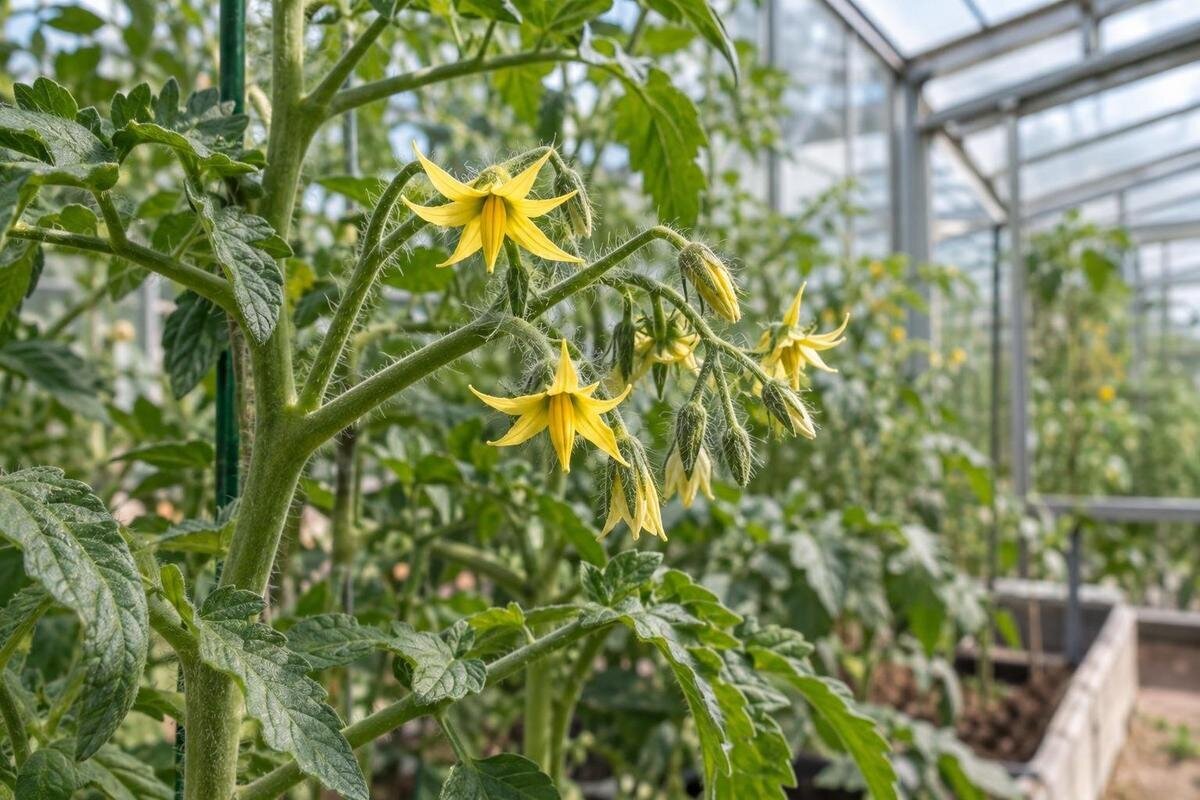
Look beneath the yellow petals at the green, rounded ovary where the flower joins its stalk. When fruit set succeeds, the petals fade and fall while that ovary begins to enlarge into a small green tomato. Petals dropping on their own is normal. Choose a newly opened flower and mark its truss, or note its position and date; revisit it over the next several days. Checking several blooms is more useful than judging a whole plant from one flower, which may be late, weak or damaged.
If no swelling develops and the flower or its short stalk turns yellow and detaches, record it as a flower that failed to set fruit. If a tiny fruit formed but later yellowed or stopped growing, fruit set occurred initially, but the young fruit was lost afterwards; stress may still be involved, but the timing changes the diagnosis. Note whether the flowers are opening, fading or falling, and whether the pattern affects one cluster or every plant. This distinction helps prevent normal petal fall or a slow first truss from being mistaken for total failure.
Measure temperature at flower height
Use a minimum-maximum thermometer around the height of the flowering trusses, out of direct sunlight and away from glazing, a doorway or a stream of air from a vent. Check the overnight minimum as well as daytime readings; a forecast or a single noon reading cannot show what the flowers experienced. For several days, record the high, low, date and which trusses are opening or dropping. Conditions during the days around flowering may matter more than the temperature on the day you notice a fallen bloom.
Compare positions if possible: plants in the centre and at the edge, near and far from a vent, or in shade and sun. A greenhouse can have warm or cool pockets that a sensor on a wall misses. Record where each reading was taken, and compare readings taken at similar times rather than treating a morning measurement in one corner as equivalent to an afternoon measurement elsewhere. A simple sketch showing plants, vents and measuring points can make the records easier to interpret. If you are also considering a different layout, use that sketch when reviewing the T-shaped orangery greenhouse. Consider where flowering plants and thermometers would go and whether you could reach them for regular checks. Keep the temperature record separate from the purchase decision: a model name does not explain why the current flowers failed.
Compare temperatures during flowering
Tomato pollen and flower function can be affected by temperature extremes. As broad warning signs, sustained daytime temperatures around 30°C (86°F) or higher and repeated nights above about 21°C (70°F) can reduce fruit set in many cultivars. Prolonged cool conditions around or below 13°C (55°F) can also interfere. These are not universal cut-offs: the cultivar, duration, humidity and plant condition all matter, and one brief spike is not the same as several hot afternoons or warm nights. Look for a pattern that overlaps with the flowers that dropped.
Respond to repeated readings rather than one unusual number. If the greenhouse regularly overheats during bloom, use ventilation and suitable shade as conditions allow, then keep recording both daytime highs and overnight lows. The balance can be difficult when hot days and cool nights occur in the same week; an adjustment that helps one part of the day may affect another. Note when you opened vents or added shade so you can compare the readings before and after the change. Also record which flowers were already open at that point, rather than judging the response only from older blooms. For a separate structure comparison, review the Oasis Pyramid Greenhouse with these temperature-management needs in mind. Check the available information about openings and shading options, and consider how you would manage them during your usual daily routine.
Inspect the flower and its stalk
Tomato flowers are generally self-fertile: pollen from the anther cone needs to reach the stigma within the flower. Inspect a freshly opened bloom in good light. The petals should be yellow, and the flower should be open rather than stuck shut or badly distorted. Look for the green ovary at the base and check how the flower attaches to its stalk. A flower can look healthy and still fail to set, so appearance is only one part of the diagnosis. Avoid pulling petals apart or squeezing the centre, which can bruise the flower and confuse your observations.
Compare several blooms on the same truss and on different plants. Petals that fade after a flower opens are expected; a bud that turns brown before opening, a visibly misshapen flower or a stalk that yellows and drops deserves a note. Check nearby leaves for distortion, spots or feeding marks that are absent from unaffected plants. These clues may point to a wider issue, but none identifies a pest, disease or chemical injury on its own. If the pattern continues, a clear photo of the whole plant and a close-up can help with further diagnosis.

Check whether pollen can move
A second tomato plant is usually not needed, but pollen still has to move within each flower. Outdoors, wind and visiting insects can supply vibration; an enclosed greenhouse may have less movement. Pollen generally releases more readily when flowers are dry and the air is not excessively humid. If blooms stay damp or the air is persistently very moist, pollen may clump rather than travel. Not seeing loose pollen does not prove that a flower is sterile, but it is a reason to check humidity and flower movement alongside temperature.
On a dry day, gently tap an open flower truss or its supporting stem to create a light vibration; do not strike or shake the plant. Try this on a few open trusses and note which ones you treated. Closed buds are not ready for this check, so revisit newly opened flowers as they appear. Record the flower stage as well as the date, and look for subsequent swelling at the base rather than assuming that a tap has worked. You should be able to reach the truss without pulling the plant towards you or brushing against neighbouring flowers. If stored supplies obstruct that access, consider their place in the growing layout. When comparing the limited-edition greenhouse with built-in storage, assess how storage and growing areas would fit your routine while leaving room to inspect, water and tend the crop.
Check humidity and airflow
Humidity and temperature can affect flowers at the same time. Persistently damp air or condensation can leave pollen sticky, while very dry, hot air can stress flowers and the wider plant. A hygrometer can show whether the greenhouse stays damp after watering or cool nights, but its reading alone is not a diagnosis. Compare it with flower condition, temperature and the pattern of fruit set. Water at the root zone rather than wetting blooms, and avoid splashing flowers just before checking whether pollen releases.
Air movement can help reduce stagnant, persistently moist conditions, but plants should not be exposed to damaging cold or severe temperature swings. Ventilate when conditions permit and note whether flowers in a still corner behave differently from those near an opening. Compare flowers at similar stages, and include temperature readings from both positions so that a difference in fruit set is not automatically attributed to airflow. Note whether watering, condensation or a change in vent position coincided with the observations. For longer-term layout planning, the Prestige greenhouse with metal base provides another product page to review. Look at the published information about openings and consider where the crop would sit in relation to them. The useful buying question is how the proposed arrangement would let you manage and monitor air movement around flowering plants, rather than simply how the structure looks.
Check water, roots, light and crowding
Look at the whole plant, not just the flowers. Wilting during the day, poor recovery overnight or repeated swings between dry and saturated growing medium can signal stress that affects flowering or young fruit. Check moisture below the surface and confirm that beds or containers drain as intended; a dry surface does not always reflect conditions around the roots. Keep watering reasonably even rather than alternating drought with a heavy soak. Persistent wilting, waterlogged roots or poor drainage deserve attention before extra feeding or hand pollination.
Also note crowding and shade. Dense foliage can trap humid air and shade flowers, while very low light can limit vigorous growth and fruit production. Avoid stripping healthy leaves in the hope of triggering fruit. Instead, record which trusses are shaded, what casts the shade and whether the same pattern occurs on plants that are setting fruit. Distinguish shade from nearby plants from shade cast by the site itself; these observations describe different layout problems. If crowding makes the space difficult to manage, the Spacious Greenhouse listing includes options from 47 to 70 m². When comparing that floor area with your needs, sketch the beds or containers, access routes and storage space rather than allocating the entire footprint to plants. More floor area alone does not establish the light or airflow around each truss, so assess the proposed arrangement against the conditions you recorded.
Review feeding before adding fertilizer
Examine plant growth and feeding history. Excess nitrogen can produce abundant, dark, leafy growth with relatively few flowers; it is a possible clue when foliage is exceptionally vigorous, not an explanation for every flower that fails. If plants are flowering well but not setting fruit, prioritize temperature and pollen conditions before adding a bloom booster. Nutrient deficiencies can also weaken plants, but leaf colour alone can be misleading because water, roots and temperature affect nutrient uptake too.
Review the fertilizer label and the amount already applied. If a nutrient or pH problem seems plausible, a soil or growing-medium test is more useful than guessing from one symptom. Avoid adding phosphorus, potassium or calcium on a hunch: fertilizer cannot correct poor pollen release or hot nights, and excess can create further imbalance. Write down the product, application date and amount, and identify which beds or containers received it. This makes it easier to compare plants without relying on memory or assuming that every plant had the same feeding history. If a new growing space is a separate project, review the Classic aluminium greenhouse alongside a plan for the beds and containers you intend to use. Include access for watering and feeding, and consider how you would keep records for different groups of plants within that layout.

Look for patterns across plants and trusses
Map the problem before changing several conditions. If flowers fail on every plant during the same hot or cool spell, a greenhouse-wide temperature or humidity issue moves up the list. If one corner, row or plant is affected, compare its sun exposure, drafts, watering, root health and recent feeding with those of healthier plants. If only the first truss is affected, watch later flowers before diagnosing a persistent problem. When one cultivar sets fruit and another does not under the same conditions, note the variety; cultivars may respond differently to shared stresses.
Record when flowers opened, when petals or stalks fell, whether a fruit began to enlarge, and the daily high and low temperatures. Add notes about watering or feeding changes, and take photos from the same angle so a pattern is easier to see. Give each plant or row a simple identifier so that a close-up can be matched to its position in the greenhouse. If affected plants are along a wall or edge, record the actual sun and temperature there rather than assuming that the whole row experiences identical conditions. These observations can also inform a separate site comparison for the aluminium lean-to greenhouse. Mark the proposed growing positions and the nearby sources of shade on your plan. Compare those positions with the conditions you have observed; the lean-to format alone cannot predict how much light the flowers would receive.
Change one factor, then watch new flowers
Work through the evidence in order: confirm whether the ovary swelled, check temperature history, inspect the flowers, test gentle vibration on dry open blooms, then review humidity, water, light and plant growth. Label the trusses you are observing. Where possible, change one manageable factor at a time. If you adjust ventilation, shade, watering and fertilizer all at once, an improvement will not tell you which change mattered. Give newly opened flowers time to respond before deciding that an adjustment has failed.
Keep the response proportionate to the pattern. Repeated heat calls for attention to heat management; a damp, still corner calls for checking moisture and air movement; very leafy growth calls for a review of nitrogen and light. Persistent distortion, spreading spots, unexplained wilting or repeated loss across the crop is a reason to seek local horticultural advice. Photos and symptoms can narrow the possibilities, but they cannot confirm every cause. Bring together the whole-plant view, flower close-ups and your notes about when the problem began, rather than presenting a fallen flower in isolation. If your observations later lead to a structure comparison, include the limited-edition aluminium greenhouse among the options you assess. Define the layout or crop-care difficulty you want to address first, then compare how each option would accommodate that need. Keep the current crop diagnosis separate from the decision to replace or enlarge the greenhouse.
Frequently asked questions
How can I tell whether a tomato flower has set fruit?
After successful fruit set, the petals fade while the green ovary at the flower’s base starts to enlarge. If the flower falls without that swelling, it likely failed to set fruit. If a tiny fruit forms and then stops growing, fruit set occurred initially, but the young fruit was later lost. Mark a few flowers and check them over several days.
Do greenhouse tomatoes need a second plant for pollination?
Usually not. Tomato flowers are generally self-fertile, but their pollen still has to move within each flower. Air movement, insects or gentle vibration can help. If you have several plants, compare their flowering patterns, but adding another plant is not the first fix to try.
When should I tap tomato flower trusses?
Try a gentle tap on an open flower truss when the flowers are dry. Damp pollen may not release as readily, and closed buds are not ready to be pollinated. Repeat for newly opened flowers if needed, but check temperature and humidity too; tapping will not correct conditions that are stressing the crop.
Can hot nights prevent tomatoes from setting fruit?
Repeated warm nights can contribute to poor fruit set, particularly when daytime temperatures are also high. Cultivars and growing conditions vary, so treat temperature ranges as warning signs rather than firm cut-offs. Record overnight lows at flower height and compare them with the dates flowers opened or dropped.
Should I add fertilizer when tomato flowers fall?
Not automatically. Excess nitrogen can encourage leafy growth, but fertilizer will not correct poor pollen release or temperatures that are too high or low. Review recent feeding and plant growth first. If you suspect a nutrient problem, use a soil or growing-medium test rather than adding nutrients on a hunch.
Blossom drop is a symptom, not a diagnosis. Follow a marked flower from bloom to fruit, measure temperature at canopy height and compare affected plants before choosing what to change. Begin with the conditions that match the pattern, make a measured adjustment, then watch the next trusses. That is more reliable than changing fertilizer or buying pollination aids on a hunch.
