
How Much Time Does a Greenhouse Need Each Week?
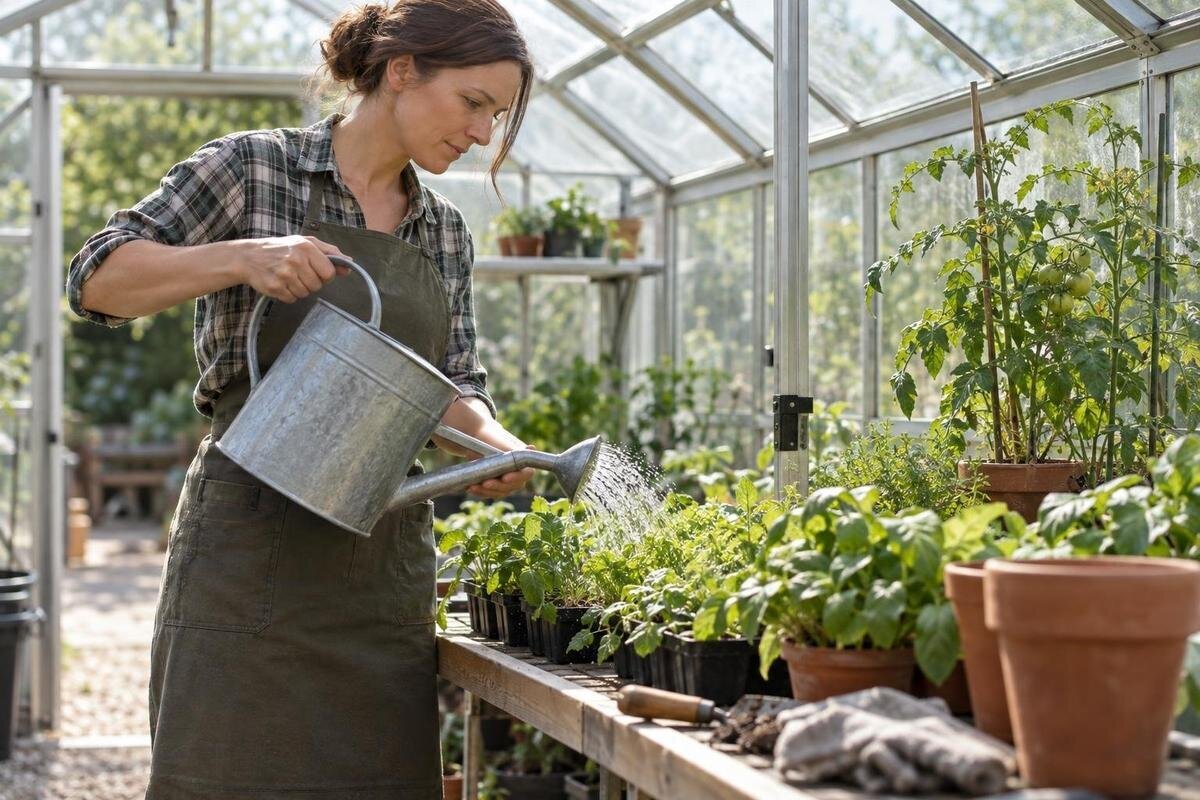
Greenhouse care planning
Greenhouse care is not a single weekly chore, so a useful estimate starts with a crop list and a growing season rather than a rule based on floor area. Watering, quick checks, training, harvesting and clean-up happen at different intervals; automation can reduce repetitive actions but cannot remove plant inspections or troubleshooting. The sample below is a transparent planning exercise, not a measured customer average. Use its assumptions as a starting point, then change the crop count, season and attendance pattern to match the greenhouse you actually intend to manage.

Why greenhouse time changes from week to week
Weekly care is shaped by crop count, plant type, growing method and season more than by a greenhouse label. A handful of herb pots has a different routine from a dense mix of fruiting crops and seedlings. Training, repeated picking, container watering or starting plants from seed adds work that a simple peak-summer estimate can miss. A greenhouse used for a short seasonal crop also has a different annual pattern from one holding plants through colder months. Define the work from your intended crops, not from the name of the structure.
Count hands-on minutes separately from availability. A five-minute walk-through is still a regular commitment, even though it takes less time than watering, tying plants or harvesting. Keep ordinary care apart from one-off work such as deep cleaning, repairs or a large planting change. Weather, a burst of ripe produce or an equipment fault can make an otherwise quiet week unusually busy. For a realistic decision, estimate a demanding but normal week in the main growing period; an annual average can hide the weeks that need the most attention.
Define the crop plan before counting hours
Write a crop plan at plant level before adding hours: name each crop, count plants, pots or bed rows, and note when each group enters and leaves the greenhouse. Record whether you will start seedlings there, buy transplants or sow replacements during the season. Mark jobs that repeat, such as training and regular picking, as well as one-time moves such as potting up. Include herbs and seed trays, not only the main vegetable crops. For each group, leave space to record the task, expected frequency and minutes per session. Where several crops share a watering round or inspection, record that shared task once rather than assigning the full time to every crop. Also identify when two groups will occupy the greenhouse at the same time; your busiest week may include both established plants and the next planting. This turns a vague plan for a few vegetables into identifiable jobs: inspect, water, support, harvest, clear and replant.
Fit that list into usable space rather than relying on total floor area alone. Sketch beds, containers, a path, a place to set tools and the route to the water source; those details affect walking and handling time. The Classic aluminum greenhouse range includes sizes from 3.77 to 28.08 m² to compare with your plan. The figures are not a time estimate: an unplanted corner adds little crop work, while crowded pots may make routine checks and harvesting slower. Leave room to reach the plants you intend to tend, including those at the back of a bed or container group. Your sketch should show how you will work in the space, not simply how many plants it can hold.
An illustrative peak-season time log
For a worked example, assume a modest household plan with about a dozen established fruiting plants and a small bed of greens and herbs during the main summer growing period. Assume soil beds, watering by hand, tools and water nearby, no unusual pest problem or equipment failure, no heated off-season crop, and access to the greenhouse every day. These are planning assumptions, not customer data or a measured average. Change the plant count, use of pots, distance to water or attendance pattern and the total will change too.
The sample week assigns 5 to 8 minutes to each of seven quick walk-throughs, or 35 to 56 minutes; 4 to 6 assumed watering rounds of 10 to 15 minutes, or 40 to 90 minutes; and two crop-care and harvest sessions of 20 to 30 minutes, or 40 to 60 minutes. Add 15 to 25 minutes for weeding and clearing, plus 10 to 15 minutes for notes, putting tools away and a separate weekly equipment check. That is 140 to 246 minutes, rounded to about 2 hours 20 minutes to 4 hours 10 minutes. It is active time, excludes initial setup and travel, and counts each job only once. If you inspect plants while watering, divide the session between those tasks or record it as one combined visit; do not enter the same minutes twice. Keep the number of visits alongside the total, since several short visits and one long session place different demands on your schedule.
Watering and access affect the weekly total
Watering is often the most variable line in a care log. A covered growing space generally does not receive direct rainfall, so rain outside does not necessarily water the plants inside. Time depends on the crop plan, growing medium, container size, plant maturity, weather and how far the water source is from the beds. A round may take only a few minutes for one group and much longer if it involves refilling, moving a hose or checking several separate areas. Record what your setup requires instead of treating a sample frequency as a watering schedule.
Count the route as well as the task: note how many groups need attention, where you begin and whether you have to move equipment between them. The aluminum lean-to greenhouse sizes listed from 3.69 to 14.34 m² provide a footprint range, but the area figures do not tell you where a tap is or how much water a particular layout needs. Check the growing medium and plants as part of your routine, and follow the instructions for any watering equipment you use. Include the minutes spent on refills and repositioning, not just time at the plants.

Plant care and harvesting remain hands-on
Water delivery is only one part of crop care. Depending on the plants, you may need to tie or train stems, remove spent growth, check for changes in plant condition, weed, replant or pick produce. Harvesting can be brief when little is ready and take longer when several crops are producing at once. Starting seedlings adds another cycle of checking and moving plants. Add each job that belongs to your crop plan, rather than assuming automation or a tidy layout will take care of it.
Estimate these tasks by crop group: note how many plants need repeated attention, how often you expect to harvest and whether a particular job is concentrated into a short season. When considering the Limited Edition aluminum greenhouse, available in sizes from 3.77 to 28.08 m², mark those groups on your layout so you can see where the work will happen. Then give each recurring task its own entry in the log. Separate time spent checking whether produce is ready from time spent picking it, unless you do both during the same recorded session. Decide whether your allowance ends when produce leaves the greenhouse or includes sorting it afterwards, and use that boundary consistently. Keep a separate note for busy harvest weeks so they do not disappear into an average.
Automation reduces routine actions, not oversight
A timer may reduce the need to start and stop irrigation manually, while an automatic vent control may reduce repeated adjustments. How much time either saves depends on whether it suits the planned setup, what it controls and how reliably it works. Before choosing equipment, check what is included, what is optional and what the system requires. For powered or connected equipment, confirm its requirements and use a qualified installer where needed; this guide does not cover installation.
Some work remains yours: walk through the plants, check that watering is reaching the intended areas, notice changing conditions and respond when something is wrong. Timers, sensors and alerts can fail, lose power or stop communicating, and an empty supply or blocked outlet still needs a person to act. If you are comparing different footprints, the T-shaped orangery greenhouse range listed from 16.52 to 30 m² is an area reference only; it does not describe included controls or their coverage. Match any equipment plan to the actual layout and maintain a regular manual check.
Allow for seasonal changes
Greenhouse work is not evenly distributed through the year. Spring preparation may include cleaning, setting out growing areas and bringing in seedlings; the active growing period brings more frequent checks and crop work; and fall may mean clearing spent plants, sorting pots and preparing for the next season. The precise timing depends on your crops and local growing season, which can vary across Canada. Use a local gardening calendar for timing rather than borrowing dates from another region.
Keep separate estimates for these seasonal blocks instead of adding a small fraction to every week. When comparing the Oasis pyramid greenhouse options, listed from 5.53 to 18.9 m², use your proposed beds, pots, plants and cleaning areas to build the seasonal task list. Record each larger job against the part of the season when you expect to do it, with a separate time allowance. Distinguish clearing one crop group from clearing the whole greenhouse, and note whether replacement plants will go in during the same visit. This makes the schedule more useful than a single entry labelled seasonal work. If plants stay in the greenhouse through colder months, include the checks they need in that season’s plan rather than assuming that all greenhouse work stops when outdoor gardening ends.
Layout affects the time spent on routine jobs
Two plans with the same number of plants can take different amounts of time if one involves more walking, carrying or repeated trips for tools. On a sketch, mark the route between the water source, crops and work area. Note where you will set down harvested produce, store everyday tools and stage pots or seedlings. A clear, practical route makes it easier to see whether you have allowed for the movement involved in each task. If access is awkward, that can add minutes every time you water, prune or harvest.
The Limited Edition aluminum greenhouse with built-in storage is listed in sizes from 5.52 to 28.08 m². The name identifies the model, but does not establish the storage’s location, capacity or fit for your tools. Check the relevant drawing and specifications when planning where everyday items will go. Make a short list of what you use on an ordinary visit and mark where each item would be kept. Include somewhere to return tools and put away supplies when the job is finished, not just somewhere to collect them at the start. Convenient storage may reduce searching only if the arrangement suits your routine; record the time and number of trips in your own layout rather than assuming a feature will shorten every job.

Separate periodic maintenance from weekly care
Some jobs are occasional rather than part of every ordinary week: washing trays and pots, cleaning surfaces, clearing out old plants, checking doors and vents, or sorting supplies before a new planting. Record when those tasks are due and how long they take. If you mix a major clean-up into a weekly average, the result can exaggerate ordinary care; if you ignore it altogether, the annual workload will look too low. Keep a routine-care total and a separate list of seasonal or occasional jobs.
For a useful record, note the date, crops, weather, watering method and start and finish time for each task. If you are planning around the Prestige greenhouse range, listed from 3.77 to 28.08 m², record the selected footprint and your planted layout at the top of the log. Update that description when you add containers or change crops, so you can distinguish a slower routine from a larger workload. Separate an unusual interruption from a typical session, but keep it visible so you can plan for contingencies. A simple note such as watering, including one refill is more useful than an unexplained total. Record unfinished work too: a short session does not represent the full allowance if you had to stop before completing the task. After several representative peak-season weeks, compare your planned allowance with the log and revise it if repeated jobs take longer than expected.
Build a routine that fits your available time
Turn the log into a schedule with distinct space for brief checks, recurring crop work and larger seasonal jobs. Decide who will cover the routine if you are away, and avoid filling every available minute with planned chores; changing weather, ready-to-pick produce or an equipment issue can add work. If the estimate exceeds the time you can give the greenhouse, adjust the crop list or the number of plants before adding more equipment. A realistic plan is easier to maintain than a schedule based on ideal weeks.
Do not extrapolate the sample log directly to a larger greenhouse. The Spacious Greenhouse range is listed from 47 to 70 m², so assess your proposed planting plan rather than multiplying the sample hours by floor area. Map the intended crop areas, access routes and watering points, then count the repeated jobs in each zone. Combine tasks that you can complete on the same visit, while keeping enough detail to identify where your time goes. If those choices depend on a particular configuration, discuss the planned layout and intended use before settling on a time budget. Compare the resulting schedule with the days and times you are actually available, not just your total free hours for the week.
Frequently asked questions
Can a greenhouse be managed in one hour a week?
Possibly during a quiet period with only a few plants and little active crop work, but one hour is not a dependable allowance for every week. Peak-season watering, harvesting, training or an unexpected problem can add time. Keep a log through a representative busy week before setting your budget.
Does automatic watering remove the need for daily checks?
No. A timer may reduce the work of delivering water, but plants and growing media still need attention. Check that the system is working as intended and account for issues such as a blocked outlet, empty supply or power interruption.
Which greenhouse jobs may need attention most days?
During active growth, a short walk-through can help you notice changes in plant condition, moisture or ventilation. Whether that check needs to happen daily depends on your crops, weather, setup and availability. Record it separately from longer jobs such as pruning or harvesting.
Does a larger greenhouse always take longer to maintain?
Not in direct proportion to its area. A larger space with few plants may involve less crop work than a compact, densely planted one. Count crops, containers, growing zones, watering trips and surfaces to clean rather than turning floor area into an hourly estimate.
How should I estimate off-season care?
Make a separate list for spring preparation, planting changes, fall clean-up and any plants kept through colder months. The work and timing depend on your crops and local growing season. Avoid spreading seasonal jobs evenly across the year; record them when they actually occur.
A useful weekly estimate is a range attached to named crops, a defined season and the way you plan to work. The example log offers one starting point, but your own timings will show whether watering, plant care or access takes more of the week than expected. Keep brief checks visible, set aside time for seasonal clean-up and treat automation as help with specific tasks rather than a replacement for oversight. When the crop plan fits the hours you can give it, the workload is much easier to judge.
