
Is Solar Greenhouse Heating Practical in a Canadian Winter?
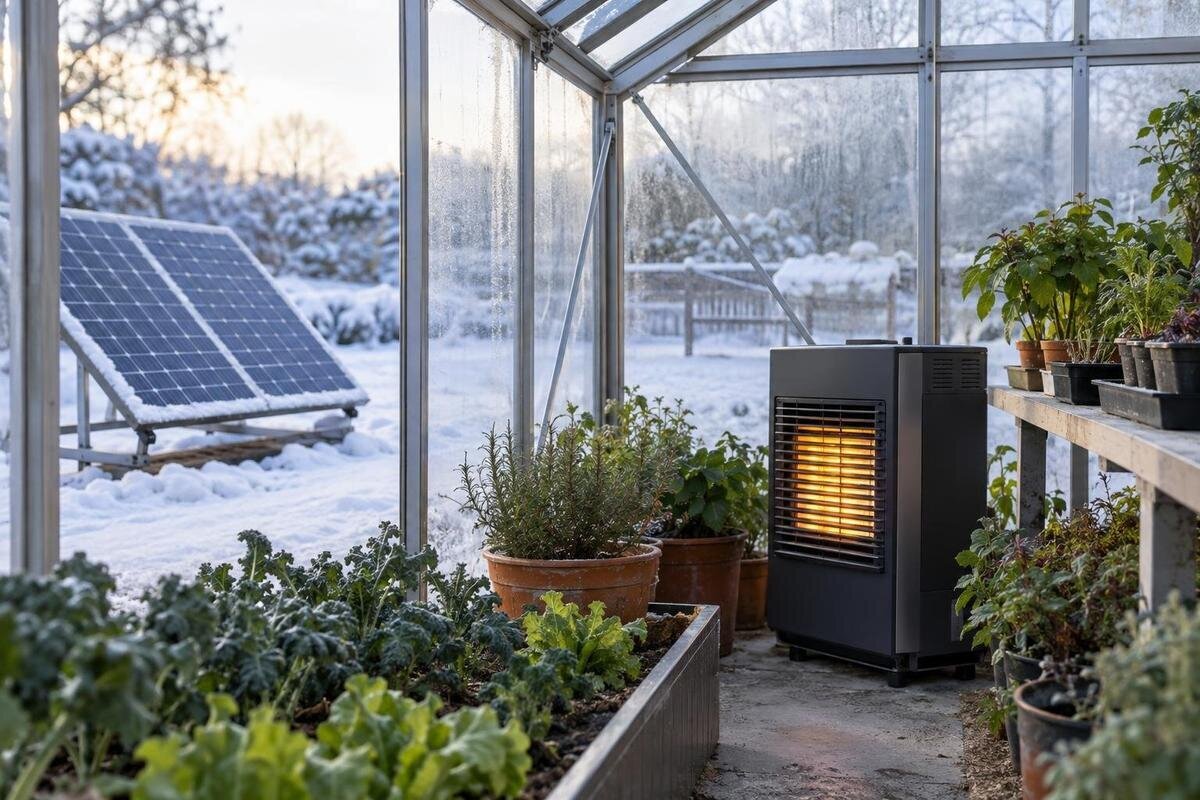
Greenhouse heating and winter energy
Solar panels can contribute to greenhouse heating in a Canadian winter, but they cannot be assumed to cover it. The periods with the greatest heating demand often coincide with short days, low sun, cloud and snow-related production losses; overnight, panels make no electricity. A realistic plan compares local winter generation with the heat required by the exact greenhouse, then identifies what supplies any remaining demand: grid power, stored electricity or dependable backup.

01
Solar panels provide electricity, not direct heat
Solar panels do not warm a greenhouse directly. A photovoltaic (PV) array produces electricity that can run an electric heater; sunlight entering through glazing can also warm the interior during the day, but passive solar gain is a separate effect. It may help in sunny hours, yet it is not dependable heat after sunset. Keep three questions distinct: how much electricity the array generates, how much heat the enclosure loses, and how the selected heater uses electricity to replace that loss. Treating them as one panel-size estimate hides the central winter constraint. Panels may also power controls or ventilation, leaving less surplus for heat.
Solar heating can still be practical as a contribution: panels may offset some daytime demand, while a grid connection can supply electricity when production falls, subject to the connection and tariff. That is different from maintaining a chosen temperature entirely from solar power. The latter depends on the plants’ minimum needs, heat loss from the exact structure, winter output at your site and the size and limits of any storage. A plan that assumes every sunny day will cover the following night is not a reliable winter plan.
Why winter solar output can fall as heating demand rises
Canadian winter solar conditions vary by site; a national or provincial average will not describe a particular shaded yard. Day length, sun angle, cloud cover, nearby trees or buildings, snow on modules, and array orientation and tilt all influence PV production. Ask for a site-specific monthly estimate using the actual location and proposed layout, with shading and snow assumptions stated. A panel’s rated capacity is not a promise of daily winter energy. Compare a typical month and difficult stretches, because an annual total can conceal a shortfall when the heater needs power most.
Greenhouse heat demand is also time-sensitive. It generally increases as outdoor temperatures fall if the indoor target stays the same, while panels produce no electricity after dark and may produce little during cloudy periods. Heat escapes through the enclosure, joints and openings; wind exposure, door use and ventilation also affect how much heat must be replaced. A sunny afternoon can warm the space temporarily, but it does not show whether the greenhouse can hold the conditions your plants need through a long cold night. Compare supply and demand over matching periods, using realistic indoor and outdoor assumptions.
02
Estimate heat demand for the exact greenhouse
Before comparing panels, define what the greenhouse must do in winter. Identify the plants or activity that need protection, the minimum indoor temperature you are planning for, whether heating is continuous or limited to certain times, and the growing area actually in use. A heat-loss estimate should describe the exact dimensions and shape, glazing or covering, seals, ventilation conditions, ground or perimeter losses, and local outdoor conditions. Ask the person preparing it to state their assumptions and distinguish peak heater capacity from total seasonal energy; those figures answer different questions. Keep the assumptions together so that each proposed solar system is compared with the same heating requirement. If one estimate covers the whole greenhouse and another covers only a growing zone, their results are not directly comparable. Likewise, a plan for maintaining minimum plant conditions should not be compared with one based on a warmer indoor target without identifying that difference.
If a heater is already operating, its recorded electricity use can help anchor the estimate. Tie the measurement to representative cold periods and the same indoor target conditions; a label showing rated watts alone does not say how long the heater will run. A mild week is not a winter total. For a new setup, obtain a professional or manufacturer-supported heat-loss estimate rather than relying on a generic greenhouse rule. The Bloomcabin Prestige Greenhouse with Metal Base is listed in sizes from 3.77 m² to 28.08 m². That range makes the exact model size important, but does not establish its heat loss.
Read heater specifications alongside greenhouse details
A heater’s electrical input rating tells you how much power it draws while operating; it does not, by itself, give the monthly energy use or cost. Controls affect run time, while weather and heat loss affect how often the heater must operate. A resistance heater converts nearly all of the electricity it uses into heat at the point of use, but that is not proof of low operating cost. If considering a heat pump, request its heating capacity and electrical input at the cold outdoor conditions relevant to your site, rather than relying on a rating for milder conditions.
Choose heating equipment only after you have an estimate of the greenhouse’s demand. The Classic Aluminum Greenhouses are listed in sizes from 3.77 m² to 28.08 m², but the range does not specify the glazing performance, air leakage, insulation or ventilation of a particular configuration. Record which ventilation and insulation options are actually offered for the selected model, rather than including an assumed upgrade in the estimate. Compare the heater’s documented winter output with the assessed demand, keeping its electrical input and heating output clearly identified. A qualified professional can then confirm whether the electrical supply and equipment are suitable for the proposed setup.

03
Compare monthly solar production with winter use
Ask a solar professional for a monthly production estimate based on your location and intended system, not only an annual total. The estimate should reflect the proposed panel direction and tilt, nearby shade, likely snow coverage and system losses. Ask which assumptions are used and whether the figures describe energy available to the heater or production before other equipment and storage losses. Monthly estimates are more useful than a single yearly number, though even a monthly total can hide several consecutive low-production days. Put generation and heating demand side by side for each winter month, using the same energy units and clearly identifying what each figure includes. A month with enough total production may still have a timing mismatch: daytime output does not directly supply a heater running after sunset. Keep that timing question separate from the seasonal balance. First establish whether winter generation is sufficient in total, then examine how storage or another supply would cover the hours when production and heating use do not coincide.
Compare the estimate with expected heater use over the same months, then consider shorter low-sun spells. Allow for electricity used by fans, pumps, controls or lighting if they share the system, and do not assume every PV kilowatt-hour reaches the heater. The Spacious Greenhouse is listed from 47 to 70 m²; use the exact selected footprint and documented construction in the demand estimate, not the catalogue category as a heat-use forecast. Panels can be located away from the greenhouse. If roof mounting is considered, do not assume a garden greenhouse roof can support an array; have a qualified structural professional and installer assess the exact structure and site conditions.
Battery capacity and overnight heating
A battery stores some electricity generated earlier so it can be used later; it does not create more energy or remove a seasonal shortfall. Its energy capacity, usually stated in kilowatt-hours (kWh), is different from the power an inverter can deliver, stated in kilowatts (kW). Both matter: the heater and other loads need enough output at the same time, as well as enough usable stored energy for the intended period. Conversion losses, operating limits and any reserve also affect how much stored energy is available to use.
Battery performance and permitted operating temperatures depend on the specific equipment. Ask for the usable capacity and power limits of the proposed battery and inverter, and follow their manufacturers’ environmental requirements; have a qualified installer assess the system and its location. For an overnight comparison, identify how much stored energy is expected to be available at sunset, rather than treating the battery’s full capacity as available every evening. That starting point must be consistent with the day’s expected generation and electricity use. The Limited-Edition Aluminum Greenhouses with Storage are listed from 5.52 m² to 28.08 m². Their built-in storage refers to greenhouse space, not electrical energy storage or a battery rating. Keep the greenhouse’s heated area and the electrical storage system as separate inputs to your plan.
04
Grid power and backup solve different problems
With a grid connection, utility electricity can supply a shortfall when solar production is low, but that does not mean the grid stores your daytime surplus. The value of exported electricity and any credit for it depend on the utility arrangement and tariff; ask what applies to your account. Grid connection and backup operation are also different things. A standard grid-tied system may stop supplying electricity during a utility outage unless it includes equipment designed for backup operation. Ask the solar contractor and utility what the proposed system can power and under which conditions.
An off-grid plan has no utility supply to fill the gap. It must account for night use, low-output periods and the heater’s documented electrical demand, along with any essential controls or other loads. Choose backup equipment that is suitable for the greenhouse environment and have its capacity and installation assessed by qualified professionals. Do not infer backup capability from a panel or battery capacity alone. The Limited Edition Aluminum Greenhouses are listed from 3.77 m² to 28.08 m²; that footprint is not a heater requirement, so use the exact greenhouse configuration and documented heater specifications when discussing backup.
Choose the area you intend to heat
Heating a smaller active area can make the total requirement easier to manage, but floor area is only one input. Greenhouses with similar floor areas can differ in shape, exposed surface, covering, sealing and ventilation, while their required indoor conditions may also differ. Decide whether you intend to heat every bench, aisle and storage area or only a defined growing zone. Any division of the space still needs to allow suitable airflow and safe heater operation. A larger heated enclosure generally means more space to account for, all else being equal, but area alone does not give a fixed energy requirement.
A catalogue size range can help frame the footprint decision: Lean-To Greenhouses are listed from 3.69 m² to 14.34 m². The name does not prove that a particular installation will need less heat or that a nearby wall will provide useful warmth; the exact structure, fit and site matter. Before choosing a model for winter use, check the available glazing, sealing and ventilation information for the exact size and configuration. Base the heat estimate on the structure you are actually considering, not on an assumed benefit from its shape or position.

05
Lower heat loss without blocking necessary ventilation
Once you know what needs to be warm, look for avoidable heat loss while keeping the greenhouse usable. Check that doors and vents close as intended, and address gaps only with compatible materials or manufacturer guidance. A thermal screen may suit some designs, but verify that it is compatible with the specific structure, leaves vents operable, preserves required heater clearances and allows enough light for the plants. Sealing every opening to retain heat is not a sound default: plant care still requires suitable air exchange and moisture management. Confirm any insulation or ventilation option for the exact model instead of assuming it is included or compatible from a product image.
Plant choice is part of the energy plan. A plant that tolerates a cool dormant season can have different requirements from seedlings or tender crops, so use reliable care guidance for the plants you intend to grow and set the heating target accordingly. Do not size the system from a preferred daytime temperature alone. The T-Shaped Orangery Greenhouse is listed from 16.52 m² to 30 m²; include the selected size and the intended growing area in your plan. If you change the plant selection or the space allocated to it, revisit the heating assumptions before comparing costs. Otherwise, you could be pricing one growing plan while sizing the equipment for another.
Compare costs using local tariffs and documented use
Base an operating-cost estimate on expected or measured heater electricity use and the rates that apply to your site. Check your utility bill for time-of-use periods, tiers, energy charges and any export-credit arrangement. Do not substitute a national average or assume exported solar electricity offsets later purchases one-for-one. Keep fixed charges distinct from the additional cost of heating, and include electricity used by other equipment if it shares the supply. The same electricity use can cost differently under different plans, so use the applicable tariff and confirm any assumptions with your utility. Separate electricity used directly from the panels, electricity supplied through a battery and electricity purchased from the grid in the comparison. This makes it clear which portion of heating demand the projected savings relate to. Where export credits apply, show them separately from avoided electricity purchases rather than combining both into an unexplained savings figure. Keep the period covered by each cost figure explicit, whether it is a winter month, the heating season or a full year.
Compare consistent cases: grid-powered heating alone, PV with grid support, and PV with storage and separate backup. Use the same plant requirements, greenhouse assumptions and heater specifications in each case, and examine winter months rather than relying only on annual totals. Include equipment and service costs from actual quotes without treating projected savings as guaranteed. For a Pyramid Greenhouse, listed in sizes from 5.53 m² to 18.9 m², record the selected size consistently across all three cases. Keep initial equipment costs separate from ongoing electricity and service costs so you can see what each proposal changes. If a proposal uses a different heater, indoor target or heated area, identify that change before attributing the entire cost difference to solar panels or storage.
Frequently asked questions
Can solar panels heat a greenhouse all winter without grid power?
It is possible only if winter generation, usable battery capacity and heater demand are assessed for the exact site and greenhouse. Nights and extended low-production periods create gaps, so do not assume a solar-only system will maintain the conditions your plants need without suitable backup.
Will a battery cover overnight heating?
It may shift some daytime solar electricity into the evening, but whether it can cover a particular night depends on the heater’s energy use, the battery’s usable capacity and its power limits. A battery also cannot make up for a prolonged seasonal shortfall in generation.
Should I size panels from the heater’s wattage?
No. The heater’s rating does not tell you how long it will run or how much heat the greenhouse needs. Compare a heat-loss estimate for the exact structure and plant conditions with monthly winter generation for your location.
Does a panel estimate tell me the heating cost?
Not on its own. Use expected or measured heater electricity use and the rates that apply to your utility account. Check any time-of-use periods, tiers and export-credit arrangements rather than assuming solar production offsets later purchases one-for-one.
Can I put solar panels on the greenhouse roof?
Do not assume a garden greenhouse roof is rated to support solar panels or their attachments. Ask a qualified structural professional and solar installer to assess the exact structure and site before considering roof mounting.
For many growers, the realistic aim is to offset part of winter electricity use, not to promise solar-only heat. Build the plan around the exact greenhouse, a documented heater, local monthly PV estimates, your actual electricity tariff and a clear source for the remaining demand. If the numbers do not balance during low-production winter periods, adjust the heated area or growing plan, add a suitable supply source, or revise the system assumptions rather than relying on an annual solar total.
