
Why Are Young Greenhouse Cucumbers Turning Yellow?
Greenhouse crop guide
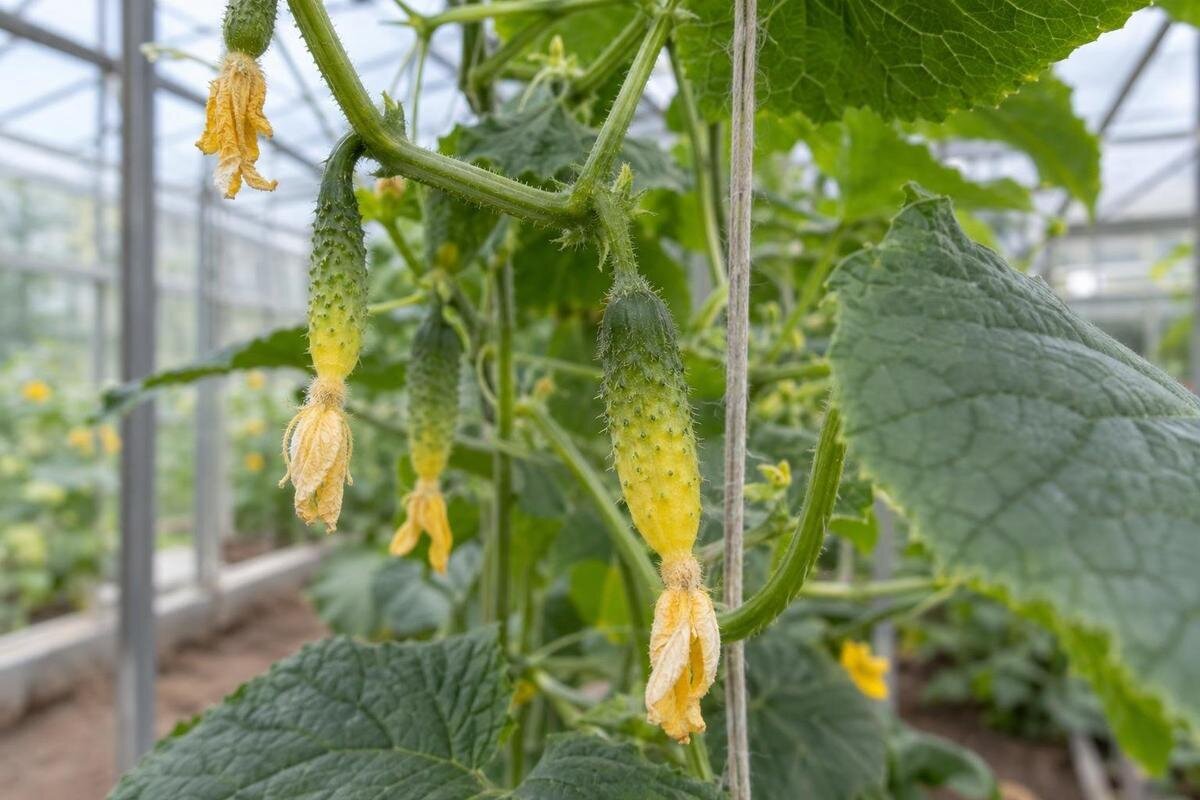
When a greenhouse cucumber turns yellow while it is still small, the fruit has often stopped developing and the plant is shedding it. This is called fruit abortion; it is not automatically a leaf nutrient problem, and colour alone cannot identify the trigger. The useful clues are the cultivar’s pollination needs, how many fruits are developing at once, temperature changes and moisture around the roots. Compare several flowers and plants before changing care.

What yellowing baby cucumbers usually mean
A female cucumber flower has a small ovary behind its petals—the little cucumber visible before the flower opens. If that ovary begins to lengthen, fruit set has started. On a pollination-dependent cultivar this follows pollen transfer; a parthenocarpic cultivar can set fruit without fertilization. When a young fruit stays short, turns yellow, softens or shrivels, and then drops, it has likely stopped developing. Gardeners call this fruit abortion. That term names the outcome, not the cause. A cucumber that grows close to mature size and then turns yellow on the vine is a different case and may simply be overmature.
Colour on its own is a weak diagnostic clue. Record when the flower opened, whether the fruit ever lengthened, and whether nearby leaves, stems or other fruits look affected. One fruit may fail while the rest of the plant continues normally; several stalled ovaries across plants or successive flowers point to a condition worth investigating. Photograph the same fruit over a few days, with a ruler beside it if that helps you compare growth. If yellow fruit also has soft spots, lesions, stem damage or a rapidly wilting vine, do not assume poor pollination; pests, disease or root damage may need closer assessment.
Confirm the variety’s pollination needs
Start with the seed packet or cultivar name. Parthenocarpic cucumbers can set fruit without pollination, a trait found in many greenhouse varieties, but it is not universal. Pollination-dependent types need pollen moved from a male flower to a female flower. The female bloom has a swelling behind its petals; a male bloom sits on a narrow stalk without a miniature cucumber. Some cultivars produce mostly one flower sex or have other specific instructions, so avoid identifying the variety from flower count alone. If the packet is unavailable, look up the exact cultivar rather than using the broad term ‘greenhouse cucumber’ to decide what it needs.
In an enclosed greenhouse, bee activity may be limited, which matters only when the cultivar needs pollen. Note whether male and female flowers are open at the same time and whether insects visit; these are clues, not proof. Do not hand-pollinate automatically: parthenocarpic types do not need it, and pollination can produce seeded or unevenly shaped fruit in some cultivars. Lack of bees cannot explain every yellow fruit, either. If you are comparing pyramid greenhouse options for a future purchase, include pollinator access in your questions only if your intended crops need it. Check the actual openings rather than inferring access from the exterior shape. Keep the cultivar’s requirements separate from your observations: a note that no insects visited is relevant to a pollination-dependent cucumber, but is not enough to explain fruit loss on a parthenocarpic plant.
See whether the plant can support its fruit load
Compare the number of cucumbers setting with the size and condition of the plant. A vigorous, established vine with a healthy leaf canopy can support more developing fruit than a recently transplanted, root-restricted, shaded or recovering plant. When several ovaries start growing at once, the fruits compete with shoots and roots for water and sugars. The plant may retain some while others yellow and stop. This is a plausible explanation if losses happen during a heavy set, while the leaves remain reasonably healthy and later flowers set successfully. It is less convincing if the whole vine is wilting or its foliage is declining.
Harvest cucumbers at the size recommended for that cultivar and do so regularly; leaving fruit to become oversized can keep the plant investing in older fruit. Handle vines carefully and retain healthy leaves, which supply energy for continued growth. Removing a clearly dead, shrivelled fruit can make it easier to monitor new set, but stripping foliage or pruning hard is not a cure. If crowding makes harvesting awkward, plan the footprint and plant count together. The Classic aluminum greenhouse range lists floor areas from 3.77 to 28.08 m². When comparing sizes, sketch the beds and walking space rather than treating the entire floor area as planting space. Check whether you can see and reach fruit along each row without pulling vines aside. A workable harvest route addresses access; it does not establish how many fruits an individual plant can support.
Look for temperature swings and poor air exchange
Greenhouse air can heat quickly in sun and cool after sunset, so a warm afternoon does not tell you what flowers experienced overnight. Cold spells and excessive heat can interfere with flowering, pollen function or fruit retention, while fast swings add stress. Keep a minimum-and-maximum thermometer near the cucumber canopy, shaded from direct sun and away from a door or wall that could give a misleading reading. Compare readings on days when new fruit turns yellow, and note night conditions and whether vents were open. A pattern repeated at certain times is more useful than assuming one universal ideal temperature.
Use the greenhouse’s existing vents and doors to reduce excessive heat when conditions allow, and avoid exposing plants to a sudden cold draft. The aim is to understand and moderate swings, not to chase one number: cultivar, plant stage and local weather differ. High humidity and stagnant air can coincide with poor growing conditions, but neither proves the cause of a yellow fruit. If you are comparing the lean-to greenhouse range for a future growing space, review the vent positions and how you would operate them at your proposed site. The model name cannot establish actual air movement or temperatures. Bring your current temperature notes into that comparison: identify when overheating or overnight cooling occurs, and distinguish those observations from assumptions about how a different structure would perform. That gives you specific questions to ask about the configuration.

Keep root-zone moisture steady
Cucumbers need a dependable water supply while they are making leaves and fruit. Letting the root area become very dry and then saturating it can stress the plant during flower and fruit development. Persistently wet, poorly drained growing medium can cause trouble too: roots need oxygen, and damaged roots may take up water and nutrients poorly. Either situation can leave a plant unable to support new fruit. Midday leaf wilt alone does not distinguish between them. Check moisture below the surface in more than one place, including near and away from an emitter or watering point; the surface can look wet while part of the root zone remains dry.
In containers, use the growing medium’s condition and the pot’s drainage to guide watering; in beds, check that water reaches the active root area without pooling. Adjust frequency to heat, plant size and growing medium instead of following an unchanging calendar. Compare the same spots over several days to see whether the soil dries between waterings or stays saturated. If one corner is consistently hard to reach, note the path and bed position rather than assuming every plant needs more water. For a planned purchase, compare the limited-edition aluminum greenhouse range with a sketch of your watering route. Mark where containers or beds would sit and which areas you would need to reach. Check the proposed layout and drainage details separately from the product’s appearance. This keeps a practical access problem distinct from the question of whether the roots are too dry or too wet.
Check nutrition and root health
Nutrition may contribute to weak growth, but a yellow fruitlet by itself does not identify a nutrient shortage. Nutrient problems often affect growth and foliage as well, yet yellow leaves, poor growth and poor fruit set can also reflect water stress, root trouble or unsuitable pH. Avoid diagnosing a deficiency by matching one colour to one fertilizer. If several plants are affected, use a soil or growing-medium test and review the pH, fertilizer history and irrigation-water inputs where relevant. Excess fertilizer salts can also damage roots, so adding more without evidence can worsen uptake rather than solve it.
Check the cultivar’s feeding instructions and the actual bed or container test before changing a fertilizer program. In a container, the original mix may have changed through watering and feeding; in a bed, a test is more informative than guessing from the surface. Keep the seed packet, watering notes and test results together so cultivar identity and recent care are easy to compare. Record what fertilizer was applied, how much and when, rather than noting only that a plant was fed. If you are considering a limited-edition greenhouse with built-in storage, review the storage arrangement alongside the growing area in the product details. Do not assume what it can hold or how much room remains for your planned beds. Keeping supplies and records accessible is a planning consideration, not a reason to expect a different greenhouse to resolve a nutrient problem.
Use other symptoms to spot a wider problem
Look beyond the small fruits to judge whether this is mainly a fruit-set problem or a wider plant problem. If leaves remain green and firm while only a few ovaries yellow, fruit load or pollination may be more likely than a general nutrient issue, though neither is confirmed. If leaves also yellow, wilt, become mottled or show stippling, inspect both sides of leaves, stems and the root area. Look for clusters of insects, feeding marks, decay or damage without assuming that any one sign identifies a disease. Compare affected and unaffected vines, especially if they are in different containers or parts of the bed.
Fruit that turns yellow with soft, water-soaked patches, visible lesions or a damaged stem deserves a different look from an evenly yellow, shrivelling fruitlet. Do not remove a whole plant or healthy leaves on colour alone. Take clear photos of the whole vine and affected fruit, and record the cultivar and recent conditions. If decline spreads quickly, several plants wilt or lesions keep appearing, ask a local horticultural diagnostic service or extension office to assess the evidence. A photograph can narrow possibilities, but may not show a root problem or confirm a pathogen.
Assess shade, crowding and greenhouse layout
Shade and a dense canopy can reduce the leaf area receiving useful light and make it harder to inspect flowers or keep air moving around foliage. Cramped rows may also hide fruit until it is older and harder to assess. Check whether affected plants sit under the same overhead shade, behind a taller crop or in a crowded bed. Do not remove a large share of healthy leaves to ‘open up’ the vine; leaves supply energy for continued growth. Compare spacing, visible light and plant condition, then make modest adjustments that preserve healthy foliage.
Treat airflow, light and access as connected layout questions, not as a shortcut diagnosis. A poorly placed vent may leave one area warmer, and dense growth can make conditions less even, but one yellow fruit does not prove either. Sketch bed positions, walking routes and where shade falls before changing the structure. When reviewing a T-shaped orangery greenhouse, use the actual drawings to place your intended crops rather than judging the growing layout from the exterior. Mark taller crops, cucumber rows and the space needed to reach vents and inspect flowers. Compare that plan with the crowded or shaded areas you have already observed. The shape alone cannot tell you whether cucumber leaves will receive enough light. Keep proposed layout improvements tied to a specific access or crowding problem rather than treating a new footprint as a diagnosis.

Change one factor at a time
After checking the variety, fruit load, temperature and root moisture, choose one low-risk change that addresses the strongest clue. That might mean harvesting overmature fruit, correcting an obvious dry spot or using existing vents more consistently. Do not change watering, fertilizer, pollination and pruning all at once: if fruit set improves, you will not know why, and a new imbalance may appear. Avoid increasing fertilizer or aggressively pruning in response to yellow fruit alone. Keep care consistent on comparable plants and note the date of any change, so the next set gives you a more useful comparison.
Use location as well as timing. If losses recur only in a warm end, cold corner or hard-to-reach bed, compare conditions there with the rest of the greenhouse before considering a renovation. Describe the problem precisely: which plants are affected, what differs at that location and whether the pattern persists after a small adjustment. If a new structure is already in your plans, review the Prestige greenhouse with a metal base against those observations. Check its specifications and proposed position rather than assuming that the model name or base establishes a particular vent arrangement or temperature control. Separate the purchase decision from the crop-care experiment so you can still judge whether the adjustment helped new fruit develop. If losses are not tied to a location, return to the cultivar and plant-level clues before changing the greenhouse.
Track the next flowers and fruits
Follow the next group of flowers rather than expecting an already-yellow fruit to recover. Mark a few newly opened female flowers, photograph them and record whether each ovary enlarges over the following days. Log the cultivar, flowering date, approximate daily maximum and minimum temperatures, watering changes, fruit load and harvests. You do not need elaborate equipment; a notebook and consistent observations are more informative than trying several remedies without notes. Compare fruit on the same plant and, if possible, at different locations in the greenhouse.
If the same area repeatedly loses fruit, map that pattern against vents, shade, watering access and plant density. Give each observation a location as well as a date, so a note such as ‘three stalled fruits’ identifies the affected vine or row. A larger footprint does not automatically produce uniform light, heat or irrigation. If you are planning a larger growing space, the spacious greenhouse range has listed floor areas from 47 to 70 m². Use a proposed bed plan to consider how you would inspect and record conditions across that area; the listed size is not a promise about crop performance. A recurring pattern may direct you to root-zone checks, canopy crowding or a local temperature difference. Give one change time to affect a new set, then compare the records rather than judging by a single cucumber.
Frequently asked questions
Will a yellow baby cucumber turn green again?
Usually not. If the fruit has stopped growing and begun to shrivel, it is unlikely to resume normal development. Focus on what may have affected that fruit set and watch the next flowers for a clearer result.
Do greenhouse cucumbers always need pollination?
No. Parthenocarpic varieties can set fruit without pollination, while other varieties need pollen transferred to female flowers. Check the seed packet or cultivar information before trying to change pollinator access or hand-pollinate.
Should I water more when young cucumbers turn yellow?
Not without checking the root zone. Dry conditions can stress a plant, but persistently wet, poorly drained soil or potting mix can also damage roots. Check moisture below the surface in more than one spot.
Can fertilizer prevent fruit abortion?
Only if a nutrient problem is actually contributing. Yellowing fruit alone does not identify a deficiency. Review feeding and watering records, and use a soil or growing-medium test before adding fertilizer; excess salts can harm roots.
Should I remove the yellow fruit?
A clearly shrivelled, stalled fruit can be removed so it is easier to monitor new growth. Leave healthy fruit and leaves in place: removing foliage or pruning heavily will not correct the underlying cause.
Treat yellowing fruit as a signal to compare the cultivar label, plant load, temperature notes and root-zone moisture. Correct the clearest issue first, then watch how newly opened flowers develop. If symptoms spread to leaves or stems, or fruit develops lesions, get a closer horticultural assessment instead of relying on colour alone. Several factors can overlap, so a short record of what changed and where fruit failed is often more useful than trying several remedies at once.
