



How to Prepare Your Patio for a Pergola Installation in the UK
A well-planned pergola starts long before installation day. This UK guide explains how to prepare your patio, garden layout, furniture zones, drainage, walking space and surface before choosing a Bloomcabin pergola for outdoor living.
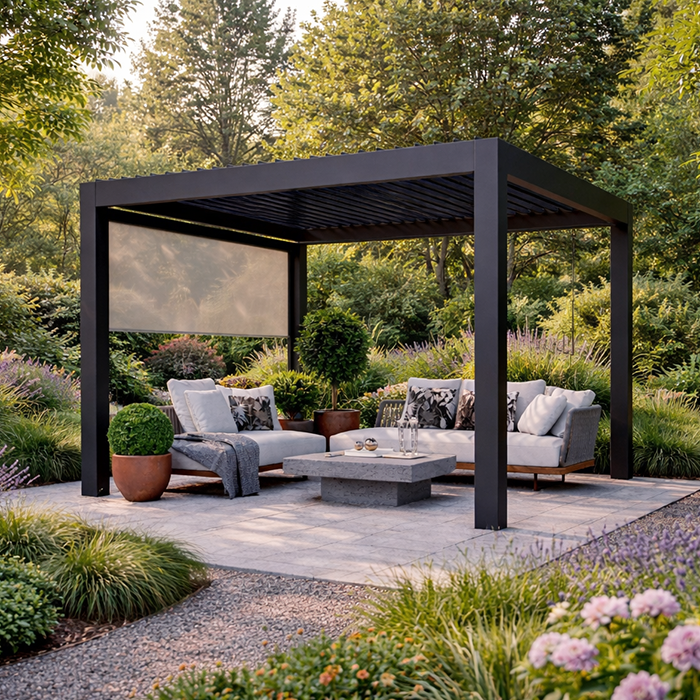
What this guide covers
This article is a practical planning guide for anyone preparing a patio pergola, aluminium pergola, lean-to pergola or bioclimatic pergola for a UK home.
- How to decide what your pergola should actually do
- How to choose the right position for a patio, garden or house wall
- How to plan around furniture, doors, walking routes and outdoor dining
- Why drainage matters before a pergola installation
- How to prepare for accessories, lighting, glass walls and future upgrades
- How to compare a freestanding pergola, a lean-to pergola and a bioclimatic pergola
Start with the outdoor room you want to create
Before measuring the patio or choosing a colour, decide what kind of outdoor space you want. A Bloomcabin Pergola can create shade, define a seating area, protect an outdoor dining space or turn a simple patio into a more structured outdoor living room.
For many UK gardens, the biggest mistake is planning the patio layout around the structure alone. A pergola should not just fit on the paving. It should work with the furniture, the house, the garden, the doors, the direction of the sun and the way people move through the space.
If you want a compact seating corner, the preparation will be different from a pergola designed for family meals, entertaining guests or a more sheltered year-round outdoor space. A larger bioclimatic pergola with adjustable louvres, LED lighting, screens or glass walls needs more forward planning than a simple open patio cover.
Bloomcabin develops modern garden structures for outdoor living, and the Greenhouses & Conservatories category lets you compare the freestanding Bloomcabin Pergola, the wall-mounted Bloomcabin Lean-To Pergola and the advanced Bloomcabin Bioclimatic Pergola.
If you are still at the research stage, the Useful Information area is a good place to check how to order, terms of purchase and delivery, warranty and return and cancellation policy before making final decisions.
Choose the pergola type before fixing the patio layout
The type of pergola changes how the patio should be prepared. A freestanding pergola, a lean-to pergola and a bioclimatic pergola all affect the garden in different ways.
A freestanding aluminium pergola gives you flexibility. It can sit in the centre of a garden, at the edge of a patio, near planting or in a dedicated lounge area away from the house. The key is to make it feel intentional, not like an object placed on spare paving.
A lean-to pergola needs a stronger relationship with the home. Because it is mounted to the wall, you should think about patio doors, kitchen access, living-room flow, windows, rooflines and the visual balance of the façade.
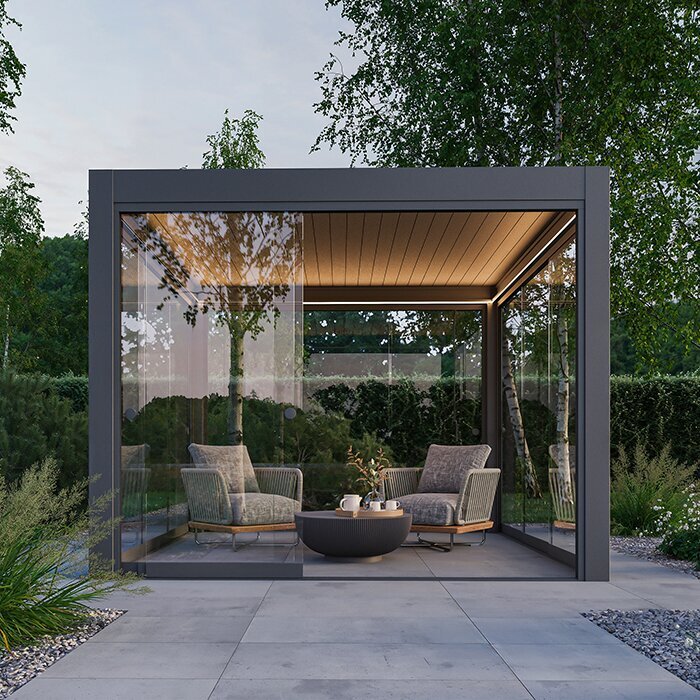
A bioclimatic aluminium pergola should be planned more like a complete outdoor room. Adjustable louvres, automated controls, optional screens, LED lighting and glass walls all affect the way the space will be used over time.
If you are comparing long-term value, design quality and configuration options, it is worth reading about premium quality, the largest selection of design options and the wider extensive product range before confirming your final pergola type.
Pick the position around daily movement, not empty space
A pergola position that looks right on a plan can still feel wrong in everyday use. A few centimetres can affect how easily people walk from the kitchen to the garden, how chairs pull back from a table, how much light reaches the house and how naturally the pergola sits against the patio.
For a UK patio, think about the real movement pattern first. Where do people step out from the house? Where is the garden path? Where do children, guests or family members naturally pass? Where will the table, lounge furniture, planters and barbecue sit?
If the patio connects directly to the home, a Bloomcabin Lean-To Pergola can create a smooth indoor-outdoor transition. If the best seating area is further into the garden, a freestanding Bloomcabin Pergola may be more flexible.
Positioning should also take sun and rain into account. UK weather can change quickly, so a good adjustable louvered roof or a well-positioned patio pergola can make outdoor living more comfortable in both bright sun and light rain.
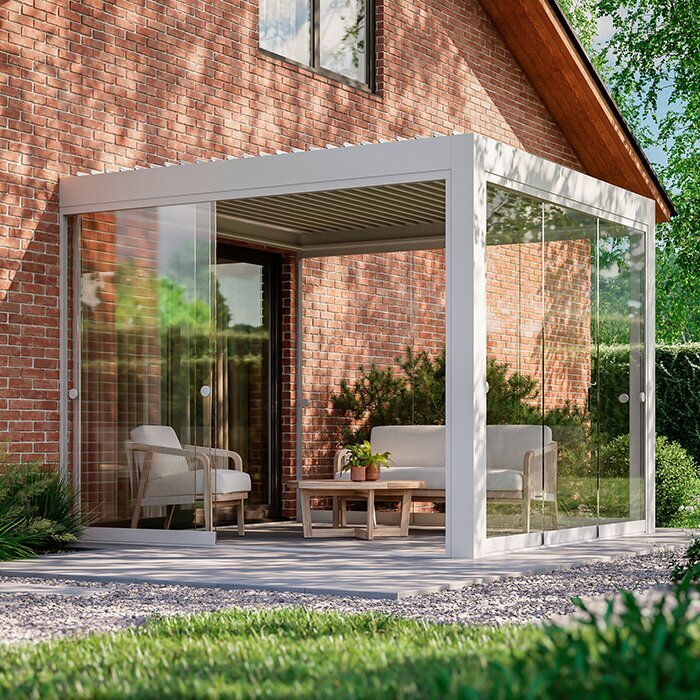
Measure the patio as it will be used, not as it looks when empty
One of the most common mistakes is measuring only the open floor area. An empty patio can look generous, but the space changes once you add the pergola frame, table, chairs, lounge furniture, planters, storage, garden access and the space needed to move around comfortably.
Mark the pergola footprint on the patio before ordering. Use tape, string, chalk or temporary furniture placement to see how the covered area will feel in real life. This is especially important for narrow patios, terraced-house gardens, compact town gardens and patios immediately outside French doors or sliding doors.
Bloomcabin pergolas cover multiple sizes, from compact patio solutions to larger outdoor living spaces. Before choosing a final size, read the guide to aluminium pergola dimensions and compare how 3x3 m, 3x4 m, 3x5 m, 3x6 m, 4x4 m, 4x5 m and 4x6 m options would work with your furniture.
The right pergola size is not simply the largest structure that fits. It is the size that feels comfortable after chairs are pulled out, people walk through the space, patio doors open, drainage routes are considered and the garden still feels balanced.
If you are unsure which size suits your patio, the page on excellent customer service is useful when you need guidance on product choice, delivery planning or general configuration questions.
Check the patio surface and installation access
A pergola needs a practical, stable and well-prepared setting. The patio may look finished, but it still needs to work as an installation area and a long-term outdoor living surface.
Before ordering, check whether the chosen area is level, accessible and logical for everyday use. Think about how the product will be delivered, how the components will be moved to the installation area, whether there is enough working room and whether steps, side gates, narrow paths or garden walls could affect access.
The Bloomcabin pergola range uses strong aluminium profiles and modern engineering, so the surrounding patio should feel just as considered. A high-quality patio pergola deserves a surface that supports a neat, stable and visually clean result.
For a broader understanding of aluminium outdoor structures, the page on aluminium greenhouses and conservatories is useful. The guide to maintenance of your aluminium greenhouse also offers helpful long-term thinking about cleaning, drainage and material care for outdoor aluminium structures.
Plan rainwater drainage before the pergola arrives
Rainwater is one of the most important planning points for a UK pergola. A patio cover must work with rain, wind, wet seasons and the existing slope of the garden.
Bloomcabin pergolas include an integrated water drainage system, but the rest of the patio still matters. Check where water currently runs, whether the patio slopes towards the house, whether there are low points near the seating area and whether water could collect under furniture or at the edge of the pergola.
Good drainage makes the finished outdoor space easier to use and easier to maintain. It also helps the pergola feel like an intentional part of the garden design rather than a structure added after the patio was already finished.
For practical questions about materials, drainage and daily use, read the frequently asked questions about Bloomcabin aluminium pergolas.
Design the furniture layout before choosing accessories
Many pergola projects start with the exciting parts: colour, lights, screens, glass walls and roof type. But furniture should come first. If the table, sofa or chairs do not fit comfortably, no accessory will fix the layout.
Think about how people will actually sit, stand and move. Dining chairs need space to slide back. Lounge chairs need breathing room. Serving food outdoors requires clear circulation between the kitchen, table and garden. If the pergola will be used for entertaining, allow more space than you would for a quiet two-person corner.
A compact aluminium garden pergola may be enough for relaxed seating, but a larger bioclimatic pergola with glass walls may be better if the patio is meant to become a more complete outdoor living room.
If the project is part of a wider garden upgrade, the page about how to improve your home helps place the pergola in a broader home-and-garden context.
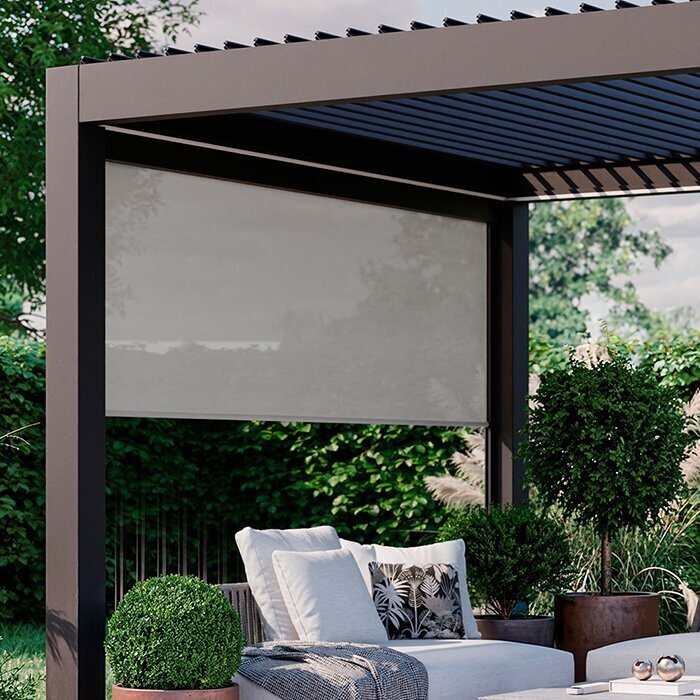
Match the pergola to the house, not only to the garden
A pergola is a functional patio cover, but it is also a visible architectural feature. It should work with the house façade, window frames, patio doors, rooflines, paving, fencing and garden planting.
This matters even more with a wall-mounted lean-to pergola, because the structure becomes part of the home’s visual composition. A pergola that lines up well with doors and windows can look planned and architectural. A pergola that ignores the house can feel like an afterthought.
Bloomcabin pergolas offer RAL colour choices, which helps you match the pergola to window frames, doors, brick, render, cladding, fencing or other garden features. A darker aluminium pergola can give a crisp modern look, while lighter colours may work better with softer façades or traditional homes.
For inspiration on configuration and appearance, the page on the largest selection of design options is especially relevant. If value is also part of the decision, the pages on competitive prices and premium quality are useful before finalising the project.
Leave room for future pergola accessories
A pergola is rarely bought for one season only. It is usually part of a longer-term garden plan. That means you should think about future upgrades before the installation.
If you may want LED lighting, glass walls, side screens, automated controls, extra shade, more privacy or a more enclosed patio space later, the pergola position and size should allow for those options.
The Bloomcabin Bioclimatic Pergola is particularly relevant if you want more control over sunlight, shade, airflow and rain protection. Its adjustable louvered roof and optional add-ons make it suitable for patios designed as more complete outdoor living areas.
Planning for accessories does not mean overcomplicating the project. It simply means thinking ahead. A pergola that works with future upgrades will usually feel more flexible, more practical and more valuable over time.
Check ordering, delivery and warranty before installation planning is final
A patio can be physically ready for a pergola, but the project still needs practical preparation. Delivery timing, access, order details, possible changes and warranty information should be checked before everything is fixed.
Before ordering, review how to order and the terms of purchase and delivery. These pages help you plan delivery, timings and the practical steps before installation.
If you are still comparing sizes, colours or options, it is also sensible to read the return and cancellation policy. For peace of mind, check the warranty page before confirming the order.
Because many UK buyers order garden structures online, it is also worth reading about secure eCommerce and purchases.
Common mistakes to avoid before installing a pergola
The most common mistake is preparing only for installation day rather than for everyday life afterwards. A pergola can be installed correctly and still feel awkward if the patio has not been planned properly.
Avoid these mistakes:
- Choosing the pergola position before planning the furniture
- Measuring the empty patio instead of the furnished patio
- Forgetting walking routes around the dining table
- Ignoring drainage and the direction of rainwater
- Choosing a pergola that is too small for daily use
- Choosing a pergola that visually overwhelms the garden
- Treating a freestanding pergola, lean-to pergola and bioclimatic pergola as if they need the same preparation
- Leaving ordering, delivery or warranty details until too late
If you want to avoid these issues, use the aluminium pergola FAQ, the pergola dimensions guide and the Useful Information section before confirming your final plan.
Questions to answer before you order a patio pergola
Before you place an order, answer these questions honestly:
- Will the pergola be used mainly for dining, lounging, shade, entertaining or all of these?
- Does the patio suit a freestanding pergola, a lean-to pergola or a bioclimatic pergola?
- Is there enough room for furniture and walking space?
- Does the pergola position work with the patio doors and garden access?
- Where will rainwater drain?
- Does the pergola visually suit the house?
- Could you want lighting, screens or glass walls later?
- Have you checked delivery, warranty and order terms?
Once these answers are clear, it becomes much easier to choose between a freestanding Bloomcabin Pergola, a Bloomcabin Lean-To Pergola and a Bloomcabin Bioclimatic Pergola.
Frequently asked questions
```
```
Should I choose the pergola type before preparing the patio?
Yes. A freestanding pergola, lean-to pergola and bioclimatic pergola each affect the patio differently. Choosing the type first helps you plan the right position, furniture layout, drainage and connection to the house.
How much space should I leave around patio furniture?
Leave enough room to pull chairs back, walk around the table and move between the house and garden. A pergola should cover the furniture without making the patio feel cramped.
Is a lean-to pergola best for a patio beside the house?
Often, yes. A lean-to pergola works well when the patio is directly outside a kitchen, living room or dining area because it creates a natural indoor-outdoor transition.
Do I need to plan drainage before installation?
Yes. Bloomcabin pergolas have integrated drainage, but you still need to check the slope of the patio, the direction of rainwater and any low points near the seating area.
Can a bioclimatic pergola make a patio more flexible?
Yes. A bioclimatic pergola offers adjustable louvres and can be enhanced with options such as lighting, screens or glass walls, making the patio more adaptable in changing weather.
Where should I read more before buying?
Start with Useful Information, then read the FAQ about aluminium pergolas, aluminium pergola dimensions, terms of purchase and delivery and warranty.
Final thought: the best pergola installation starts with a well-planned patio
A pergola installation does not begin when the structure arrives. It begins when you decide how you want to live outdoors.
If the patio is planned around real use, the finished pergola will feel more natural. Furniture will fit better. Walking routes will be clearer. Rainwater will be easier to manage. The pergola will connect more naturally with the house and garden.
The goal is not simply to install a patio cover. The goal is to create an outdoor living space that works well every day.
When you are ready to compare options, start with the Greenhouses & Conservatories category and review the Bloomcabin Pergola, Bloomcabin Lean-To Pergola and Bloomcabin Bioclimatic Pergola.
