
Aluminium or Cedar Greenhouse: Care Over Time
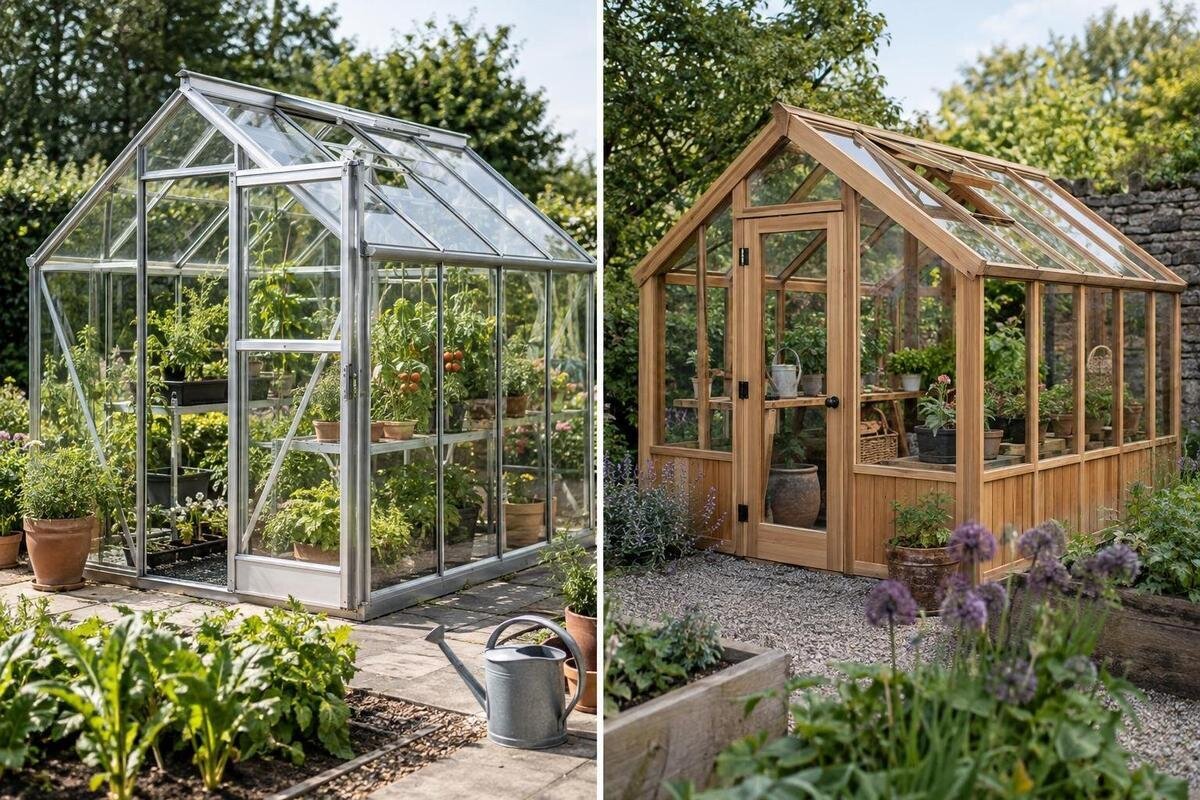
Greenhouse materials and maintenance
An aluminium greenhouse may avoid timber-specific treatments, but it is not maintenance-free; cedar may need finish care, but the required work depends on the timber and coating. The fairest comparison is between similarly sized, similarly built models, using each supplier’s written care schedule for the exact frame, finish, glazing and fittings. This guide explains what to ask, what to record and how site exposure and access affect ownership over time.

01
Compare complete greenhouse specifications
Frame material is only one part of a greenhouse’s maintenance. Glazing, seals, doors, vents, fixings, surface finish, base details and access to the roof all influence what needs cleaning, checking or replacing. A cedar frame with a properly maintained, specified finish is not a fair comparison with neglected timber, just as a well-finished aluminium frame should not be compared with a poorly assembled one. Begin with two actual models rather than claims such as “wood needs care” or “aluminium is maintenance-free”. Then separate tasks tied to the frame from those that apply to every greenhouse. A roof wash, door adjustment and timber recoat do not have the same cause or interval, so do not lump them into one vague maintenance total.
Make the comparison like-for-like: match usable area and overall layout, glazing type, number and type of openings, fittings, finish, foundation interface and construction quality as closely as possible. Ask each supplier for drawings, full specifications and the written care schedule for the exact configuration. Separate routine cleaning from treatment, finish touch-ups, inspection and parts replacement. For every task, record who recommends it, how often it is due, which product or method is permitted, and what sign means it needs attention. If one guide covers only the frame and the other includes glazing or fittings, clarify the scope before weighing the lists. Avoid comparing one maker’s interval with generic advice for a different product.
Routine care for an aluminium greenhouse
An aluminium frame does not need timber stain or wood preservative, but a greenhouse made with aluminium still needs cleaning and inspection. Fine dust, pollen, leaf fragments and plant residues settle on profiles and glazing; deposits may also conceal a blocked drainage route, worn seal or loose fitting. The finish matters: instructions for a coated surface may differ from those for another finish, and a damaged coating should not automatically be sanded or painted with a household product. Start with the manual’s approved cleaner and tools. If it gives separate instructions for the frame, glass, seals or fittings, keep them separate rather than applying one cleaner everywhere. A product suitable for glazing may not suit an applied frame finish.
Use a soft cloth or sponge with mild soapy water only if the supplier permits it, and avoid abrasive pads, strong solvents or pressure washing unless the care guide explicitly allows them. During cleaning, look over corners, joints, fixings, glazing retainers and the places where doors or vents move; note chipped finish, signs of corrosion on fittings, cracked seals or stiff operation. If a problem appears structural or a part no longer sits securely, ask the supplier or a qualified installer how it should be assessed rather than improvising a repair. For an option such as the aluminium Wall Greenhouse, ask for the routine for that model, including separate directions for its finish and fittings. Do not assume a general tip for aluminium applies to every coating.
02
Cedar maintenance depends on the timber and finish
Cedar is a broad material label, not a maintenance specification. Ask which species and timber grade are used, whether the timber has been treated, and whether the greenhouse arrives unfinished, stained, oiled or painted. Natural durability and weathering appearance can vary with these details, so the word “cedar” alone cannot establish an inspection or recoat interval. An exposed unfinished surface may change colour over time; that visual change is different from a problem with the timber. Decide whether you are content with a weathered appearance or want to preserve a particular colour, because the latter usually involves caring for the chosen surface finish. Ask whether the care plan distinguishes inside and outside surfaces, since their exposure may differ.
For a coated frame, follow the coating maker’s interval and condition checks, not an assumed rule such as every spring. The lower rails, cut ends, joints and places where water or debris linger deserve particular attention, and any specified treatment for exposed ends should be documented. Keep product names, application dates and preparation notes with the greenhouse paperwork; this makes a later repair less likely to involve an incompatible coat. If a surface becomes soft, splits or looks persistently damp, ask the greenhouse supplier or a timber specialist to assess it before covering it. Check that any treatment is suitable for adjacent sealants, glazing and metal fittings. Do not diagnose a problem from colour alone; use the signs set out in the manufacturer’s instructions.
Check the coating and treatment instructions
Do not compare “treated cedar” with “aluminium” as if these were complete surface descriptions. A timber frame may be supplied with or without a finish, and an aluminium frame can also have a specified surface treatment or coating. Ask the supplier to name the finish for the chosen configuration, state which frame components receive it, explain how to clean it and specify the interval or condition that calls for renewal. Ask what must not be used, how a small mark should be handled and whether directions differ for exposed and sheltered positions. If the finish is factory-applied, ask whether later maintenance needs a particular compatible product.
Keep separate records for the frame, glazing, seals and hardware: a single label such as “low maintenance” does not tell you how often each component needs attention. If you shortlist the Limited Edition Aluminium Greenhouse, request the finish specification and care instructions for the exact option, then compare them with the cedar supplier’s documented treatment plan. The useful comparison is the number and type of planned tasks, the products they require and how changes in appearance are managed, not the marketing name or colour shown in a photograph. If the supplier does not specify an interval, ask what inspection signs trigger the next action instead of inventing a date.

03
Compare equivalent construction quality
Equivalent quality means matching more than the headline frame material. Compare drawings for overall dimensions, frame profiles or timber sections, joint and connector details, glazing retention, door and vent hardware, base connection and glazing specification. Ask what is included in each configuration: the number of openings, type of glazing, and any finish or foundation components that influence later care. A catalogue photograph does not establish these details. If the cedar option has better fittings or a more complete finish than the aluminium option, any difference in maintenance may come from those details rather than the frame material. Compare workmanship and specified components before attributing workload to the material, and request like-for-like specifications for the models under consideration.
Set two proposed builds side by side and identify where they differ before estimating care. The T-Model Orangery Greenhouse is listed in sizes from 16.52 to 30 m²; compare one chosen configuration with a cedar greenhouse of similar scale, then use the drawings to assess construction details and access. Listed area helps identify a configuration, but it does not describe the frame sections, finish, hardware or care schedule. Treat missing information as a question for the supplier, not evidence that the care burden is the same. If an exact equivalent is not available, record the differences and avoid presenting the result as a pure material comparison.
Access and layout affect cleaning effort
Cleaning time depends partly on how the greenhouse is laid out. Check whether you can reach the external roof, corners, panes behind permanent shelving and junctions around opening windows without awkward stretching. Inside, benches, irrigation pipework and tall plants can hide frame bases or glazing edges; decide whether these can be moved for a full clean. Count the high or narrow areas that need attention, not only the number of square metres. Make access part of the comparison because an easy-care surface is less convenient if its upper panels or joints are difficult to inspect. Check whether cleaning both sides of the glazing is included in the proposed routine.
Ask for elevations or drawings that show height, roof form, openings and fixed components. The Oasis Pyramid Greenhouse is listed in sizes from 5.53 to 18.9 m², but area alone cannot tell you how easy its roof and corners will be to reach; check the actual configuration. Plan to use suitable, stable access equipment and never treat glazing as a step. Ask the supplier which surfaces may be cleaned from the ground and which methods are suitable for the specified glazing. If routine cleaning requires specialist access, include that time or help in your ownership estimate instead of assuming every surface can be reached from the floor.
04
Keep a maintenance record for the whole structure
Turn the chosen manufacturer’s instructions into a maintenance record organised by component. For each task, note the recommended interval, when it was last completed and any condition that calls for earlier attention. Keep scheduled work separate from checks prompted by a change in appearance or operation: a coating inspection is not necessarily an instruction to recoat. If the guidance varies with exposure, record which conditions apply to your site. Describe warning signs in the manufacturer’s terms so that you can compare later observations consistently. Keep the original instructions alongside your notes, including any restrictions on cleaning or treatment products, rather than replacing them with a generic calendar for timber or aluminium.
Keep a dated log with photographs of any developing mark, split, loose seal or change in movement, and note what cleaning or treatment was used. This helps identify whether an issue recurs in the same place and prevents an incompatible product being applied later. Record the supplier, model and finish alongside the guide so another owner or tradesperson can understand the history. Treat add-ons as separate components: the Limited Edition Greenhouse with Built-in Storage listing identifies built-in storage, so ask which materials and finishes apply to those parts and whether their care instructions differ from the main frame. A complete schedule should cover everything supplied, including doors, vents, handles and other fittings.
Account for site exposure and mixed materials
Exposure can affect the interval a manufacturer recommends, so give the supplier an accurate description of the site instead of borrowing somebody else’s calendar. Note whether the greenhouse is close to the sea or receives salt spray, whether it is sheltered or dusty, how much direct sun reaches it, and whether irrigation water regularly splashes the frame. Mention overhanging trees if leaves or other debris collect on the roof. Ask whether these conditions call for additional rinsing or more frequent finish checks, and which cleaners are appropriate. These are site questions, not a claim that every Maltese garden has the same conditions; a sheltered courtyard and an open coastal plot can have different exposure.
Separate the frame from its base and fittings when reading the specification. Aluminium rails may sit alongside other materials, and a cedar build may use metal connectors, seals and glazing components; each can have its own cleaning or replacement guidance. The Prestige Greenhouse with a metal foundation page identifies a metal foundation, a reminder to ask for care instructions for the full assembly rather than assuming the main frame is the only material to maintain. Confirm the actual materials in the selected model, how they meet, and which treatment products are compatible with adjoining surfaces. Do not apply a wood treatment or metal cleaner to neighbouring materials without approval.

05
Estimate the work over time
Estimate labour and recurring supplies separately from the purchase price, without pretending either material has a fixed lifetime cost. List the tasks in the care guide, how often they are due, the products needed, and whether you can complete them with the access available. Timber treatment may include preparation as well as applying a coating; a coated aluminium frame still needs cleaning and finish checks. Separate frequent light tasks from occasional renewal work, and ask whether any activity requires specialist assessment. If a component may need replacement, include it as a possible task rather than assuming a repair is due or assigning an unsupported lifespan.
Use the number and type of surfaces to estimate cleaning effort rather than relying on floor area alone. The Spacious Greenhouse is listed in sizes from 47 to 70 m², which indicates the scale of one available option but does not state its glazed surface area, number of joints or cleaning time. On the drawings, identify the roof, doors, vents and any supplied storage, then consider each cleaning task alongside the access it requires. Compare those tasks with the cedar alternative. Keep your own time separate from any paid help, and estimate recurring supplies from the relevant care instructions. This makes the comparison about maintaining the actual buildings rather than their material labels.
Choose the care schedule you can maintain
If you prefer not to maintain a timber coating, an aluminium frame may suit your routine better, provided its own cleaning and finish instructions are clear and manageable. If you value cedar’s appearance and are willing to maintain its specified surface, timber may make sense; decide whether you will accept natural colour change or want to preserve a particular finish. Neither preference removes the need to check glazing, seals, fixings and openings. The deciding question is whether the documented tasks match the time, access and products you are willing to provide. Think about who will carry out the work and whether that arrangement is realistic over time.
Make the final comparison between two exact models, not a notional “wood” and “metal”. The Aluminium Classic Greenhouse is listed in sizes from 3.77 to 28.08 m²; choose a particular configuration and compare it with a cedar build of similar size and construction quality. Look at the busiest maintenance period as well as the routine workload: are you willing to set aside time for preparation and finish renewal, or would you prefer to avoid timber-specific work? Consider who will do tasks you cannot comfortably manage yourself. Resolve any uncertainty that could change your choice before ordering, rather than relying on a broad promise of low maintenance.
Frequently asked questions
Does aluminium make a greenhouse maintenance-free?
No. It avoids timber stain or preservative on the aluminium frame itself, but the finish, glazing, seals, fixings and moving parts still need attention. Use the cleaning and inspection instructions for the exact model, and check whether the manufacturer treats the frame finish separately from other components.
How often does a cedar greenhouse need treating?
There is no single interval for every cedar frame. Species, timber condition, supplied finish and exposure affect the manufacturer’s instructions. Follow the inspection and recoating intervals for the exact product, along with any guidance on signs that treatment is needed. If these are not published, ask the supplier rather than adopting an annual rule from another greenhouse.
Will cedar keep its original colour?
Not necessarily. An unfinished exterior can change colour as it weathers, while a coating intended to retain a particular appearance needs care according to its maker. Decide whether natural weathering is acceptable, and ask what maintenance is required to preserve the finish you prefer.
What makes an aluminium-versus-cedar comparison fair?
Match size, glazing, openings, fittings, finish, foundation details and construction quality as closely as possible. Then compare both written care schedules, including approved products, maintenance intervals, signs that renewal is needed and whether the instructions cover the whole structure. If one option differs in several components, record those differences instead of attributing every task to the frame material.
What should I do if a care schedule is missing?
Ask for written guidance for the selected model, including the frame finish, glazing, seals, hardware, approved cleaners and treatment intervals. A generic care page or catalogue phrase such as “low maintenance” may not answer those points. Until the supplier clarifies, do not assume a product or recoat interval is suitable.
Aluminium and cedar are not a choice between upkeep and no upkeep. The useful distinction is which tasks each exact build creates: any timber-treatment or colour-preservation work, the cleaning and inspection both structures need, and finish-specific care for the surfaces actually supplied. Compare models of similar quality and ask for the written schedule before choosing. The better long-term fit is the greenhouse whose maintenance instructions, appearance and access suit the way you will actually use it.
