
Assessing Peat-Free Media for Greenhouse Crops
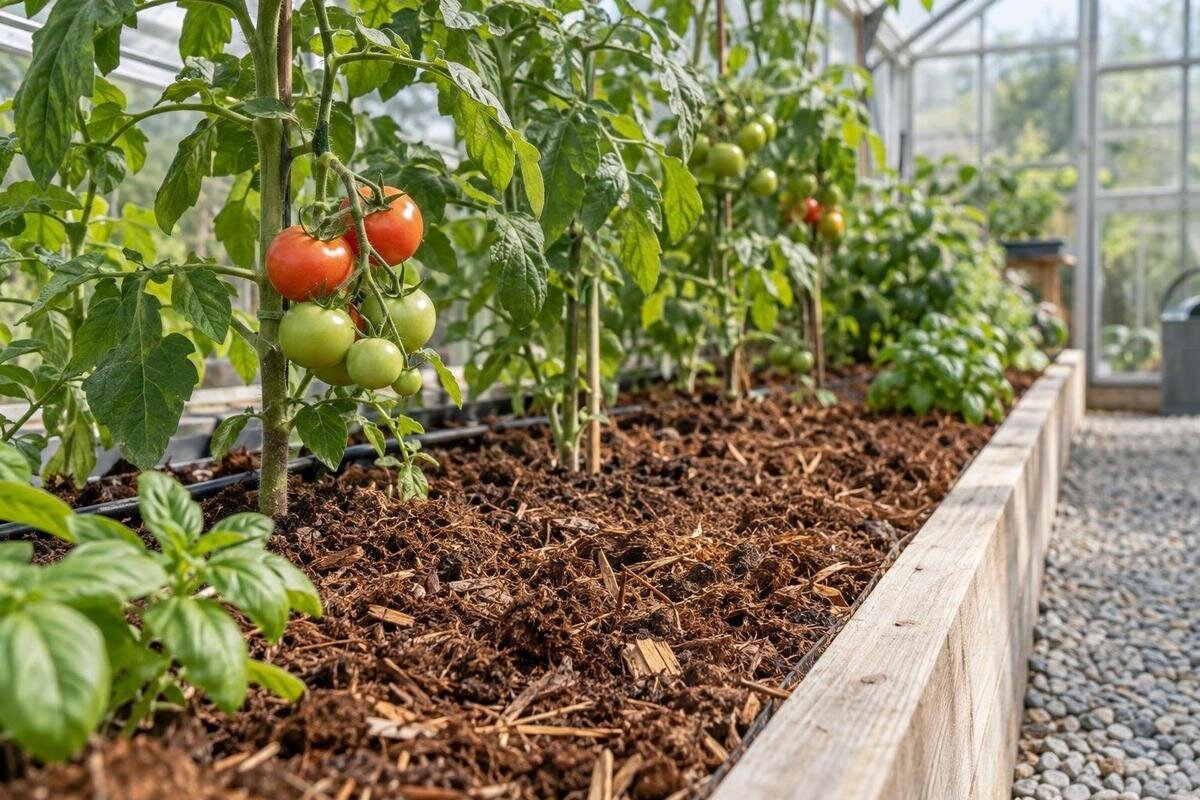
Greenhouse growing media
Peat-free growing media can suit greenhouse crops, but the label alone tells you little about how a blend behaves once it is watered, planted and fed. Coir, composted bark, wood fibre, green compost and mineral ingredients hold water, drain and supply nutrients differently; the proportions and processing matter as much as ingredient names. The useful comparison is practical: how the mix performs in your container or bed, whether the supplier describes it clearly, and what changes your irrigation and feeding routine may need. A small, well-observed trial can prevent a whole greenhouse being switched to a blend that does not suit its crops.

How peat-free blends differ
A peat-free label indicates that the supplier declares the product contains no peat; it does not mean every product has the same structure, nutrient content or intended use. One blend may rely on coir and composted bark, another on wood fibre and green compost, while a third uses mineral ingredients to change the balance of air and water. A bag labelled for seed sowing may behave differently from a mix intended for established plants or raised beds. Treat the product name as a starting point, then read the ingredient list, use directions and any crop or container limitations before comparing it with your current medium.
Even when two bags list similar ingredients, particle size, degree of composting, moisture at packing and proportions can alter how the mix fills a pot and how it settles. Finer particles may close air spaces; larger pieces may leave a looser structure, but the result depends on the whole blend rather than one ingredient. Peat-free media can also change during use as organic components shrink or break down. Do not infer that a product is unsuitable from a single adjective such as light or rich. Compare consistent batches by their stated characteristics, then test the actual medium under your watering routine.
Water retention and air space matter together
A growing medium has to supply water while leaving enough air around roots. Very fine material can remain wet and slow drainage in a poorly drained container; a coarse, open blend may drain quickly and need closer attention between waterings. These are tendencies, not rules: a mix can include fine and coarse components, and pot shape, depth, root growth and how firmly it is filled all affect the outcome. Under cover, the medium is not receiving rain directly, and warm, bright conditions can dry the surface before the lower root zone is dry. Judge moisture at root level rather than by colour at the top.
Check a sample in the same type of container or bed you plan to use. Wet it evenly as the supplier recommends, allow excess water to drain, and note whether the mix wets through or water runs down one side. Check moisture again at several depths before the next irrigation; look for persistent saturation, poor drainage or rapid drying. Repeating this with the same volume and method makes comparisons more useful than squeezing a handful. If you are also comparing greenhouse layouts, use the T-Model Orangery Greenhouse product details to plan a trial area with room to reach the containers and inspect drainage.
What common ingredients contribute
Coir is processed from coconut husk and may be supplied as fine material, fibre or chips; these forms can give mixes different water and air characteristics. Ask whether the coir has been washed or buffered where this matters to its stated use, and check the supplier’s pH and EC information rather than assuming the word coir guarantees low salts. Composted bark can help keep a mix open, but its particle size and maturity matter. Bark that is not sufficiently matured may affect nitrogen availability. Product data should make clear what is actually used and whether the mix is ready for planting.
Depending on its form and proportion, wood fibre can make a blend lighter and more open when fresh, but organic fibres can change as they decompose, so the initial feel is not the whole story. Green compost may contribute nutrients and improve water retention, yet its salt level, pH and nutrient content vary with feedstock and production. Mineral ingredients such as perlite, pumice or vermiculite may alter drainage, aeration or water storage; their effect depends on particle size and proportion. Do not build a recipe from ingredient names alone. Before mixing at scale, plan where bags can be opened and measured without spilling into crops. If considering the Pyramid Greenhouse, check its layout against the space needed for both preparation and planting.
Choose a mix for the crop and growing system
Match the medium to the crop and the way it is grown. Seedlings and young plants need a fine, even texture that can be wetted consistently; larger fruiting crops remain in the same root zone for longer and may need a more stable balance of moisture and nutrients. These examples do not prescribe a particular recipe: crop variety, pot size, season and local water all matter. A mix sold for seed raising should not automatically be treated as a long-term growing medium, while a highly nutrient-rich compost blend may be unsuitable for a delicate start. Check the labelled purpose against the crop’s needs and seek crop-specific advice if the supplier’s directions are unclear.
Then consider the system. Pots and grow bags contain a limited volume, so changes in water and nutrients can show quickly; a bed has more total volume but still depends on its drainage and existing soil. A medium intended as a container mix may not be intended to replace soil in a bed, or vice versa. Keep the route between beds, containers and the working area in the plan, especially if sacks of media need to be carried through. When considering the Limited Edition greenhouse with built-in storage, check the storage dimensions against the bags you expect to keep, and plan the planting area separately.

Read supplier information before buying
Ask for a current specification sheet, not just a short marketing description. Useful information includes the ingredient categories, intended crops and systems, pH, electrical conductivity (EC), declared nutrient charge or fertiliser inclusion, and directions for initial wetting and feeding. If pH or EC values are supplied, check the testing method and units; values obtained by different extraction methods are not directly comparable. Find out whether the stated nutrient supply is starter fertiliser, compost-derived nutrients or both, and how long the supplier expects it to support plants. A clear use label helps you decide whether a mix is ready for planting or needs a separate feeding plan.
Reliable sourcing means being able to identify what you received and what could change next time. Look for a batch or lot reference, a stated bag volume, packing information and a supplier who can explain ingredient origin and quality controls. If the blend uses coir, wood fibre or compost, ask about consistency between batches and what happens when a component changes. Peat-free status alone does not establish the source, processing or environmental impact of those ingredients, so request evidence relevant to your priorities instead of relying on an unqualified sustainability claim. Keep the label or specification with your notes; it makes a repeat order or comparison much more reliable.
Trial a batch before changing the whole greenhouse
Test an unfamiliar blend on a small scale before filling every bed or pot. Use one representative crop and the actual container size, or a short marked section of bed, and follow the pack’s wetting and filling directions. If possible, compare it with the medium you already use under similar light, watering and feeding. Keep enough conditions alike to interpret the result; planting one medium in pots and another in a bed does not isolate the substrate. Record the planting date, watering, additional feed, drainage behaviour and visible changes. Watch establishment, root growth when plants are lifted at normal transplant time, and whether the medium settles.
A useful test is not just a yield comparison. Note how evenly water enters, how long the root zone stays damp, whether the mix forms a crust or shrinks from the pot edge, and how much care it demands across normal working days. If one blend needs a different routine, record that rather than declaring it a failure or assuming it is identical to the old mix. For a comparison area, account for both plants and the access needed to water and inspect them. If you are planning a new growing space, compare the Bloomcabin Prestige Greenhouse layout with the containers and access routes your trial will need.
Adjust irrigation by checking the root zone
Once a mix is in use, do not automatically carry over a watering schedule used for peat-based media. Let the supplier’s first-use instructions guide initial wetting, then check moisture within the root zone before deciding when to water again. A dry-looking surface can sit above moist material, while a pot’s edge may be wet even if the centre remains dry. Lift a container to compare its weight after watering and as it dries, or check moisture at consistent depths in a bed. Use these observations to recognise changes rather than seeking one universal reading. Check drainage too: frequent watering will not correct a blocked outlet or an unsuitable container.
If your observations show that a new blend loses moisture faster, adjust the interval in small steps and check again, rather than increasing both frequency and volume at once. If it stays saturated, review the mix, fill level and drainage before watering more often. Crop size, ventilation, light, temperature and container volume all change the rate of water use, so a hot day and a mild day may call for different decisions. Where different crops or media occupy separate zones, map them before setting an automatic routine. When comparing options such as the Spacious Greenhouse, mark those zones and their water access on the proposed layout.
Manage nutrients separately from watering
Water and fertility need separate checks: a plant that wilts or grows slowly is not proof that the medium needs more feed. Some peat-free mixes include a starter fertiliser or nutrient-rich compost, while others are deliberately low in nutrients. Read how much is included and for what stage, then follow the product and crop guidance before adding a second fertiliser source. Overfeeding can raise soluble salts and damage roots, while too little feed can limit growth; both can look like other root-zone problems. In pots, nutrients can be used up or washed out more quickly than in a large bed, so review the plan as plants grow rather than treating the initial label as a season-long guarantee.
Use pH and EC results as context, not as a diagnosis by themselves. pH affects nutrient availability, while EC gives an indication of soluble salts; neither reading identifies every cause of weak growth. If a supplier provides expected values, compare them with a sample tested by the same method, and account for nutrients in irrigation water if relevant. In covered beds, rain does not usually fall directly on the surface, so salt build-up can be a consideration where drainage and water quality are poor; assess conditions before routinely adding fertiliser or flushing the medium. If comparing models in the Aluminium Greenhouses range, use your planting plan to identify crops that need separate feeding routines.

Keep media clean and track batch changes
Storage and handling affect repeatability too. Keep bags in the condition advised by the manufacturer, protect them from weather and accidental contamination, and retain batch labels after opening. Use clean tools when sampling or moving the medium so residues from fertiliser, soil or a previously diseased crop are not carried into a fresh batch. Do not assume an opened bag will behave exactly like a sealed one after prolonged exposure; check its texture and moisture before use and follow the supplier’s advice on storage life. If a sample has changed noticeably or seems unexpectedly warm, pause and ask the supplier rather than planting a full crop into it.
Before replacing one product with another, note the exact blend, bag volume, batch and how it performed; an ingredient list with the same words may still describe a different structure. If a supplier changes the formulation, repeat a small trial instead of assuming the earlier irrigation routine will transfer. Keep these records with the labels so you can distinguish a change in the medium from a change in its care. A compact greenhouse plan must also reserve room for sealed sacks, a clean potting surface and the containers being filled. If considering the Wall Greenhouse, check where these tasks would fit without obstructing access to crops.
Measure the growing area before ordering
Calculate the quantity from the space you need to fill, then compare it with the stated bag volume. For a rectangular bed, estimate volume from its internal length, width and intended fill depth, keeping units consistent; for containers, total the number and fill volume you will actually use. Check whether the supplier quotes loose or compressed volume, whether the medium needs pre-wetting, and how much settling is expected. Allow only for the change described by the product instructions rather than adding an arbitrary surplus. Ordering enough of one formulation and batch for a planned fill also reduces the chance of blending an untested substitute halfway through.
Set that quantity against the whole greenhouse layout: growing area, paths, water access, potting space and any storage you will use. A greenhouse’s listed area is not the same as bed volume or the clear space you can allocate, so use its exact plan and measurements when placing benches or beds. For example, Limited Edition Aluminium Greenhouses has listed area options from 3.77 m² to 28.08 m², but the media order must reflect the beds and containers in your chosen layout. Once their dimensions are settled, calculate the required fill volume and compare it with the supplier’s stated pack volume.
Frequently asked questions
Are all peat-free mixes suitable for every greenhouse crop?
No. Ingredients, structure, nutrient content and intended use vary. Check that the product suits your crop and growing system, then trial it before using it throughout the greenhouse.
Does a peat-free mix always need more frequent watering?
No. Watering depends on the blend, container, crop and conditions. Check moisture within the root zone and compare how the medium behaves after watering before changing your routine.
Can I add compost to a peat-free blend?
Only when it suits the crop and the existing mix. Compost can change nutrient levels, salt content and structure. Check the supplier’s directions and assess the blend before adding it widely.
Should I fertilise peat-free media straight away?
Not necessarily. Some products contain starter fertiliser or nutrient-rich compost; others contain little added nutrition. Read the label and consider the crop’s stage before adding more feed.
What supplier details are useful when comparing media?
Look for the ingredient list, intended use, stated volume, batch identification and available pH, EC and nutrient information. Ask how values were measured and whether the formulation may change between batches.
Choosing peat-free media means matching a blend with clearly stated properties to a crop, rather than finding one universal replacement recipe. Test its physical structure, confirm what nutrients are already present, and keep observations on watering and batch performance. Those checks make supplier information easier to compare and help you decide whether a mix works across a full season, in a specific bed, or only for a particular crop. Use the recorded results to guide future orders and care, rather than assuming every peat-free blend will behave the same way.
