
Buying an Electric Outdoor Sauna: Check the Power Supply
SAUNA BUYING GUIDE
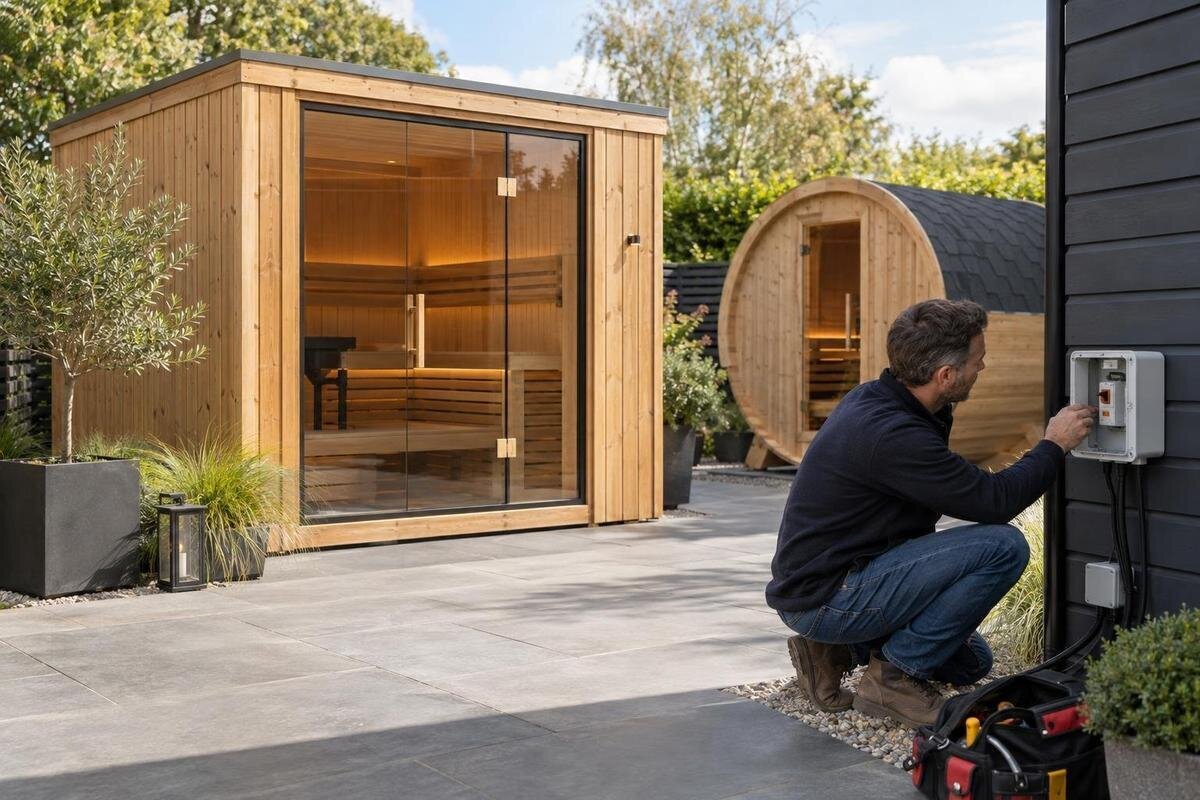
Planning to buy an electric outdoor sauna? Treat its power supply as a selection criterion, not an installation detail to leave until after delivery. The heater’s power rating is only part of the picture: its supply, circuit and controls must suit both the property and the outdoor location. Before choosing a model, obtain the electrical documentation and ask a qualified electrician to assess the proposed site. That early check helps you find out whether the option is practical, what information is missing and whether another heater or supply arrangement should be considered before you place an order.
01
Treat electrical compatibility as a buying requirement
An electric outdoor sauna is both a cabin purchase and an electrical load to plan for. The cabin’s name or appearance does not establish which heater is supplied, how much power it requires or which supply it needs. Ask for the heater’s exact make and model, its manual or technical sheet, and written confirmation of whether it is included in the order. If you plan to buy a heater separately, obtain the cabin maker’s compatibility guidance too; a plausible power figure alone does not show that a particular combination is approved. Separate the cabin’s identity from the equipment that will draw power.
Treat these details as a go-or-no-go buying check, rather than something to sort out after delivery. Share the documents and intended outdoor position with a qualified electrician who can assess the property and identify any constraints. A general assurance that the home has electricity is not an assessment of the heater’s circuit requirements or the route to the chosen location. If the product information is incomplete, ask the seller for the missing details before you commit. Without them, comparisons between options can look more certain than they really are. Keep notes on cabin layout and electrical compatibility separately: each needs its own evidence.
Read the heater rating with the full specification
The rating in kilowatts (kW) is useful, but it is only one field in the specification. It gives the heater’s stated power; on its own, it does not tell you the required voltage, phase, current, control arrangement or circuit conditions. A kW rating is a power figure, not an estimate of the energy used in a particular session. Check that the data sheet applies to the exact heater being offered, not a similar model or a generic example for another cabin. If the listing gives only a headline rating, ask the seller for the manufacturer’s full documentation before comparing options.
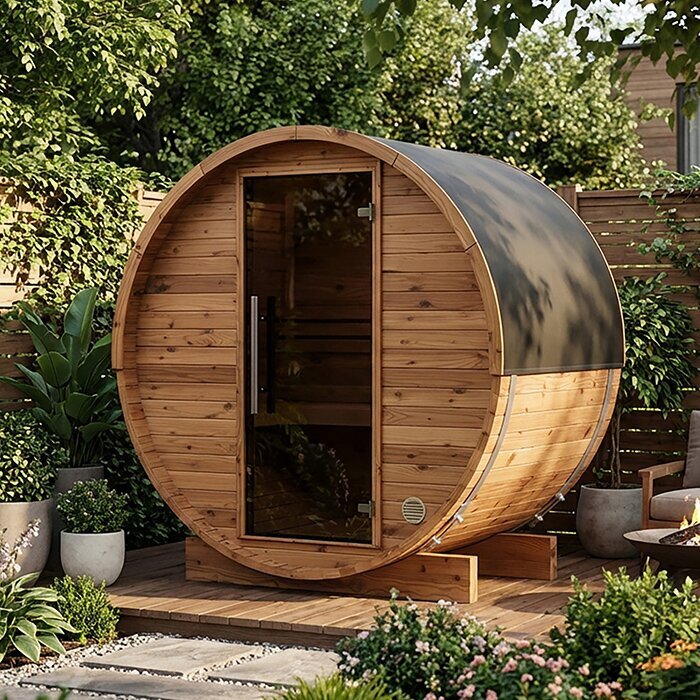
When reviewing the Thermowood barrel sauna S 140 listing, treat the product name as an identifier, not an electrical specification. Check whether the seller names a heater and gives its exact model; if not, ask before assuming one is part of the order. Request the rating and supply requirements together, and keep the response with the listing details. This prevents a comparison based only on headline heater figures while overlooking differences in the stated electrical arrangements. Do not fill gaps by borrowing numbers from another sauna page or a model that looks similar.
02
Confirm voltage and phase for the exact heater
Voltage and phase are separate checks from the power rating. The heater documentation may state its nominal voltage and whether it is designed for a single-phase or three-phase supply; the correct configuration must match the exact equipment and what is available at your property. Do not infer it from the country, another building or the appearance of a socket. If the listing abbreviates the details or says only that the sauna is electric, ask for the full manufacturer’s specification. A seller’s general reply about a product range is not enough if the heater variant you would receive has not been identified.
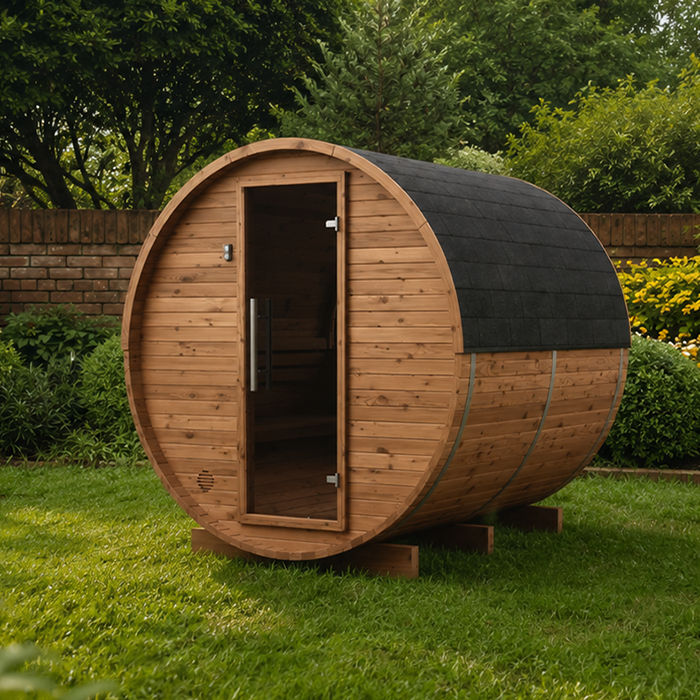
Before settling on the Thermowood barrel sauna HC150 page, seek the electrical sheet for the heater that would actually be supplied, rather than a general sheet for sauna accessories. Ask whether the heater has different electrical variants and, if so, which one is included in the quote. Get that version identified in writing. Do not treat an alternative configuration as interchangeable simply because it is sold for a sauna; the maker’s instructions and your electrician’s assessment need to agree. This check matters early: the confirmed configuration must fit the supply available at your property.
Ask which circuit the heater requires
Ask what circuit the manufacturer requires, not only whether the home has enough electricity. The installation document should identify the circuit arrangement and connection requirements for the exact heater. Your electrician can determine whether an existing circuit is suitable, whether a separate circuit is required and whether any work is needed; the answer depends on both product and property. Do not assume that a nearby socket, an unused position on a board or an extension lead makes the heater compatible. Leave cable selection, protective devices and the connection itself to a qualified professional. The useful buying answer is about this appliance in this property, not a general rule.
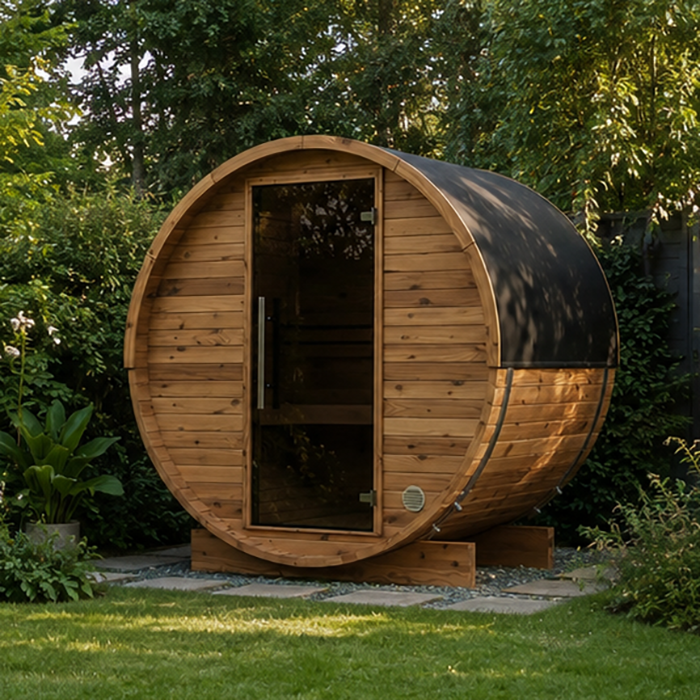
If the specification for the Thermowood barrel sauna HC 225 listing gives a power rating but no circuit information, pause and ask the seller for the missing document. Request the exact heater model and the manufacturer’s statement about its supply and circuit, then give both to the electrician. This helps you compare purchase options fairly: installation requirements may affect the work that needs planning, even when product pages show similar headline ratings. Do not estimate that difference from the kW figure alone or from a comment about another product. Record any answer that changes which option you can buy.
03
Check the property’s available capacity
A suitable circuit does not automatically establish that the property’s incoming supply has enough capacity for another substantial electrical load. An electrician may need to consider the available supply, the distribution board, the circuits already in use and other appliances likely to run at the same time. You do not need to calculate demand or alter a board; the useful task is to describe the property accurately and obtain a professional assessment. Mention planned electrical changes or known limitations as well as the sauna. Ordinary experience with household appliances is not a reliable guide to a particular heater’s needs.
For the Thermowood barrel sauna N 210 page, as for any sauna choice, ask for an assessment that relates the actual heater specification to your property, rather than expecting the product label to answer the question. Explain which large appliances may operate at the same time and where the sauna is planned. The electrician can say whether the proposed supply is adequate or whether changes or a different configuration need to be considered. If that result affects your choice, request a clear summary. It will make follow-up with the seller more precise than a general question about whether the sauna is powerful enough.
Include the outdoor location in the assessment
The word outdoor does not tell you what electrical equipment to buy, but the location matters to the assessment. The sauna may be some distance from the property’s distribution board, with a route across a wall or landscaped area. That can affect the electrician’s design and estimate. Share the intended position, access and any obvious obstacles, using a simple site plan or photographs if helpful. Do not choose the cable, route, protection or installation method yourself. The electrician needs to assess those details against the heater instructions and the conditions at the site.
When considering the Thermowood barrel sauna N 250 listing, identify the intended place on the property before confirming your order. The product page does not establish whether the route at your home is straightforward or what work it will involve, so do not use another buyer’s installation as a template. Ask the electrician to flag access, exposure and site-specific constraints, then pass relevant points to the sauna supplier if they affect positioning. This early exchange can help you avoid choosing a location first and discovering later that the electrical route or approved heater position has to change.
04
Verify whether the heater is included
Confirm the contents of the order before asking anyone to assess its electrical demand. A sauna described as suitable for an electric heater may not necessarily be sold with that heater, and a supplied heater may not be the version you assumed. Ask the seller to list the cabin, heater, control unit and relevant connection components included in the order, separately from optional items. For anything excluded, establish who will supply it and whether it must be paired with a specified heater. Do not infer the contents from category wording or a product photograph; your electrician needs documents for the equipment you intend to use.
Before choosing the Thermowood barrel sauna LC 260 page, ask in writing what exact heater, if any, is in the proposed order and which installation documents go with it. If the heater is not included, ask for the maker’s compatibility guidance for the heater you are considering, then have an electrician assess that unit. If a heater is included, check its model against the quote and technical sheet. This avoids preparing a supply plan for one unit and arranging another. An image or a general package description is not a substitute for a written list of what you will receive.
Clarify the controls and connection points
Ask how the heater’s controls are arranged and whether any controller is separate from the heater. The manufacturer’s documents should make clear which components are supplied and what connection requirements apply to the system as a whole. If a separate control unit is intended, find out where the manufacturer expects it to be located and share that plan with the electrician. This is not a detail to improvise after choosing the heater: the position of components can affect what needs to be planned at the site. Do not assume that a control supplied for a different heater will work with the one you are buying.
For the Thermowood barrel sauna HCF 300 listing, use the same check as for any option: request the control-system details for the exact heater being offered. If you want a timer, remote interface or other added control, ask the supplier whether the heater supports it and have the electrician confirm the arrangement before buying accessories. A feature mentioned for one product should not be assumed to apply to another. Keep optional controls separate in your comparison so you can see which items are included, which are additional and which still need professional approval.
05
Get a professional view before committing
If possible, arrange an electrician’s assessment before you finalise your choice. Send the heater’s technical sheet, information about the property’s existing supply and the planned outdoor position. Ask whether the available supply and circuit can meet the documented requirements, whether the proposed route raises any site-specific issues and whether any further information is needed. This gives you a practical answer about the setup you are considering, rather than a general opinion about sauna heaters. If the assessment identifies a constraint, you can ask the seller about an alternative before committing to an order.
For the Thermowood barrel sauna LCF 300 page, as with any listing, distinguish the seller’s product information from the electrician’s site assessment. Ask the seller to identify the heater and provide its documentation; ask the electrician to assess that documentation against your property. If the two do not match, pause and clarify what would need to change before proceeding. A clear exchange is more useful than relying on a general online answer or an assumption based on a neighbour’s installation. Keep any decision about changing the heater or its configuration tied to written manufacturer information and professional advice.
Keep the documents that support your decision
A simple comparison record can make the buying decision clearer. For each option, note the heater’s exact model, power rating, voltage and phase, the stated circuit requirements, and which controls or other components are included. Add the electrician’s assessment of your property and planned location. If any field is missing, mark it as unconfirmed rather than guessing. This makes it easier to see which options have enough information for a meaningful comparison and which still depend on a seller’s reply or a professional assessment.
Before placing the order, check that the heater named in the seller’s confirmation is the same one covered by the technical sheet and electrician’s assessment. Keep those documents with your order details, and ask for clarification if the proposed equipment changes. A different heater may have different electrical requirements, so earlier advice should not automatically be carried across to a replacement. With the model, supply information and site assessment aligned, you can compare options on a sounder basis and plan the next steps without treating an unknown specification as a minor detail.
Frequently asked questions
Which electrical details should I request before buying?
Ask for the exact heater model and its manufacturer’s documentation, including the power rating, voltage, phase and stated circuit requirements. Confirm what heater and controls are included in the order. A qualified electrician can then assess those details against your property and the proposed outdoor location.
Can I assume a standard household socket will power the heater?
No. Do not assume the heater is suitable for an ordinary socket, or try to make it work with an adapter or extension lead. Check the manufacturer’s requirements for the exact heater and ask an electrician to confirm whether your property can meet them.
Does the heater’s kW rating tell me if my circuit is suitable?
No. The kW rating is only one part of the specification. Voltage, phase, current and circuit requirements also matter, as does the capacity available at the property. An electrician needs the heater’s full documentation to assess the proposed setup.
Should I speak to an electrician before placing an order?
If possible, yes. Share the heater documentation and the planned location before you commit. An electrician can identify any supply or site constraints and explain whether you should consider another configuration or allow for electrical work.
What if the listing does not say which heater is included?
Ask the seller to confirm in writing whether a heater is included and, if so, give its exact model. Request its electrical documentation as well. If you are sourcing a heater separately, check the cabin maker’s compatibility guidance and have an electrician assess the unit you intend to use.
The most useful comparison is not simply between heater power figures. It is between confirmed heater specifications, the supply available at your property and the assessment of the planned outdoor location. Establish what is included, obtain the documentation for the exact equipment and involve an electrician before committing. Once those details agree, you can choose a sauna with a much clearer understanding of what the purchase requires.
