
Buying a Greenhouse with Storage: How Much Growing Space Remains?
Greenhouse buying guide
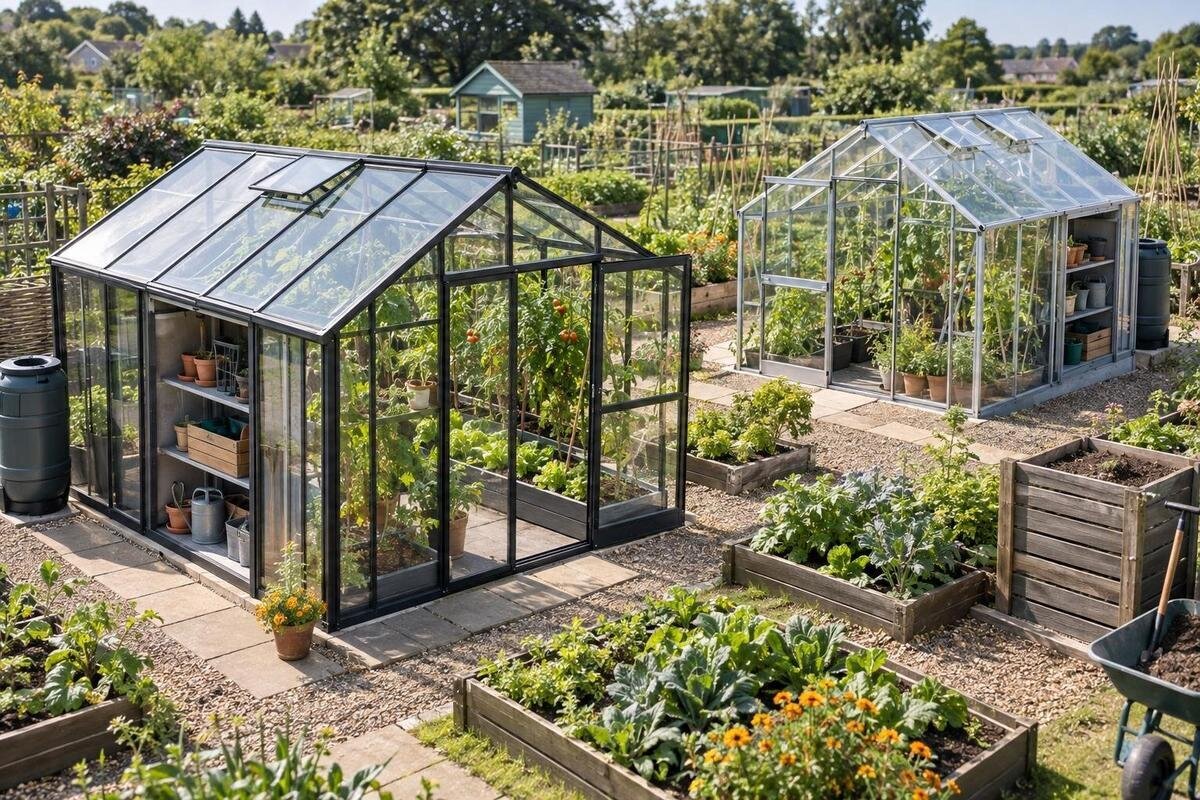
A greenhouse can look generous on a plan but feel crowded once tools, pots and a route between plants are in place. When you buy a greenhouse with storage, the useful figure is not only the outside footprint; it is the clear growing and working area left after you decide where stored items will go. First distinguish a separate compartment shown in the product information from space you plan to organise inside the greenhouse yourself. Then measure the items, access route and planting layout together. This makes it easier to compare greenhouse sizes on a like-for-like basis and avoids choosing by a headline area that does not reflect the way you intend to use the space.

Before you buy 1
Clarify what ‘storage’ means in the listing
The phrase greenhouse with storage can mean two different arrangements: a greenhouse with a specifically described storage compartment, or an ordinary greenhouse where you reserve part of the interior for supplies. Those are different buying decisions. With a compartment, you need to know its marked dimensions, whether a partition is included, and whether the space is part of the configuration or a separately specified extra. With an interior storage zone, the items occupy space that could otherwise hold pots, beds or a work surface. Decide which arrangement you want before comparing models. If a separate store is essential, look for it on a dimensioned plan and in the list of included components, rather than relying on a photograph or a general description.
A product name identifies a candidate but does not set out its usable layout. For example, the listing called Bloomcabin Prestige greenhouse with metal foundation should be considered alongside a current plan and a description of what is included; look for these details or request them if they are not clear. The name alone does not confirm a storage bay or show how much floor remains for plants. Check for labelled entrances, partitions and internal measurements. If no separate store is specified, plan the storage as your own use of the greenhouse, or ask the seller to clarify the configuration before ordering.
Measure the usable interior, not the outside footprint
Start with measurements that describe the inside rather than treating the outer footprint as planting space. Product pages may show overall width and length, but those are not automatically the clear dimensions available for beds or pots. Find out which measurements are external and which describe usable floor area. If only external measurements are given, do not convert them into a planting estimate by guesswork. Write the interior length and width on a simple sketch, marking entrances, fixed features and any section separated from the main growing area. An area figure is useful, but its shape and access matter too: a broad, uninterrupted area can be easier to lay out than the same area divided into awkward strips.
For a practical estimate, subtract the floor area taken by a floor-standing storage unit and any non-growing strip you need for a route or work surface from the clear interior floor area. Shelves may occupy less floor, but the space needed to reach them still needs to be planned. With a candidate such as Bloomcabin Orangerie, compare the dimensions supplied with a plan, and request a dimensioned drawing if internal measurements are missing. Keep both the remaining area and its usable width on your comparison sheet. Two plans with similar area totals can feel very different if one leaves a narrow or interrupted route between planting zones.
Before you buy 2
Make an inventory of what you will store
Make a storage inventory before setting aside floor space. List the items you genuinely want to keep in the greenhouse: hand tools, pots, trays, labels, watering equipment or seasonal supplies, for example. Note how many there are, the largest item's width and depth, whether it needs to stand upright, and how often you will reach for it. A small collection used every week may need a compact, accessible place; bulky items used occasionally can take up a surprising amount of floor. Measure the actual boxes or containers rather than estimating from memory, and include the space needed to open a cabinet or take a stored item out. Leave out things that can conveniently remain in another suitable storage area.
Turn the inventory into a footprint rather than an impression of clutter. Draw each container or cabinet to scale, including the clearance needed to take it out without moving trays or pots. Mark which supplies need to stay together and whether they should be close to the entrance. On a listing titled Classic Plus 385, as with any greenhouse candidate, the model name does not tell you how much room your own items will take. Use a plan if one is provided, or request one, then add your measurements. This exercise can also show whether a few rarely used supplies are the reason you are considering a larger greenhouse.
Keep storage clear of the route through the greenhouse
Storage affects how you move through a greenhouse as well as how much floor it covers. Mark a route from the entrance to each planting area you expect to tend, allowing for carrying a pot or watering can. Keep the doorway and, where a door swings, its opening area clear on your sketch. If storage sits against a side, check that it does not create a pinch point beside a bed or make frequently used items awkward to reach. Include any work surface you expect to use for sorting pots or preparing trays. The aim is to make the whole growing area reachable without repeatedly shifting stored objects, not to preserve an empty corridor for its own sake.
Test at least two layouts on paper: storage near the entrance for items you use often, and storage farther in for things you need less regularly. Note how each arrangement changes the planting area and whether either blocks a route. For a candidate such as the T-model orangery greenhouse listing, use its actual dimensions and openings if a plan is available, or request a plan before relying on the title to judge the layout. A scale drawing on graph paper can help you compare options. If the route looks cramped, reduce the storage area or move some items elsewhere before deciding that the greenhouse itself is too small.

Before you buy 3
Match the remaining area to your growing plan
Estimate the growing area from the plants you want to raise, not from a vague target number of pots. Sketch beds, containers or benches at their intended sizes, and allow for plants' expected mature spread, supports and access for routine care. A layout that fits seedlings may not suit those same plants later in the season. If you grow in pots, include their diameter and room to lift or turn them. If you use beds, account for their full width rather than counting only the soil surface as available. This gives you a realistic minimum for planting before you allocate storage, and helps you see whether the remaining shape will work for your plans.
Repeat the same crop plan for each greenhouse you are comparing. Do not assume a model title describes the shape of the usable floor or that every part of an interior can take the same arrangement. Check the listing for pyramid greenhouse for a masonry base against the dimensions provided for it, just as you would with any other option; request a plan if the usable layout is not clear. If your chosen crops need a longer continuous bed, a similar total area divided by a storage unit may not meet the brief. Write down the growing layout you consider essential before comparing optional storage.
Choose between internal and separate storage
Consider whether everything needs to occupy the floor at all. A small freestanding cabinet or shelf may organise lightweight, regularly used items while leaving some floor open, but it still projects into the room and needs space for access. Wall-mounted or suspended storage must not be assumed to fit a greenhouse frame. Check the product documentation for compatible fittings and any stated limits before planning around it. Keep heavier or awkward items where they can be handled without reaching across plants. The purpose is to count the space actually occupied, including access, rather than treating a shelf as storage with no effect on the growing area.
Compare internal storage with keeping bulky or rarely used supplies elsewhere, such as in an existing garden store or another suitable place. That can preserve greenhouse floor space, although it means an extra trip when you need something. Decide which arrangement suits your routine. If you consider a listing such as Aluminium Classic greenhouse, verify from the product details whether any storage fittings are supplied or identified as compatible; do not assume the model name promises them. If storage equipment is not documented, treat it as a separate purchase decision and include its footprint in your plan.
Before you buy 4
Include access and storage in the site measurements
Check the whole site footprint, not only the interior plan. You need room to approach and use the entrance, and the product's siting information may specify access around the structure. If you plan a separate storage box or cabinet beside the greenhouse, add its footprint and the route between the two to your site sketch. A tight fit can make either item difficult to use, even when both appear to fit on paper. Measure the available area, including paths and fixed garden features, and allow for any clearance stated in the product information. Do not treat the boundary of the site as the only limit when planning where the greenhouse will go.
With a listing titled Aluminium Lean-To Greenhouse, look for stated siting requirements and dimensions; request clarification if they are not available. Do not infer from the title that a nearby wall or store creates extra internal space. Compare the candidate's external measurements with the area you have measured on site, then account for the entrance and any storage beyond the structure. If the base or installation requirements are unclear, ask the supplier or a qualified installer what the chosen product needs before ordering. The aim is a layout that fits and remains accessible, not one that uses every available centimetre.
Check the specification and order configuration
Read the product information with storage in mind, not only the overall size. Confirm whether the advertised dimensions describe the greenhouse alone or include a separate compartment, whether a partition is shown, and which components are included in the selected configuration. Look for how doors, fixed fittings and any named storage accessories are represented. If the page offers more than one configuration, make sure you are comparing the one you intend to order. For any missing internal measurement, unclear accessory compatibility or ambiguous wording, ask the seller directly. Do not fill gaps from an image or from another model's description, since those may not establish what is included in your order.
Apply the same care to an individual listing, such as Aluminium Limited Edition greenhouse: the title identifies the product but cannot replace its specification and dimensions. If no defined store appears in the product information, count any bins, shelves or cabinet you add as your own layout, not as an included feature. Before completing the order, make sure the selected model, configuration and any separately selected accessories match the plan you used to calculate growing space. Also consider the route from the delivery point to the garden location and whether you have arranged suitable help for assembly, if needed.

Before you buy 5
Compare greenhouse sizes on the same basis
Use one worksheet and the same questions for every candidate. Record the confirmed internal dimensions, the area assigned to storage, the usable route, the growing area left, and any entrance details that affect your layout. Note whether each figure comes from a product plan, a written reply or your own estimate; keep estimates separate from confirmed measurements. Add a simple crop sketch and a scaled outline of your storage so that every option is judged against the same requirements. This helps prevent a large outside footprint from seeming automatically better than a smaller alternative with an arrangement that works more naturally for your particular planting plan.
Leave unknowns visible rather than treating them as favourable. If one listing gives only external dimensions while another provides clear internal measurements, you do not yet have an equal comparison; ask for the missing information or mark the candidate as uncertain. Likewise, an accessory mentioned separately is not the same as a compartment included in the purchase, and the space below a shelf is not automatically accessible planting room. Check whether you can retrieve stored items without moving plants or blocking the entrance. A fair comparison reveals trade-offs; it should not hide an inconvenient layout behind a single area total.
Set a minimum growing area before choosing
Use the remaining area to make a clear decision. Write down the minimum growing layout you need and the maximum floor space you are willing to give to storage, then compare those figures with the measured interior of each option. If none leaves enough planting room, you can remove rarely used supplies from the greenhouse plan, choose a smaller storage arrangement or consider a larger greenhouse if the site and budget allow it. A bigger product is not automatically the right answer if it makes the garden layout awkward or leaves space you do not need. The suitable choice is the one that meets both your growing and storage requirements.
Think about whether your needs may change, but do not reserve an unrealistic amount of empty space for hypothetical future equipment. A movable storage unit may make rearranging easier only if its dimensions and suitability for the greenhouse are established; it still needs a clear place on the plan. Draw the intended storage, access route and plants together, then use that layout when reviewing the order configuration. If the sketch leaves too little room for the crop plan or a practical route, revise the arrangement or choice before buying rather than expecting the space to stretch once the greenhouse is in place.
Frequently asked questions
Does a greenhouse listing always include a separate storage compartment?
No. Storage may mean a compartment specifically named in the product information, or simply space you plan to use for supplies. Treat a separate bay as included only when the description identifies it, shows its position and dimensions, and the order configuration confirms it. Otherwise, count storage as space you will allocate inside the greenhouse.
How can I estimate the growing space left after adding storage?
Begin with the clear internal floor area, then allow for floor-standing storage and any route or work area you do not intend to plant. Compare what remains with a scaled layout of your beds or pots. If a shelf or cabinet projects into a route, allow for the space needed to reach it as well; the external footprint alone is not enough.
Can shelves replace the need for a storage footprint?
Shelves can reduce the floor occupied by some items, but their projection and the space needed to retrieve things still matter. Check the product instructions for compatible fittings and any stated limits; do not assume the greenhouse frame can support a shelf. Bulky or awkward items may be easier to keep in another suitable storage area.
Where should I place storage inside a greenhouse?
Try a position that keeps regularly used items accessible without blocking the entrance or the route to plants. Mark the door opening and planting areas first, then test the storage position on the same plan. The best place depends on the layout, so do not assume that a particular wall or corner will work in every greenhouse.
Should I choose a larger greenhouse or keep supplies elsewhere?
Compare the growing area left in each option with the minimum planting layout you need. If storage leaves too little room, consider moving rarely used supplies to another suitable place before choosing a larger greenhouse. A larger footprint is worth considering only if it fits the site, budget and growing plan.
Choosing a greenhouse with storage is a balance between three mapped spaces: the plants, the items and the route connecting them. Use confirmed internal dimensions, mark the crop layout and storage together, and compare each candidate against the same requirements. If the plan leaves too little room, change where the supplies live or reconsider the greenhouse size before ordering. The right fit is the one that leaves a practical growing area for the plants you expect to tend, rather than one whose outside footprint simply looks generous.
