
Buying a Glass Greenhouse: Understanding the Glazing Options
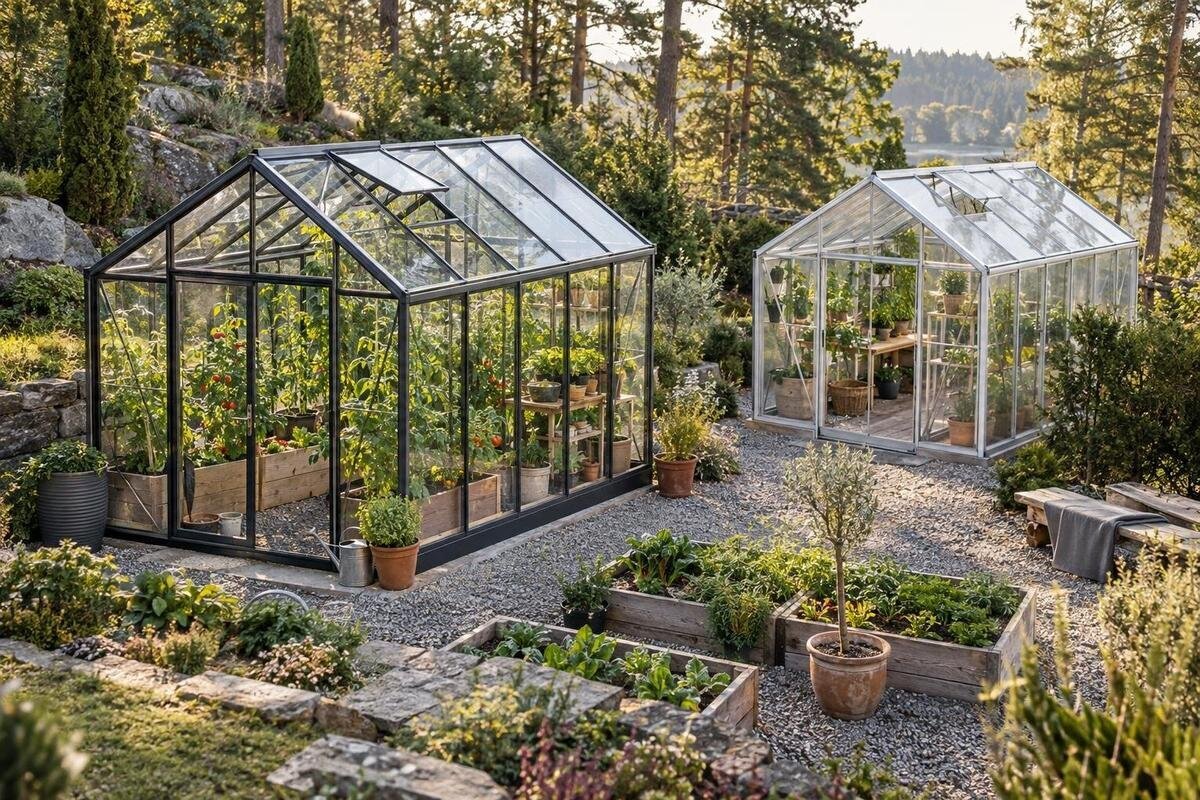
Greenhouse buying guide
Choosing a glass greenhouse involves more than deciding that you want transparent panels. Different glazing constructions have different breakage behaviour, light transmission and frame requirements, and one structure may use more than one type. Before ordering, identify exactly what is included in the selected configuration and where each pane is fitted. Then compare the documented details with your plants, the way you will use the space, and the practicalities of maintenance and replacement.

01
What “glass greenhouse” says—and what it does not
“Glass greenhouse” identifies a broad material category, not a complete glazing specification. A product may come with glass as standard, offer it as an option, or use different glazing in different parts; another version may include a non-glass panel. Check the exact model variant and read what is included in the configuration you intend to buy, rather than relying on a family name. The title of a listing such as the Bloomcabin Prestige greenhouse with metal foundation identifies the model, but does not establish the glass type, whether every panel is glass, or whether the panes are included. A catalogue photograph cannot settle those points.
List the roof, side walls, end walls, doors and opening panels separately. Look for terms such as horticultural, toughened, laminated, single-glazed or double-glazed, and note whether each is specified as standard or offered as an option. If the page says only “glass”, ask for confirmation of the type and coverage before comparing prices. Save the exact model and selected configuration with your notes; two versions within a product family need not contain the same panels. Also check whether the quoted package includes the glazing and any components you have assumed are present. Where choices are shown separately, record the wording used for each option, as small differences in the description may indicate a different panel arrangement. This record also makes it easier to compare later replies from the supplier against the configuration you intend to order.
Horticultural glass and annealed panes
“Horticultural glass” commonly refers to annealed glass used for greenhouse panes, although sellers may use terms differently. It provides a transparent, rigid panel, but it is not the same as toughened or laminated safety glass. If annealed glass breaks, it can leave large, sharp pieces. Consider whether glazing is close to a doorway, path, workbench or route used often, and who is likely to move around it. This breakage behaviour is part of choosing a panel, not a detail to infer from the traditional appearance of a greenhouse.
If you are looking at Bloomcabin Orangerie, check the product details for the stated glass type rather than guessing from photographs. Ask which sections use that glass, whether any doors or roof panels have a different construction, and whether a matching replacement is available. “Horticultural” alone may not answer questions about exact pane dimensions or frame fit, so use the supplier’s panel information for those details. If no type is stated, treat it as unknown while comparing options instead of assuming every glass greenhouse uses the same pane. It is worth asking whether the description applies to the supplied configuration or is merely a general description of the range. A written reply that identifies the relevant panel areas is more useful than an informal comparison based on appearance.
02
Toughened glass: a different breakage pattern
Toughened glass, also called tempered glass, is heat-treated and breaks in a different way from ordinary annealed glass. When it fails, it generally breaks into many small fragments rather than the same large, sharp pieces associated with annealed panes. This can reduce one particular breakage hazard, but the glass is not unbreakable and small fragments can still injure. The difference is in how the pane breaks, not a guarantee that a greenhouse is risk-free. Ask for the exact glass description and any relevant product documentation rather than accepting a broad “safety glass” label.
For Classic Plus 385 or any other model, look for an explicit statement that the panes are toughened, then identify whether this applies to the roof, sides, doors or only selected areas. A mix of glass types may be specified, so do not assume that one label covers the whole structure. If the listing uses only a general safety term, request clarification and supporting documentation. Check how a replacement pane would match the original type and frame; toughened glass cannot ordinarily be cut or drilled after treatment, making the correct specification important. Ask whether the stated glass description refers to every supplied pane or only to a particular upgrade. This distinction matters when comparing two configurations that otherwise appear similar in a listing.
Laminated glass and fragment retention
Laminated glass typically consists of two or more sheets bonded together with an interlayer. If the glass is damaged, that layer can hold many fragments together, making the breakage behaviour different from an ordinary annealed pane. The glass can still crack, however, and a damaged panel may need replacement. Retaining fragments does not mean that the pane is safe to leave in service or that it can support a person or object. The exact construction affects how it performs, so “laminated” is a description to investigate, not a blanket promise about every impact.
On the T-model greenhouse with orangery wall base page, as with any candidate, look for the stated pane construction rather than inferring it from the design name. Confirm which areas use laminated glass and whether the supplier identifies a safety classification or other relevant documentation. Ask how a replacement must match the original layers, dimensions and frame. If fragment retention matters because of where the greenhouse will be used, have the supplier or a qualified glazing professional confirm that the specified pane and frame are suitable for that situation. Also establish whether the available information describes the glass itself, the finished glazed panel, or both. These are not necessarily the same thing when the glass is installed in a greenhouse frame.

03
Single glazing and insulating glass units
Single glazing is one pane. “Double glazing” suggests two panes, but ask what the seller means: it could be a sealed insulating glass unit or two separately fitted sheets. Check where the option is installed, rather than assuming it covers the entire greenhouse. A specification for side walls does not establish what is fitted in the roof, doors or opening sections. Ask for the arrangement by area and for details of any seals or frame requirements. A product photograph may not show the number of layers clearly enough to make this comparison.
Additional layers can affect insulation, light transmission, panel thickness and frame requirements, but the glass label alone does not tell you how the whole greenhouse will perform. If the supplier gives thermal information, ask what it measures and whether it refers to the glass unit or the complete structure. The name of the pyramid greenhouse for a masonry base does not state whether its glazing is single or insulated, so check the selected variant’s actual details. Do not treat the word “insulating” as a guaranteed growing temperature; vents, frame and use also influence conditions. Compare any figures under the same stated conditions, and do not set a quoted glass-unit value beside a whole-structure value as though they described the same result. Note whether the figures apply to fixed panels, opening panels, or an unspecified area.
Light transmission, tint and diffusion
Clarity in a product photograph cannot tell you how much light passes through a pane. Glazing may differ by tint, surface treatment, pattern or diffusion, and specifications may give figures for visible-light transmission, solar transmission or another measure. If a percentage is supplied, ask what it measures and whether it describes the glazing alone or the assembled greenhouse. Compare like with like: figures based on different measures do not give a fair ranking. This information is useful when you have particular light requirements for the plants you plan to grow.
A diffusing surface scatters transmitted light; it does not create extra light. Whether that distribution suits your growing plan depends on the plants, their arrangement and the rest of the greenhouse. Ask what any tint or treatment is, and whether it requires particular care. On the Aluminium Classic Greenhouse listing, use measured information if it is provided; if the page offers only an image or a word such as “clear”, ask the seller to clarify. Treat an unstated figure as unknown rather than estimating it from appearance. If you are comparing a treated pane with a plain one, ask whether the stated value is measured before or after the treatment. That helps avoid treating a descriptive marketing term as a directly comparable light specification.
04
Match the glazing to the plants you plan to grow
Begin with the plants you intend to grow, rather than assuming that one glazing type is best for every crop. Consider whether the greenhouse will mainly be used for propagation, growing on or extending the season; these plans can place different importance on light transmission and heat loss. Check the plants’ growing requirements and compare them with the information supplied for the glazing. A pane that looks clear does not prove that the greenhouse will meet those needs. The glazing is one part of the growing environment, alongside ventilation, shading and the structure as a whole.
Write down your main priorities before comparing products: for example, documented light information, a particular safety feature or stated thermal performance. Rank them so that attractive appearance or an unfamiliar label does not outweigh what matters for your plants. When reviewing the Aluminium Lean-to Greenhouse listing, evaluate any stated glazing details separately from the greenhouse layout, then compare those details with your growing plan. The product name does not tell you which panes are fitted. If an important specification is missing, leave it unresolved until you have a clear answer. Include the stage at which you expect to use the greenhouse, since seedlings, established plants and overwintering plants may create different priorities. This keeps the comparison focused on documented requirements rather than a vague idea of better glazing.
Safety details around access and work areas
Think about where people may be close to the glass: at the entrance, along a regular route, near a workbench or around stored tools. Also consider overhead panes and activities that take place beside the greenhouse. This helps identify which breakage risks matter in your setting without assuming that one type is right for every situation. The roof, doors and walls may use different glazing, so ask for details by panel area. Consider who will use the greenhouse regularly, including children or pets, when deciding which information you need from the supplier.
Judge the Aluminium Limited Edition Greenhouse by its stated glazing details, not by its name or image. Verify which panes, if any, are toughened or laminated, whether the description applies to the doors and roof, and what guidance the supplier gives about breakage. If the choice depends on a particular site condition or local requirements, ask a qualified installer or glazing professional before ordering. A general label or online photograph cannot confirm that a specific pane and frame are suitable for your situation. Keep questions about access separate from questions about plant light, as a pane choice may address one concern without answering the other. This makes your request for clarification more precise.

05
Pane fit, replacement and delivery arrangements
Greenhouse panes are not interchangeable simply because their outside dimensions look similar. Thickness, edge finish, glass type and the way the frame retains a pane can all affect fit. Toughened glass, for example, cannot ordinarily be cut or drilled after treatment, so a replacement has to match the required specification. Ask whether individual replacement panels are available for the exact model and configuration, how they are identified, and what information you would need to order one. Keep the model reference and glazing details with your purchase records in case a pane needs to be matched later.
Ask about cleaning before choosing glazing with a coating or textured surface. Follow the manufacturer’s care guidance, since cleaning methods suitable for one treatment may not be suitable for another. For delivery, check how the glass is packaged, what the seller requires if a pane arrives damaged or is missing, and what process applies to a replacement. Read the current terms before confirming your order. It is also sensible to consider whether you have a suitable place and enough help to receive fragile panels; delivery and handling arrangements can affect the practicality of the purchase. Check what inspection, if any, is expected on receipt and how quickly damage must be reported. Keeping photographs of the packaging and any visible issue may help you describe the problem accurately if you need to contact the seller.
A practical way to compare glazing packages
Make a short comparison table with one row for each exact model and selected configuration. Record the glass type by area, whether the glazing is single or multi-layer, any stated light or thermal figures and what they measure, safety documentation, whether the panes are included, and the availability of replacements. Mark missing details as “not confirmed” rather than giving a product an assumed advantage. This exposes unfair comparisons, such as weighing a complete package against a configuration that may not include the glazing you expect.
Then rank the trade-offs by importance. If a safety classification is essential, do not count an unclear label as proof. If growing performance is the priority, compare relevant documented light information and any whole-structure data on the same basis. If future upkeep matters, verify cleaning guidance and replacement options. You do not need the most complex glazing in every case; choose a clearly specified arrangement that fits your growing plans and intended use. If a deciding detail remains unclear, keep it marked as unconfirmed rather than relying on a photograph. Before placing an order, read the final configuration back against your table so that the model, selected options and stated glass areas all match. This simple check can reveal an assumption made during comparison.
Frequently asked questions
What is horticultural glass?
Horticultural glass usually refers to a conventional annealed glass pane used for greenhouse glazing, although sellers may use the term differently. Check the product details for the exact type and where it is fitted. It should not be assumed to be toughened or laminated safety glass.
Is toughened greenhouse glass unbreakable?
No. Toughened glass is designed to break into smaller fragments rather than large, sharp pieces, but it can still break and the fragments can cause injury. Confirm which panels are toughened and ask for the relevant product details.
What happens if laminated greenhouse glass breaks?
Its interlayer can hold many fragments together, but the pane may still crack and need replacement. Laminated glass is not a guarantee that a damaged panel is safe to leave in place. Ask about the exact construction and the supplier’s guidance.
Does double glazing mean every panel has two panes?
Not necessarily. The term may describe an option for particular areas, and sellers can mean different constructions by it. Ask whether it is a sealed insulating unit or separately fitted panes, and check which parts of the greenhouse use it.
Can I replace a pane with any glass of the same size?
No. Pane type, thickness, edge finish and the way it is retained in the frame can all matter. Ask for a replacement matched to the exact greenhouse model and glazing configuration rather than choosing by dimensions alone.
Treat glazing as part of the complete greenhouse specification, not as an isolated label. Confirm the pane type and position, then compare evidence for light, insulation and safety with frame compatibility, upkeep and replacement. If a listing leaves a detail open, keep it marked as unconfirmed until the supplier answers. That gives you a like-for-like decision based on the plants you plan to grow and the way the greenhouse will be used.
