
Buying a Greenhouse for a Hot Climate: Ventilation and Shade
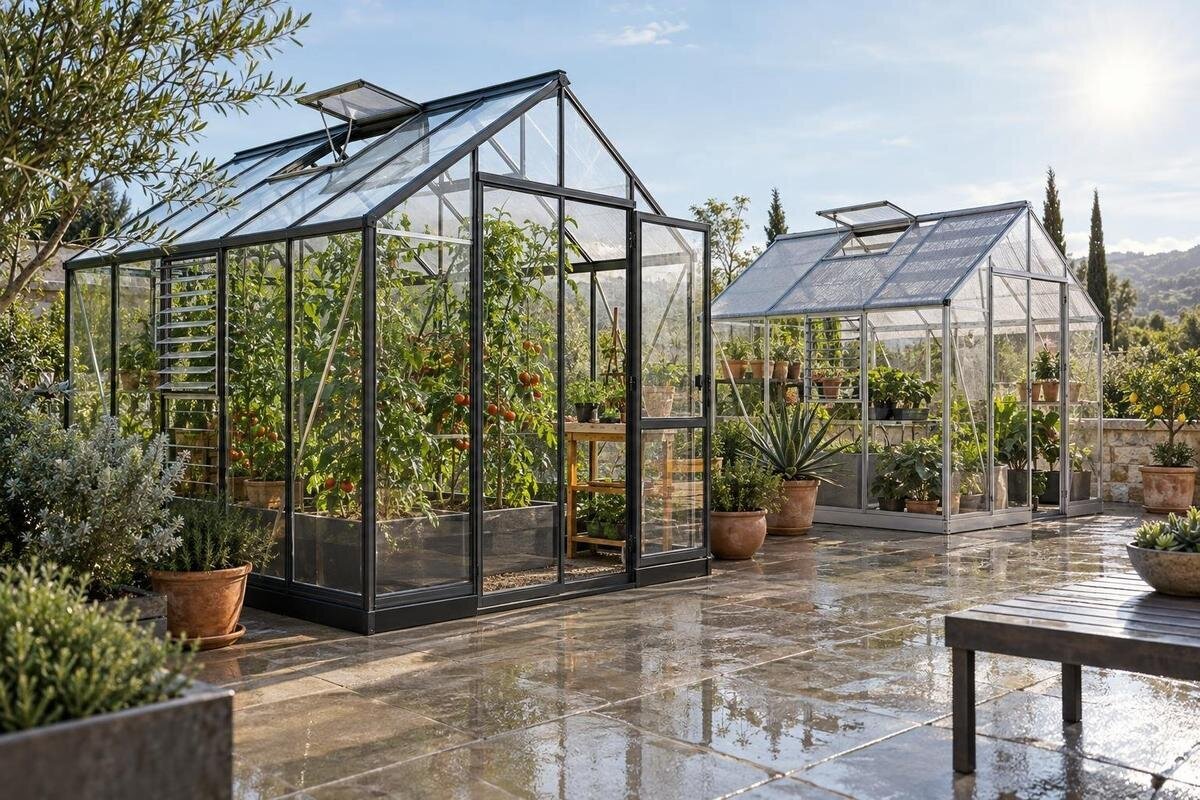
Greenhouse buying guide
If you plan to buy a greenhouse for a hot climate, compare how it deals with heat before settling on footprint or appearance. Strong sun can warm the enclosed space, while still air and uninterrupted direct light may make conditions difficult to manage. A sensible choice is not automatically the one with the largest number of vents or the darkest covering. Look at where air can enter and leave, how shade can be fitted and adjusted, and how much light your plants need. Your site, growing plans and daily routine should shape the comparison.

01
Why heat management matters when choosing a model
A greenhouse changes how sunlight and outdoor air affect plants. Sunlight passes through the covering, and the enclosed space may warm faster than the open garden; that heat then needs a way to leave. In hot weather, ventilation and shading are core buying questions, not accessories to consider after choosing a model. Put them beside usable growing space on your first comparison sheet. A greenhouse for warm conditions should be assessed by the controls it actually offers and the work those controls require, rather than by a product name or attractive photograph. That distinction matters because the configuration and day-to-day operation affect how you manage summer conditions.
Ventilation exchanges interior air with outdoor air; it cannot make hotter outside air cool, and it may not be enough by itself during an intense sunny spell. Shading limits some direct light, but plants still need light, and shade does not remove all heat. Think of these as two controls with different jobs. The balance depends on intended crops, time of year, whether plants are in trays or established beds, and how closely you can manage the space. This realistic view helps avoid expecting one feature to solve every summer problem. It also separates a basic opening from a complete ventilation route, and a shade accessory from a crop-specific light decision.
Map the sun and existing shade on your site
Before comparing models, observe the intended site over a typical day and, if possible, at different points in the growing season. Note when full sun reaches the proposed footprint, when a wall or tree casts shade, and whether nearby structures block open sky. Morning and late-day light can fall at different angles, so one midday snapshot is not a reliable summary. A simple sketch marked with sun and shade at useful times gives you a fair basis for comparing possible positions. It may also show that one part of the plot already has a different light pattern from another.
Use the sketch to test possible positions rather than imposing a universal compass direction. A wall may shade the greenhouse at one time and leave it exposed later; it may also affect whether a planned vent faces open space. Keep room for the door to open and for you to reach external shade, then confirm the footprint and opening locations from product information. Compare your site map with the Bloomcabin Prestige greenhouse listing only after checking its stated dimensions; the catalogue name alone cannot show how it would sit on your plot.
02
Compare the position and operation of the vents
Vent count is a weak shortcut for judging ventilation. Compare the type and location of every stated opening: roof vents, side vents and doors can have different roles in an airflow route. A roof outlet may help warm air escape while a lower opening admits replacement air, but the practical result depends on the full layout. Look for a diagram or written description that relates openings to the structure; a product photograph may hide their position or scale. If opening dimensions or area are not given, do not estimate them from an image.
Check how each opening is operated, whether it can be left at different positions, and whether the handle is reachable from the path you plan to use. A manual catch needs someone to attend to it; an automatic opener, if offered, has stated compatibility and operating requirements to confirm. Ask whether a screen or other fitting changes airflow, if that matters to your growing plan. For the Bloomcabin Orangerie product page, note only the ventilation information it actually gives and turn any gap into a specific question before ordering. A larger vent count alone does not guarantee a comfortable interior.
Check whether air can travel through the growing space
Once you have identified the openings, consider the route air can take across the growing area. A high outlet and a lower inlet can support air movement; openings on different sides may encourage cross-flow when surrounding conditions permit. These are comparison principles, not guarantees of a particular temperature: exposure, outside air and actual opening positions all matter. If possible, mark inlet and outlet points on a floor plan and ask whether shelves, benches or dense planting could sit between them. Air may not circulate evenly in every corner, so a vent count does not describe the whole interior.
Look at the usable layout as well as the frame. A central path may make controls easier to reach, while benches or stored tools could narrow a route to an opening. Plan for the mature arrangement, not only an empty greenhouse. Ask for a drawing that shows the openings and growing area, then consider whether you can preserve a clear route without sacrificing essential space. If the Classic Plus 385 page does not provide enough detail to answer that, note the gap instead of assuming the photograph represents the airflow you need. The aim is to understand the route, not to make a technical calculation.
03
Choose shading that you can adjust
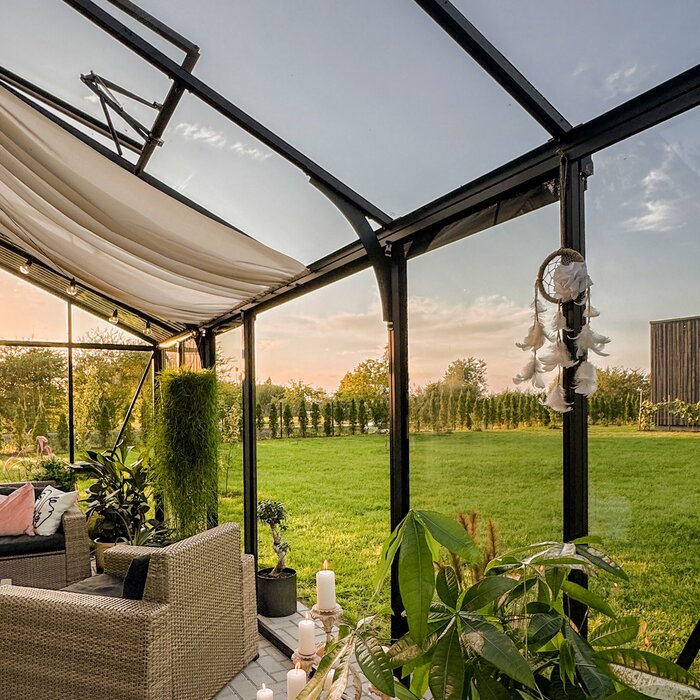
Shading may sit outside the glazing or inside it, and the distinction affects how you compare options. External shade intercepts some sunlight before it passes through the covering; internal shade acts after light has entered. Either can reduce direct sun, but no arrangement should be assumed to cool the greenhouse by itself. Ask which shading method is compatible with the selected structure, whether it is included or an optional extra, and how it is fixed. Ordinary garden shade cloth may not fit a particular frame or leave vents free, so verify compatibility rather than improvising.
Where crop choice or season may change, an adjustable or removable system gives you more control than permanent heavy shade. Find out how it opens, closes, cleans and stores, and whether the mechanism remains accessible without blocking doors or vents. Consider whether you can adjust it from outside and how often you realistically intend to do so; an elaborate option may be ineffective if it is awkward to operate. Review the T-Model greenhouse orangery listing for its stated shade compatibility and package details. The product name alone does not tell you which, if any, shading is supplied.
Keep crop light requirements in the comparison
Shading is not simply a matter of reducing temperature as much as possible. Different crops and growth stages have different light requirements, and leafy, fruiting and young plants may not respond alike to the same degree of shade. Write down the main crops and whether the greenhouse will be used for propagation, growing on or harvesting. A propagation space may need a different balance from permanent growing beds, so describe each use clearly. If you intend to mix uses, consider whether separate areas or movable shade would make the space easier to manage.
Ask for information about the glazing and any stated light-transmission or diffusion values, then check them against shade compatibility. Do not infer interior brightness from a panel's exterior colour or a catalogue photograph; camera exposure can mislead. Where the documentation uses technical terms, ask what they mean for the configuration you would order and compare them with crop-specific horticultural guidance. Confirm whether any figures describe the glazing alone or the finished arrangement with accessories, since added shade changes the light reaching plants. For the Pyramid greenhouse listing, use documented panel and accessory details rather than its name or shape to judge the options.
04
Consider who will operate the vents each day
Ventilation is only useful if you can operate it when needed, so match its mechanism to your routine. Check whether handles and controls are reachable from the path you plan to use and whether opening a high vent requires special access. If several openings need adjustment, consider how long that takes and whether you can respond when the weather changes or you are away. Plan around your actual habits, not an idealised routine; an inconvenient control may remain unused precisely when you need to manage heat.
Automation can reduce repeated manual adjustment, but the label alone does not establish how it works. Ask whether an opener is included, optional or unavailable, confirm compatibility with the chosen vent, and check the supplier's operating and maintenance notes. If powered controls are involved, have installation requirements clarified by a qualified professional rather than guessing. On the Aluminium Classic greenhouse page, rely on published details to identify the opening method; do not infer a particular control system from the model name. Also decide what you would do if you needed to open the greenhouse manually.
Compare glazing and shade accessories as one system
Ventilation, glazing and shade work as a system, so compare compatibility rather than treating each as a separate checkbox. Ask what glazing is specified and what is documented about light transmission, diffusion or heat management. Then check that the intended shade can be fitted to the selected glazing and frame without blocking vents or making panels difficult to reach. General words such as clear, tinted or diffused do not provide a full specification. Request information for the exact configuration you would order, particularly if the seller describes more than one panel or accessory option.
Confirm package contents before ordering: which vents, controls, clips, screens or shade parts are included, which are optional and which are not offered for that version. Ask how replacement parts are identified and whether fitting shade affects panel cleaning or routine access. The Aluminium lean-to greenhouse listing belongs in the same comparison as any other option; verify its stated panel and accessory details rather than inferring them from the title or photograph. A clear component list makes like-for-like assessment easier and reduces surprises after delivery.

05
Check the proposed footprint against the site
Assess the footprint in its real setting, not in isolation. Existing trees, walls or neighbouring structures can cast shade at certain times; an obstacle can also limit access to a side opening. Measure the proposed space and compare it with the dimensions in the product information, leaving room for doors to open and for you to work around the structure. Think about the path for carrying items in and out, as well as space to operate external shade without stepping into planted beds. Where a greenhouse sits near a wall, do not count on the wall as complete shade or assume it leaves intended vents unobstructed.
If the site has distinct sunny and shaded areas, decide which is more useful for your intended crops rather than automatically choosing the sunniest patch. A location with enough light and scope for adjustable shade may be easier to manage than a fully exposed one, though the result depends on the crops and ventilation. Compare the proposed position with the exact footprint and openings documented for the Aluminium Limited Edition greenhouse page. A catalogue image cannot establish site fit, so use the dimensions and installation guidance for the configuration you choose.
Confirm the details before placing an order
Turn your research into a written comparison using the same fields for every shortlisted greenhouse: stated vent types and locations, opening controls, shade options, glazing details, dimensions and included accessories. Mark each item as confirmed, optional or not stated. This prevents a striking photograph or a broad marketing label from filling gaps in the information. If a detail affects heat management, ask a precise question—for example, whether a shade accessory fits the selected frame while leaving each vent usable—instead of asking generally whether the model suits a hot climate.
Review the order summary for the exact configuration, not just the main product name. Confirm that the options discussed are recorded, and check what installation documentation is supplied and which requirements need professional assessment. If the choice depends on an unanswered question about ventilation or shade, resolve it before completing the order. You can then compare models on what they actually include and on how comfortably their features fit your crop plan, site and willingness to adjust them through the season.
Frequently asked questions
Are more vents always better in a hot-climate greenhouse?
No. The number alone says little about opening size, placement, how far vents open or whether air has a route through the greenhouse. Compare the published positions and dimensions, and consider obstructions and the interior layout. A clear airflow route and controls you can use are more informative than a total vent count.
Can ventilation keep a greenhouse cooler than the air outside?
Ventilation exchanges interior air with outdoor air; it does not refrigerate the space. When the outside air is hot, ventilation has limits, although it can still help release trapped heat. Pair it with suitable, adjustable shade and a realistic crop plan. Do not assume a greenhouse will stay cool simply because it has openings.
Should I choose external or internal shading?
Neither is universally best. External shading intercepts some sunlight before it reaches the glazing, while internal shading is fitted inside. Compatibility, ease of adjustment and access to vents all matter. Choose according to the greenhouse's documented options, the light your plants need and how you will operate the shade. Confirm whether it is included or separate.
Should I orient a greenhouse in one particular direction?
There is no single compass direction that suits every plot. Walls, trees, neighbouring buildings and the greenhouse footprint affect where direct sun falls during the day and across seasons. Observe your site and compare possible positions with vent access and crop light requirements. Treat orientation as a site decision, not a rule copied from a generic diagram.
What should I verify before ordering?
Ask for the vent types and positions, opening controls, shade and glazing compatibility, exact dimensions, and a list of included and optional parts. If information is missing, request documents for the exact configuration before ordering. Check access and installation requirements too, and ask a qualified professional to assess any work that requires specialist expertise.
The right greenhouse is the one whose heat-management features suit your site and plants, and that you can operate in practice—not simply one whose listing suggests a particular style. Prioritise a clear, documented ventilation route and shading you can adjust without removing more light than your crops can tolerate. Then compare the sun pattern, the exact package contents, access and any unanswered specifications. With those points considered together, you can choose on the basis of how the greenhouse will work for your growing plans, rather than guessing from its appearance.
