
Buying a Greenhouse for Orchids and Tropical Plants
Greenhouse buying guide
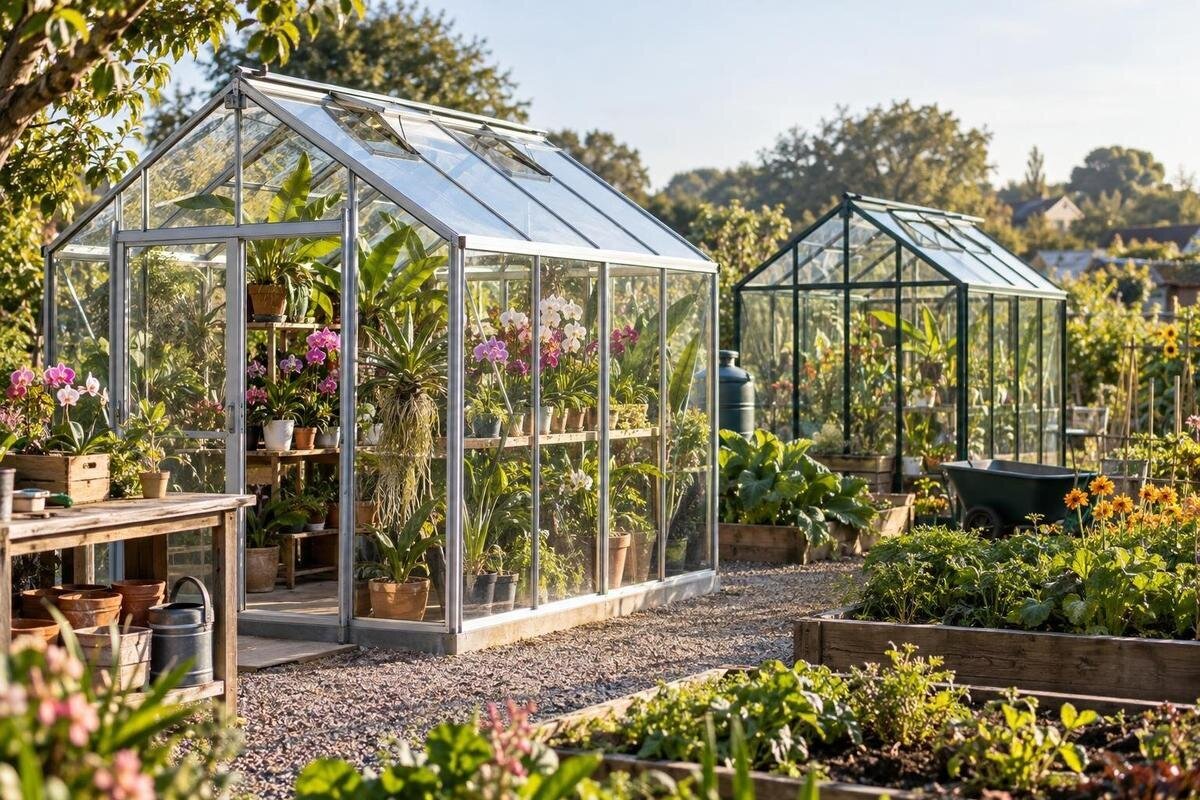
Buying a greenhouse for orchids and tropical plants means balancing growing conditions with the limits of the site. Orchids and tropical plants are broad groups, not one set of care requirements: light, temperature, humidity and airflow can differ from plant to plant. A greenhouse can provide a dedicated space, but it does not by itself create a stable climate. Before choosing a model, make a plant list, observe the proposed location and check the specifications you will rely on: usable dimensions, glazing, ventilation, foundation and any climate-control equipment. That gives you a sound basis for comparing listings and deciding whether the structure fits your collection and the time you can give it.

01
Start with the plants you want to grow
Begin with an inventory rather than a target greenhouse size. Record each species or cultivar, its current conditions, and any care guidance for light, temperature, humidity and seasonal changes. Orchids are a varied group, while tropical plants include species with very different habits; the broad label does not tell you whether they will thrive together. Include mature height and pot size, not only how the plants look today. Note which plants would live in the greenhouse all year and which would move in or out seasonally. This list shows whether you need one shared area or separate growing zones, and which requirements should shape the purchase.
Decide whether the structure is for your whole collection, selected plants that need protection, or a display area that still leaves room for maintenance. That purpose affects usable bench space, access and the level of control you may need. Group plants by compatible requirements rather than appearance, and leave capacity for larger pots or new plants. If a listing such as Bloomcabin Orangerie interests you, compare its published dimensions and any stated equipment with your list, and ask about details that are missing. A model name alone does not establish capacity, humidity levels or suitability for orchids. Separate essential features from optional ones so appearance does not dominate the decision.
Match light exposure to the site
Treat light as both a plant question and a site question. Some orchids and tropical plants suit bright, filtered conditions; others need a different balance, so follow the guidance for the species in your inventory. Observe how long direct sun reaches the proposed site and whether the light changes through the day. A position that looks bright from indoors may receive less light than expected, while direct sun through glazing can create more intensity and heat. Avoid choosing the most exposed spot by default. Decide what light each plant can tolerate before comparing greenhouse designs, then consider whether practical shading could provide the balance you need.
Visit the site at different times of day and, if possible, in more than one season. Walls, trees, fences and roof overhangs can cast changing shade; pale paving or neighbouring surfaces may also affect brightness and heat. Consider where shading might go without blocking vents, doors or access to plants. The aluminium Limited Edition greenhouse listing is one page to inspect for actual glazing and light information; its title and photograph do not show how much light reaches the plants. If those details are not stated, ask rather than guess. Keep a brief note or sketch of the site’s exposure to make comparisons more reliable than relying on memory.
02
Plan temperature control and ventilation
Think of temperature control as a plan, not an automatic benefit of buying a greenhouse. Sunlight can warm an enclosed space, and conditions can shift with weather, time of day and season. Compare the temperature guidance for your plants with the conditions likely at the site, including periods when you cannot check it. That comparison will show whether shade, ventilation, supplemental heating or other controls may be needed. There is no universal setting for a mixed orchid and tropical collection, so avoid choosing equipment around a generic target. Decide how you will monitor changes and who can respond when conditions move outside the needs you have recorded.
Air movement and humidity belong in the same plan. Check where air can enter and leave, whether vents and doors will remain reachable once benches are in place, and how you will avoid stagnant pockets among dense foliage. Adding moisture alone is not a complete humidity strategy; persistent condensation or still air may signal that the arrangement needs attention. A sensor near the entrance may not reflect conditions among high shelves or plants at the far end, so consider where readings will be taken. If different plants need distinct environments, separate zones may be more realistic than expecting one setting to suit every pot.
Check glazing and frame specifications
Glazing affects the light that reaches plants and the way a greenhouse responds to sun, so compare the actual panel specification rather than relying on a photograph. Ask what glazing is specified and whether published information covers light transmission or diffusion, insulation and compatible shading. Different panels can change how you manage the space, but no single glazing choice is automatically best for every orchid or tropical plant. Use your plant inventory and the site’s observed exposure to define what matters. If the listing leaves an important detail unclear, request manufacturer information before comparing it with another model, and ask about replacement panels too.
Check the frame and panel assembly information as well: which materials are specified, how panels are held, what maintenance is expected and whether replacement components are identified. Those details affect the work of keeping the greenhouse clean and usable, even when two models look similar in a photograph. In the aluminium Classic greenhouse listing, look for the exact frame and glazing information rather than treating the product title as a performance specification. Check any published guidance on ventilation, shading and cleaning. If the details are missing, contact the seller before committing, particularly if you need a particular light or heat-management outcome.

03
Measure the usable growing space
Measure the space available and the area you will actually use. Note the proposed footprint, height, route from the house or garden, and room to open the entrance fully. Inside, reserve space for benches, pots, a route for carrying plants and any equipment; outer dimensions do not reveal how much growing area remains. Tall plants and hanging containers affect headroom, while shelves can narrow movement or shade lower plants. Include room to reach every growing surface for watering, inspection and cleaning. A scaled sketch is useful: mark walls, existing paths, taps, doors and other fixed features before comparing sizes.
Compare the sketch with the published external and internal dimensions, door position, usable height and any bench or shelf arrangement shown. Check whether benches, staging or other pictured items are included or optional; a product photograph does not define the order contents. When reviewing Classic Plus 385, do not interpret the number in the model name as a measurement unless the specification confirms it. Allow for plant growth, larger pots and access for changing containers, but do not buy floor area that you cannot reach or ventilate effectively. If a dimensioned diagram is missing, ask for one before deciding.
Compare the site with the greenhouse design
Choose a position you can reach frequently and manage in the conditions you plan to provide. Consider the route for carrying pots and supplies, access to water, and whether equipment can be used without awkward extensions or blocked paths. Check shade from buildings and trees, overhanging branches, roof runoff and nearby reflective surfaces. A position beside a wall may make access convenient, but that wall can also affect shade, warmth and airflow. Think about how the greenhouse will fit into your routine, not only whether it fits the garden plan. There is no single orientation that is right for every site and plant collection.
If you are considering a wall-adjacent design, inspect the actual drawing, clearances and requirements for the wall and base. The aluminium lean-to greenhouse can be included in that comparison, but the name alone does not show whether your wall, site or exposure is appropriate. Check how doors, windows, gutters and maintenance access relate to the proposed position, and confirm the stated attachment requirements with the supplier. Get qualified help if you are unsure about the wall or ground. Do not let a close-fitting layout block light, ventilation or a route to reach the plants.
04
Confirm the foundation and floor requirements
Foundation and floor details belong in the buying decision, not at the end of it. Check what type of base the design requires, whether it is included or sold separately, and what the supplier states about the surface and preparation. A title alone cannot confirm what will arrive in the package. For example, Bloomcabin Prestige greenhouse with metal foundation names a metal foundation, but you still need to confirm what that means for the included components and what the site must provide. Ask for the relevant dimensions and installation requirements before arranging groundwork. If those requirements are unclear, get clarification rather than relying on a photograph or an assumed standard.
Consider the floor as part of the same plan. It needs to suit the way you move pots, reach benches and clean up water from ordinary care; drainage and runoff should have an appropriate route. Do not assume that a level-looking patch or existing paved surface meets the requirements of a particular greenhouse. If ground conditions, drainage or anchoring are uncertain, ask the supplier or a qualified installer to assess them. Confirm that the floor and any threshold will not interfere with the entrance. Planning these details early can prevent the finished growing space from being difficult to enter, clean or keep orderly.
Plan water access and everyday care
Watering needs come from the plants and their growing media, not simply from the humidity in the greenhouse. Make sure regular watering is practical: can you carry water to every bench, or is a suitable supply available nearby? Check how pots drain and where water collects, particularly if you use trays or elevated benches. Do not assume that a more humid atmosphere means a plant needs less attention; continue to follow species-specific guidance. If particular orchids have water-quality preferences, take account of the source you can access. A long or inconvenient route for water can make daily care a chore and influence where you place benches.
Think through the small tasks that repeat: filling watering cans, emptying trays, removing fallen foliage, checking pots and cleaning surfaces. Leave a route to plants at the back without needing to move other pots or lean across delicate foliage. A layout that is easy to inspect makes it easier to notice when a pot needs attention, while crowded benches can hide drainage problems. If you plan to use timers, reservoirs or other watering aids, check their space and compatibility separately; a greenhouse structure does not necessarily include them. Consider how often you can visit and who could look after the plants if you are away.

05
Budget for equipment and ongoing use
List the equipment your plant plan requires and separate essential items from optional extras. Depending on the site and species, you may be comparing shading, ventilation controls, fans, heaters, humidity monitoring or watering aids. Check whether each item is included, offered separately or not specified, and whether it suits the layout you have measured. The T Model greenhouse orangery wall base listing should be read for its stated package and site requirements, not as evidence that particular controls or a suitable wall connection are included. Ask the supplier to clarify any component that affects preparation or your total budget before you order.
Give running costs and regular work their own place in your comparison. Heating, fans, humidification, lighting or controls may use energy or need replacement parts; glazing, frames, floors and benches also need ongoing care. Actual costs depend on what you install, how often it runs and local energy rates, so a generic estimate would not be reliable. Consider whether your schedule allows you to monitor equipment and respond to changing conditions. A more elaborate growing environment can demand more attention as well as more equipment, so include maintenance time, consumables and any professional support in your plan.
Verify the product details before ordering
Before ordering, compare the full specification line by line: external footprint, usable internal height, door opening, glazing, ventilation, base, included accessories and any separately supplied items. Read diagrams alongside the written description and note unanswered questions. For a listing named pyramid greenhouse for masonry base, confirm in practical terms whether the package requires, includes or excludes a masonry base, and what dimensions and preparation are stated. Do not infer measurements from a model number or assume the product photograph shows everything supplied. A simple comparison sheet makes it easier to see which greenhouse meets your criteria and where information is still missing.
Check the current ordering details for your exact address: delivery coverage, access for unloading, assembly responsibilities, packaging and the procedure for reporting missing or damaged components. Confirm what is and is not included before checkout rather than assuming the same arrangements as another purchase. If the installation depends on a wall, base, electrical equipment or site condition that remains unclear, ask the supplier and, where relevant, a suitably qualified professional before committing. Resolve the practical questions while you can still compare alternatives, and keep the final choice tied to the plants and the work you are realistically prepared to manage.
Frequently asked questions
Can all orchids share the same greenhouse conditions?
No. Orchid species and cultivars can differ in their light, temperature and humidity needs. Use reliable care guidance to group plants with compatible requirements, and consider whether the layout can provide different positions for those that need separate conditions.
Will a greenhouse keep tropical plants warm by itself?
Not reliably. Sun can warm an enclosed space, but conditions still vary with the site, weather and season. Compare your plants’ needs with the likely conditions and decide whether ventilation, shade or additional equipment is required.
Should I choose the sunniest part of the garden?
Not automatically. The best position depends on the light your plants need and how direct sun affects the greenhouse. Observe the site at different times and consider whether you can manage shading and ventilation there.
How much space should I allow?
Compare the greenhouse’s actual internal and external dimensions with a sketch of your site. Include space for benches, mature plants, door clearance, equipment and a route for watering and cleaning—not just the footprint.
What should I verify before ordering?
Check dimensions, glazing, ventilation, foundation requirements and what is included. Also confirm delivery to your address, unloading access and assembly arrangements. Ask about any unclear wall, ground or equipment requirements before committing.
A suitable greenhouse is the one whose verified dimensions, glazing, ventilation, foundation and upkeep match both your plants and your site. Use species-specific care guidance to set the priorities, then compare complete specifications and the work needed to maintain the growing environment. That is a stronger basis for choosing a greenhouse for orchids and tropical plants than relying on a broad product label alone.
