
Buying a Greenhouse for Tomatoes: Choosing Height and Growing Space
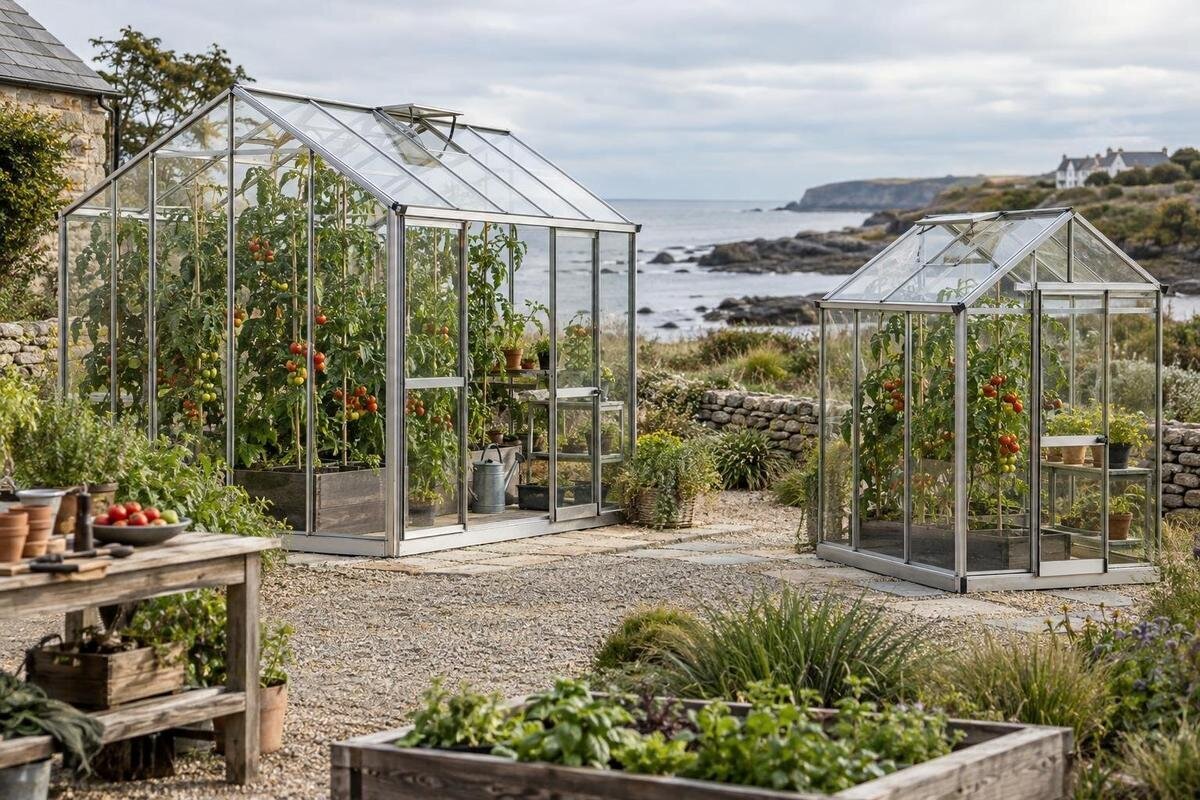
Greenhouse buying guide
Buying a greenhouse for tomatoes is not simply a matter of finding the largest footprint that fits the garden. Plants need enough floor area to grow without crowding, enough usable height for their chosen training method and a route that lets you reach them for routine care and harvesting. Before you buy, plan the number and type of tomatoes you want, sketch the beds or containers, then compare that plan with the greenhouse’s actual internal and external dimensions. This makes height and growing space practical buying checks, rather than guesses based on a product photograph.

Set a tomato plan before looking at greenhouse sizes
Begin with the crop, rather than a guessed plant count from a product photograph. Write down how many tomato plants you expect to grow, whether you have chosen varieties, and whether you intend to use beds, pots or grow bags. If the varieties are undecided, leave the number provisional and use the seed supplier’s guidance on mature growth and spacing when you compare options. A bush type and a cordon-trained type can make different demands on floor area and headroom, so note the likely growing habit as well as the quantity. Count plants rather than imagining a general tomato corner; the number turns the rest into measurable questions.
Separate essentials from optional extras on the same plan. If tomatoes are the main crop, reserve the positions they will occupy as mature plants, not just the small spaces needed when they are first planted. Mark anything that must also stay inside, such as watering equipment or a tray of other crops, so it is not counted as planting room. Add the Bloomcabin Prestige greenhouse with metal foundation to your shortlist only when you can compare measurements shown or confirmed for it with this plan. Neither the product name nor a photograph establishes plant capacity.
Measure the space available in the garden
Measure the area where a greenhouse could stand with a tape, then mark the usable rectangle rather than relying on a rough impression. Note the narrowest clear width and length, and mark fixed obstacles such as walls, fences, existing beds and trees. Include any approach path that must stay open. The external footprint helps determine whether a greenhouse can fit on the plot; it is not the same as the interior area available for tomatoes. If the space narrows towards a corner, measure that pinch point too, since a single overall garden width can conceal a fit problem. Keep the sketch to hand when comparing products.
Consider what needs to remain reachable around the greenhouse, including its entrance and existing garden paths. A structure may fit between boundaries yet leave too little room to enter or move around it. Use the seller’s or installer’s stated base and siting requirements rather than assuming the footprint is the only clearance needed. When you review the Bloomcabin Orangerie page, look for its outer dimensions; if they are not clear, request confirmation. Compare confirmed measurements with your sketch and keep access areas separate from the space you count for tomato beds.
Look beyond the greenhouse’s overall height
A headline height does not tell you all the space tomatoes can use. Find out how the quoted figure is measured and look for both the peak and the lower side or eaves height. A high ridge can still leave less standing or planting room near the edges if the roof slopes. If you plan to work upright among the crop, usable side height and headroom along the route matter as much as the maximum point. Check whether the product information includes a drawing or a table that separates these measurements. If not, ask what the quoted height represents before comparing it with another greenhouse.
Translate the figures into your growing plan by considering the tallest plant you expect, its support method and the clearance you need to handle it. External height does not guarantee the same clear space inside; the roof shape and frame can affect where a plant can be positioned. Do not assume the structure is designed to carry a trellis or hanging crop supports unless the manufacturer confirms this. For Classic Plus 385, look for relevant height details or ask the seller what can be confirmed before treating the greenhouse as a match for your plan.
Match headroom to tomato variety and training
Your tomato variety helps determine how much vertical room is useful. Determinate, or bush, tomatoes generally have a more defined growth habit, while indeterminate varieties are often trained upwards and continue growing. These are broad patterns, not a substitute for cultivar information: mature size varies, so use the label or seed supplier’s guidance. Note the expected growth habit and mature height of the varieties you plan to grow. If you are choosing a greenhouse before choosing tomatoes, compare it with the tallest likely option rather than assuming every plant will remain compact.
Training choices affect where the available height and floor space are needed. A cage or bush-growing approach can take up more room outwards, while vertical training may need clear space above the plant for growth and handling. Decide how you expect to train the crop, then check that there is room to set up and reach the supports without blocking your route. The name of the T-model greenhouse orangery does not tell you its clear interior height. Check any dimensions or drawings supplied for it, and ask the seller if relevant height or support information is unclear.

Calculate how much floor area remains for plants
After checking the site, work out how much internal floor area could actually hold plants. Decide whether you will use in-ground beds, raised beds, pots or grow bags; each changes how the floor can be arranged. Use internal width and length where available, rather than relying only on the outside footprint. Mark bed edges or container positions on a scaled sketch, and use spacing guidance for the varieties you intend to grow. This gives you a more realistic estimate than treating every centimetre inside the walls as planting space, while also making it easier to compare different layouts.
Leave the planned walkways and door area blank on the sketch. They are not spare planting space: they make the crop reachable. If a candidate looks generous on paper, place each bed or container on the plan before judging its capacity. If the layout only works by pushing plants into a path, it is too crowded for the way you intend to use it. For the pyramid greenhouse for masonry base, seek confirmed outer and internal measurements, then check the floor plan against your bed or container arrangement rather than reading usable growing area from the product name.
Leave room to tend and harvest the crop
Plan a clear working route before counting the remaining floor as planting space. You will need to reach plants to inspect them, water them, tie or support them, pick fruit and remove spent growth. Consider whether each row can be reached from one side or needs access from both. A narrow gap may look efficient when the greenhouse is empty, but containers and foliage can make it harder to use later. Mark the route on your sketch and test it against your own reach and the tools you normally carry, rather than relying on a generic aisle measurement.
Think through harvesting as well as regular care. Will there be somewhere to stand while picking, and can you carry a basket to the entrance without stepping through a bed or squeezing between plants? Note which edges are accessible and keep the frequently used route continuous. Apply the same layout test to the aluminium Classic greenhouse once its interior measurements have been confirmed. The product name cannot establish whether your rows and passage will fit. Space for turning and reaching may matter more in practice than one extra plant position.
Allow for other uses without crowding tomatoes
Decide whether the greenhouse is dedicated to tomatoes or shared with other crops and equipment. A second crop needs its own space, and items such as pots, watering equipment and small tools can occupy floor area even when they are not part of the planting plan. Mark where these things will be stored or used. If tomatoes are the priority, do not include space already reserved for another purpose in your estimate of available planting room. This distinction helps you set a realistic plant count and avoid choosing a greenhouse that feels full before the tomatoes reach their mature size.
Shared use can change during the season, so plan for the period when the most things will be inside at once. If another crop or equipment will be there alongside mature tomatoes, allow for both on the sketch. If the uses happen at different times, note that instead. Compare the dimensions shown or confirmed for the aluminium lean-to greenhouse with the space you have allocated to each use. Do not infer its capacity or suitability from the wording of the product name.
Compare listed dimensions on a like-for-like basis
Read product dimensions as a set, not as a single promise of capacity. Compare the outside length and width with your site sketch, then look for inside floor measurements, overall height, side or eaves height and door details if they are provided. Each answers a different question: whether the structure fits, how much floor can be arranged for beds, and where there is headroom for plants. Product tables may use terms differently, so check an accompanying drawing or ask the seller what each figure measures. Keep units consistent when comparing one candidate with another.
Before ordering, check which product version the measurements apply to and whether a stated dimension refers to the greenhouse alone or includes a base. Look for clear interior measurements if those affect your plan. Do not estimate a missing figure from a photograph or assume that products with similar names share dimensions. Assess the aluminium limited edition greenhouse by measurements supplied or confirmed for that product, as you would any other candidate. If a key figure is unclear, request confirmation instead of filling the gap with a guess.

Check the route to the site before ordering
Check how the greenhouse can reach its intended position. Measure the gate or side passage, the narrowest point on the route, turns and any steps. Consider where items could be unloaded and the route from there to the site, in line with the delivery arrangements available for the product. The assembled greenhouse footprint does not tell you the size or shape of the items brought to the site. Ask the seller what access and unloading information can be provided for the model you are considering, then compare it with your measurements. This is a separate check from whether the finished structure fits in the garden.
Confirm what the order includes and what preparation or assembly arrangements you will need to make; use the actual product information rather than assuming that a base, tools or help are included. If installation conditions or the ground at the intended site are uncertain, seek guidance from the seller or an appropriately qualified installer before ordering. Keep delivery logistics separate from plant capacity: a greenhouse may suit your tomato layout on paper but still be difficult to bring to its intended position. Check product-specific instructions with the supplier instead of guessing.
Turn the measurements into a shortlist
Compare shortlisted options against the same plan and in the same order. Check the outer footprint against the garden, usable height against the crop and training method, and interior planting area after marking beds, containers, paths and other uses. Note which measurements are confirmed and which still need an answer from the seller. This keeps the comparison focused on usable tomato-growing space rather than a model name, one headline dimension or the apparent scale of a photograph. A candidate that misses a necessary measurement can be set aside before you spend time comparing less important details.
Decide what amount of spare space is genuinely useful for your plan. Room to reach plants or accommodate their expected growth is different from simply choosing the largest greenhouse available; the structure still needs to fit the plot and be practical to use. A layout with no route, too little room for mature plants or no allowance for the support method may be too tight from the outset. Choose an option that meets your essential measurements and intended working layout, and resolve any unanswered dimension before placing the order.
Frequently asked questions
How do I choose a greenhouse size for tomatoes?
List the plants and varieties first, then mark their growing positions, beds or containers, access route and any other planned use on a sketch. Compare it with the greenhouse’s external footprint and confirmed internal dimensions. Follow variety-specific guidance on mature size and spacing; a product name or photograph is not a reliable measure of plant capacity.
What height should a greenhouse for tomatoes have?
There is no single height for every tomato plan. Check the expected growth habit of your chosen varieties, then compare it with the greenhouse’s usable side and ridge height and your intended support method. If only a headline height is available, ask the seller what it measures before ordering.
Does the greenhouse’s stated floor area equal usable growing space?
No. The outside dimensions help you judge whether the structure may fit the garden. Inside, you still need to allow for beds or pots, a route through the greenhouse, door access and any equipment you plan to keep there. Mark these areas before estimating how many plants will fit.
Can I grow tomatoes in a smaller greenhouse?
A smaller greenhouse can suit a limited crop if the number of plants, their varieties, containers and access route fit its actual interior measurements. Avoid relying on a generic plant count. Compare mature growth and spacing guidance with a drawn layout, leaving room to tend and harvest the plants.
What should I confirm before ordering?
Confirm the dimensions for the exact product version you are considering, including any internal height or door details that affect your plan. Ask about base and installation requirements, and check delivery access and assembly information with the seller. Resolve missing measurements rather than inferring them from a photograph or model name.
A suitable greenhouse for tomatoes is one whose usable height and interior layout work for the varieties and growing method you have in mind, while its outside dimensions fit the available site. A plant list, a measured garden sketch and a marked interior plan make those points easier to assess. With access routes and any other uses included, you can compare options on the space you will genuinely have for growing and harvesting tomatoes.
