
Buying a Greenhouse Kit: Assembly Skills and Tools You’ll Need
Greenhouse buying guide
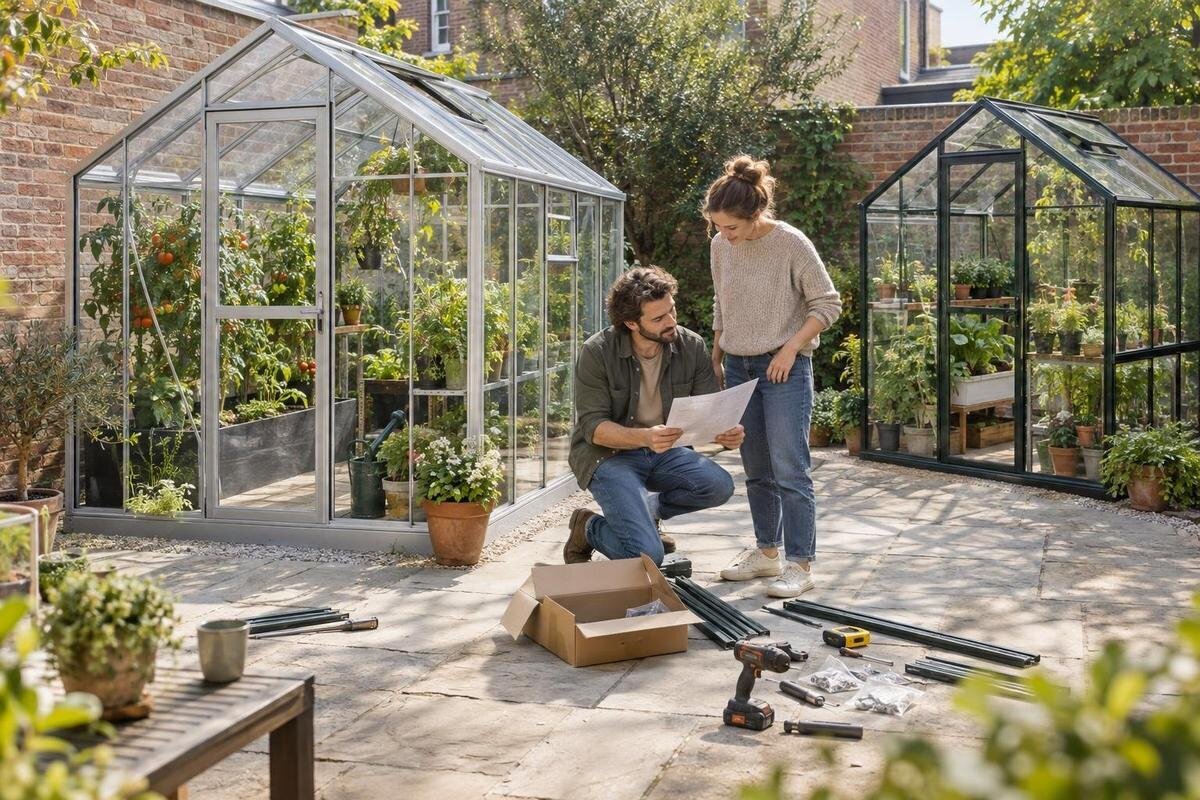
Buying a greenhouse kit also means buying into an assembly process. The work may involve reading diagrams, sorting fixings, handling larger components and preparing the place where the greenhouse will stand; the exact demands differ by kit. Before placing an order, find out what the instructions require, which tools are not supplied, who can help and whether the base is ready. That gives you a fair comparison between kits and avoids treating a product name or photograph as an assembly plan.

Read the assembly information before choosing
A kit’s name, photograph or overall footprint cannot tell you how complicated its assembly will be. The most useful evidence is the instruction set for the exact model: how parts are identified, what order the work follows, which tools are named, and whether preparation or separate components sit outside the package. If the guide is not available on the product page, ask the retailer or manufacturer whether you can see it before buying. A short contents description can point to questions, but it is not enough to judge the work if you need to understand the actual assembly sequence. Ask how to match the document to the exact model or configuration you plan to order.
Read the guide for details that affect your own capacity, not just to get a general impression from the diagrams. Note any stated staffing recommendation, stages that call for an extra pair of hands, named tools, and tasks involving measuring, alignment or careful handling. Check that the guide applies to the precise model and configuration on your shortlist; similar names do not prove that instructions are interchangeable. For a listing such as Bloomcabin Prestige greenhouse with metal foundation, assess the assembly information for that specific option rather than guessing from its name. Write down questions that remain, including how the guide matches the item you would order, and get answers before you commit.
Choose who will do the work
Decide whether you will assemble the kit yourself, share the work with a capable helper or arrange paid assembly. The answer depends on the instructions, your practical experience, available time and whether you can manage the parts and sequence safely—not on a general claim that greenhouse kits are easy to assemble. If the manual gives a recommended number of people, use it when planning rather than assuming you can improvise on the day. Think about whether you can set aside an uninterrupted period and who can be available for the stages that need help. A helper who is only free briefly may not solve a staffing issue.
If your shortlist includes Bloomcabin Orangerie, match that named model to its own assembly information before deciding who will do the work. If you involve a contractor, ask whether the offer covers assembling the supplied kit only or also delivery handling, base preparation and separately purchased items; these are different tasks and should be clear in writing. Confirm who provides the tools, checks the parts against the list and contacts the seller about missing or damaged items. This is a way to define responsibilities, not a reason to assume professional assembly is necessary. You are deciding whether the work and any help you choose fit your arrangements.
Compare the skills the instructions call for
A practical self-assessment is more useful than a broad label such as “good at DIY”. Can you follow illustrated instructions from start to finish, compare part labels with a list, keep similar fixings organised and pause when a diagram is unclear? Assembly usually rewards patience and accuracy more than speed. If the guide calls for measuring, checking that pieces align or repeating a sequence consistently, consider whether you are comfortable doing so carefully. You should also be willing to stop and ask for clarification rather than forcing a part that does not seem to fit. Keeping track of completed stages can help you avoid losing your place if work has to pause.
The exact components and sequence belong to the model’s documents. Someone who has assembled flat-pack furniture may recognise the value of sorting parts and following a sequence, but that experience does not automatically cover every task in a greenhouse assembly. If Classic Plus 385 is on your shortlist, request or review its own assembly guide and identify what you already know how to do, what the instructions explain clearly, and where you would want competent help. Ask about unfamiliar steps before purchasing rather than relying on a photograph. Do not plan to modify parts or substitute another method unless the manufacturer approves it.
Build a tool list from the exact manual
There is no dependable universal tool list for every greenhouse kit, so avoid buying equipment from a generic checklist alone. Instructions may specify basic hand tools such as a screwdriver, spanner or hex key; they may also call for measuring or levelling tools, but only the exact manual can confirm what applies. Check whether a special key is supplied, whether a tool is explicitly excluded, and whether a particular size or type is named. A general note that “tools are required” is not enough if you do not recognise an item. Ask for clarification before ordering if the list uses a term you cannot identify.
Separate tools into three groups: items you own, items you can borrow or hire, and items you would need to buy. Use the instructions for T Model greenhouse orangery with wall base only if they match the option you are assessing; do not infer its tool requirements from the name. Check tool sizes before ordering equipment, and ask whether the assembly instructions allow a power tool or call for hand tools. Follow the maker’s directions rather than applying extra force or changing fasteners. Include any eye protection, gloves or access equipment specified for the job. If a permitted tool is battery-operated, factor in its battery and charger; do not improvise if you lack something the guide requires.
Make room for sorting and handling the parts
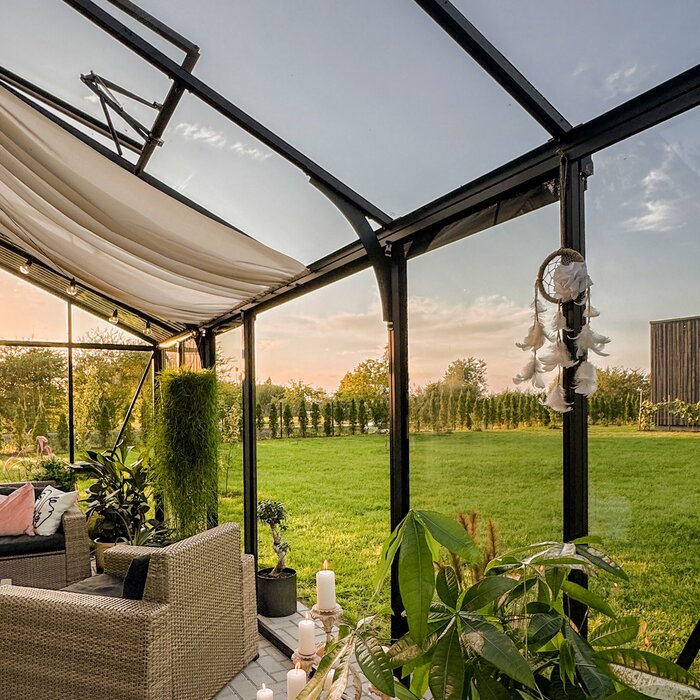
Assembly needs a place where parts can be identified and handled without being repeatedly moved through clutter. Think about the route from the delivery point to the assembly area and whether there is room to lay out components in an orderly way. Ask for package dimensions or handling guidance if access is restricted; the finished greenhouse’s footprint does not tell you how much temporary space the work will need. Good lighting makes it easier to read part labels and diagrams. If the kit must be stored before assembly, find out how the maker says to protect the parts and whether your planned storage place can meet that guidance.
Keep the parts list with the boxes and group fixings only as the instructions recommend, so small pieces do not get mixed. Check the delivery against the inventory before disposing of packaging, and set aside damaged or unclear items instead of using substitutes. This can help you raise a problem while the details are easy to identify. If pyramid greenhouse for a masonry base is among the names you are considering, the title alone does not tell you package size or how components should be staged; ask for the relevant handling information. Leave enough room for people to work without crowding the parts, and follow the maker’s advice about keeping children, pets and unrelated activity away from the work area.
Separate greenhouse assembly from base preparation
Assembling the greenhouse frame and preparing its ground or support are not automatically the same job. Establish whether a base or foundation is included, is an optional extra, or must be provided separately. Then read the stated requirements for its position, dimensions and preparation. Do not infer what is needed from a photograph or a phrase in a model name. If the instructions use terms you cannot assess, ask the manufacturer for the relevant drawing or written requirements rather than estimating from an image. This helps you distinguish the kit assembly tasks from work that may need to be completed before assembly can begin.
Confirm who is responsible for preparing the support and when that work must be complete. The name Aluminium Classic Greenhouse cannot answer whether a particular base is supplied or what the site must provide; use the documents for the exact model. A tape measure or spirit level may help with checks named in those documents, but neither tool replaces a specification. If ground conditions, support capacity or anchoring details need judgement, ask an appropriately qualified professional. Keep this work separate from your assembly-tool budget so that a kit that appears manageable does not leave you with an unplanned site-preparation task.
Check how panels and larger components are handled
Ask what the instructions say about handling panels and other larger components. Their material, weight, size and assembly sequence cannot be inferred from the category name, so check the actual product documentation and delivery information. Find out whether any components need to be carried or supported by more than one person, how they should be stored before fitting and what protective equipment the maker specifies. These questions are useful even if you have assembled other garden products: different materials and formats may call for different handling. If parts have protective coverings, follow the instructions on when to remove them rather than guessing.
Check what the parts inventory identifies and how to report a panel or component that arrives missing or damaged. If Aluminium lean-to greenhouse is an option you are considering, ask for information that matches the exact model and check its stated handling sequence and staffing needs. Do not treat another kit’s instructions as a substitute simply because its appearance seems similar. It is useful to know, before ordering, whom to contact if the contents do not match the list and what information they will need. Do not begin a step with an unidentified or damaged piece; seek guidance first.
Plan around delivery, access and available time
Delivery arrangements affect when and where assembly can begin. Ask how many packages are expected, their approximate external dimensions or weight if available, where the carrier will leave them, and whether you need to move them from there yourself. These are order-specific details; do not make plans from a product photograph or a finished-size measurement. Check whether you have a suitable place to keep the packages if the base, a helper or a workable assembly period is not ready on delivery day. If the delivery or access arrangements are unclear, confirm them before ordering rather than discovering a problem when the kit arrives.
Use the manufacturer’s assembly estimate, if one is available, as a planning aid and ask what it includes. Opening and checking the kit, preparing the work area or base, and final checks may not all be counted in the same way. Do not treat an estimate for one model as a promise about another. If Aluminium Limited Edition greenhouse is on your shortlist, request documents and timing information for the exact option being sold. Choose a period when the required people can be available, and allow room to resolve questions or missing parts. A realistic schedule is better than forcing the work into a narrow window.

Compare kit contents and excluded work
A kit is easier to compare with another when its included items and excluded work are clear. Read the contents list and check whether it names the frame, panels or covering, doors, vents, fixings, base parts and written instructions, as relevant to that model. These are questions to check, not a claim that every kit includes each item. Note accessories you actually want, such as shelves or staging, separately so you do not mistake an optional extra for part of the basic order. Ask what must be bought elsewhere and whether the supplier can identify a compatible item.
Compare assembly resources alongside the product contents. Account for tools you would need to obtain, any paid help you decide to use and separate base work, without assuming that any fixed price or extra is included. Check whether the maker provides a parts inventory and what procedure applies if the delivery does not match it. For each listing, use the same questions: exact model, kit contents, tool requirements, staffing and excluded preparation. Where a base component or accessory is listed separately, clarify whether it is intended for the option you are considering. This keeps the comparison focused on what you will actually need to arrange.
Turn the answers into a realistic plan
Before placing an order, test the answers you have obtained against a short assembly plan. You should be able to identify the instructions for the exact kit, who is responsible for the work, which tools must be available, where the parts can be handled, what the base requires and how to deal with missing or damaged items. Mark each point as confirmed, arranged or still unknown. A single unresolved detail may be easy to settle with a question; several unknowns about access, support or specialist tools suggest that you are not yet comparing the options on equal terms. This check makes it easier to judge whether the kit fits your skills and schedule.
Choose a kit whose assembly demands you can meet, or whose gaps you can realistically cover with planned help. If the work depends on a tool you cannot obtain, a person you cannot schedule or base preparation that has not been assessed, resolve that before committing rather than hoping it will be manageable on delivery day. Keep the model guide, parts list and answers together so you can refer to them during preparation. Assembly information is part of the buying decision: it tells you what equipment to gather and whether the work is a sensible match for your experience and arrangements.
Frequently asked questions
Can one person assemble a greenhouse kit?
That depends on the exact instructions and the tasks involved. Check whether the guide recommends a particular number of people and whether any stages require an extra pair of hands. Do not assume that a compact footprint means one-person assembly. If the guidance is unclear, ask the retailer or manufacturer before you buy.
Which tools should I have ready?
Use the tool list for the exact model. Depending on the instructions, examples may include a screwdriver, spanner, hex key, tape measure or spirit level, but there is no universal list. Check whether any special tool is supplied, and confirm the size or type required before buying equipment.
Does a greenhouse kit include its base?
Inclusions vary, so check the contents and exclusions for the model you are considering. Ask whether a base or foundation is included or must be provided separately, and what site preparation the instructions require. A photograph or product name is not enough to confirm this.
Should I use power tools for assembly?
Only use them if the instructions for your exact kit allow it and explain any relevant limitations. Some tasks may call for a particular hand tool instead. If the guidance is unclear, ask the manufacturer rather than assuming a power tool is suitable because it seems quicker.
What if the assembly guide does not answer my questions?
Ask the retailer or manufacturer for information that matches the exact model or configuration before ordering. Clarify the tools, staffing and base requirements you cannot assess from the guide. If the support or anchoring details need a professional judgement, consult a suitably qualified professional.
Buying the kit is only part of the decision. A suitable choice is one whose assembly information makes clear what you can do, what tools and help you need, and what preparation sits outside the package. When those requirements match your skills, time and space—or can be covered by help you have arranged—you can order with a realistic plan rather than discovering an avoidable gap on assembly day.
