
Buying a Sauna for a Coastal Garden in Malta
Outdoor sauna buying guide
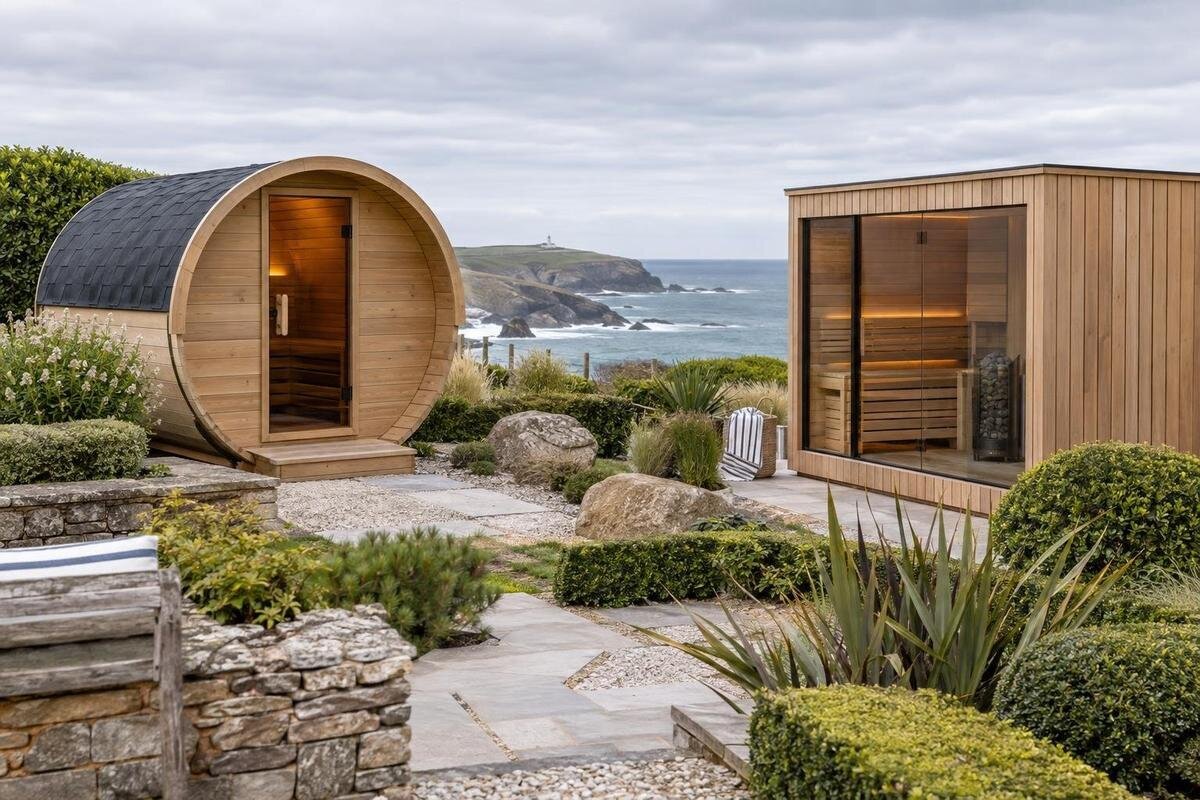
Buying a sauna for a coastal garden in Malta calls for more than finding a design that fits the view. Salt carried on the air, wind, strong sunshine and rain can affect different parts of a site, and exposure can vary even within one property. A sensible purchase therefore begins with the exact position, the sauna’s documented materials and care requirements, the ground beneath it, and the work needed to install it. Compare those details before treating an attractive photograph, a wood description or a model name as proof that an outdoor sauna suits a seaside setting.
Assess the exposure at the exact garden position
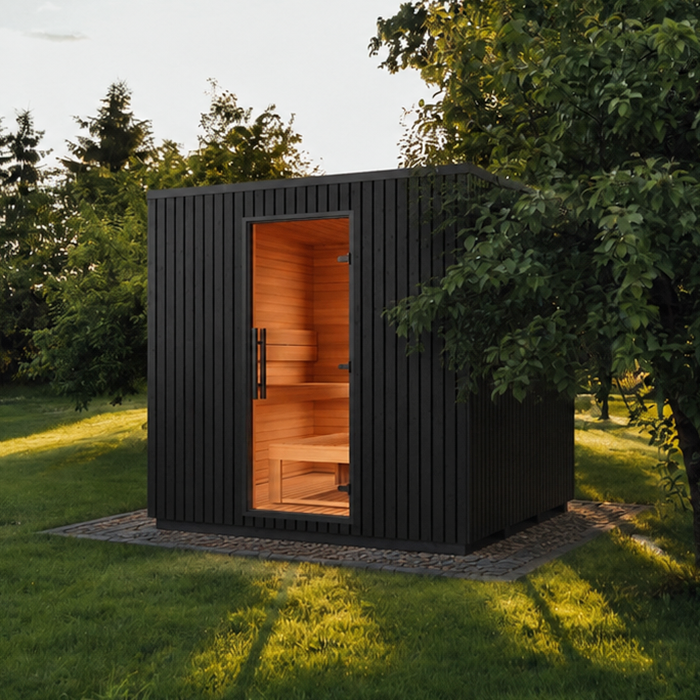
Coastal describes the setting, not one uniform level of exposure. A garden close to open water may receive spray, while another site farther inland may still be exposed to wind carrying salt; walls, nearby buildings, trees and the direction of prevailing weather change what reaches a particular spot. Look at the proposed position rather than relying on the property address. Note where salty residue appears on existing outdoor fittings, how exposed the area feels on windy days, and whether rainwater regularly reaches the same surfaces. These observations help you frame precise questions for a supplier, but they cannot establish that a particular sauna or finish is suitable.
Ask for written guidance covering the intended coastal exposure, not just a general description such as outdoor use. Find out which exposed parts are covered by that guidance, what care is expected, and whether any limitations apply to the finish, fittings or warranty. The product name alone cannot answer those questions: Thermowood Barrel Sauna S 140 is a listing to investigate, not evidence of a salt-resistance rating. If information is missing, ask the seller to obtain the manufacturer’s response before comparing the model with alternatives. A clear answer should relate to the actual site conditions and state what the owner must do to maintain the sauna.
Measure the sauna footprint and working space
Before choosing a model, mark out its stated external dimensions in the garden and leave the space needed for access and operation. Check whether a listing gives the overall measurements or only the cabin body; also confirm any projection, step, roof edge or assembly space shown in the installation documents. A model code or product photograph is not a substitute for a dimensioned drawing. Use the measurement information for Thermowood Barrel Sauna HC150 as a starting point, then confirm details from the full specification and manual. Do not commit until the intended position accommodates the sauna and the clearances prescribed by its instructions.
Think about use around the cabin as well as the footprint. A door needs its stated opening area; people need a route to enter, exit and bring in towels or supplies, and an installer may need room to assemble components. Check privacy from the house, neighbouring windows and outdoor seating, without blocking access or ignoring the manufacturer’s ventilation and heater requirements. If the garden is tight, draw the cabin, door opening and approach on a simple plan or mark them on the ground. This often reveals a conflict with a path, drain, gate or planting bed before an order makes moving or redesigning the site expensive.
Confirm the base requirements before site preparation
The base is a separate buying decision, not a detail to leave until delivery. Ask what surface and support arrangement the selected sauna requires, then compare that instruction with the ground at the proposed position. Existing paving, a raised deck, soft soil, a slope or an area where rainwater gathers can each raise different questions; no single base solution should be assumed from the word garden. Check how water moves across the site and whether the planned position would obstruct drainage or sit where runoff collects. A supplier’s installation drawing can identify the specified support area, but it does not assess the condition or capacity of your own ground.
Request the base requirements and any anchoring or levelling details in writing before preparing the site. If the instructions do not clearly cover your ground, ask a qualified installer or relevant building professional to assess it; do not improvise a foundation or rely on a generic online diagram. The page for Thermowood Barrel Sauna HC 225 can be included in a shortlist, but its name does not establish what base it needs. Confirm who is responsible for site preparation, whether the installer will inspect the base, and what must be completed before assembly. Put that scope into the quotation so the sauna, support and installation are considered together.
Account for sun, shade and wind separately
Sun and shade affect the comfort and upkeep of an outdoor installation, but the best position cannot be inferred from the word coastal. Watch how direct sun and shade move across the garden at different times, and note whether the site is exposed to driving rain or debris from nearby trees. A shade sail, wall or canopy may change exposure, but it should not be treated as proof that the sauna is protected from salt or that a particular cover is suitable. Ask what external exposure the manufacturer allows and whether a proposed shelter changes the installation requirements. The listing for Thermowood Barrel Sauna N 210 is one item to compare against published guidance, not a recommendation for a sunny or sheltered position.
Wind is a separate concern from sunshine. Consider the direction that reaches the planned area, how a gate or access path behaves in gusts, and whether a wall or hedge creates a different pocket of exposure. Do not assume that a screen will make an exposed position suitable; it can also alter airflow and access. Check the manufacturer’s placement, ventilation, fixing and heater-clearance instructions, then ask a qualified installer to judge any site-specific question. Trees can provide shade, yet branches and fallen leaves may create maintenance or access issues. A practical location balances the documented installation conditions with a route people can use in ordinary weather, rather than choosing the most attractive corner alone.
Verify materials and maintenance for sea-air exposure
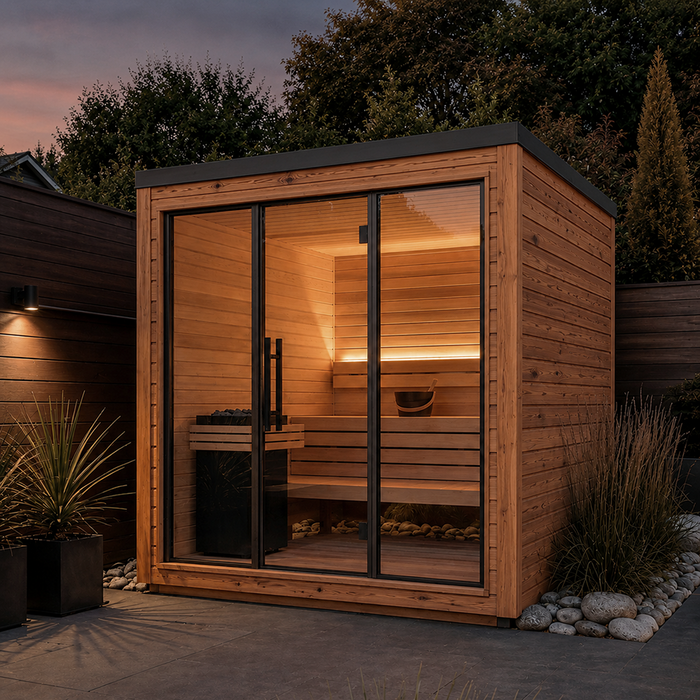
Ask what the sauna is made of beyond the broad wood description: the exterior finish, roof covering, joints, seals and any exposed metal fittings can have different care needs. Request the manufacturer’s statement about suitability for salt-air conditions and find out whether it applies to every component or only to the timber. Thermowood in a model name does not, by itself, describe the finish, hardware or corrosion resistance of the complete product. A listing such as Thermowood Barrel Sauna N 250 gives you a specific page to check, but use a technical specification or written seller response to answer material questions. Avoid comparing two options on appearance alone when their exterior details are not clear.
Read the maintenance instructions before buying, especially any guidance on cleaning, removing deposits, inspecting joints and refreshing an exterior finish. Ask how the recommended routine changes, if at all, in a location exposed to sea air, and which cleaning products or methods are acceptable. Do not assume that a finish is maintenance-free or that pressure washing is appropriate. The answers matter to the whole ownership cost: a sauna that fits the garden may still be a poor match if its care requirements are impractical for you. Check warranty terms alongside the care guide, looking for stated exclusions or maintenance conditions that relate to corrosion, finish or outdoor exposure. Use the written terms rather than a verbal impression.
Choose capacity from interior dimensions and intended use
Capacity should reflect who is likely to use the sauna together, rather than a figure guessed from a model name or exterior shape. Compare the internal dimensions, bench arrangement, available sitting space and headroom shown in the documentation; the outside footprint does not tell you how much usable room there is. The product page for Thermowood Barrel Sauna LC 260 can sit in the comparison, provided you check those actual details instead of reading a capacity into its code. Decide whether users expect to sit upright, change position or share the space comfortably, then verify that the stated interior layout supports that pattern. If capacity is not published, ask before ordering.
Include the way people will approach and enter the sauna in your space check. Confirm the door’s position and opening direction, any step or threshold shown, and whether the path remains clear when garden furniture, storage or planting is in place. Do not choose a smaller cabin solely because its exterior dimensions fit: compare the usable seating area and access needs as well. Conversely, extra internal room has value only if it suits the garden, the number of regular users and the overall purchase budget. Ask for a dimensioned plan and a clear capacity statement, then compare options on the same basis. This avoids treating a model suffix, photograph or marketing phrase as a reliable measure of comfort.
Confirm the heater and installation requirements
Confirm the heating system and utilities as part of the purchase, not after the cabin is chosen. Ask whether a heater is included, what exact equipment is intended, and which supply or fuel and installation conditions it requires. Verify that the stated equipment is compatible with the sauna and that clearances, ventilation and controls are set out in the manufacturer’s instructions. These are not details to infer from a product image or to calculate by guesswork. A page such as Thermowood Barrel Sauna HCF 300 is a point of reference for questions about included equipment; it does not establish the heater specification. Ask a qualified installer, including an electrician where electrical work is involved, to confirm what your site can accommodate.
Separate the cabin price from the work needed to make it usable. Establish whether the quoted scope includes assembly, heater fitting, electrical or other service connections, commissioning and site preparation, and identify who is qualified and responsible for each task. Ask the supplier for the installation manual early enough for a professional to review it, especially if access, clearances or the route for services could affect the chosen position. If heating equipment is sold separately, obtain its exact model and compatibility information before accepting a quote. A written installation scope helps prevent gaps between the sauna supplier, installer and tradesperson; it also lets you compare offers on the same basis without assuming that a product listing includes work it does not state.
Compare the complete cost and warranty terms
Compare the complete amount you would need to pay, rather than a headline figure for the cabin alone. Request an itemised quote that separates the sauna, heater and controls where applicable, delivery, unloading, assembly, base preparation, connections, accessories and any finishing work. Ask which of these are included and which remain your responsibility; do not assume that a model page covers installation. The listing for Thermowood Barrel Sauna LCF 300 can be added to a shortlist, but it is not enough to establish an installed cost or package contents. Put competing quotations side by side and check that they cover the same items, charges and work. That makes a price comparison useful even when different suppliers describe packages differently.
Price is only one part of value. Before ordering, read the warranty and after-sales terms: who provides support, how a claim is made, whether parts can be replaced, and whether coastal exposure or a required maintenance routine affects coverage. Check the stated duration and exclusions in the actual documents; no warranty should be presumed from a model label or general sales description. Ask how to obtain replacement fittings or finish products if needed and whether service is available for the equipment included in your package. Save the technical sheet, installation instructions, quote and maintenance guide together. If an important promise appears only in conversation, ask for it in writing so the basis of your purchase is clear.
Plan delivery, assembly and aftercare
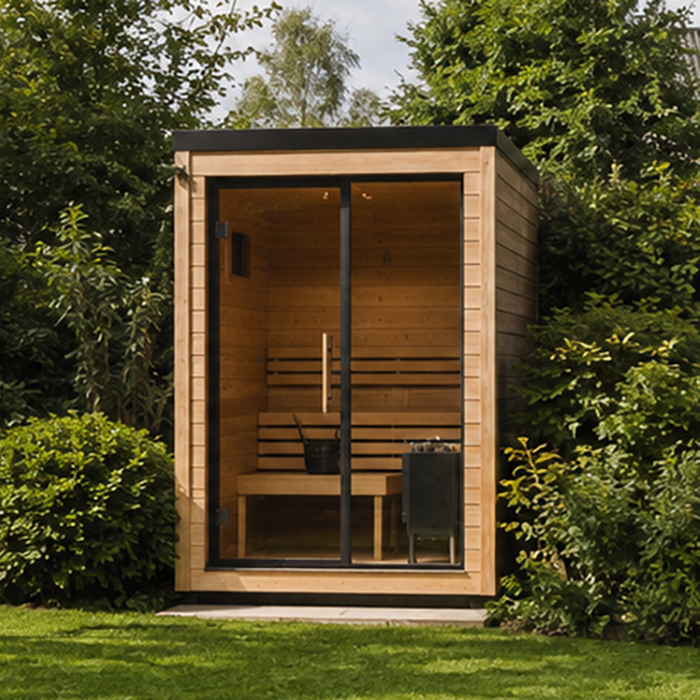
Check the delivery route as carefully as the sauna’s footprint. Measure gates, narrow passages, steps, turning space and any overhead obstruction, then ask the seller for the packed dimensions, unloading method and access needed on arrival. A unit that fits the final position may still be difficult to bring through the garden. Confirm whether the delivery service includes carrying the package to the site, whether special unloading equipment is needed, and who arranges it; do not infer these points from a product photo or an advertised delivery description. If a part arrives as a kit, ask how its components must be stored before assembly. Agree those details before arranging delivery.
Clarify who assembles the sauna and what site conditions must be ready first. Ask whether the supplier offers assembly, whether that work includes only the cabin or also the heater and connections, and how defects or missing parts are reported. For a self-assembly option, review the instructions and tool or skill requirements honestly, then ask a professional if any installation detail is unclear. Once installed, keep the manuals, warranty, receipt and maintenance record accessible; these documents make it easier to follow the correct care routine and request support. Coastal conditions can make aftercare a recurring task, so confirm where to obtain replacement components and how service questions are handled before buying.
Compare final options against a coastal-site checklist
Use a simple comparison sheet for the final two or three choices. Record the manufacturer’s written coastal guidance, exposed materials and care routine, external and internal dimensions, base requirements, heater and connection scope, delivery access, installation responsibilities, total quoted cost and after-sales terms. Mark each item as confirmed, unclear or unsuitable for your particular site rather than using an average score to hide missing information. A low total can reflect an omitted base or installation cost; a compact footprint may come with an interior layout that does not suit intended users. A short, evidence-based list is more useful than comparing names or photographs, and it highlights the unanswered question that could change the purchase.
If an important detail is absent, pause and request the manufacturer’s or supplier’s written answer before placing an order. This matters most for claims about salt-air exposure, maintenance, site preparation, compatibility and warranty conditions, because a general phrase such as outdoor sauna may not cover the exact garden. If the documentation does not support the proposed position, consider a different location or another option rather than assuming the issue will be resolved after delivery. Then revisit the layout and cost check if the site or installation scope changes. The aim is not to find the largest or most feature-rich cabin; it is to buy a sauna whose documented needs fit your garden, installation plan and intended level of care.
Frequently asked questions
Does an outdoor sauna automatically suit a coastal garden?
No. A description such as outdoor use does not establish how the sauna’s exposed materials, fittings or finish will cope with sea air. Ask for written guidance on coastal suitability, maintenance and any related warranty conditions.
Does a garden closer to the sea always have greater exposure?
Distance alone does not tell you what reaches the planned position. Wind direction, nearby buildings, walls and trees can all affect exposure. Check the exact site and note any salt residue on existing outdoor fittings.
What should I confirm about the base before ordering?
Ask for the selected sauna’s support and levelling requirements, then compare them with your ground and drainage. If the instructions do not cover the site, have a qualified installer or relevant building professional assess it before preparation begins.
Can I rely on Thermowood in a model name as proof of coastal suitability?
No. A model name does not describe every material, fitting, finish or care requirement. Ask for the full specification and written guidance about the complete sauna’s suitability for sea-air exposure.
Should I assume the purchase price includes installation?
No. Check the quotation for each item, including delivery, unloading, base preparation, assembly, heater and connections where applicable. Ask who is responsible for each part of the work before comparing prices.
For a coastal garden in Malta, the sound choice is the one whose documented exposure guidance, care routine and installation needs make sense at the exact site. Measure the space, confirm the base and utility requirements with the appropriate professionals, and compare complete written quotations rather than model names or photographs. If a supplier cannot substantiate a key point about sea-air suitability or maintenance, keep it unresolved until they do. That evidence-based check can narrow the shortlist without guessing what a sauna is designed to withstand.
