
Buying a Sauna for Frequent Use: Practical Features to Prioritise

Sauna buying guide
Buying a sauna for frequent use is less about finding a feature-rich model and more about choosing one that fits the routine you will actually keep. The cabin needs to suit the people using it, the place it will stand and the practical work around each session: getting in, using it comfortably, cleaning it, allowing it to dry and operating it. Compare those repeated tasks alongside appearance and purchase price. A clear specification, usable layout and realistic installation plan are more valuable than assumptions based on a product name.
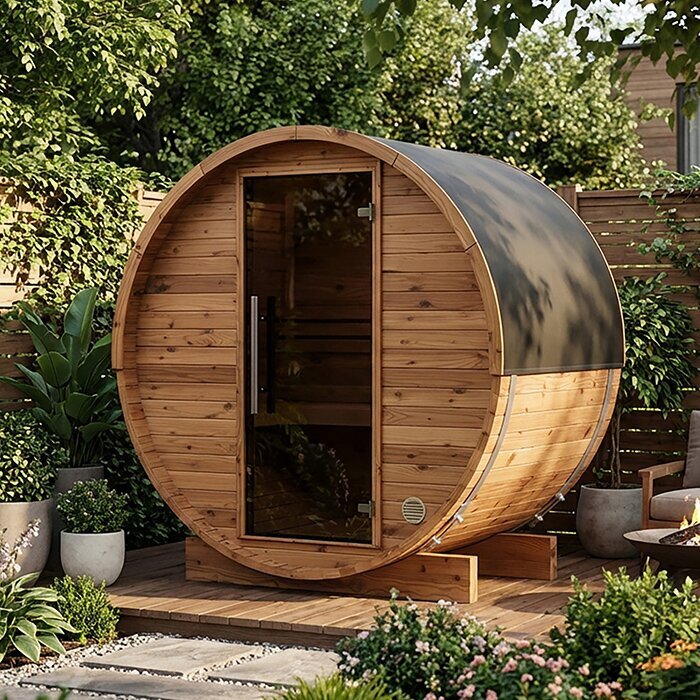
Buyer’s checklist 1
Start with the pattern of use
Before comparing models, write down who is likely to use the sauna and how often it will be shared. The important figure for space is usually the number of people using it at the same time, not the total number of household members. Note both a typical occasion and a busier one, and whether use is likely to be planned or spontaneous. This does not prescribe how often or how long anyone should use a sauna; it gives you a practical brief for judging capacity, access and operating effort. If guests may join, decide whether that is occasional enough to handle differently from your normal routine. Also note whether people will use it together or in succession; this helps define the access, cleaning and operating information you need.
That brief helps prevent a model name or a headline capacity from making the decision for you. A listing such as Thermowood Barrel Sauna S 140 listing is an identity, not a complete measure of who can sit comfortably inside. Check the supplier’s stated occupancy, interior dimensions and layout, and ask for a drawing if the page does not make them clear. Then compare the details against the number of people who will actually use it together. For frequent use, a choice that works for the usual group is generally more useful than one sized only for an uncommon gathering, provided the occasional case is still acceptable to you.
Match the interior to the people using it
A stated maximum occupancy is not the same as an explanation of how the seats are arranged. Look for a dimensioned plan and check how many usable sitting places it shows, where the benches sit, and whether there is room for people to settle without blocking the entrance. If the supplier provides only a capacity figure, ask what that figure means and whether it assumes close seating. Do not estimate usable space from a photograph, product code or exterior shape; images may not show scale, and names are not measurements. Check whether the dimensioned drawing shows the configuration actually offered in your quote; a plan for a different layout is not enough.
Think about the height and mobility of the regular users as well as their number. Different people may find a high step, narrow doorway or one seating level less convenient; confirm actual measurements and the route from the door to the seats instead of relying on labels such as “family size”. If a physical visit is not practical, ask for dimensioned drawings and clear views of the interior. Use the Thermowood Barrel Sauna HC150 product page as a candidate to check against the same criteria, not as evidence that a particular layout or capacity will suit you; only a dimensioned plan and confirmed occupancy information can answer those questions.
Buyer’s checklist 2
Check entry and movement inside the cabin
Frequent use turns the doorway and the route to a seat into repeated points of contact. Confirm the clear opening, door position and opening direction, step or threshold height, and the space needed to approach the entrance. Include the surrounding area in your measurements: a door that opens towards a fence, wall or stored equipment may be awkward even if the cabin itself fits. For indoor installation, check the route through the building as well as the final location; for an outdoor unit, measure gates and turns on the way to its intended spot.
Inside, ask how users get from the entrance to the seating and where towels or personal items can be kept without obstructing movement. Compare the stated clearances with the people who will use the cabin, rather than assuming every bench arrangement feels equally easy to enter and leave. Consider whether people may need to pass one another at the doorway when several will use it together. A doorway, step or seat that seems manageable once may become a source of friction when repeated often. If anyone needs a particular access arrangement, discuss it with the supplier before ordering and have a qualified installer confirm what the proposed site can accommodate; do not assume an ordinary sauna is accessible by default.
Choose finishes with clear care instructions
Regular use makes upkeep part of the buying decision, so ask what materials and finishes are used on the surfaces people touch and sit against, and how each should be cared for. Request the manufacturer’s cleaning and maintenance instructions before purchase, including products or methods to avoid. Do not treat a timber label or a general description such as “easy care” as a complete care plan. Follow model-specific directions, since a method suitable for one finish may not suit another. If the supplier gives separate instructions for routine cleaning and more thorough care, ask how to tell when each applies.
Look closely at what the listing identifies and what it leaves unstated. On the Thermowood Barrel Sauna HC 225 listing, for example, the model name alone does not tell you the surface finish, cleaning routine or upkeep required; ask the seller for those particulars in writing. Also find out whether the supplier specifies checks or periodic treatment, if any, and who is responsible for carrying them out. This is more useful than trying to infer maintenance from a photograph. If the instructions seem burdensome for the routine you plan, include that effort in your comparison rather than postponing the question until after delivery.
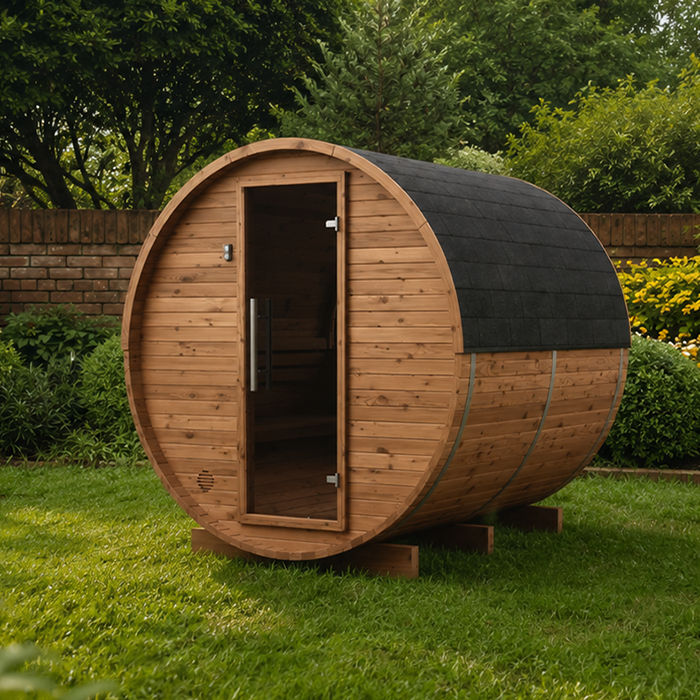
Buyer’s checklist 3
Plan how the sauna will be cleaned and dried
Frequent use means the cabin needs a repeatable between-use routine. Ask which areas should be wiped or cleaned, how to deal with moisture, and what the supplier recommends for ventilation and drying after a session. Find out whether those steps can be done easily with the sauna in its intended position, including access to corners, the floor and any areas that need inspection. Do not assume that opening a door or vent in a particular way is sufficient; follow the instructions for the exact sauna and heater configuration. If uses may occur on successive days, ask whether the supplier’s drying guidance covers that pattern.
Ask for the cleaning steps and any recommended checks in a form you can keep with the product documents. Check whether a drainage arrangement or particular floor setup is required, and whether it is part of the proposed installation or must be arranged separately. The Thermowood Barrel Sauna N 210 listing is another candidate to assess against written cleaning and drying guidance, not a basis for assuming how its interior is arranged. A routine that is clear and realistic for the people who will look after the sauna is more useful than a promise of “low maintenance” without supporting instructions.
Ask about construction, maintenance and support
Frequent use is a reason to ask how the sauna is assembled and what parts may need attention over time, not to assume that a particular material or shape guarantees a service life. Request a component list, assembly guidance, maintenance schedule and details of any parts the owner is expected to inspect or replace. Ask which parts, if any, are replaceable and how the supplier handles a repair enquiry. Find out whether replacement parts can be ordered separately and how to identify the correct ones. These answers help you judge whether routine upkeep is manageable and what support exists if a component needs attention.
Put the response alongside the purchase terms: clarify who assembles the cabin, whether any preparation is the buyer’s responsibility, and what support or warranty conditions apply. Ask for the applicable terms in writing and check what they cover, any exclusions and the process for requesting help; do not assume that a warranty exists or covers every issue. When reviewing the Thermowood Barrel Sauna N 250, treat the model name as a way to identify the product, then seek the relevant service information directly. A regular-use purchase should leave you clear about both routine care and the route to assistance.
Buyer’s checklist 4
Confirm the site and delivery route
Measure the intended position and the complete route to it before ordering. Record available width, length and height, plus the room needed for access and any service or maintenance space the supplier specifies. Then measure gates, corridors, steps, turns and overhead obstructions on the delivery route. Compare these figures with the product’s stated assembled dimensions and the dimensions of any parts that need to pass through a restricted opening. A footprint that fits on paper is not enough if the unit cannot be brought to the site or accessed afterwards. If assembly is proposed on site, ask how much clear working room is needed.
Before placing an order, confirm the required base or supporting surface, clearances, weather-exposure guidance if it will be outdoors, and any utility connections with the supplier and a qualified installer. Suitability depends on the exact model and location; do not assume that a flat-looking outdoor surface or existing patio automatically meets the supplier’s requirements. The Thermowood Barrel Sauna LC 260 listing identifies a candidate, but its name alone cannot establish fit, support needs or installation requirements. Have the proposed site assessed by the appropriate professional before committing, especially where structural work or electrical services may be involved.
Review the heater and controls as part of daily use
Heating equipment and controls are part of the routine even when bought separately from the cabin. Confirm what the quoted sauna includes, which heater options are stated as compatible, and how the control system is operated; do not assume a heater is included or that a unit can be paired with any heater. Ask for the correct manufacturer’s instructions for both items and clarify who will provide and connect them. This is about obtaining a complete, compatible specification, not guessing an output from a model code or selecting equipment by appearance.
Think through the steps from starting to shutting down and the location of the controls, then ask whether the supplier can explain the operating sequence for the configuration being offered. Controls should be understandable to the people who will use the sauna; if several household members will operate it, make sure everyone can follow the manual. Record the exact heater, controls and any separate components on the quote. The Thermowood Barrel Sauna HCF 300 product page identifies a model only; use the listing and supplier documentation to confirm the proposed combination rather than assuming features from its name. Have electrical suitability and connection requirements confirmed by a qualified professional.
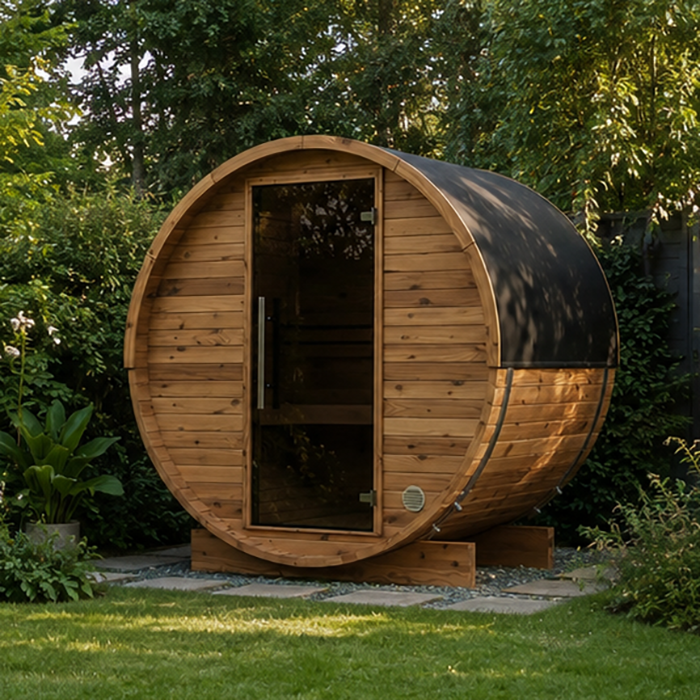
Buyer’s checklist 5
Estimate ongoing costs and effort
A sauna for regular use can make running costs a more important part of the comparison, but there is no reliable cost figure based on the product name alone. Ask the supplier for energy-use information for the exact cabin and heater combination, the assumptions behind any estimate, and whether that estimate reflects the pattern of use you described. Your tariff, operating settings and frequency affect what you pay, so compare figures only when their assumptions are clear. If no dependable estimate is available, note the gap rather than treating a generic figure as a promise.
Include less obvious effort too: preparing the cabin, following the cleaning and drying routine, and arranging any scheduled maintenance all take time even if they do not appear on an electricity estimate. Ask what tasks are expected of the owner and how often, where the supplier can specify it; distinguish firm instructions from rough guidance. The Thermowood Barrel Sauna LCF 300 listing can be assessed using the same questions as other candidates, but do not read operating costs or service needs into its model code. Compare each option on documented information, not an assumed saving or a broad label such as “efficient”.
Compare the full order before committing
Before choosing, build a like-for-like comparison with the exact model and configuration, quoted components, internal and external dimensions, published occupancy, care instructions, siting needs and operating information. Write down details the supplier has confirmed and separate them from points still awaiting an answer. Keep drawings and agreed changes with the quote so later comparisons use the same configuration. This makes omissions visible and stops an attractive image or short description from standing in for a specification. If a detail matters to your intended use—seating layout, clear opening, ventilation guidance or maintenance access—ask for it explicitly and keep the response with the quote.
Read the order and delivery terms alongside the product description. Confirm what is included, what must be arranged separately, how the unit will be transported and whether assembly, site preparation, electrical work or removal of packaging is covered. Ask how to report a delivery problem and who handles after-sales questions, without assuming any particular service or time frame. Check that the written configuration matches what you discussed before placing the order. This final review is especially useful for a sauna used often: it resolves practical expectations before the repeated routine begins.
Frequently asked questions
How should I size a sauna for frequent use?
Base the decision on the number of people who will use it at the same time and the actual seating layout, not the total number of people in the household. Request interior dimensions, a plan and the basis for any stated maximum occupancy. Consider busier occasions too, but decide how much extra capacity they genuinely require.
Is a larger sauna always better for regular use?
No. Compare the usual group with occasional peaks, then weigh the available site, footprint, budget and documented running information. A larger advertised capacity does not tell you whether the seating is comfortable or the entry is convenient. Choose using verified dimensions and the uses you genuinely expect.
What care information should I request?
Ask for model-specific cleaning methods, suitable cleaning products, drying and ventilation guidance, inspection tasks, maintenance frequency and instructions for each finish. Clarify whether any periodic work is expected from the owner and how to request replacement parts or service. Keep the written instructions; do not infer care requirements from a material name or sales description.
Can I estimate the running cost before buying?
Ask for energy-use information or an estimate for the exact sauna and heater combination, with the operating assumptions stated. Apply your own electricity tariff and expected use pattern to the figures. Do not treat a generic estimate or model code as a guaranteed cost; if there is no meaningful basis for an estimate, note that uncertainty.
What needs confirming before I place an order?
Confirm the exact configuration and included items, dimensions, seating and occupancy information, site and access requirements, care instructions, delivery and assembly responsibilities, operating information and support terms. Ask a qualified professional to assess any structural or electrical suitability questions for your site. Keep the supplier’s answers with the quote so the ordered setup is clear.
Frequent use makes the everyday details part of the purchase, not an afterthought. Prioritise verified capacity and access, clear cleaning and drying guidance, maintainable construction, a suitable site and an accurately specified operating setup. Compare documented running information and the time needed for care, then keep unanswered points separate from confirmed details. A good choice is not automatically the largest or most feature-labelled model; it is the one whose confirmed layout, care demands and installation plan fit the routine you expect to maintain.
