
Buying a Thermowood Sauna: Materials and Maintenance
Sauna buying guide
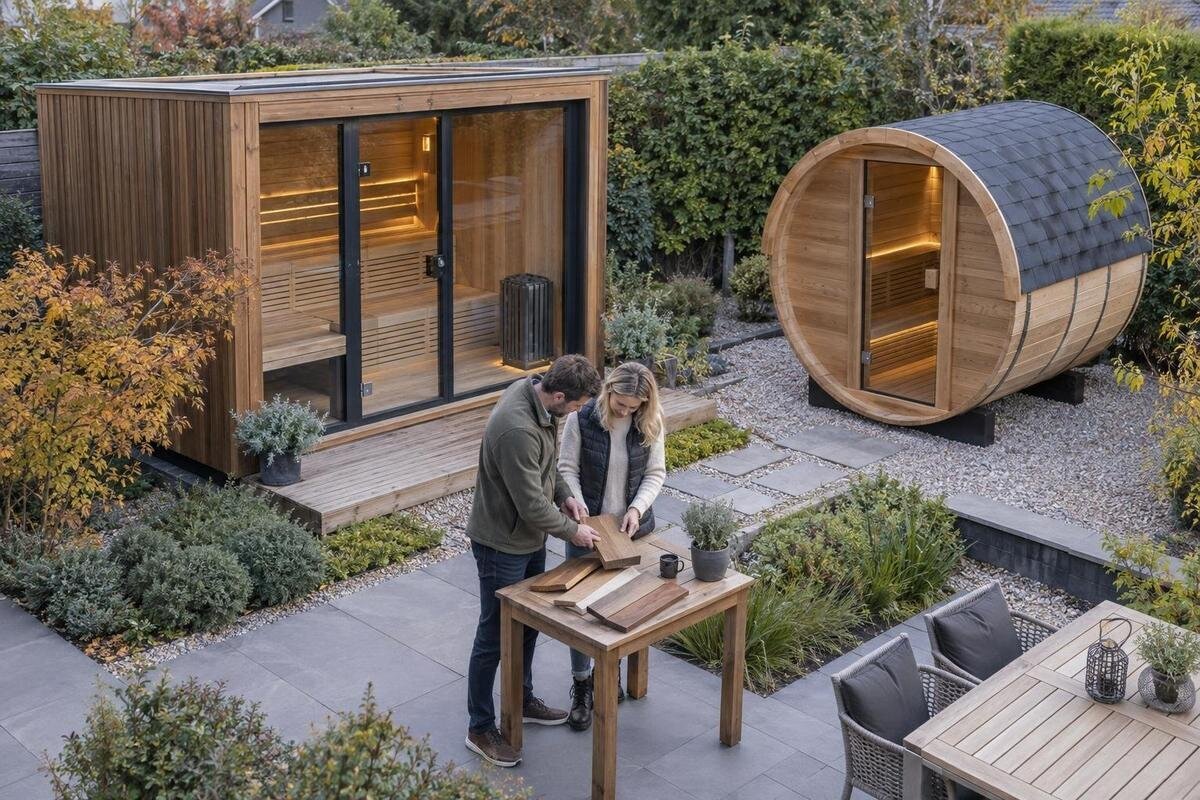
Thermowood can be a useful starting point when comparing sauna timber, but the name alone does not tell you which wood is used, which parts of the sauna it covers or how the finished surfaces should be maintained. Those details matter: benches, interior lining and exposed exterior cladding face different conditions and may need different care. Before you buy, identify the material and finish by component, request the model’s care instructions and consider the sauna’s intended setting. Then decide whether the upkeep fits how you expect to use and look after it.
What the term Thermowood tells you
Thermowood generally refers to timber that has undergone thermal modification. Heat treatment changes the wood and can affect its colour and response to moisture, but the word is not a full specification for a sauna. It does not, by itself, tell you the tree species, precise process or grade, board profile, whether a finish has been added, or which parts of the structure use the timber. Ask what the term means for the particular model rather than assuming it describes every wooden surface. Treat it as a starting point for questions, not as an assurance of performance.
Keep that material description separate from claims about the complete cabin. The name alone cannot establish how the sauna is built, how each surface is protected, where it may be installed or what care it needs. Heat-modified timber is not automatically waterproof or maintenance-free, and models using the same label may differ in species, components and finish. Request the manufacturer’s material specification and care guide. If appearance matters, ask how the supplied surface may differ from online photographs and whether it has a coating; a product name does not promise an exact shade. Collect the same information for each candidate before judging them. Save the written reply with the listing, especially where a salesperson uses broad terms such as durable or low-maintenance. Those descriptions may be useful prompts, but they do not replace a clear account of the surfaces, finish and required care.
Which parts of the sauna use Thermowood?
Ask for a component-by-component materials list covering the exterior cladding, interior lining, benches, floor, frame, door surround and trim. A product title may refer to the principal material rather than every element in the build. User-contact surfaces, splash-prone areas and outside boards face different conditions, so they may use different species, finishes or care instructions. Ask what each component is made from and whether its surface is treated. A bench, for example, may have different care requirements from wall boards, so identifying contact areas is not a minor detail. Find out whether replacement parts can be identified by their material and finish. Also ask whether the list describes the supplied model as ordered or an illustrated version with optional features. This prevents a general range description from being mistaken for confirmation of the exact sauna you intend to buy.
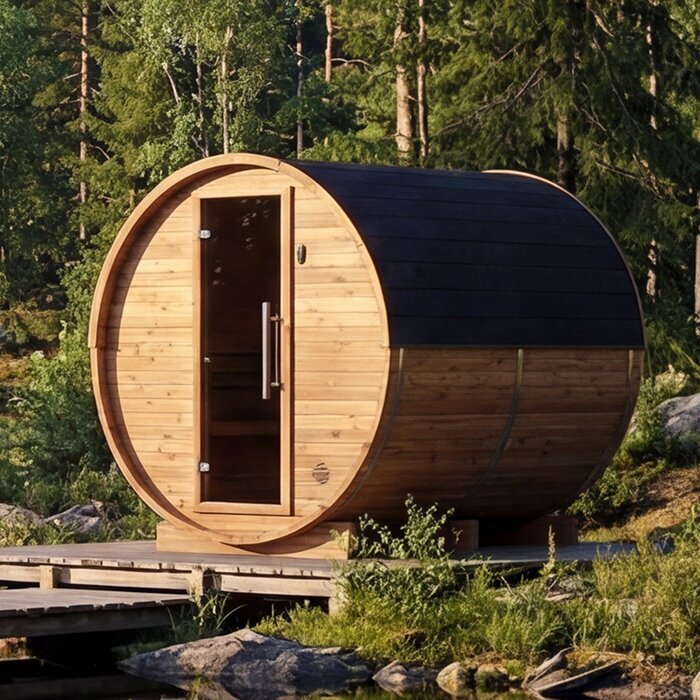
Use this question when reviewing individual listings. Thermowood Barrel Sauna S 140 is one model name to compare, but the wording alone does not confirm which parts use heat-modified timber. Check the written specification and ask the seller if it does not provide a component list. Record what is confirmed rather than treating a headline as a description of the entire sauna. If the information refers to a model range, ask whether it applies to the exact model you are considering. A clear list makes later questions about cleaning, coating and replacement more precise.
Ask about the species, treatment and finish
Once you know which parts use Thermowood, ask for the species and treatment information. Different species and processes can produce different grain, colour and surface behaviour; the label does not provide a universal shade or finish. Find out whether the timber is supplied bare, oiled, stained, sealed or otherwise treated, and which product was used. Ask whether the finish covers all relevant faces or only visible surfaces, since edges and later repairs may have separate instructions. The supplied manual should refer to the material and model in question, not just offer generic advice.
A product listing is a starting point, not a substitute for maintenance information. Thermowood Barrel Sauna HC150 can be one line on your comparison sheet, but do not infer the exact species or coating from its name or model code. Ask for the model’s care manual and any written terms that set out upkeep responsibilities, including whether a finish needs renewal and which products are compatible. If care requirements are unclear before ordering, note the gap and ask the seller to resolve it rather than applying generic decking advice. Check any supplied coverage terms for stated care obligations. Compare the wording in the manual with the product page, because a short listing may omit limitations or preparation steps. Keep the version and date of any guidance you receive, so you can refer back to the information provided for your order.
Match the material to the sauna’s setting
Where the sauna will stand changes the maintenance question. A site exposed to strong sun, wind-driven rain or water splashing from nearby paving may present different demands from a sheltered position. Consider likely wetting, the chance for the exterior to dry, and access for cleaning or finishing. Do not treat any one site as universally suitable; look at its actual exposure and avoid positions where water routinely collects against the timber. Fences, planting or other obstacles can also make inspection and finish work awkward. Ask whether the supplied guidance covers the conditions you expect. Think through ordinary access as well: gates, paths and surrounding furniture can affect whether you can reach all sides without moving obstacles. A care routine is easier to keep when checking the exterior does not depend on difficult or unsafe access.
Before placing an order, ask whether the selected model is intended for your proposed setting and what location requirements the manufacturer states. Thermowood Barrel Sauna HC 225 is a name to investigate, not evidence that a particular exposed site is suitable. Review the siting and installation instructions, including the stated base and service arrangements, with the supplier. If the base, clearances or connections raise technical questions, have a qualified professional assess them. Do not use a material label as a substitute for written installation guidance.
Check care instructions for interior surfaces
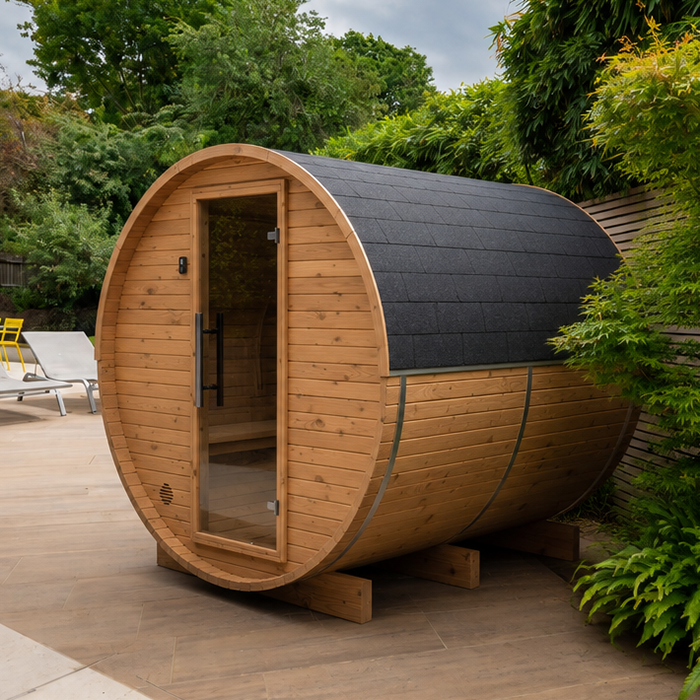
Interior cleaning deserves its own answer because benches, walls and floors see different amounts of body contact, sweat and water. Ask what to do after use, how to remove marks and which cleaning products are permitted for each surface. Clarify whether the guidance distinguishes routine cleaning from occasional deeper cleaning, and whether it specifies a cloth, brush or another method. Abrasive pads, strong cleaners or oils may affect a finish or leave residue, so use them only if the manufacturer approves. Natural-looking timber still needs a defined care routine. Ask whether the instructions require surfaces to be dry before the next use and whether removable accessories have separate cleaning guidance. A simple written routine helps other household members use the same products and avoids well-intended treatment that conflicts with the manufacturer’s recommendations.
Get guidance for the exact model rather than relying on broad advice. Thermowood Barrel Sauna N 210 should be assessed using its own instructions: ask whether benches and other user-contact surfaces have coatings, how they should be cleaned and whether sanding or refinishing is allowed. Surface changes and marks may need different treatment depending on the finish. Keep a copy of the recommendations with the order documents so that anyone cleaning the sauna can follow the same method. If a care step is unclear, resolve it before choosing a cleaning product.
Understand exterior finishing and upkeep
Exterior cladding often faces the most weather, so ask what finish is supplied and what appearance the manufacturer expects over time. Some buyers prefer to maintain a particular colour; others may be content with a naturally changing surface, if the maker permits it. Neither preference tells you what a specific sauna needs. Sun and wetting can affect exposed timber and coatings, so request advice for your intended site. Ask whether the outer wood should be left untreated and whether an approved finish needs periodic renewal; do not assume an indoor treatment is suitable outside. If you value a uniform look, ask how repairs, new boards or treated areas may appear beside older exposed timber. This is a visual consideration as well as a maintenance one, and it is best clarified before choosing a finish approach.
Ask for the name of any recommended coating, the surfaces it applies to, the preparation instructions and how to tell when upkeep is due. Avoid guessing from a generic label such as oil or stain. For Thermowood Barrel Sauna N 250, seek the supplied care guidance rather than assuming its exterior is pre-finished or that a similarly named model uses the same treatment. If a coating must be purchased separately, include that task in your decision. A written answer makes it easier to compare care demands before purchase.
Plan for drying, ventilation and inspection
Moisture management is part of routine ownership, but it is not a substitute for suitable product guidance or siting. Ask how the manufacturer recommends drying and ventilating the sauna after use, and whether any surfaces should be wiped or simply left to dry. Plan practical access around the exterior so you can inspect, clean and renew an approved finish when required. Avoid creating a complicated schedule from assumptions about the word Thermowood; follow the model’s manual and consider the conditions at the site. This helps you understand the care routine before placing an order.
Check the written guidance for the exact model, including any notes about standing water near the base or inspecting joints and exposed edges. Thermowood Barrel Sauna LC 260 belongs in the comparison on the basis of its own documented instructions, not similarities in its name. Ask what changes in colour or surface are expected and which signs should prompt you to contact the supplier. Simple access for routine care is a practical consideration: a surface that cannot be reached is harder to clean and inspect. Do not assume that every sauna needs the same drying or inspection routine. Decide where you will keep the care instructions and any approved products, so the routine remains practical rather than becoming an occasional search for information. A brief record of work carried out can also help you follow the manufacturer’s stated sequence of care.
Include upkeep in the ownership decision
Maintenance has a time cost as well as a materials cost. Before deciding, find out whether the routine for the particular sauna involves cleaning, periodic re-coating, professional servicing or a combination; do not assume one timetable fits every model. Ask which products are included and which must be obtained separately, and whether recommended materials can be sourced later. This gives you a way to compare a low-effort routine with one that calls for regular attention, without inventing a fixed expense or lifespan. Include any specialist work in your assessment. Consider who will take responsibility if you are away or if the sauna is used by several people. Clear ownership of simple tasks can be as important as the task list itself, particularly where exterior appearance is a priority.
Make a practical ownership plan: who will clean the interior, check the exterior and arrange any specialist work? Consider access to the sauna and the weather it will meet, then compare these details with the manufacturer’s instructions. When looking at Thermowood Barrel Sauna HCF 300, ask what is included in the order and which care tasks remain your responsibility; the name itself answers none of these points. Confirm the heater, assembly and other inclusions from the listing or seller. Have any electrical or installation requirements checked by a qualified professional before committing.
Compare models using the same information
Use the same questions for every candidate: which species and treatment are specified, which parts use the timber, what finish is supplied, and what cleaning and exterior care instructions are provided? Include any siting notes and ask where to find the exact model’s manual. Mark each answer as confirmed, unclear or not supplied. That simple record stops a model name or attractive photograph from carrying more weight than the details you need for long-term care. If a field is unclear, ask before ordering and keep the response with your purchase information. Add a column for the source of each answer, such as the listing, manual or a written reply from the seller. This makes it easier to spot where two statements differ and gives you a focused list of points to clarify.
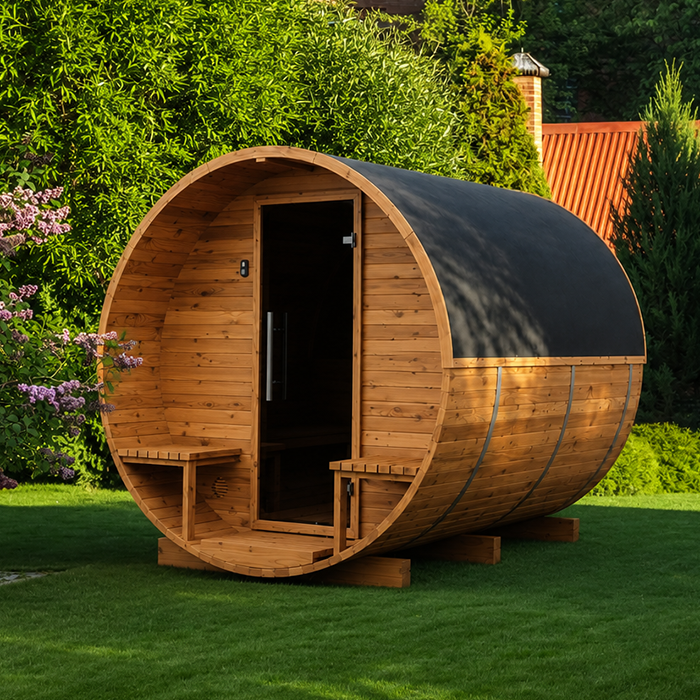
For example, Thermowood Barrel Sauna LCF 300 can be considered alongside alternatives, but compare only what the respective documentation states. A number or suffix in a model name should not be treated as an explanation of species, finish or maintenance requirements. Ask the seller to clarify any mismatch between a product description and its manual, and request instructions for the exact model rather than a general brochure. If key care details remain unanswered, decide whether you are comfortable with that uncertainty before paying.
Choose a routine you can maintain
After gathering the material details, judge the care routine rather than the word on the label. A buyer who wants to keep a particular colour may be willing to maintain an exterior finish; someone who prefers fewer surface treatments may choose differently, if the manufacturer permits that approach. Think about how often the sauna will be used, whether several people will need to follow the same cleaning steps and whether you can reach the surfaces that need attention. These practical habits matter when comparing ownership requirements.
An option is a better fit when its timber specification, finish and care instructions are clear and manageable for the intended location. If low maintenance is a priority, ask the supplier to define it in concrete terms: which surfaces need attention, what products are approved and what periodic work is expected. If an answer is missing, treat it as a comparison gap rather than assuming the Thermowood label settles the question. Choose on the written description and the routine you can follow, not on the material name alone. Before finalising the order, read your notes once more against the exact model identifier and included finish. That final check can reveal an unanswered question or an assumption carried over from another sauna in the comparison.
Frequently asked questions
Does Thermowood mean every part of the sauna uses the same timber?
Not necessarily. The name alone does not identify the material used for the benches, lining, floor, frame or exterior. Ask for a component-by-component materials list and care instructions for each type of surface.
Is a Thermowood sauna maintenance-free?
No material name guarantees that. Cleaning and upkeep depend on the components, any finish and the sauna’s setting. Follow the model’s instructions, and check whether exterior surfaces need a particular treatment or renewal.
Should I apply a finish to the exterior?
There is no universal answer for every model. Ask whether the timber is supplied bare or coated, whether the manufacturer permits it to weather naturally, and which finishes are approved for the intended location.
What should I ask about cleaning the interior?
Find out how to clean the benches, walls and floor, which products and tools are permitted, and whether different surfaces need different methods. Ask whether sanding or refinishing is allowed before attempting it.
How can I compare two Thermowood sauna models?
Use the same questions for both: which parts use the timber, what species and finish are specified, and what care and siting instructions are supplied. Mark unanswered details as unknown instead of inferring them from a model name.
A sound purchase decision starts with a specific material list and ends with a routine you can follow: know which surfaces use Thermowood, what finish they have, how to clean them and how exposed timber should be maintained. If those points are documented and suit the intended setting and your available time, you can compare models on more than the name on the page. If important care details remain unknown, resolve them before ordering or consider an option with clearer instructions.
