
Buying a Wooden Greenhouse: Maintenance and Material Choices
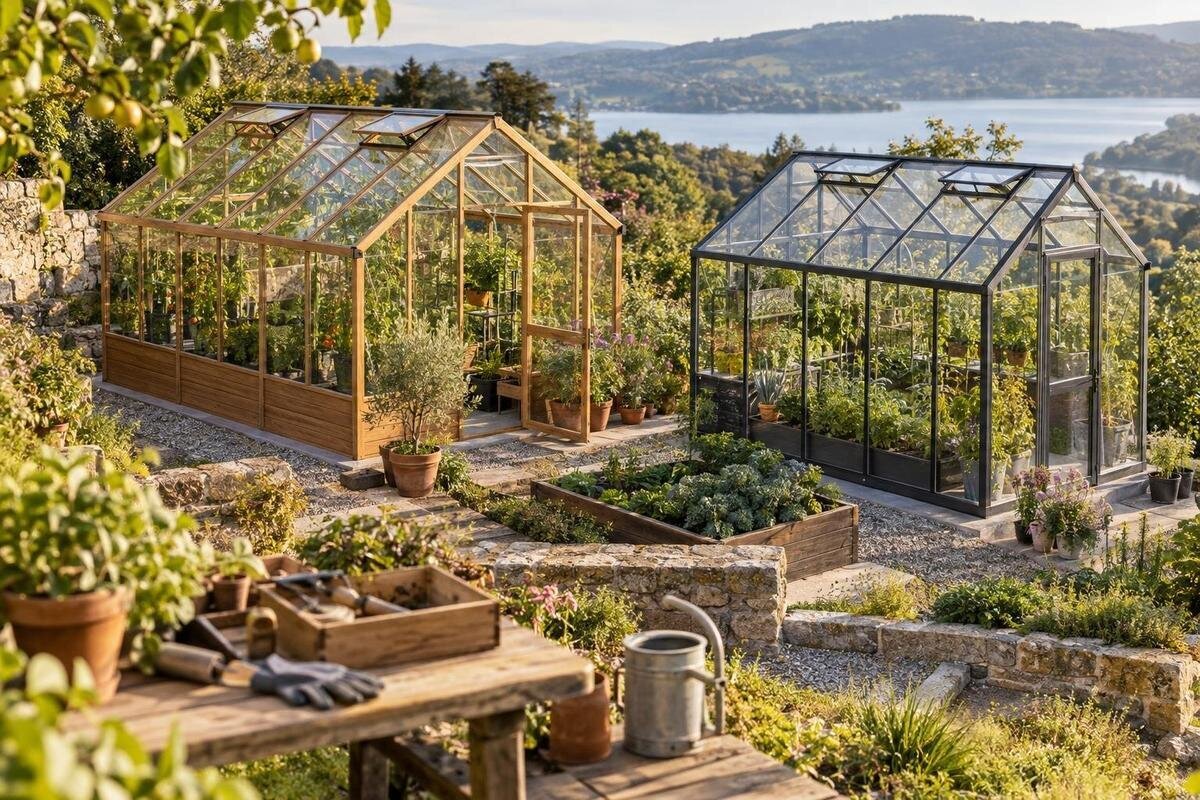
Wooden greenhouse buying guide
Choosing a wooden greenhouse is not just a question of appearance. Timber species, treatment, factory finish, the way the frame meets its base, and the care you can realistically provide all affect whether a particular design is a sensible purchase. Two greenhouses described as wooden can differ in which parts are timber and in the maintenance the maker expects. Before relying on a broad durability claim, get the written material and care details for the exact model. This guide helps you assess those details alongside your growing plans, site and budget.

Decide what you want from a wooden greenhouse
Start by deciding what timber is meant to give you. You may prefer its natural appearance beside planting, or like the possibility of renewing a compatible surface as it weathers. Neither point, by itself, guarantees less work or a longer service life: those depend on the precise timber, treatment, joints, finish, site exposure and the maker’s care instructions. Be realistic about the routine you will accept. If you do not want to inspect and maintain a frame, do not choose wood on looks alone. Compare the published care requirements for other frame materials too, rather than relying on the general belief that one material is maintenance-free. Also consider whether you can reach all sides once surrounding planting matures.
Set out your intended use and garden constraints before browsing. Note the growing area you need, access around the structure, places for benches or trays, and whether you will use it for seedlings, taller plants or a mix. A model name such as Bloomcabin Orangerie cannot tell you whether its materials, footprint or maintenance suit that plan; check the specification and ask for any missing detail. A quick plan on paper can expose conflicts early, such as a door opening into a path or a frame taking space needed for movement. Think about year-round access, not only where plants will sit in the growing season. Allow room for routine access without blocking a path or work area. Keep appearance in the comparison, but treat it as one factor alongside use, site and upkeep.
Check which components are timber
Check the description part by part rather than treating wooden greenhouse as a complete specification. Ask which members are timber: the main frame, roof supports, lower rails, doors, glazing bars and any base. Find out what the door hardware, fixings, seals, glazing and included staging are made from, and whether any are optional. Check whether glazing panels are included and specified separately from their frame. Different components can have different care needs, so instructions for the frame do not automatically cover every surface or fitting. A title such as Prestige greenhouse with metal foundation is a reminder to distinguish a foundation from a frame; it does not, by itself, describe all the materials in the structure.
Request a written list of included and excluded parts, with accessories shown in photographs identified clearly. Confirm whether a foundation is supplied or must be provided separately, and whether shelves, gutters, opening mechanisms or vents form part of the package. These points affect the purchase total as well as your maintenance plan. If a seller describes a greenhouse as wooden but does not identify the timber sections, ask for clarification before placing an order. You need to know which areas require timber care, which are other materials, and how the parts are intended to connect. Do not use an image to settle a point the written specification leaves open. A complete list also helps you check the order when components arrive.
Ask for the timber species and treatment
Ask for the actual timber species or a clear timber grade, not only broad labels such as softwood, hardwood or weather-resistant. Species and grade are not interchangeable, and a general adjective cannot tell you exactly what has been supplied. Check whether the same specification applies throughout or whether posts, doors and roof members differ. Ask whether the timber has been treated, what the treatment is, which components it covers and whether it is intended for the exposure where the greenhouse will stand. Ask whether the seller provides timber or treatment documentation with the order. If the seller cannot answer, treat the missing information as a comparison gap rather than making a guess from grain, colour or a photograph.
Use a simple comparison table: species or grade; treatment; untreated components; finish supplied; care instructions; and any restrictions on use or later coatings. A model name such as Classic Plus 385 is not a statement of timber species or treatment, so look for those details in the product information. The same applies when a photograph makes a frame look unmistakably wooden. Ask for answers about the exact greenhouse, not generic advice about garden timber. This gives you a sounder basis for comparing designs and helps prevent a broad durability phrase from becoming an expectation about lifespan or upkeep. Record the exact wording, rather than a verbal summary, so the options remain comparable.
Understand the factory finish
Clarify what ‘finished’ means in the product description. Timber might be supplied with a protective treatment, a coloured coating, both or neither, and those terms do not describe the same thing. Ask what has been applied at the factory, which components and surfaces have been covered, and whether further coating is required before use. A coloured photograph cannot answer these questions. Find out which cleaning and coating products the maker permits, how often the finish should be checked or renewed, and whether the first application is expected before or after assembly. Ask whether the schedule differs for components with more direct exposure. Follow the instructions for the exact product instead of assuming a familiar exterior paint or stain will be compatible.
Keep timber treatment, decorative finish and warranty terms separate in your notes: each answers a different question about the wood, surface and cover for faults. A title such as Aluminium Limited Edition Greenhouse is no substitute for reading the full material and care specification, just as a wooden model name cannot confirm its finish. For a timber frame, ask about exposed ends, joints and surfaces that may be hard to reach after assembly, and whether the supplied finish covers them. Use only a coating system approved for the product. If instructions leave compatibility unclear, ask for written guidance before applying anything. Keep that guidance for later care, not only the initial preparation.
Consider moisture and site exposure
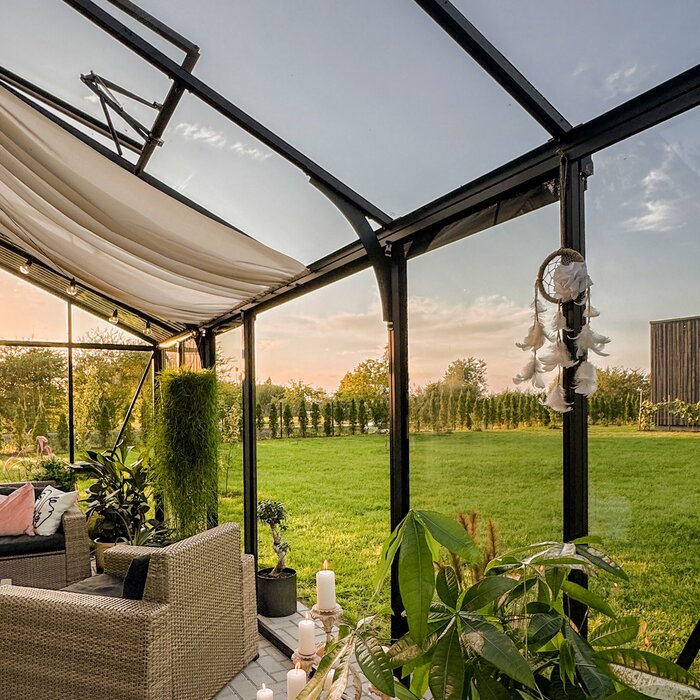
Think about how water reaches the frame at the proposed position. Rain, watering, condensation, damp ground, splash-back and slow drying can affect lower sections differently from the roof; shade may also keep surfaces wet for longer. These are site questions, not fixed properties of every wooden greenhouse. Note whether the position is exposed, sheltered, near irrigation or beside a wall, and ask the supplier which conditions the exact model is designed for. Include nearby cover, irrigation and any water runoff in your notes. A name such as T-model greenhouse orangery wall base is not enough to assess moisture exposure or compatibility with your wall. Verify the actual layout and maintenance details rather than assuming a nearby wall removes the need to consider water.
Ask how the lower frame is intended to meet the base and how water around joints is managed. Find out whether any timber is meant to touch soil or paving and what the maker specifies at those contact points; do not assume a wooden base is suitable for buried or persistently wet conditions. Leave practical access to inspect lower rails and corners instead of covering them with stored items or dense planting. If the site has a condition that could affect the finish or fixings, describe it to the supplier and request advice for the exact specification. Include watering spray and runoff from nearby surfaces in that description. Check whether stored tools or mature planting will hide these inspection points.
Confirm the base and installation requirements
Before you order, identify the required support and what is included. The product documentation must state what foundation or prepared base is acceptable; a model title cannot establish its required form, dimensions or tolerances. Do not assume that a paved area, lawn or masonry base will suit simply because it appears level. Check how the frame is intended to be secured and whether base components are included, sold separately or supplied by you. Ask whether supplied parts are designed to connect to a particular base system. A title such as Pyramid greenhouse for a masonry base shows why base wording needs clarification, but the name cannot confirm whether your existing surface meets the installation requirements.
Ask for the installation guide before buying if requirements are unclear. Use it to check whether the proposed location and supporting surface fit the maker’s stated instructions, and whether the frame and its other components are intended to be assembled as you expect. Confirm what ground preparation, access and help the installer may need, and whether a qualified professional should assess a site-specific foundation or uncertain fixing details. Do not alter the design or improvise connections to compensate for a missing specification. If dimensions or fixing information are absent, request formal guidance rather than estimating from a photograph or a nearby structure. If specialist work is involved, confirm who will undertake it before scheduling assembly.
Plan the maintenance routine
Treat maintenance as recurring work, not a one-off task at purchase. Ask the manufacturer for the inspection interval, signs to look for, cleaning method and timetable for renewing any coating. Make a note of the joints, lower rails, door frames and areas that stay damp if the care guide identifies them as points to monitor. A brief visual check after seasonal changes or exposure to difficult weather can help you notice damage, peeling, loose fittings or water collecting; use the product instructions for any repair. The aim is not to impose a universal yearly schedule: species, treatment, finish and site all affect the appropriate routine. Keep the care guide accessible so future checks follow the same criteria.
Be honest about the time and access you can provide. Can you reach the exterior faces to clean or recoat them, and store any approved maintenance products as directed? If regular attention would be difficult, decide that before ordering rather than after the structure is assembled. You can compare the documented care notes for different frame materials, but do not assume any type is maintenance-free. A listing such as Aluminium Classic Greenhouse is a model name, not proof of its maintenance burden; apply the same evidence-based check to a wooden greenhouse. Compare stated tasks and intervals, not simplified claims. Include the space needed to work safely, not just the time spent applying a coating.
Fit the greenhouse to the garden layout
Measure the footprint using the maker’s full external dimensions, including the base and projections stated in the specification. Then mark out door movement, paths, ventilation openings, access for maintenance and room to handle trays or taller plants. Keep enough working space around the structure to inspect joints, clean or recoat surfaces and replace a part if required; maximum growing area is not useful if you cannot reach the frame. Check height at the edges and ridge against how you will use the interior, using published dimensions rather than a photograph. Consider door and vent positions too, since benches or stored tools can make a nominal floor area feel restricted. Plan room to open doors fully and handle cleaning materials.
Decide whether the structure will stand on its own or sit beside a wall, fence or other obstruction, then confirm that the selected design is intended for that arrangement. A title such as Aluminium Lean-to Greenhouse can prompt a layout question, but it does not confirm that your wall, orientation or site is suitable. For a wooden model, ask how the adjacent surface affects access and whether you can keep the specified clearances. Check the route from the delivery point to the final position as well; limited access may affect how components are moved and assembled. Keep growing space, available light and maintenance access on the same plan. Note nearby planting or overhangs that may obstruct access as they grow.

Compare the whole ownership cost
Compare the whole ownership commitment, not only the amount at checkout. List the greenhouse, any base work, assembly, optional staging and other parts you genuinely need, then include the maintenance products and tasks described in the care guide. Do not invent a replacement schedule or assume every timber frame needs identical treatment; use written instructions and ask which costs may recur. If two options include different components or finishes, record the difference before comparing them. A lower initial price cannot settle value without a like-for-like specification and a realistic allowance for the work you will do yourself. Include any consumables or replacement items the seller says are owner-supplied.
Read the terms that affect repair and continued use. Check what the warranty covers or excludes, the period stated, any maintenance conditions and how replacement components can be requested. Do not assume timber, glazing, fixings and finish share identical terms. Ask whether owner care must follow a particular method and keep the answer with your purchase documents. A broad durability claim without its scope or conditions should not replace written terms. If you expect to keep the greenhouse for many seasons, the repair and care plan matters alongside the design; it is part of the value you are buying, not a detail to postpone. Request the terms before paying, rather than relying on a brief summary.
Verify the details before ordering
Before placing the order, bring the answers together in a model-specific checklist: material for each frame component; timber species or grade; treatment and factory finish; written care instructions; glazing and fixings; base and installation requirements; dimensions and clearances; included accessories; warranty scope; and delivery or assembly arrangements. Mark anything unanswered and ask the seller to confirm it in writing. This turns a broad product description into details you can compare and helps you avoid ordering a design that cannot be installed as planned or maintained using the specified methods. Make sure the final model reference matches the specification you reviewed.
Revisit the garden plan after receiving the full dimensions and base instructions. Check that the structure fits your growing use, leaves room for maintenance and matches the time you are willing to spend caring for timber. If you are comparing wooden models, put the actual material and care specifications side by side; a persuasive finish, lower price or general durability statement cannot replace them. Place the order when the details that matter to you are clear. If something essential remains uncertain, ask before buying rather than assuming it will be resolved after delivery. Save the care guide and written clarifications with the order documents.
Frequently asked questions
How often should I maintain a wooden greenhouse?
There is no single interval that suits every timber, treatment, finish and site. Ask for the maker’s inspection and recoating schedule, then check the frame as specified. If you notice damage or conditions change, follow the product guidance rather than relying on a fixed calendar date.
Which timber is best for a wooden greenhouse?
There is no universal best choice based only on terms such as softwood or hardwood. Request the species or grade, treatment details and information about which components use it. Compare the care guidance for the exact model, and do not infer service life from colour or a broad durability claim.
Can I paint or stain a wooden greenhouse?
Only if the instructions for that greenhouse permit it and identify compatible products. Check whether the frame already has a treatment or factory coating, which surfaces need attention, and when further coating is appropriate. If compatibility or timing is unclear, ask before applying anything.
Does a wooden greenhouse need a foundation?
Requirements vary by model, so use the installation documentation to confirm the acceptable base, fixing method and preparation. Do not assume an existing patio, lawn or masonry surface will meet them. If the site or fixing details need assessment, consult a qualified professional rather than estimating.
Is a wooden greenhouse easier to maintain than another frame type?
Not automatically. Compare the specific care instructions for each model, including cleaning, inspection and any finish renewal. A general material label does not tell you how much time or expense to expect. Use the stated tasks, warranty conditions and access available in your garden to make the comparison.
Choose the wooden greenhouse whose documented timber, finish and care routine suit both your site and the time you can give it. Appearance can narrow the options, but the specification determines what you are buying and what future work it involves. When the component materials, base requirements and maintenance instructions are clear, you can judge a model on its merits rather than on colour or a broad durability claim.
