
Buying a Wood-Burning Sauna: Heater, Flue and Site Planning
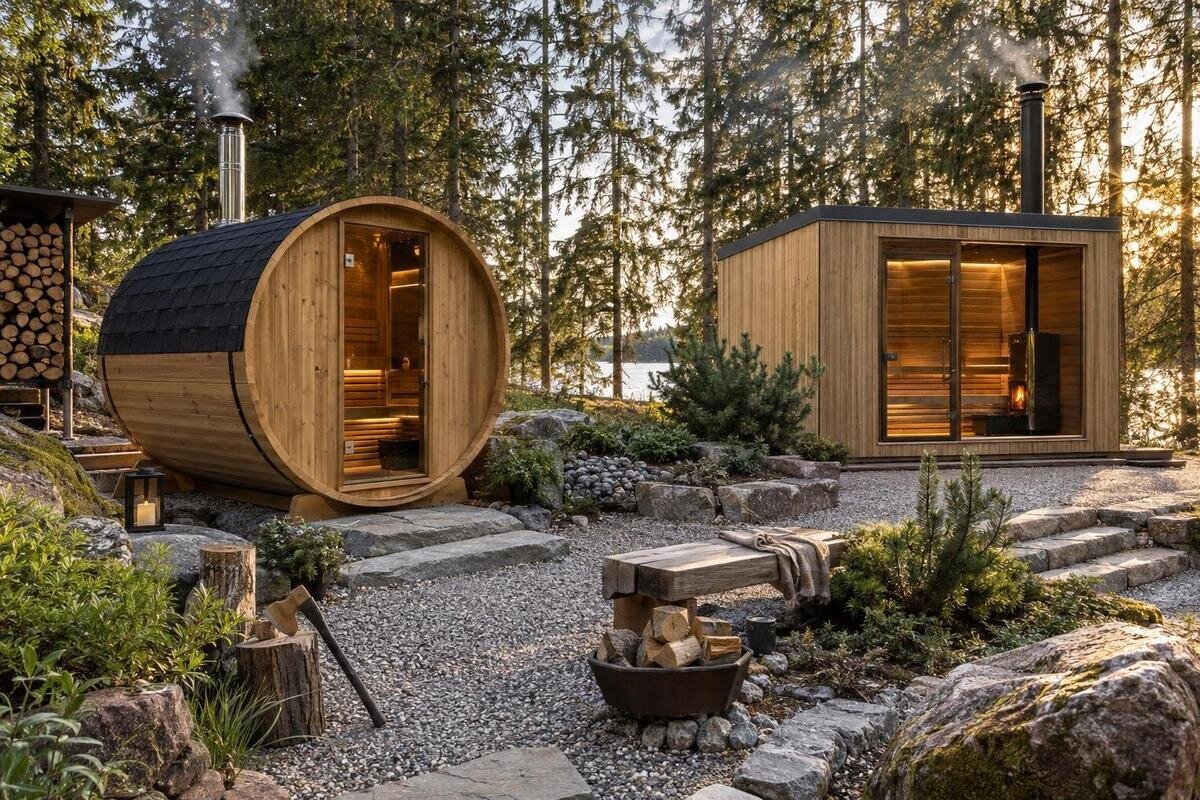
Wood-burning sauna buying guide
Buying a wood-burning sauna involves three decisions that cannot be separated: the cabin and heater must be a documented match, the flue needs a workable route, and the site must support safe installation and day-to-day use. A shape or appearance can be appealing yet prove awkward if the stove is not compatible or the chimney route is blocked. Treat the heater, flue and location as one buying brief. Confirm product-specific details with the supplier and have a qualified installer assess anything that affects safe installation before you place an order.
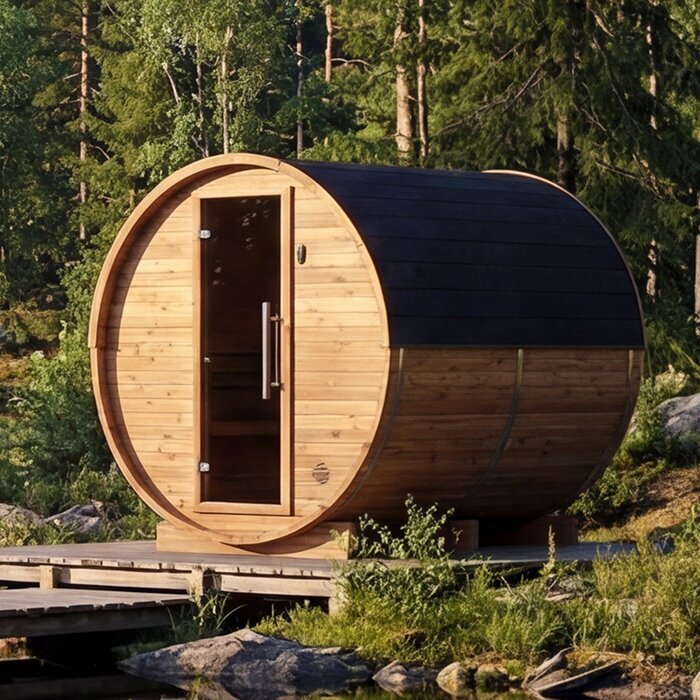
What changes when a sauna is wood-fired?
A wood-burning sauna asks you to plan for a routine as well as a cabin. Someone will need to source and store suitable fuel, prepare and tend the fire, manage ash, and maintain the stove and flue according to their manuals. The heat-up period is part of each visit, so consider how often the sauna will be used and who will look after the fire. If no one wants to carry fuel or attend the stove, the appeal may not outweigh the extra work. Include convenient access to the heater and a sensible fuel-storage location in your layout, without using areas that must remain clear. If several people share the sauna, agree who is responsible for tending it.
Wood combustion also brings requirements that an electric heater does not have in the same form: the stove needs a suitable supply of combustion air, and smoke and gases need a compatible flue route outdoors. That links heater choice to the cabin and the exact site, not just to personal taste. Product photographs can help you compare appearance, but cannot prove the heating type or compatibility. For example, the Thermowood Barrel Sauna S 140 listing identifies a sauna option to investigate; confirm separately whether the exact configuration can be paired with your intended wood-burning heater and whether the heater is included. Resolve those points before settling on a location or weighing cosmetic preferences.
Match the heater to the cabin
Start with the heater maker’s recommended cabin volume and the specification for the exact sauna configuration. Do not estimate the match from outside length, a model code or the size of the room alone. Construction, insulation and extensive glazing can affect heat demand, so ask which cabin details the heater maker uses when recommending a stove. If a model comes in different layouts, compare the one you will actually order rather than a general illustration. The recommendation should identify the heater and any assumptions behind it. When information is incomplete, ask the supplier to resolve it rather than sizing by guesswork; a larger stove is not a universal fix for a poor match.
Ask for the stove’s exact make and model, its installation and operating documents, and written confirmation that it is suitable for the selected cabin. Physical fit is not proof of compatibility: protective arrangements, the flue connection, combustion-air provision and operating instructions must work together. An unsuitable heater can frustrate use, while choosing a more powerful unit is not automatically a safe fix. The Thermowood Barrel Sauna HC150 product page can identify a model in your comparison, but use confirmed cabin specifications and a documented heater pairing—not the letters or numbers in the name. Keep the relevant manuals available before ordering so unresolved questions can be settled while changes are still straightforward.
Check exactly what the package includes
A cabin, heater and flue may appear together in an image or description without every component being part of the same sale. Ask for an itemised list for the exact configuration: the cabin, wood stove, stones if required by that heater, flue components, finishing parts for a roof or wall penetration, heat protection, guards and any other items named in the manuals. Mark each item as included, optional, supplied by an installer or left to you. Confirm that separately supplied parts are compatible, not merely available, and do not assume an accessory is included because it is pictured. The distinction matters when a purchase is described as a cabin package rather than a complete installed system.
Delivery, unloading, assembly, base preparation, flue fitting and commissioning may be handled by different parties. Ask who arranges each task, what is excluded, and when the installer needs access to the site. When reviewing the Thermowood Barrel Sauna HC 225 listing, use it to identify the cabin, then ask the seller to confirm the exact package in writing; do not infer a heater or flue from the product name. If equipment and installation come from different suppliers, establish who checks compatibility across both orders. A quote that separates equipment from installation makes the total scope easier to compare and shows which work you must arrange yourself.
Plan the flue route before selecting a site
Flue planning is a property-fit question, not a detail to leave until assembly. The installer needs to know how the flue could leave the cabin and continue to an appropriate outlet, and what lies along that route. Roof structure, walls, eaves, windows, nearby buildings and access for future inspection can affect the acceptable design. A route that looks short on a sketch is not necessarily suitable for the selected stove. Do not choose a location or cut an opening from generic advice; the heater and flue instructions and a qualified installer must determine the arrangement. An early assessment can rule out a location before you buy.
Before ordering, ask for a route plan or written description based on the exact cabin and heater. It should make clear which flue system and site-specific checks are proposed, who confirms the clearances and outlet position, and how access for inspection will be maintained. Avoid combining components from separate product descriptions unless the relevant manufacturers and installer confirm the combination. The Thermowood Barrel Sauna N 210 listing identifies a cabin model; it cannot establish whether a flue can pass through your roof or wall. That answer depends on the proposed construction and appliance, so resolve it at the property rather than relying on a generic diagram.
Confirm combustion air and protective measures
Combustion air and flue exhaust have to be considered together. Ask the heater supplier how the selected stove is designed to receive air in the proposed cabin, and have the installer check whether the ventilation arrangement is suitable for that appliance and room. Do not assume a gap under a door, an open window or another cabin feature satisfies the manufacturer’s requirements. A change made late can affect the layout and the heater pairing. Put any required air provision on the plan before ordering, with its design and position determined by the instructions and a qualified installer rather than adapted on site.
A wood fire produces combustion gases, and an inadequate exhaust arrangement can allow smoke or carbon monoxide to enter an occupied space. A compatible, correctly installed system is essential; a general diagram or a seller’s assumption is not enough. Ask the installer to identify the protective measures and commissioning checks for the exact equipment, and follow the manufacturers’ instructions on detection and use. An alarm does not make an unsuitable stove or flue safe. If the proposed route puts hot equipment near a passage, seating or storage, have access and protection addressed in the design without guessing at clearances. Make sure future users understand the equipment instructions.
Check the base, footprint and delivery access
Before committing to a spot, obtain the footprint and support requirements for the exact cabin. A flat-looking patch of ground is not evidence that the base is adequate: level, stability, drainage, soil and support points can all affect the preparation required. Ask the supplier for the information a qualified installer or groundworks professional needs, then have that person assess the site rather than estimating a foundation from a photograph. Allow for door use and maintenance access as well as the cabin outline. Do not substitute a model code or image for confirmed dimensions. If the site slopes or has drainage concerns, raise them with the assessor rather than applying a universal base solution.
Check the route from the delivery point to the final position: gate openings, turns, steps, slopes, overhead restrictions and places where components may need to be carried or assembled. Ask how the sauna will arrive and what access the delivery or installation team requires; confirm unloading and assembly responsibilities instead of assuming a vehicle can reach the site. For a cabin such as the Thermowood Barrel Sauna N 250 listing, use only supplier-confirmed dimensions when marking out the proposed footprint. Include room for entry and routine upkeep, and revise the location if delivery access or service space is impractical. Restricted access may change the installation arrangements.
Consider smoke, neighbours and property requirements
Look beyond the cabin footprint. The flue outlet, nearby windows and doors, eaves, fences, planted areas and places where people sit can affect whether a location is practical. Wind can carry smoke towards a neighbour or back towards openings, while trees and other structures may complicate the route or restrict future access. Consider how the area is used at different times of day, including whether doors or windows are commonly open. These factors do not yield one universal spacing that buyers can apply themselves; the installer should assess the actual property and appliance instructions. Plan user movement without crossing close to hot equipment or obstructing service access.
Before purchasing, check any planning, fire-safety, environmental or property-management requirements that apply to your particular site with the relevant local authority, owner or qualified installer. Requirements and permissions can depend on the property and proposed work, so do not rely on a neighbour’s arrangement or a general distance found online. Keep the Thermowood Barrel Sauna LC 260 listing in the product comparison as an identified cabin, then assess its supplier-confirmed footprint against your own site. If the property is shared or rented, establish who can approve changes before ordering or booking installation, and retain written confirmation.
Plan for fuel storage and ongoing maintenance
Wood storage affects where the sauna works day to day. Identify a place to keep fuel protected from the weather, with a convenient carrying route and without using an area that the heater instructions or installer say must remain clear. Check what type and size of fuel the selected stove allows, and whether you can obtain it reliably in the quantity you expect to use. Avoid planning a large pile beside the cabin before checking the relevant safety requirements and site constraints. The trip from storage to the stove should remain practical in poor weather and should not block an exit or maintenance access.
Ask what routine care involves before deciding. The chosen stove and flue manuals should explain cleaning, inspection, ash handling and components that need attention; use those instructions rather than copying a routine from a different heater. Find out who can service the exact equipment and whether replacement components can be sourced through the supplier or installer. Keep the paperwork with the sauna so future users know the intended configuration and maintenance requirements. For a model such as the Thermowood Barrel Sauna HCF 300 listing, first confirm what heater it can support; the product name alone cannot answer the maintenance question.
Compare written specifications and installation scope
A useful quotation identifies the cabin model and configuration, heater make and model, basis for compatibility, flue system and what the installer proposes for the site. Ask for relevant manuals, confirmed dimensions and a route plan or written description, plus a clear schedule of included and excluded items. If the supplier cannot confirm whether a detail is part of the order, treat it as unresolved rather than assuming it will arrive later. Check that the documents refer to the cabin and heater you will actually buy; a generic diagram may not cover a different version. A shared written record helps everyone work from the same design.
Compare quotations on equal scope, not just the headline amount. One may include delivery, assembly or installation while another leaves those tasks, groundwork, finishing and commissioning to you; clarify who arranges each part. Confirm what happens if the site review changes the proposed flue route, and who is responsible for property approvals or other permissions that apply. A product page such as the Thermowood Barrel Sauna LCF 300 listing is useful for naming the cabin in your notes, but the written quote must establish its exact configuration and the separate wood-burning equipment. Record differences in a comparison table before selecting.
Settle the site and system before ordering
Before committing, bring the choices together in one record: exact cabin and stove, documented compatibility, flue components and route, combustion-air arrangement, installer’s site assessment, base requirements, delivery access, package contents and any local checks that remain. This is more useful than keeping separate product pages and verbal assurances. When one part depends on another—for example, the cabin layout on the flue path—ask for a revised plan that shows both. Note any assumptions still outstanding. Do not treat an unconfirmed installation detail as a minor finishing item; it can determine whether that location and configuration work at all.
Give each unresolved question a named owner: the sauna supplier can confirm cabin specifications, the heater maker can clarify intended compatibility, and a qualified installer can assess the property and fitting plan. If the route, access or clearances cannot be confirmed, pause the purchase and reconsider the position or configuration rather than improvising after delivery. Keep the final quote, manuals and site plan together, and agree who will check the completed installation against the equipment instructions. That gives future users a clear reference for operation and maintenance as well as a record of what was ordered.
Frequently asked questions
Can I buy the sauna cabin now and choose a stove later?
Only if the cabin maker confirms that the later-selected heater is suitable for that exact cabin and that the required air supply, clearances and flue can be accommodated. Check compatibility before paying; a stove that fits physically is not necessarily a suitable match.
How do I choose the right wood-burning heater?
Compare the heater maker’s recommended cabin volume with the confirmed details of the sauna configuration you plan to order. Ask the supplier and heater maker to confirm the pairing, including any relevant construction or glazing details. Do not size a stove from a model name or guesswork.
Can a flue exit through a wall instead of the roof?
That depends on the selected stove and flue system, the cabin construction and the site. A qualified installer should assess the proposed route against the manufacturers’ instructions and applicable requirements. Do not assume a wall route is suitable just because it appears simpler.
Does buying a sauna mean the stove and flue are included?
Not necessarily. Check the itemised contents for the exact configuration and ask which stove, flue parts, protective components, delivery and installation work are included or optional. Have any compatibility between separately supplied equipment confirmed before ordering.
Is any level outdoor surface suitable for a sauna?
No. The base must meet the requirements for the exact cabin and suit the site. Ask a qualified installer or groundworks professional to assess support, level, drainage and access. A flat-looking patch of ground or a product photograph cannot establish that it is suitable.
The soundest purchase is one where the cabin, heater, flue route and installation scope have been considered together—not simply a model that looks right. Confirm the exact equipment and package, assess the proposed site and access with the people responsible for installation, and keep the documents that define the agreed arrangement. Once those dependencies are settled, you can compare appearance, layout and day-to-day convenience with a clearer understanding of what you are actually ordering.
