
Remote-Controlled Sauna Heating: What to Check
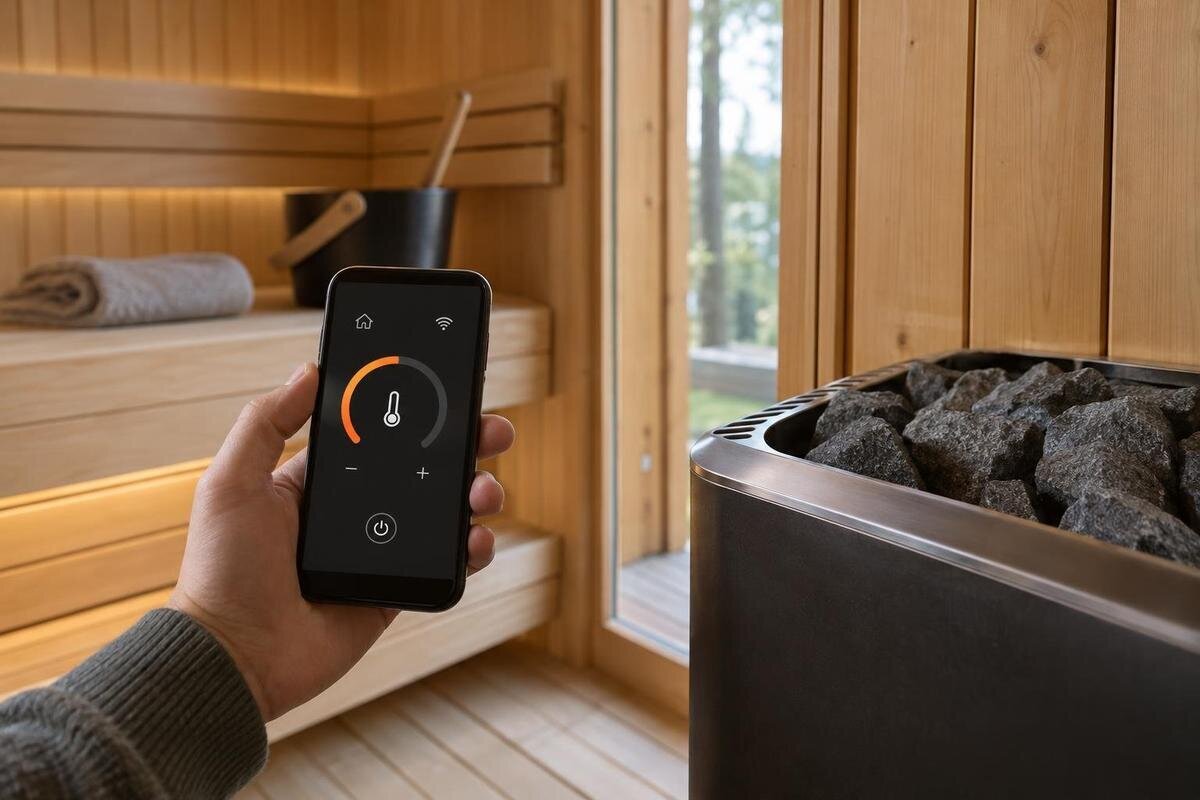
Sauna heating
Remote-controlled sauna heating can make preparation more convenient, but the word remote does not establish that a particular heater can be started safely or that a control will work with it. The system may include the heater, its controller, sensors, a separate power unit and network accessories; the manufacturer’s instructions determine which combinations are supported. Before buying or retrofitting, verify the exact models, the scope of any specified conformity or certification documents, remote-start limits and required safeguards. This guide helps you ask those questions without treating a phone app, a logo or a product photograph as proof of compatibility.
01
What remote-controlled heating means
Remote-controlled heating can describe several different actions: starting the heater from outside the sauna, setting a delayed start, changing a setting, checking a status display or receiving an alert. A product described as smart may offer only some of these functions. A timer set at the local control is different from a command sent over a network, and a temperature display does not necessarily show that the heater is running. Some systems report a status without allowing a start command; others allow a command but provide limited feedback. Ask the seller to describe each action plainly, then locate it in the exact control-unit manual.
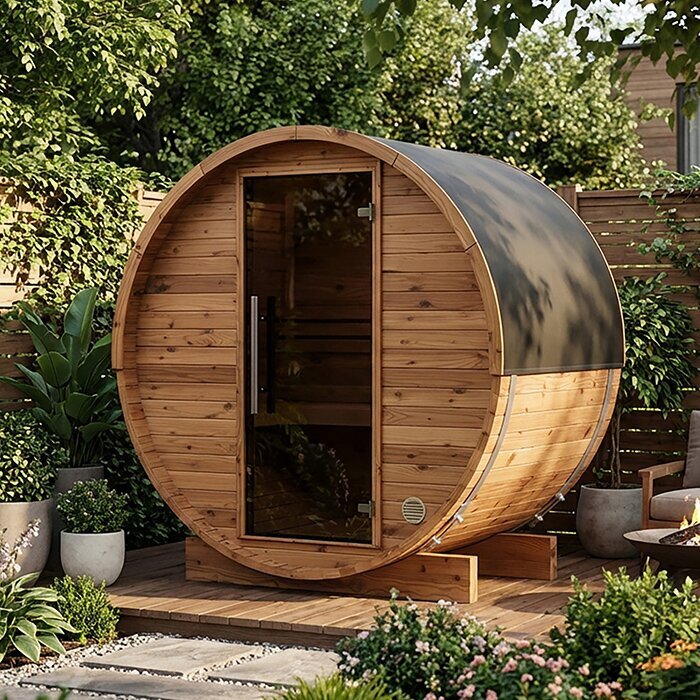
Treat the sauna enclosure and the heating package as separate things to verify. The Thermowood Barrel Sauna N-210 page identifies a sauna model; by itself, a sauna listing does not confirm which heater, control unit, sensors or remote-start accessories are included. Ask for the make and model of each component, whether it is included or optional, and which document confirms that the parts work together. This distinction matters when a sauna is sold as a base product and the buyer chooses heating equipment later. Do not infer remote capability from the sauna’s shape, stated area or a general category label.
Heater and controller compatibility
Compatibility must be checked against the heater’s full model and variant, not merely its brand. The heater manual identifies the control units it supports and may set conditions for output range, supply type, control interface or a separate power unit. Do not try to match parts by appearance or by comparing a single number in a listing. Give the manufacturer or supplier the heater’s complete reference and the controller reference, including a revision or generation if one is shown. Before ordering, have a suitably qualified installer confirm the electrical and control requirements against the actual product labels and instructions. A familiar brand name alone is not a compatibility statement.
An existing heater is not automatically suitable for a third-party Wi-Fi relay or replacement panel. A controller may need an approved interface, matching software, specified accessories or a particular power unit; a connector that seems to fit, or an app that recognises the heater brand, is not proof. If you are comparing enclosures, include the exact model in the enquiry, such as the N-250 sauna listing, but base the compatibility answer on the heater and controller documents. Ask for written confirmation of the complete proposed combination. If an adaptation is suggested, get the manufacturer’s approval before work begins rather than relying on a verbal assurance that the parts are commonly used together.
02
Heater sizing and enclosure details
Remote operation does not change the heater capacity required for the sauna. Use the sizing method and limits in the heater manufacturer’s documentation for the actual room, including the dimensions and construction features the instructions require you to consider. Volume, glazing, insulation, wall surfaces and ventilation may affect the recommendation, but the required inputs vary between systems. Do not substitute approximate outside dimensions or a product photograph for the measurements specified in the manual. Nor can an app’s temperature setting compensate for a heater chosen for the wrong enclosure. If the sizing basis is unclear, ask the sauna supplier and installer to confirm it before choosing a controller.
Use the actual sauna model when discussing that calculation. The LC-260 model page gives a figure of 5.12 m²; that figure alone does not state the internal volume, any construction adjustments required by a heater manual or which heater-and-control combination is approved. Ask what the listed area represents and obtain the manufacturer’s recommended heater configuration for the exact sauna. Only then settle the control question: a remotely operated unit still needs to be an appropriate, documented match for the room. A page describing an enclosure cannot replace the heater’s own sizing guidance.
Sensors and safeguards in the approved setup
Make a list of every safety-related device required by the heater and control instructions. Depending on the approved system, there may be temperature sensors, a door-related interlock, a heater-guard safety device or another control that limits when remote start is allowed. Their names and functions are not interchangeable, and not every system uses the same arrangement. A safeguard required for one operating mode may not be the same as one required for remote operation, so check the exact instructions. Ask which items are mandatory, whether each is included and which models are approved. Have the installer confirm their position from the manufacturer’s guidance rather than placing a sensor by guesswork.
Ask how the control responds if a door is opened, a required sensor is disconnected, a fault appears or communication is lost. The manual should explain whether the heater is prevented from starting, stopped or requires a local reset; never assume a standard response. A door switch, for example, does not automatically prove that no object has been left on the heater, and a temperature sensor is not necessarily an occupancy detector. Ask where a fault is displayed and how the user is expected to respond. When asking about a particular sauna such as the HCF-300 sauna, have the supplier identify safeguards for the proposed heater-and-control package, rather than relying on the sauna model alone.
03
Certification and conformity documents
Treat certification or conformity claims as applying to specific documented products and intended uses, rather than to the whole package by default. If the manufacturer names a certificate, declaration, conformity marking or applicable standard, ask for the document and check the model references, version, scope, installation conditions and limitations. A document for an app or radio connection does not, by itself, show that the heater and its safety controls are an approved combination. Likewise, a mark on one component should not be assumed to cover separately supplied accessories or a later retrofit. Avoid relying on an unexplained statement that the overall system is certified.
Ask the supplier to show how each document maps to the precise heater, controller and safety devices on the quotation, and who confirms that the assembled system follows the manufacturers’ instructions and applicable local requirements. If a document does not list every component, ask its issuer or the manufacturer what it covers; do not interpret its scope yourself. For an enquiry involving the LCF-300 listing, include that sauna model to keep the installation context clear, while checking evidence against the actual heating and control equipment. A product-page description is not a substitute for the relevant documents. Certification wording is useful only when its scope and the proposed configuration are clear.
Limits on remote starting
Find out exactly when a remote command is permitted. The manufacturer’s instructions may require a manual arming action, a particular door condition, a clear heater area, confirmation that the room is unoccupied or another safeguard before starting; these conditions are system-specific, not universal features. Confirm whether the same rules apply to app start, delayed start and scheduled operation, and whether a user must be physically present for any stage. Ask how the user can tell when a start request has been refused. If you cannot establish that the sauna is in the state required by the instructions, do not treat remote activation as safe simply because the app accepts a command.
Read the limits on delayed starts, maximum run periods, repeat scheduling, cancellation and automatic restart after an interruption. A time setting does not necessarily confirm that heating actually began or ended, unless the manufacturer says the control reports that status. Note how a user cancels a scheduled or active cycle and what indication appears after an error. For a setup based on the S-140 model, ask the supplier to point to each applicable operating limit in the manual, including any conditions for a restart. Do not infer that unattended or away-from-home starting is permitted just because the controller has a timer or remote button.
04
Network, app and local-control behaviour
Connectivity is a separate compatibility question. Confirm whether operation depends on a local wireless network, an internet connection, a manufacturer’s service, a phone app or additional hardware; do not assume these are included with a heater or sauna. Ask what happens if the connection fails, power is interrupted or the service is unavailable: does the system reject a new command, continue a programme already accepted, or lose only status reporting? These behaviours can differ. Check what alerts are sent and whether a notification confirms receipt of a command, the heater’s actual state or only a communication event. The manual should define those terms, and the supplier can confirm which phone or app versions are supported.
Plan for local operation if a phone, account or network is unavailable. Ask whether an approved local control remains available, how a user regains access and whether a software or service change can affect remote functions. If several people use the sauna, decide who may start heating and how account access is handed over; do not leave a previous owner with access. When considering the HC-150 sauna listing, verify which remote functions and network accessories are included in the specific offer instead of assuming they come with the sauna model. Also confirm whether extra hardware is required and whether an app notification is the only way to view system status.
Professional installation and handover
Remote control does not make electrical installation a do-it-yourself task. The heater, controller and safety devices must be fitted by a suitably qualified professional in accordance with the exact manufacturer’s instructions and applicable local requirements. Before work begins, have that person confirm the proposed configuration, required protective devices, clearances and sensor locations from the manuals. This is a compatibility and safety check, not a wiring guide: do not adapt connections, bypass an interlock or substitute a part on the basis of an online suggestion. Ask the supplier to coordinate any package-specific questions with the heater or control manufacturer.
At handover, ask the installer to demonstrate the permitted local and remote controls, cancellation of a scheduled start, response to a fault and use of any required reset or manual control. Confirm that all specified sensors and interlocks are present and checked as the manufacturer directs, without bypassing protection. Ask what the user should do if the network or power is interrupted, and who to contact about a fault. Keep manuals, model references, conformity documents and installer notes together so later service work can identify the installed version. If the installation includes a sauna such as the HC-225 model page, record that enclosure model alongside the selected heater and controller; a generic description such as ‘sauna remote control’ is not enough to identify the equipment.

05
Day-to-day use and future servicing
A remote setup still depends on the room being prepared in accordance with the sauna manual. Before enabling remote start, establish who checks the cabin and heater area, who can enter while heating is scheduled, and what household members or staff should do if plans change. Follow the manufacturer’s rules for the heater area and items in the cabin; never rely on a remote device to detect something it is not documented to detect. If other people can use the sauna, explain the start, stop and cancellation procedure so nobody assumes another person has checked it. Make sure the person responsible for preparation knows how to confirm the system’s actual status.
Consider maintenance and replacement before committing to the system. Ask how sensors, control units and network accessories are identified for service, where to find the correct instructions, and whether the manufacturer supports the exact component versions after a phone, network or software change. A failed accessory or later retrofit should not be handled by swapping in a generic controller: first confirm compatibility and required safeguards with the manufacturer or installer. Keep a record of approved changes so a future service visit does not depend on memory or a product name that covers several versions.
A documented checklist before purchase
Before purchase, make a written record of the exact sauna model, heater model and sizing basis, compatible controller and any separate power unit, mandatory sensors and safety accessories, documents covering the proposed combination, and remote-start rules. Add network requirements, cancellation behaviour, what is included or optional, who installs the system and who demonstrates it. This can be a short quotation or email exchange, but each answer should refer to a model-specific manual or manufacturer confirmation rather than a broad product description. Written detail also helps reveal when the sauna, heater and control package are being sold as separate choices.
If one critical answer is missing, pause the remote-feature decision until the supplier or manufacturer resolves it. If they cannot explain how the system prevents a start the manufacturer disallows, how it behaves after a fault or what its conformity documents cover, additional connectivity does not resolve those gaps. You may still compare sauna enclosures or consider a heater with local control, but do not buy a separate remote unit on the assumption that it will work later. The basis for choosing remote control should be a documented, approved configuration—not simply the presence of an app or button, or a promise to establish compatibility after installation.
Frequently asked questions
Can I add remote control to an existing sauna heater?
Only if the heater manufacturer confirms that the exact heater model supports the proposed controller and required safeguards. A generic Wi-Fi relay or replacement panel is not automatically compatible. Ask the manufacturer or supplier for written confirmation, then have a qualified installer check the configuration.
Does Wi-Fi mean the heater can be started remotely?
No. Wi-Fi may provide a connection or status display without allowing remote start. Check the control unit’s manual for the exact functions, conditions and feedback it supports, and confirm whether extra hardware or an account is needed.
Is a door sensor enough to make remote starting safe?
Not necessarily. A door-related device has only the function described by its manufacturer; it may not detect an object on the heater or confirm that the sauna is empty. Verify every safeguard required for the proposed system and follow its operating instructions.
Can I schedule the sauna to start while I am away?
Only if the manufacturer explicitly permits that mode and its required safeguards and conditions can be met. Check the rules for scheduled starts, cancellation and fault responses. Do not assume that a timer or accepted app command makes an unattended start safe.
What should I confirm before paying for a remote-control system?
Get the exact heater and controller references, the required sensors and accessories, documentation covering the proposed combination, permitted remote-start modes, network requirements and installation arrangements. Ask the supplier or manufacturer to resolve any missing compatibility or safety information before purchase.
Remote-controlled sauna heating is only a dependable feature when the exact heater, control unit and required safeguards are documented as a compatible system, and the intended start mode is allowed by the manufacturer. Treat connectivity as one part of the package, not as proof of safety. If the operating limits, document scope or fault response remain unclear after reviewing the instructions and installer handover, resolve those questions before enabling remote operation.
