
Community Greenhouse: Sharing Tasks and Resources
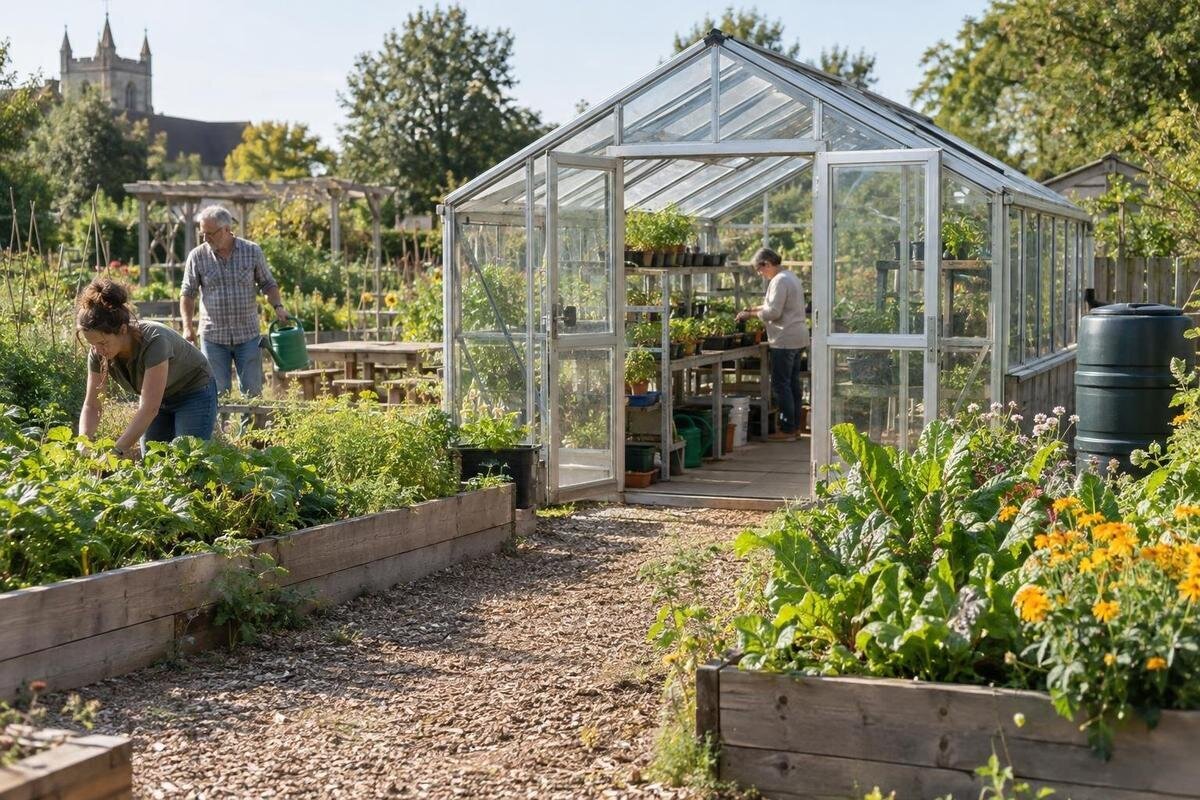
Community greenhouse planning
A community greenhouse is easier to share when each person can see what is theirs to grow, what belongs to everyone and who is responsible for routine care. The practical plan covers more than bed allocation: it sets boundaries for water, tools, access, maintenance and harvests, and says who provides cover when someone is away. Begin with the group's purpose and the time members can realistically give. Turn those agreements into a labelled layout, a simple task register and a review process, so day-to-day decisions do not depend on one organiser remembering every detail.

01
Agree the greenhouse's purpose
Before discussing a greenhouse model or assigning beds, agree what the project is meant to deliver. A group growing food for members may need different harvest rules from one raising plants for a shared garden or running demonstrations. Decide which activities are in scope, who the greenhouse is for, whether produce is shared or assigned, and who settles choices such as crop priorities. Keep the purpose short enough to consult when a new request arises. A written statement gives members a common reference, rather than leaving each person to assume that the space exists for a different reason. It can also make clear what the group is not able to provide.
Estimate how the greenhouse will be used as well as how much space it needs: the number of regular growers, visits in a typical week, busy periods such as sowing and harvesting, and how many beds need collective care. Include the hours members can reliably contribute; enthusiasm is not the same as a rota that can be covered. If the brief calls for a generous shared footprint, the Spacious Greenhouse, listed in sizes from 47 to 70 m² is one catalogue range to compare against a measured site plan. Its listed area does not establish user capacity, access, permission or suitability for this group; those depend on the complete project.
Map paths and shared working areas
Measure the intended site and draw a simple plan before allocating growing areas. Mark the proposed greenhouse outline, entrance and routes in and out, water access, tool storage and any work surface the group expects to use. Show doors or other features that need clear space, nearby obstacles and the route for bringing in compost, containers or harvest crates. Do not divide the whole interior into beds: people need room to pass and work without crossing another person's plot. Confirm measurements on site, and ask a suitably qualified professional about structural or ground details that fall outside the group's expertise.
Test several arrangements on the drawing: individual plots, a shared bed, space for seedling work and a clear working route. The Aluminium Classic Greenhouse range, listed from 3.77 to 28.08 m² provides one area range to compare with the sketch, but the stated area is not a layout or a measure of planting space. Check the exact model dimensions and product details before making site or bed decisions. Leave room for people carrying trays or tools to pass without routinely stepping through a growing area. A paper plan can reveal a route conflict before beds are built and help members see which areas are deliberately left shared.
02
Allocate beds and harvests fairly
Choose the allocation method before planting: beds can be assigned to a person or team, managed collectively, or split between both. Mark every boundary on the map, label it in the greenhouse and name the people responsible for each plot. Keep shared crops distinct from personal ones; otherwise sowing, tending, harvesting and removing finished plants can become sources of dispute. Decide who selects varieties for communal beds and whether members may take produce freely or need to record what they harvest. Clear rules make participation easier for someone who joins mid-season. If the group wants to trial crops, agree who decides whether a trial continues.
Fairness needs a process as well as a map. If requests exceed available plots, agree how spaces are offered, how long an assignment lasts and when it can be renewed; do not leave renewal to whoever asks first. Decide what happens to a plot when its owner is away or leaves, and how unclaimed plants or harvests are handled. When comparing greenhouse sizes, include the Wall Greenhouse range, listed from 3.69 to 14.34 m² alongside the group's allocation plan. Mark the proposed plots and shared areas on each layout before deciding how many places to offer. Record the agreed harvest and handover rules before planting.
Set a shared water routine
Treat water as a shared resource with a clear routine, not an informal assumption that someone else has dealt with it. Record the water source, how members may access it, any cost or conditions agreed with the site owner or provider, and whom to tell if supply is disrupted. Set a watering rota that names the beds or common areas covered on each visit, while recognising that crop, container and growing conditions vary. The plan should say who may adjust the routine and how changes are passed on. It should not require every member to guess from memory or follow an unreviewed schedule that no longer suits the growing areas.
Map the route between water access and the growing areas, so filling and carrying water does not cut across another member's plot or block the working path. Keep a simple note of unusual use, leaks or supply concerns and pass issues to the named contact rather than making unagreed changes. When comparing layouts for the Limited Edition Aluminium Greenhouses, listed from 3.77 to 28.08 m², mark water access and the beds served on the same drawing. This gives members a shared reference for their visits. Base the watering routine on the group's actual crops and agreed water source, and revise it when those arrangements change.

03
Organise tools and storage
Make a short inventory of the tools and supplies the group actually owns, separating shared items from anything members bring for personal use. Give each shared item a labelled home, and decide whether a sign-out note is needed for tools that move between the greenhouse, a store or outside beds. Agree who replenishes consumables, checks whether a tool is usable and reports missing or damaged equipment. A common collection works only if members know what is included; a list also prevents repeated purchases and helps new growers find equipment without having to ask the same person each time. Set return and cleaning expectations where appropriate.
If a greenhouse is being considered, treat storage as one part of the layout rather than an assumption about how much kit it will hold. The Limited Edition greenhouse range with built-in storage, listed from 5.52 to 28.08 m² is one catalogue option to compare with your inventory, but the product description does not establish whether the storage suits the group's particular equipment. Confirm the exact arrangement and dimensions before assigning tools a permanent place. If separate storage is planned, show it on the same drawing and agree who can access it. Keep frequently used items reachable without moving personal crops.
Give every recurring task an owner
Every repeating job needs one named owner, even when several people share the work. The owner coordinates the task, checks that it is covered and alerts the group if it cannot be completed; they do not have to perform every visit themselves. Give the task a backup, particularly for watering, opening or closing routines, and other work that cannot wait for the next meeting. Avoid entries such as everyone or volunteers, which make it difficult to tell who should notice a missed task. If a team is responsible, name one contact within it. Give each task its own owner rather than assigning all responsibility to a general caretaker.
Keep a task register with five practical details: the job, the person accountable, when it is due, how completion is recorded, and whom to tell if it is blocked or reveals a problem. Match timing to the group's crops and equipment instructions instead of setting identical intervals for everything. An entry for a shared bed should name the bed, not merely say plant care. Review ownership whenever a member changes role or leaves; update the register and shared calendar so an old name does not remain the only contact. A paper sheet near the entrance can work if that is what members will actually use.
04
Make the maintenance rota manageable
Separate crop work from care of the greenhouse and its shared areas. The rota can cover tasks such as clearing loose debris from working routes, returning tools, tidying shared surfaces and reporting visible damage or water problems. Add other checks only when they relate to equipment or tasks the group actually has. Routine observation is not permission to carry out structural, electrical or other specialist repairs; record the issue and refer it to the person responsible for the site or a qualified professional. Write down what counts as completion for each task, so a handover does not depend on different members interpreting the job in different ways.
Set the rota around real volunteer availability, and divide larger jobs into manageable visits rather than assigning a season's work to a single person. Leave space for cover when a member is away, and review whether duties are taking longer than expected. If comparing options in the Pyramid Greenhouse range, listed from 5.53 to 18.9 m², draw up a provisional task list for each proposed layout. Include the shared areas and equipment that members would maintain, not just the growing beds. Use product-specific maintenance information to identify relevant duties, then check which members can take them on.
Plan handovers and absences
Plan a handover for ordinary absences as well as longer changes in membership. Each rota entry should show who covers a missed visit, how the substitute finds current instructions and whom to contact if something unexpected occurs. A shared calendar or noticeboard can record dates, but keep the current task owner and backup visible in one agreed place. Ask members to tell the coordinator as early as possible when they cannot attend. The system should make replacement work explicit, rather than depending on someone noticing a silent gap. Make sure a cover volunteer can find the relevant bed labels, contact details and task notes without relying on the absent member.
Keep handovers brief and factual: note what was completed, what still needs attention, whether water or shared equipment is unavailable, and any decision awaiting the group. Use a named contact to raise concerns about neglected beds, disputed harvests or repeated gaps; give that contact a clear route to put the issue before the group. Agree how routine decisions are made and where the outcome is recorded. This avoids settling disagreements informally at the greenhouse door and gives absent members a way to see the same information as those who attended. Record the agreed action and who will follow it up.

05
Confirm site and project requirements
Before committing to a model, confirm that the proposed location and project can support the actual plan. Check the measured area, access route, where the group will store equipment, the water arrangement and who controls the site. Establish which permissions or owner approvals are needed rather than assuming that a community project is covered by an individual's arrangements. If visitors or a wider group will use the greenhouse, define how access is managed and ask relevant professionals or authorities about project-specific requirements. Do not infer general public-building compliance from a product description or from another group's experience.
Separate product facts from site decisions. The Prestige Greenhouse with metal foundation, listed from 3.77 to 28.08 m² gives a specific size range and identifies a metal foundation, but those details do not establish compatibility with the prepared base, ground or permissions for your site. Compare the exact model's requirements with the site's conditions, and obtain project-specific advice from the supplier or a suitably qualified professional where structure or foundation design is involved. Keep confirmed site conditions and the relevant product details with the group's purchase record.
Review the plan as the group changes
Schedule a review at a natural point in the growing cycle and whenever membership, the site, water arrangements or the crop plan changes. Bring the bed map, task register and handover notes, then ask where the routine has failed: missed visits, idle plots, confusion over harvests, tools not returned or repeated water concerns. Change the relevant rule or owner, not just the date of the next meeting. Keep a dated copy of the updated plan and tell all members where the current version is kept. A brief review makes it easier to spot repeated problems before they become accepted as part of the routine.
If the review shows that the planned area no longer suits the group's work, redraw the layout before adding structures or beds. The T-Model Orangery Greenhouse, listed from 16.52 to 30 m² is one published range to include in a comparison of possible layouts. For each option, show how the proposed growing areas would affect equipment storage, the water route and shared working space. Review the associated duties with members before agreeing to expand, so any change in space is matched by a workable operating plan.
Common questions
How should a community greenhouse divide its growing beds?
Use a labelled map to separate individual plots, shared beds and working routes. Agree how places are allocated, how long assignments last, who chooses crops for common beds and how produce is shared. Review allocations when membership changes rather than relying on informal understandings.
Who should be responsible for watering?
Name someone to coordinate the watering plan, then assign the visits to named people on a rota. Each visit needs a backup, and members should know whom to contact about a problem with the supply. Adjust the routine to the crops and observed conditions rather than assuming one schedule suits every bed.
Should members bring their own gardening tools?
Decide which tools the group will provide and which members may bring for their own plots. List shared equipment, label its usual storage place and agree how it is returned. A simple record can help the group notice missing or damaged items and avoid buying duplicates.
What belongs on a greenhouse maintenance rota?
Include recurring care of shared areas, such as tidying working routes, returning tools and reporting visible problems. Add tasks only when they apply to the greenhouse and equipment the group has. Specialist repairs should go to the person responsible for the site or a qualified professional.
How can the group manage a member leaving?
Use a handover process that updates the plot map, task register and contact list. Reassign any beds and recurring duties, and confirm how keys or other access arrangements are handled. Keep the current plan in one agreed place so remaining members do not depend on a former member's memory.
A workable community greenhouse depends on visible agreements more than on perfect attendance. When growing areas are clearly allocated, shared resources have simple rules and every recurring job has an owner and backup, members can contribute without guessing what others expect. Keep the plan practical, record changes and review it when the group's needs shift. That gives the greenhouse a routine that can be handed over and sustained by the whole community.
