
Electric and Fuel-Burning Greenhouse Heat Compared
Greenhouse heating
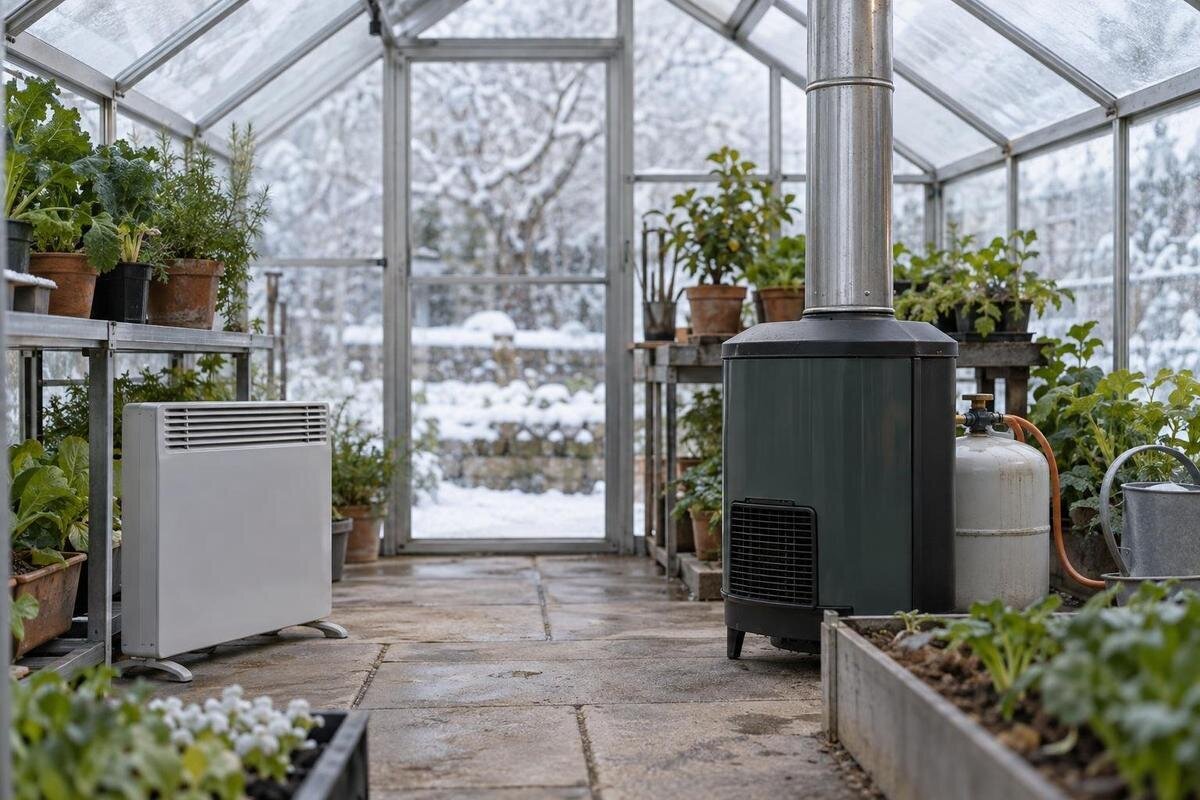
Electric and fuel-burning greenhouse heaters can both provide warmth, but they create different conditions around plants and place different demands on a site. An electric unit has no on-site combustion; a fuel-burning appliance may release exhaust into the greenhouse or route it outside through a flue, depending on its design. That difference affects moisture, emissions, ventilation, maintenance and installation. Compare documented heater models in the context of a particular greenhouse, not fuel names alone. Useful evidence includes stated heat output, combustion method, required air and flue arrangements, electrical needs and servicing instructions. The fuel label cannot predict greenhouse performance by itself.

Before you choose 1
Where combustion exhaust goes
Electric greenhouse heating creates warmth without burning fuel inside the greenhouse, so the heater itself adds no combustion exhaust or combustion-generated water vapour to the growing space. Moisture still comes from plant transpiration, watering, damp growing media and evaporation from wet surfaces. Nor does electric heating automatically mean zero environmental impact: emissions may occur when electricity is generated, and the wider comparison depends on the supply and appliance. For air inside the greenhouse, though, there is no burner at the point of use. A fan, if fitted, can move warm air but does not change this distinction. Electric heating still needs ordinary ventilation and does not prevent condensation.
With fuel-burning equipment, establish whether combustion is direct-fired into the greenhouse or separated from it by a flue. A direct-fired model releases its combustion products into the enclosure; a flued model is designed to carry exhaust outdoors when installed as specified. The fuel label alone does not tell you which arrangement applies, and two heaters using the same fuel can have different effects indoors. The Classic aluminium greenhouse range is listed in sizes from 3.77 m² to 28.08 m². Use the selected greenhouse’s exact size and model details to define the space; catalogue dimensions do not identify a compatible heater or its ventilation requirements.
Moisture from fuel combustion and greenhouse humidity
Burning common hydrocarbon fuels produces water vapour as well as combustion gases. With an unflued, direct-fired heater, those products enter greenhouse air. Added moisture can contribute to condensation on cooler glazing or plant surfaces, particularly as the air or surfaces cool. The effect depends on the fuel, appliance and operating pattern, so do not assume a single humidity increase. Watering, damp compost and plant transpiration also add moisture; condensation alone does not identify its source. A humidity reading is useful, but checking cooler surfaces can reveal where water is collecting. When comparing observations, note whether the heater was running, whether watering had just taken place and whether vents were open. This gives each reading some context rather than attributing every change to the heat source. Distinguish between moisture already present and moisture introduced by combustion: replacing a heater does not remove the other sources.
Electric heat does not remove water from the air. Warming it can lower a relative-humidity reading while its moisture content stays the same, but that moisture may condense when air meets a cooler surface. Venting damp air can help manage moisture, yet it also carries warmth out; a flued heater keeps its exhaust outside but does not remove water from plant transpiration or irrigation. The lean-to Wall Greenhouse range lists models from 3.69 m² to 14.34 m². For a selected model, consider its actual openings and layout when planning air movement; floor area alone does not show how moisture will be managed.
Before you choose 2
Emissions inside and outside the greenhouse
Point-of-use emissions and wider energy impacts are separate questions. An electric heater has no combustion exhaust inside the greenhouse, while emissions associated with generating electricity depend partly on the electricity supply. Burning common hydrocarbon fuels releases carbon dioxide; incomplete combustion can also produce carbon monoxide, and other pollutants vary with fuel and equipment. A flued appliance is intended to send exhaust outdoors when installed as specified; an unflued one releases it into the growing space. For a broader comparison, consider the energy source and the specific equipment rather than ranking systems by fuel label alone.
Ask the heater supplier for its stated fuel, combustion type, exhaust route, emissions information where available and required service schedule. Carbon monoxide cannot be reliably detected by sight or smell, so the absence of an odour is not a test of safe operation. When comparing enclosure options in the Limited Edition Aluminium Greenhouse range, listed from 3.77 m² to 28.08 m², keep the heater’s emissions information separate from the greenhouse specification. Check the details for the specific heater being considered; a general description of a fuel category does not provide the same information.
Ventilation requirements differ by appliance
Greenhouse air exchange matters with either heat source because plants, irrigation and condensation all affect the growing environment. A combustion appliance can add another condition: air for burning fuel and a defined route for exhaust. Direct-fired heaters may specify particular ventilation conditions; opening a greenhouse vent to meet them can also remove heat and change the heater’s workload. Ventilation for crop management should not automatically be treated as the appliance’s approved arrangement. Even when a heater is flued, its combustion-air and exhaust requirements remain part of the system.
Read the heater manual to establish whether the appliance is direct-fired or flued, where its combustion air comes from, and what vent, flue and clearance conditions apply. Do not size vents or improvise an exhaust route by rule of thumb; ask a qualified installer to assess the heater and enclosure together. The T-Model Orangery Greenhouse is listed in sizes from 16.52 m² to 30 m², but those floor-area options do not define airflow. Review the selected greenhouse’s actual openings and layout alongside the appliance instructions.

Before you choose 3
Electrical supply, fuel storage and installation
Electric heating makes the available electrical supply a central constraint. Compare the heater’s stated electrical demand with what is available at the greenhouse; do not assume a nearby household socket or extension lead is suitable for sustained heating in a damp space. Check whether the appliance is intended for greenhouse conditions, including condensation and watering exposure. A qualified electrician can confirm the connection, circuit capacity and protective arrangements for the particular unit and site, including any applicable local requirements. Do not infer that an installation is suitable from the heater’s plug or a product photograph.
Fuel heating has different practical demands: an approved fuel supply and storage arrangement, refilling or delivery, access for servicing and, for some designs, a flue. The manufacturer’s instructions and a qualified installer should determine where the unit, fuel and exhaust components can go; a greenhouse corner or nearby shed should not be assumed suitable. Some burners need electricity for ignition, a fan or controls, so stored fuel does not necessarily provide heat during a power cut. The Pyramid Greenhouse range is listed from 5.53 m² to 18.9 m². Check the actual floor plan for access and service space as well as growing area.
Maintenance and everyday checks
An electric heater avoids burner, fuel and flue servicing, but it is not maintenance-free. Follow the maker’s schedule for cleaning and checking airflow, the thermostat and the electrical connection. Have a professional assess damage or repeated electrical interruptions rather than continuing to operate a suspect unit. A fan-assisted model has moving parts and air passages that may need attention as instructed. Sensor position also affects what the controller reads: a sensor close to the heater can respond to a local pocket of warmth rather than conditions among the plants. Follow the maker’s location guidance and use a separate thermometer to compare conditions in different parts of the greenhouse.
Fuel-burning units add checks for the burner, fuel system and, where fitted, the flue and combustion air. Arrange servicing as the manufacturer specifies and use a qualified technician where required; do not adjust combustion components by guesswork. Routine planning also includes how fuel is replenished and where it is stored under the appliance’s instructions. The Limited Edition greenhouse with built-in storage range lists sizes from 5.52 m² to 28.08 m². Confirm which area is intended to be heated and what clearances the heater requires, rather than assuming the greenhouse name explains its internal layout.
Before you choose 4
Reliability during power or fuel interruptions
Reliability depends on both the heater and the service feeding it. An electric unit needs mains power; a fuel heater may also need it for ignition, a circulation fan, electronic controls or a pump. The manual should clarify those dependencies, including what happens after an interruption and whether the unit restarts automatically. A heater that does not depend on electricity can still stop when fuel runs out, a refill is delayed or a component needs service. Compare these failure points with how much unattended operation the greenhouse requires.
Do not assume that fuel on site equals backup heat. Check whether controls, pumps or fans remain available during an outage and whether any alternative arrangement is approved by the manufacturer; improvised backup power or alternate fuel can create new hazards. Also consider whether fuel deliveries and replacement containers are practical at the location during the period of use. The Prestige Greenhouse with metal foundation range is listed from 3.77 m² to 28.08 m², but access to electricity or fuel is site-specific, not a feature established by a greenhouse model name.
Compare documented heater ratings
Compare ratings on the same basis. An electric unit’s stated power usually describes its electrical input, while a fuel-heater document may list fuel input, useful heat output or both. Input figures alone are not a fair comparison if one rating describes energy consumed and another describes heat delivered. Check the declared output, test conditions, thermostat range, fan or control power needs, and whether the manufacturer gives separate figures for different operating modes. If the rating basis is unclear, ask the supplier before comparing models; do not turn a fuel quantity or energy-content figure into a heat-output claim. A comparison sheet should identify what each number measures, its unit and the operating mode to which it applies. Keep maximum ratings separate from figures for reduced operation, rather than selecting whichever value makes a heater appear more favourable. Where a figure is not supplied, leave that entry unanswered until it is clarified. This makes differences in the available information visible instead of disguising them as differences in performance.
Keep running costs separate from safety and suitability checks: local energy prices change, and neither fuel type nor a headline rating guarantees an operating bill. The Spacious Greenhouse range is listed from 47 to 70 m², which gives a sense of the range’s footprint but does not predict heat loss. A proper assessment also needs the exact greenhouse and heater specifications. Floor area alone cannot establish whether a particular unit will maintain a chosen temperature. For a meaningful comparison, use the same greenhouse, intended temperature and period of operation for both options. Record the date and basis of the energy prices used, and distinguish fuel purchased from useful heat delivered. Include any stated electrical demand for a fuel heater’s fan or controls rather than treating fuel as its only energy input. These details explain the comparison without implying that either option has a guaranteed running cost.

Before you choose 5
Safety in a damp growing space
Electric heat removes combustion exhaust at the point of use, not every safety concern. Condensation, watering, damaged cables or connections, hot surfaces and obstructed air openings still need attention. Use only a heater whose maker permits the intended environment, and follow its documented clearances, mounting and cleaning guidance. A domestic room heater is not automatically suitable for a greenhouse just because it is electric. Consider how the growing space will be used once the appliance is in place: pots, trays, watering equipment and stored materials all need a layout that respects those clearances. Review that layout when benches are rearranged or plants occupy more space, rather than treating the initial empty greenhouse as the permanent arrangement. Keep the heater’s air openings and service access in mind when planning seasonal storage. These everyday constraints belong in the purchase decision, alongside the electrical assessment described above.
Do not treat combustion products as a dependable way to enrich greenhouse air with carbon dioxide. An ordinary burner does not control the composition or concentration of its exhaust, and carbon monoxide or other by-products can create risk if combustion or exhaust arrangements fail. The heater’s instructions, flue and professional servicing matter more than a general claim about plants using carbon dioxide. Any proposed use of combustion exhaust for crop enrichment needs its own specialist assessment; it is not a substitute for selecting a heater with suitable operating and installation requirements.
Choose the system that fits the site
Electric heating may suit a site where the documented supply can support the chosen appliance and avoiding on-site combustion is a priority. It removes fuel storage and combustion-specific servicing from the greenhouse plan, but not electrical checks, ordinary ventilation or moisture management. Fuel-burning heat may suit a site where fuel access, servicing and an approved combustion route are practical. A direct-fired design puts exhaust and added water vapour into the greenhouse; a flued design changes that exposure but brings flue and combustion-air requirements. Neither source is automatically simpler once the full installation is considered.
For each heater under consideration, distinguish installation requirements from recurring responsibilities. A connection or flue arrangement must be resolved before use, while cleaning, servicing and fuel replenishment remain part of ownership. Consider who will handle those tasks and whether they fit the way the greenhouse is used, especially during unattended periods. An arrangement that appears convenient at purchase may be less practical if its routine needs cannot be met. Use the comparison of ratings, emissions and site requirements to identify those trade-offs rather than choosing on fuel preference alone. If an important detail remains unclear, ask the supplier or a qualified installer about that specific point. The more suitable option is the one whose requirements fit both the site and the routine you can maintain.
Frequently asked questions
Does a fuel-burning greenhouse heater always add moisture?
No. Burning common hydrocarbon fuels produces water vapour, but whether it enters the greenhouse depends on the appliance. A direct-fired, unflued heater releases combustion products indoors; a flued model is designed to carry them outside. Check the exact heater documentation rather than treating all fuel-burning models alike.
Does an electric greenhouse heater reduce humidity?
No. Warming air can change its relative-humidity reading, but an electric heater does not remove water from the greenhouse. Moisture from plants, irrigation and wet surfaces remains and may condense when air meets a cooler surface. Ventilation and moisture management still matter.
What changes when a fuel heater is flued?
A flue is intended to carry combustion exhaust outdoors, so less of it enters the greenhouse than with a direct-fired heater. The appliance still has combustion-air, flue, clearance, installation and servicing requirements. The greenhouse also needs suitable air exchange for plant and moisture management.
Can greenhouse vents alone make an unflued heater suitable?
Not necessarily. Openings used for crop ventilation do not automatically meet a particular heater’s requirements. Direct-fired models can specify their own ventilation conditions, and opening a vent can also lose heat. Follow the heater documentation and ask a qualified installer to assess the appliance and enclosure together.
Will a fuel-burning heater work during a power cut?
Do not assume so. Some fuel heaters need mains electricity for ignition, a fan or electronic controls. Check the specific model’s documentation, including how it behaves after an interruption. Fuel availability matters too: a working electricity supply cannot compensate for an empty container or a delayed refill.
Compare the two systems as complete installations. Electric heating avoids on-site combustion but depends on an appropriate supply and does not solve moisture management. Fuel-burning heat requires a clear understanding of where exhaust goes, how the appliance is ventilated and serviced, and how fuel will be supplied. Once the exact greenhouse and heater documentation are available, choose the arrangement whose requirements fit the site and the routine you can maintain.
