
Growing Alpine Plants in a Cool, Airy Greenhouse
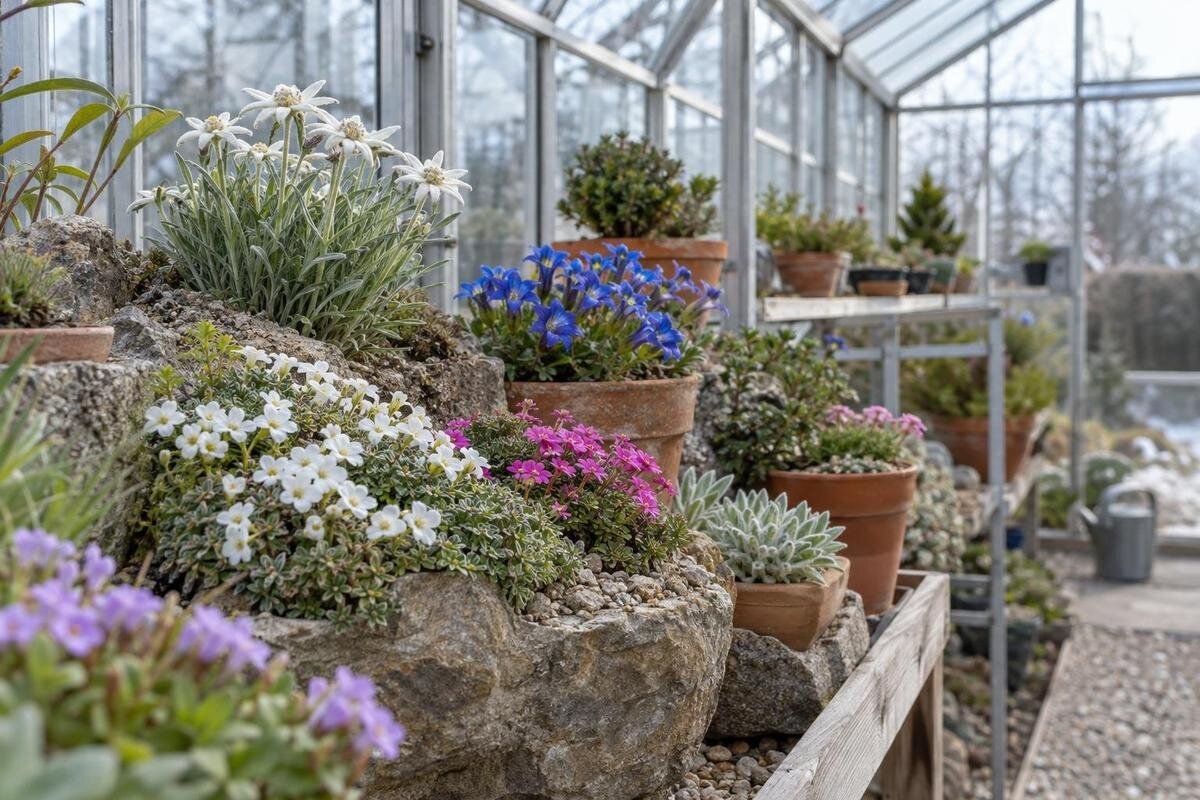
Alpine plants under glass
Alpine plants do not all want a miniature mountain climate, and a greenhouse should not automatically become a warm growing room. For many rock-garden species, its main value is keeping prolonged rain away from crowns and pots while preserving bright light and free air movement. The glass can, however, trap heat quickly. Success depends on matching the shelter to each plant’s natural light, moisture and seasonal-temperature needs, then managing ventilation and drainage accordingly.

Greenhouse buying checks 1
Why alpine plants benefit from a cool, airy greenhouse
An alpine greenhouse is best understood as a rain shelter with controllable airflow, not as a warm house for every mountain plant. For many small rock-garden species, its practical benefit is protection from long spells of wet compost and rain on crowns, while keeping plants in bright conditions. Glass can also trap heat quickly when the sun is out, so shelter without ventilation may create the stress the collection is meant to avoid. The aim is to exclude prolonged rain without sealing in heat or stagnant, damp air.
This differs from advice for tomatoes, cucumbers or tropical ornamentals, where retaining warmth may be a central goal. Alpines need their own balance of light, root-zone moisture, airflow and seasonal rest; a continuously warm, humid environment is not a universal benefit. Some hardy garden alpines grow well outdoors and need no cover, while others benefit from protection against repeated wetting. Before choosing a structure, identify the problem it should solve, such as winter rain, summer exposure or space for collection management. Then check that the design lets you respond to that problem.
Identify each alpine plant’s habitat before grouping it
Alpine describes a broad range of habitats rather than one set of growing instructions. Elevation, slope, rock type, snow cover and local exposure all influence a plant’s light, moisture and temperature needs. Edelweiss (Leontopodium alpinum), for example, is associated with open, sunny, stony sites. Soldanella alpina offers a useful contrast: it is associated with cool mountain settings and moist, partly shaded places. Purple saxifrage (Saxifraga oppositifolia) represents exposed, cold-adapted rock habitats. These examples illustrate why one light or temperature prescription cannot suit every alpine plant.
Keep the botanical name with each pot and make a short care record using a specialist nursery or botanical garden reference. Note the natural substrate, exposure, moisture needs and winter regime. A common name such as saxifrage may refer to plants with quite different requirements. Record whether a species grows on limestone, acidic rock, scree or a damp snowbed, rather than labelling it only as alpine. Make the record easy to use at the bench: separate the plant’s requirements from your observations of how it grows in your greenhouse. Leave unanswered questions clearly marked instead of filling them with assumptions based on a neighbouring plant. This helps you decide which pots can share a position and which need to be managed separately. Group plants by similar needs only after checking their exact names. For a footprint comparison while planning a collection, Limited Edition Aluminium Greenhouses are listed in area options from 3.77 to 28.08 m²; treat the stated area as a starting point, not as space available solely for pots.
Greenhouse buying checks 2
Keep greenhouse temperatures seasonal and measurable
Separate winter hardiness from tolerance of a hot root zone. A plant may survive frost outdoors yet suffer when its pot heats behind glass; another may be alpine by origin but come from a lower, sheltered habitat. There is no single alpine temperature to set. When a greenhouse is closed, direct sun can raise the air and pot temperature well above conditions outside. That change may happen quickly around midday, even if the morning felt cool. Begin without routine heating and measure conditions where the leaves and containers actually sit, rather than relying only on an outdoor forecast.
Use a min–max thermometer and a simple log to compare sunny and cloudy days, overnight conditions and positions at bench height or near the floor. Note where the thermometer was placed and whether doors, vents or shade were in use. If you move it, identify the new position so that readings from different parts of the greenhouse do not become mixed together. The useful comparison is between clearly recorded conditions, rather than a list of temperatures with no indication of how the space was managed. Check each species’ guidance for summer heat limits, frost tolerance and need for a cool winter rest. Saxifraga oppositifolia, from cold, exposed habitats, should not automatically be given the same warm, protected position as a plant that mainly needs shelter from rain. If groups need incompatible seasonal conditions, separate them rather than changing the climate for the whole collection. If you are planning distinct growing and working areas, the T-Model Orangery Greenhouse is listed in sizes from 16.52 to 30 m². That range indicates area, not temperature control.
Give each species suitable light without trapping heat
Bright light does not mean placing every pot in unfiltered midday sun. Assess the exposure at bench level through the year: nearby walls, trees, the roof and the greenhouse’s orientation can create different conditions from one side to another. Edelweiss is a useful example of an open-site plant that generally calls for a sunnier position; Soldanella alpina is better considered for cooler, partly shaded conditions. Use those contrasting requirements to plan separate zones, rather than imposing one shade level across the house. Observe growth and leaves, and note how long the sun reaches each bench. A simple sketch can show which positions receive morning sun, afternoon sun or shade during your observations. Mark the date as well as the time, so a position assessed in one season is not treated as permanently shaded or sunny. Use the sketch to choose where to place plants with different light requirements.
In a glazed enclosure, strong light can also mean a rapid rise in heat, particularly when the air is still. On clear days, compare light exposure with temperature readings, and use movable pots, ventilation or temporary shade when conditions call for it. Introduce plants to brighter positions gradually if they have been raised under cover. Keep a shaded zone bright enough for its plants, and leave a more open position for sun-loving rock species. The Pyramid Greenhouse is listed in area options from 5.53 to 18.9 m²; use that figure only when considering space for different light zones, and assess the actual site and layout separately.

Greenhouse buying checks 3
Watering alpine plants under cover
A roof can make moisture easier to manage, but it does not mean alpines should be kept dry. Plants still need water during active growth, and requirements vary with species, roots, compost, container size and season. When rain is excluded, check the potting mix rather than relying on rainfall. Water to moisten the root ball without leaving the crown in standing water. A dry-looking surface may conceal damp compost below, while a sunny or breezy position can dry a pot more quickly. Check individual containers, especially when different species share a bench.
Leave room around pots so water can drain and air can circulate. Trays that hold standing water can keep the base of a pot wet; also check containers after rain, since wind can blow it through open doors or vents. A fixed watering schedule is unlikely to suit a mixed collection through every season. If built-in storage is part of your plan, the Aluminium Greenhouses with Storage – Limited Edition page lists options from 5.52 to 28.08 m². Check the selected plan to see how storage affects the available growing area and access to your plants.
Choosing pots and compost for free drainage
Free drainage starts with a pot that has clear drainage holes and a growing mix suited to the species, not one recipe labelled for all alpines. Many rock-dwelling plants need an open, gritty medium that lets excess water escape, but the balance of mineral and organic material depends on the plant and how it is grown. Check whether a species prefers limestone or acidic conditions before choosing additives: a freely draining mix can still be chemically unsuitable. Avoid blocking drainage holes with fine particles, and choose a pot that fits the root system without leaving a large volume of persistently wet compost.
After watering, check how quickly the pot drains and whether the centre of the mix remains saturated. Porous containers can dry differently from less porous ones, so note the pot material as well as its size. Repot if compost has compacted or roots have filled the container, but do not disturb plants routinely just because their neighbours use a different mix. Label separate growing mixes, especially for plants with contrasting soil preferences. The Bloomcabin Prestige Greenhouse is listed in area options from 3.77 to 28.08 m²; compare the chosen area with your intended benches and the room needed to lift, inspect and water pots.
Greenhouse buying checks 4
Plan ventilation and working space together
Ventilation helps limit heat build-up and allows damp air to disperse. The aim is regular air exchange, not a draught directed at every pot or a permanently closed room. Where a design provides openings at different heights, their position and size can affect how air moves through the space. Surrounding walls or other obstructions may also matter. Avoid crowding pots together, particularly where foliage or crowns stay wet after watering. Open doors or vents in response to weather and temperature; an unheated greenhouse is not automatically a cool one.
Before choosing a structure, check the listed vent locations, the height and width of the openings, and whether you can reach and operate them once benches are in place. Consider headroom above shelves and the route for carrying trays through the door. A large area alone cannot tell you whether air will reach the plants evenly. The Spacious Greenhouse is listed at 47 to 70 m², providing an area reference for planning a large layout. Check the selected model’s ventilation details and usable height rather than treating the area figure as a measure of airflow.
Choose a greenhouse by usable growing area
Plan for the collection as it grows, not just for the number of pots you own now. Include benches or shelves, a clear walking route, space to water and repot, and positions for species with contrasting light and moisture needs. A few wide containers can occupy more room than many small pots, while mature plants may need more space than young divisions. Draw a simple plan using internal measurements, and check the door route before deciding how much benching is practical. Mark the full footprint of containers rather than counting pots alone. Include the space you need to set down a tray while inspecting a plant, and show where temporarily moved pots will go during repotting. This makes the plan a working layout rather than a diagram of the maximum number of containers that could fit inside. Leave access to plants at the back rather than filling every surface.
Site conditions matter as much as the floor area. Note when the chosen position receives sun, whether nearby surfaces reflect heat and whether fences or buildings obstruct openings. Check how exposure changes during the day instead of assuming that a wall or fence will provide useful shade. The Aluminium Classic Greenhouse listing gives area options from 3.77 to 28.08 m². Compare the stated area with your measured working space, then check the internal height, door dimensions and ventilation details for the chosen version. Listed area is not the same as bench capacity.

Greenhouse buying checks 5
Manage winter dormancy without routine heating
Winter care depends on a plant’s origin and whether it is dormant or still growing. Many alpines need a cool season; keeping the whole greenhouse warm can disrupt that cycle. At the same time, hardiness in open ground does not guarantee that a small pot will tolerate every winter condition. Review each plant’s frost tolerance, moisture needs during dormancy and sensitivity to repeated wetting. Give protection to vulnerable specimens according to their requirements, and avoid combining plants that need very different winter conditions under one unexamined heating routine.
Maintain enough air movement to avoid stagnant, damp conditions in mild weather, while keeping each species’ cold tolerance in mind during colder spells. Water dormant pots sparingly, but do not let roots dry out completely unless the species’ guidance calls for it. Inspect them periodically rather than treating winter as a no-care period. A wall greenhouse may suit a particular site, but the wall does not automatically provide the right temperature or light. The Wall Greenhouse page lists area options from 3.69 to 14.34 m². Use that range to compare scale, then assess the wall’s exposure, shade and ventilation where the greenhouse would stand.
Use plant symptoms and growing records to solve problems
Read changes in growth alongside the conditions around the plant. Soft crowns, persistently damp compost or an unpleasant smell can be reasons to check drainage, watering and airflow. Long, weak growth may indicate insufficient light or excessive warmth, while bleached or scorched leaves can follow sudden strong sun or a hot, dry pot. These are clues, not diagnoses, and symptoms differ between species. Compare an affected plant with a healthy example of the same species, and review recent changes in weather, shade, watering and ventilation.
Make one adjustment at a time and record what changed. You might move a pot to a cooler or brighter position, improve air movement, or alter watering if the species’ requirements support it. Give new growth time to show whether the change helped; older damaged leaves may not recover. Describe the affected part of the plant and date the entry, rather than writing only that it looks unhealthy. At the next inspection, distinguish existing damage from any new symptoms and note whether growth has resumed. This gives you a clearer basis for judging the adjustment without repeatedly changing care in response to the same damaged leaves. If one plant declines while others remain well, focus on its pot and microclimate before changing the whole greenhouse. If it repeatedly struggles despite careful adjustments, its natural habitat or winter cycle may not match the conditions available. A clear record helps you make that decision without disrupting the rest of the collection.
Frequently asked questions
Can every alpine plant be grown in a greenhouse?
No. Some hardy alpines grow well outdoors, while others benefit from shelter from prolonged rain. A greenhouse can also become too warm for cold-adapted plants. Check each species’ habitat and growing requirements before deciding whether it belongs under glass.
Should I heat a greenhouse for alpine plants?
Heating is not a default requirement. Many alpines need a cool seasonal cycle, and warmth can add stress if the greenhouse is already sunny. Check whether each species needs winter protection or a cold rest, and choose a growing space that can meet those needs.
Do alpine plants all need full sun?
No. Edelweiss is associated with open, sunny sites, while Soldanella alpina is a useful example of a plant suited to cooler, partly shaded conditions. Use the species name to check its light requirements and arrange pots in suitable positions.
If the roof keeps off rain, should I water less?
Not according to a fixed rule. Plants still need water during active growth, but their needs vary with species, season, pot and compost. Check each pot before watering, and make sure excess water can drain away.
What should I check when choosing a greenhouse?
Compare the listed area with your intended benches, access route and working space. Also check the chosen model’s ventilation details, opening positions and usable height. Area alone does not tell you how cool or well ventilated the growing space will be.
A cool, airy greenhouse can make an alpine collection easier to manage when it provides rain protection without trapping heat or dampness. Build the collection around each plant’s habitat, keep pots draining freely and use observations to adjust light, watering and ventilation. With those conditions in view, the greenhouse becomes a practical shelter for plants with different needs rather than a single climate imposed on them.
