
Growing Cucamelons in a Greenhouse in Malta
Greenhouse growing guide
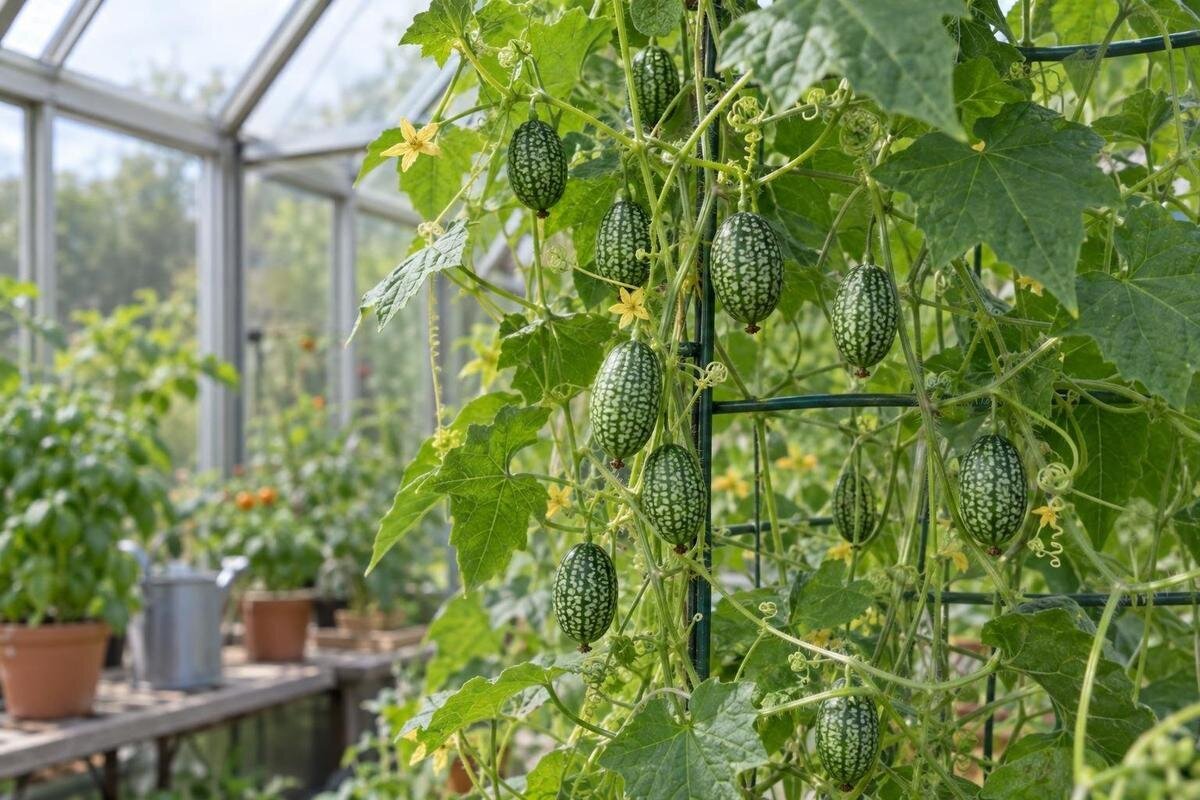
Cucamelons (Melothria scabra), sometimes called Mexican sour gherkins, are warm-season climbers whose small, striped fruits are easiest to find when the vines are trained upwards. In a Maltese greenhouse, warmth can help a crop establish, but the same enclosure can become much hotter than the outdoor air. Plan sowing around night temperatures, give the vine a stable support of its own, keep moisture even at the roots and make summer ventilation part of the growing plan. A greenhouse provides shelter; it does not remove the effects of cool nights, intense sun or limited floor space.

Is a greenhouse useful for cucamelons in Malta?
Cucamelons (Melothria scabra), sometimes called Mexican sour gherkins, are warm-season plants rather than winter greenhouse crops. They are frost-sensitive, and an unheated structure can cool sharply overnight; warmth during the day does not guarantee safe conditions after dark. Malta’s mild climate may allow an earlier start than in colder regions, but sites differ with exposure and shelter. Put a minimum–maximum thermometer near the crop, out of direct sun, and use its overnight readings instead of relying on a fixed date. If nights remain cool, keep trays warm indoors or postpone planting. A greenhouse shelters vines from wind and rain, but is not automatically heated or climate-controlled.
Think about the greenhouse as a shared growing space. One vine needs less room than a crop filling a whole bed, yet its foliage and support occupy more than the planting point; leave access to water and neighbouring plants. The Classic aluminium greenhouse range lists floor-area options from 3.77 m² to 28.08 m². These figures compare listed footprints, not usable bed area or trellis height. Before choosing a size, mark a proposed bed or container, a clear route to the door and the support position on a plan. Then compare that layout with the information for the model you are considering.
When and how to sow cucamelon seeds
Use warmth, not a calendar date, to decide when to sow. Cucamelon seed needs a warm seed-starting environment; cold compost can delay emergence and leave young plants sitting wet for longer. Sow under cover when you can keep the tray consistently warm, using small individual pots and fresh seed compost with drainage. Follow the seed packet for sowing depth rather than burying seed deeply. Moisten the compost before sowing, then keep it damp, not saturated. An unheated greenhouse may suit a later sowing once the season has warmed, but its overnight temperature can be too low for an early sowing. Avoid sowing so early that seedlings must wait in their pots for weeks.
After emergence, move pots to the brightest suitable position so seedlings do not become long and weak while reaching for light. Turn them if light comes mainly from one side, and remove any cover used to retain moisture. If several seeds germinate in one pot, snip off the weaker shoot rather than pulling it up and disturbing the seedling you keep. Water around the compost and let excess drain; standing pots in water can cause problems at the roots. The Wall Greenhouse range lists floor-area choices from 3.69 m² to 14.34 m². If a greenhouse will also host seedlings, allow temporary tray space without putting it in the future path of a climbing vine.
Preparing seedlings for planting out
Plant out when seedlings have several true leaves, their roots hold the compost together and nights are reliably warm. Acclimatise them gradually by letting indoor-raised plants experience greenhouse conditions for increasing periods. Avoid sudden exposure to strong direct sun: a seedling moved straight from a windowsill into a closed, sunlit greenhouse can scorch even when the air felt mild indoors. Keep plants sheltered during cool nights and do not leave trays where midday heat can bake the compost. Water the pots before transplanting so the root balls hold together, choose a milder part of the day and handle each plant gently. Water it in afterwards so the compost and surrounding soil make contact.
Set each root ball at the same depth as it grew in its pot, then firm the soil gently without compacting it. Leave room for leaves to spread and keep the stem base visible so it is easy to inspect and water. In a container, place the pot beside its final support before planting; moving it later can pull on the vine or disturb its roots. The Limited Edition Aluminium Greenhouses range has listed floor-area choices from 3.77 m² to 28.08 m². Use the chosen footprint to plan where the crop will sit, but leave space for a walkway and any plants already inside. Total greenhouse area is not all plantable space.
Plan the growing space before planting
Decide whether the vine will grow in a greenhouse bed or a container before installing its support. In a bed, choose a position that is accessible from the path and leaves room to inspect leaves on both sides. In a container, keep the pot where it can be watered easily without blocking a door. A trellis at the end of an aisle can become a barrier once leaves spread, so plan a clear route for routine care and picking. In a shared greenhouse, consider how the vine might shade shorter crops. One well-managed plant is a useful first trial in a compact area; add another only if each can have its own support and access.
Floor area is only one part of the plan: bed width, doors, storage, benches and clear height around the support affect how much can actually grow. The Bloomcabin Orangerie Spacious Greenhouse is listed in options from 47 m² to 70 m²; compare that footprint only if it suits the wider growing plan. A single cucamelon plant does not itself call for a large structure. Mark the vine’s vertical growing space, a walking route and room for other crops before comparing listed sizes. A simple sketch can reveal conflicts, such as a mature vine crossing the path or blocking access to a crop that needs frequent picking.

Give cucamelon vines a stable support
Install the support before planting, when it is easy to work around the bed or container. Cucamelon stems climb by tendrils, so use netting, a trellis or vertical strings with a surface they can grip; a smooth line may need the stem guided by hand. Choose a support that remains stable as the leafy vine grows and carries fruit. Guide the main growth upwards, using soft ties loosely rather than winding string tightly around the stem. Check new shoots regularly and redirect them before tendrils become tangled with nearby crops or greenhouse fittings. Keeping the lower part of the vine accessible also makes watering and leaf checks easier.
Do not assume the greenhouse frame or glazing bars can carry a crop support. Attach a trellis to the structure only if the manufacturer confirms the chosen part is suitable; otherwise, use an independently stable support. The T-Model Orangery Greenhouse range has listed floor areas from 16.52 m² to 30 m², but floor area does not show the usable height or uninterrupted trellis space in a chosen model. Check its published plan and position the vine so it does not block a door or vent. If the stem reaches the top, guide it sideways along a suitable support or trim it sparingly. Removing healthy leaves is not a substitute for planning the route of the vine.
Soil, containers and even watering
A garden bed or container can work if the root zone has fertile growing medium and drains freely. In a bed, loosen compacted ground and add mature compost if the soil needs organic matter, but avoid a spot where water collects after irrigation. A container gives control over placement, yet its mix dries faster under greenhouse sun and roots have less room to buffer changes in moisture. Choose one with drainage holes and enough volume for a climbing crop, and place it on a stable base. Compare these options with the watering attention you can give: a container offers flexibility when planning the crop, but its smaller root zone needs closer monitoring as conditions change.
Water around the base rather than pouring over the leaves. Aim for even moisture through the root zone, not alternating wilting and saturation; let surplus water drain away. Check below the surface with a finger or small trowel, because a dry crust does not prove the full root ball is dry. Containers may need checking more often during hot, windy spells, while beds can hold moisture longer. Adjust to what you find instead of following a fixed watering timetable. The Aluminium Greenhouses with Storage – Limited Edition range is listed from 5.52 m² to 28.08 m². When comparing a design with storage, include storage and walkway space in your layout rather than treating the whole footprint as crop bed.
Ventilation and shade in Malta’s summer
In Malta, heat management deserves as much attention as warmth. A greenhouse can heat quickly in direct sun, and cucamelons may struggle if the air becomes very hot or the roots repeatedly dry out. Open available vents and doors early on warm days, before heat builds around the canopy. Use removable shading if the site receives harsh direct sun, but keep air moving and avoid shading a plant that already lacks light. Do not assume it is safe to leave the greenhouse sealed because the morning felt cool. Check a thermometer at crop height as well as the plant: the interior can differ sharply from outdoor conditions.
Keep the vine away from vents and opening mechanisms so leaves do not obstruct them. A listed floor area does not, by itself, show how well a greenhouse can exchange air; check the opening details for the exact model you are considering. The Bloomcabin Prestige Greenhouse range is listed from 3.77 m² to 28.08 m², but those figures describe area, not summer ventilation. If the enclosure remains too hot despite available openings and shade, consider a different growing position for the next sowing rather than adding more cover. Recheck at different times of day as the sun’s path changes through the season, and adjust ventilation before the canopy shows signs of stress.
Why cucamelon flowers may not set fruit
Flowers need to set fruit before there is anything to harvest. Cucamelon plants usually carry male and female flowers on the same vine. A female flower has a small swelling behind the petals that can develop into a fruit; a male flower has no such swelling. In an outdoor bed, insects can transfer pollen, but a closed greenhouse may limit their access. If flowers open and then fall without a fruit swelling, check pollination as well as temperature and watering: excessive heat or repeated drying can also interrupt fruit set. Extra fertiliser is not the first remedy; a leafy vine with flowers but no fruit may need better pollination or more even conditions.
If pollinating insects are not reaching the flowers, try hand-pollination with a clean, soft brush. Lightly collect pollen from an open male flower and touch it to the centre of an open female flower, taking care not to crush the petals. The Pyramid Greenhouse range lists floor-area choices from 5.53 m² to 18.9 m². When comparing greenhouse layouts, allow room to reach the flowers for hand-pollination and check how openings can provide airflow and insect access. Open doors or vents when conditions suit the crop, but continue monitoring the temperature rather than assuming that open vents alone will prevent overheating. If fruit set remains poor, note whether flowers are opening and check temperature and soil moisture.

Check for pests and leaf problems
Inspect the upper and lower leaf surfaces, growing tips and stem junctions regularly, especially in warm weather. Aphids, whitefly and spider mites can build up under cover; clues include clusters of insects, sticky deposits, pale stippling or fine webbing. Look early, before a problem spreads through the tangle, and remove badly damaged leaves with clean snips. Clear fallen plant material and weeds from around the base, and water the soil rather than soaking the canopy. Adequate spacing and ventilation make the plant easier to inspect and help prevent foliage from remaining crowded and damp. If new leaves look distorted, check carefully for pests before assuming the cause is a nutrient deficiency.
Symptoms can overlap: yellowing may follow excessive moisture, poor drainage, heat stress, restricted roots or normal ageing, as well as a pest problem. Check soil below the surface, the condition of new growth and recent greenhouse temperatures before changing fertiliser or watering. If you find pests, start with a practical, low-disruption control. Use any garden treatment only if its label covers the crop and setting, and follow its directions, particularly around pollinators. Remove affected material carefully rather than leaving it beside the bed. A lightly trained canopy is easier to monitor than a dense mass, but do not strip healthy leaves to make up for poor airflow.
When to harvest cucamelons
Harvest each fruit while it is small, firm and green with clear pale stripes. Do not wait for it to yellow or soften if you want the crisp texture associated with cucamelons; older fruits can be more seedy and less pleasant to eat fresh. The exact point is partly a matter of taste, so pick an early fruit and assess it before leaving the rest. Look along the support and behind leaves, where fruit can be hidden in the canopy. Snip the stem or hold the vine steady as you pick rather than pulling down on it. Regular checks make it easier to harvest at the stage you prefer.
Use the fruit fresh or preserve it in a suitable pickling recipe, and keep harvested cucamelons out of direct sun while you finish in the greenhouse. If the vine continues flowering in suitable conditions, keep checking it; fruiting can slow during very hot spells or as nights cool. When growth finishes, remove the vine and fallen leaves so old material does not obstruct the next crop, then clean containers before reusing them. A second sowing is useful only if new plants will have enough warm growing time before cooler nights return. In an unheated greenhouse, plan around the season rather than expecting protection to provide year-round growth.
Frequently asked questions
Can cucamelons grow in an unheated greenhouse in Malta?
Yes, during a suitably warm part of the year. An unheated greenhouse can shelter plants, but it does not guarantee warm nights and may become excessively hot in direct sun. Check minimum and daytime readings at crop height, ventilate before heat builds up, and delay sowing or planting if nights are still cool.
When should I sow cucamelon seeds in Malta?
Use conditions rather than a fixed date. Start seeds where they will stay warm, then transplant only when nights and the root zone are warm enough for steady growth. Exposure and whether the greenhouse is heated both matter, so use a thermometer and the seed packet as guides rather than relying on a calendar alone.
Do cucamelons need a trellis?
A vertical support makes the climbing vine easier to guide, inspect and harvest. Install a trellis, netting or garden strings before planting. Keep it stable, and attach it to the greenhouse only if the manufacturer confirms that the chosen part is suitable for that purpose.
Why are my cucamelon flowers not producing fruit?
Limited access for pollinating insects, excessive heat and a root zone that repeatedly dries out can all affect fruit set. Check the greenhouse conditions first. If insects are not reaching open flowers, try transferring pollen between male and female flowers with a clean, soft brush.
How do I know when cucamelons are ready to pick?
Pick them while they are firm, green and clearly striped, before they turn yellow or soften. Taste an early fruit to find the size and texture you prefer. Check the vine regularly, since leaves can hide fruit on the support.
Successful greenhouse cucamelons in Malta depend on timing and day-to-day management: start when warmth is reliable, keep the roots evenly moist, give the vine its own support and prevent the enclosure from becoming stifling. Harvest the fruits while they are firm and striped. If the growing area cannot stay warm at night or cool enough by day, adjust the season or choose a better-ventilated position rather than expecting the greenhouse to correct every condition.
