
How to Grow Sweet Peas Under Glass for Earlier Flowers
GREENHOUSE GROWING GUIDE
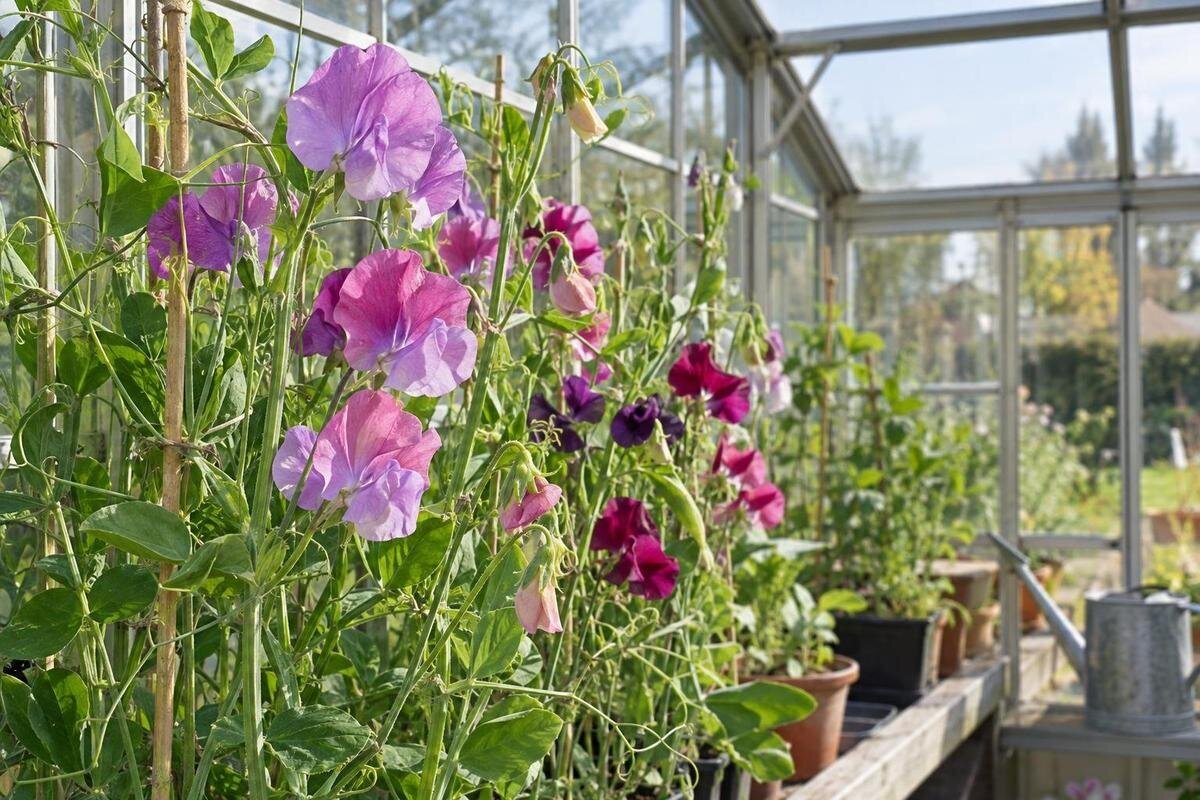
Sweet peas (Lathyrus odoratus) can flower earlier under glass when the greenhouse acts as a bright, cool shelter rather than a hot forcing house. Cover can help seedlings establish and protect stems from wind and prolonged rain, but it does not guarantee a particular flowering date or better flowers. For earlier flowers, match an early-flowering variety to its sowing window, give roots room, train the climbers before they tangle, and manage ventilation from germination through regular cutting.

What a greenhouse changes for sweet peas
Sweet peas (Lathyrus odoratus) are cool-season climbers. A greenhouse makes the early stages easier to manage: trays are sheltered from wind and prolonged rain, young roots can establish before planting, and stems can be cut in a protected space. For earlier flowers, the aim is to extend the cool part of the growing season, not to imitate summer warmth. If plants are pushed into heat, they may grow quickly but produce shorter stems or drop unopened buds. Choose timing and routine around the quality of the flowers, rather than the earliest possible sowing date.
Glass can heat rapidly in sunshine even when the air outside feels cool, then lose warmth overnight. Keep a min/max thermometer close to the crop and note how the greenhouse behaves on clear days; a midday glance may miss a hot spell at leaf level. For footprint comparison, the Pyramid Greenhouse range is listed from 5.53 m² to 18.9 m². Check the plan for a bed or containers, trellis, door clearance and a picking route. Floor area includes the space needed to reach and care for plants, not just the planted strip.
Choose an early-flowering variety and sowing window
Look for a variety described by its supplier as early-flowering or suitable for the season you intend. Sweet peas vary in flowering time, scent, colour, stem length and mature height; sowing early does not turn every cultivar into an early-flowering type. Use the packet or catalogue description to check the flowering period and whether the variety is intended for cutting. Decide which qualities matter most for your flowers: long stems for taller arrangements, scent for small indoor posies, or a particular colour combination. Compare those priorities alongside flowering time rather than choosing by colour alone. Keep the descriptions with your sowing notes so you can later compare the crop with what you expected. If you want flowers over a longer period, choose varieties with overlapping stated windows or plan separate sowings, rather than expecting one batch to provide a continuous supply.
Work back from the time you hope to make the first useful cut, using the variety’s sowing guidance instead of a date copied from another climate. In mild conditions, autumn sowing can give roots and shoots time to establish before spring flowering; sites with cold nights may need protection or a different schedule. A few small sowings spaced through the recommended window can spread the crop and show whether your greenhouse stays cool enough. Label each batch with its variety and sowing date, then record germination and first flowering to improve next year’s timing.
Start seedlings in deep pots
Sow in deep root trainers or pots rather than a shallow seed tray: sweet peas develop long roots, and deep cells make it easier to transplant them with less disturbance. Follow the packet for sowing depth, use fresh, free-draining seed compost, and moisten it evenly before sowing. Keep the compost damp but not saturated while the seeds germinate; waterlogged compost can deprive young roots of air. Label trays immediately so varieties do not get mixed, and sow only as many plants as your support and picking space can accommodate. Work out that number from the intended planting positions before filling pots. If you are comparing varieties, keep each batch clearly separated and labelled through transplanting, rather than relying on a tray label that will be left behind. This makes it easier to identify which plants later provide the stem length and flowering time you wanted.
After emergence, move seedlings into the brightest cool position available. Poor light encourages lanky growth, while a closed greenhouse can become warm quickly in sunshine. Ventilate when conditions allow and avoid hiding trays behind taller plants. Before planting, water the pots and move each root ball intact, handling seedlings by a leaf rather than squeezing the stem. The Limited Edition aluminium greenhouse with built-in storage is listed in sizes from 5.52 m² to 28.08 m²; if comparing it for a seed-starting project, check the plan for trays, access and the eventual climbing row. The listing name alone does not say how much bench space remains.
Prepare the bed or containers
Choose a bright position: glazing cannot compensate if a wall, bench or neighbouring plants shade the row for much of the day. In a bed, remove weeds and loosen the root zone, then improve poor soil with mature compost. Sweet peas need moisture-retentive but free-draining ground; avoid planting where water sits after watering. For containers, use a deep, stable pot and suitable compost, and remember that pots can dry faster than a bed. Check drainage holes before planting, since a container standing in water can leave roots too wet.
Plan spacing from the variety’s instructions and allow for mature foliage, not just the size of the seedlings. A well-lit row is easier to train and pick than a crowded strip squeezed between benches. Leave a route to reach plants without stepping on the bed or brushing against stems. Sketch the planting row, support and access route together, including any benches that will remain once the vines are tall. Check whether you can reach both ends of the row and the plants furthest from the door. This helps you compare a narrow bed with containers without treating every unoccupied corner as another planting position. The Bloomcabin Prestige Greenhouse is listed from 3.77 m² to 28.08 m². Compare the chosen plan with your planting positions and paths, and check the product specification for clear internal space; the listed floor-area range alone does not establish bed capacity or usable height.

Install supports before the vines climb
Put supports in place before planting, while you can still reach the bed without breaking stems. Sweet peas climb by tendrils, so trellis, netting or vertical strings give them something to catch. Match the support to the variety’s stated mature height and the available growing space. Think about access at the top as well as at planting level: you will need to guide new growth and reach flowering stems as the vines lengthen. Keep ties and mesh accessible for training and cutting, and leave doors and vents free to open fully. Do not assume the greenhouse frame is a suitable anchor: use a freestanding support or a fixing method permitted by the greenhouse instructions, without loading glazing panels or bars.
Choose a training method before vines tangle. Netting allows several shoots to climb and suits a less formal, multi-stem crop. For more uniform cut stems, a cordon-style approach trains selected main stems vertically. Remove side growth only if that is part of the method you have chosen, as leaves supply energy for growth and flowering. Tie stems loosely and revisit them as they lengthen, keeping each plant’s growth accessible rather than allowing neighbouring vines to become entangled. Pinching young plants can encourage more shoots, but gives a bushier habit than keeping a single main stem. The Spacious Greenhouse is listed from 47 m² to 70 m²; that area figure does not state clear internal height, so check the selected plan against the variety and support.
Keep the greenhouse bright and cool
Light matters as much as shelter. Give plants an open, bright position and keep glazing reasonably clear so daylight reaches leaves along the row. A seedling bench that shades the crop, dense foliage or permanent shade cloth can slow development and make stems lean. Direct sun can also raise greenhouse temperatures much faster than the crop can use the extra warmth. Check the temperature near the plants during the warmest part of the day and overnight; a cool outdoor forecast does not show how hot the greenhouse itself becomes.
Use vents and doors to release heat as sunshine warms the space, adjusting openings to the weather and the plants. The aim is fresh air without exposing young plants to a damaging cold spell. If ventilation alone cannot control sharp heat peaks, temporary shading may help, but remove it when the heat passes so that useful light is not unnecessarily reduced. The Aluminium Classic Greenhouse range is listed from 3.77 m² to 28.08 m²; those areas do not describe ventilation performance. Check the selected configuration’s openings, positions and ease of operation before relying on it to keep a cool crop comfortable.
Water consistently and feed with care
Under glass, plants receive no rainfall, so check moisture at root level and water when the soil or compost is drying rather than following a fixed daily schedule. Beds may stay moist longer than pots, while containers can dry quickly in sunny weather. If you use both, assess them separately rather than watering everything because one pot feels dry. Water enough to wet the root zone, allow excess to drain and avoid leaving pots standing in water. Where practical, water in the morning and direct it to the soil; foliage that remains wet in a closed, humid greenhouse is more prone to problems. Check below the surface instead of judging moisture by the dry top layer alone. Pay attention to whether the same containers repeatedly dry out first, so your watering routine reflects the crop rather than a convenient timetable.
Improve poor soil with compost rather than applying heavy doses of fertiliser. Too much nitrogen can encourage soft leafy growth at the expense of flowers, and extra feed may be unnecessary in fertile soil. If plants need feeding, choose a product suitable for flowering plants and follow its label; adding more does not bring flowering forward. The Wall Greenhouse range is listed from 3.69 m² to 14.34 m². If comparing a compact layout, check that the plan leaves a clear route to water, tie in and cut stems without crushing plants.
Pick flowers regularly for a longer crop
Cut stems regularly to keep the plants producing flowers. For a vase, pick when the lower flowers are open and the upper buds are still developing. Use clean, sharp scissors and choose the longest usable stems; avoid removing most of a young plant’s leaves in one cut. Before cutting, trace the flower stem back through the foliage so you can see what you are removing, especially where several vines meet on the support. Keep the leaves and growing stems that will carry the next flowers intact. Pick during a cooler part of the day if possible, and put stems into clean water promptly. Remove foliage that would sit below the waterline. Frequent, careful cutting encourages further flowering, while allowing mature blooms to form seed pods can divert the plant from making more flowers.
Check the whole row for faded flowers and swelling pods, including growth hidden behind the support. A missed pod can reduce later flowering, so regular inspection is as important as cutting. Keep a simple tally of stem length, quantity and date; it shows whether the variety and training method are meeting your needs. The Limited Edition Aluminium Greenhouse range is listed from 3.77 m² to 28.08 m². When comparing layouts, include room to reach the crop and carry cut stems; a planted area without picking access can leave part of the harvest difficult to use.

Monitor plant health and stagger batches
Inspect new growth, leaf undersides and flower buds several times a week. Aphids can gather on soft tips, while poor airflow and persistently damp foliage encourage fungal problems such as powdery mildew. Early removal of a small affected shoot, sensible spacing and prompt clearing of fallen leaves are easier than trying to manage a dense, neglected row. Look along the whole support rather than checking only the shoots nearest the path. Note whether a problem is confined to one plant or appears across several, and revisit affected growth during later checks instead of assuming one intervention has resolved it. If you use a pest or disease control, follow its label and check that it is suitable for the crop and intended use.
A modest second sowing can extend picking, but only while the season remains cool enough for good stems. Do not crowd new plants among mature vines, where they may lose light and airflow; a separate container or short row may be easier to manage. Record when flowers begin and when quality declines, then remove plants that no longer give useful stems. The T-Model Orangery Greenhouse is listed from 16.52 m² to 30 m². If comparing growing-space plans for staged batches, check the actual layout and reserve clear routes rather than treating the full footprint as bed area.
Clear the crop and review the season
The under-glass crop is usually finished when heat leads to short stems, buds that fail to open or few worthwhile flowers, even if foliage remains green. Remove spent vines and fallen leaves rather than leaving a tangled mass against the support. If plants show serious disease, do not add affected material to a home compost system unless you know it will be managed safely. Wash reusable pots and supports, and clear old compost from seed trays so the next sowing starts in a clean space.
Before resetting a bed, check drainage and note whether the root zone stayed evenly moist or repeatedly dried out. If sweet peas grow in soil, move them to another bed in a later season when rotation is practical; for containers, avoid reusing depleted compost. Write down sowing dates, first flowers, ventilation routines, heat episodes and the quality of the harvest while details are fresh. Those notes help show whether the timing, cultivar or layout needs changing, and make the next early-flower crop easier to plan.
Frequently asked questions
Can sweet peas stay under glass all year?
They are cool-season plants, so a greenhouse does not make them a reliable year-round crop. As temperatures rise, stems can become shorter and buds may fail to open. Use glass to support an early, cool-season crop, then finish it when flower quality declines.
Do sweet peas need a heated greenhouse?
Usually, extra heat is not the route to earlier, better flowers. Choose a suitable sowing window and protect young plants from damaging cold as the seed supplier advises, while keeping them bright and cool. Monitor conditions rather than keeping the greenhouse closed to hold warmth.
When should I sow sweet peas for early flowers?
Check the sowing guidance for an early-flowering variety and adapt it to your site. In mild conditions, autumn sowing can give plants time to establish before spring flowering, but there is no single date that suits every cultivar or greenhouse.
How tall should the support be?
Use the variety’s stated mature height and check the greenhouse’s clear internal height before choosing a support. Fit it before planting, keep it clear of doors and vents, and use a freestanding support or a fixing method permitted by the greenhouse instructions.
How can I keep sweet peas producing flowers?
Cut usable stems regularly and remove faded flowers before seed pods develop. Keep the root zone evenly moist, train new growth as it lengthens and avoid overcrowding. If the season turns too warm for good stems, continuing to maintain the crop may not extend useful flowering.
An early sweet pea crop depends on matching the variety and sowing window to a bright, cool growing space. Give roots room, install supports before stems climb, and use ventilation and regular picking to protect flower quality as conditions change. A brief record of sowing dates, heat episodes and first cuts will help you refine the next crop more reliably than a fixed calendar.
