
Growing Beetroot in a Greenhouse for Early Harvests
Greenhouse growing guide
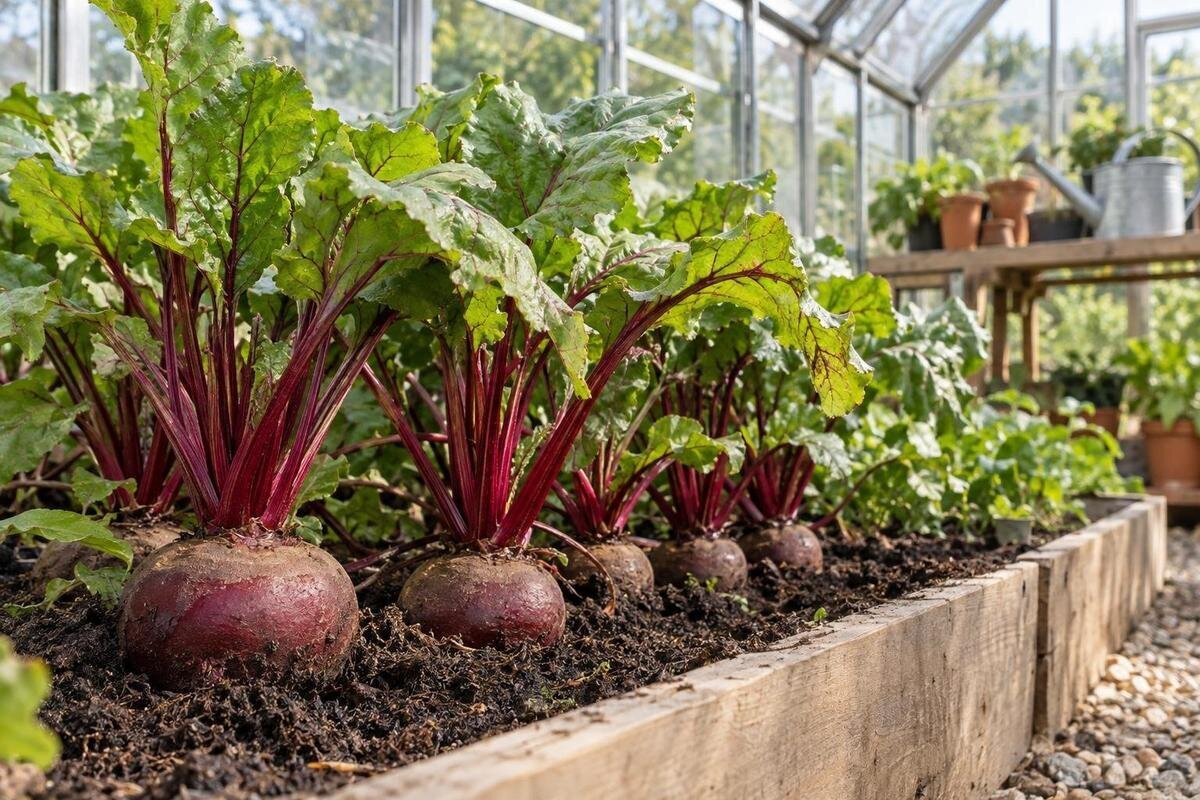
Baby beetroot can give a greenhouse bed a useful early crop, but in Malta it is not automatically earlier or better than outdoor sowing. Beetroot grows best while conditions are relatively cool; an unheated greenhouse may shelter seedlings and warm the soil, yet it can also heat quickly in sunshine. In many gardens the open bed can support a substantial cool-season crop, so protected space is most valuable for a small trial batch that can be harvested young and cleared before the greenhouse is needed for something else. This guide compares both options and covers timing, sowing, spacing, water and the footprint needed for a worthwhile harvest.

Does beetroot need a greenhouse in Malta?
Beetroot is a cool-season root crop, not one that needs a heated house. Malta’s mild winters can make outdoor sowing possible over a longer window than a calendar written for colder climates suggests, but current soil and weather still decide whether a particular bed is ready. Cover can help when an open plot is cold, wet, exposed or inconvenient to work, and soil under cover may become workable a little earlier. It does not guarantee a quicker crop: an unheated greenhouse has no set night temperature, while sunshine can raise daytime heat quickly. Beetroot still needs light and steady growth; sowing into cold, saturated soil does not save time.
Set a modest goal: a first handful of small roots, not a storage crop. If an outdoor bed is already sunny, loose and workable, it may produce baby beetroot at much the same time without taking the best greenhouse bed. Compare those early roots with the other crops that need cover later, and ask whether you can clear the beetroot before the next planting is due. The Spacious Greenhouse (Orangerie) range has listed areas from 47 to 70 m²; that scale is difficult to justify for one baby-root batch alone, so assess it against a wider crop plan.
When to sow for an early crop
Choose a sowing window by conditions rather than copying dates from a seed guide written for a colder climate. In Malta, the cooler part of the year generally offers the better chance of steady growth; autumn or winter sowing, and an early-spring sowing, can each work when the bed is workable. Do not sow into waterlogged soil just to be early, and avoid a batch likely to spend its root-forming period in sustained heat. Short winter days can slow growth even inside a greenhouse. The aim is to get seedlings established while there is still a useful stretch of suitable growing weather ahead.
Try a small row under cover before sowing the whole bed. Note the sowing date, when seedlings appear and when roots become worth lifting; these observations are more useful for your own site than a borrowed calendar. Record the position of the row too, so that a later sowing in a different part of the greenhouse is not treated as an identical comparison. If you are considering a wall greenhouse, the Wall Greenhouse range lists footprints from 3.69 to 14.34 m². Check the chosen plan against the actual area that receives useful light: a listed floor area does not establish how sunny a particular position will be. Mark the proposed beetroot bed on that plan and note when you intend to sow it. This connects the purchase decision to a particular growing space and season, rather than an assumption that any covered corner will provide an early harvest.
Light, heat and ventilation under cover
The leaves supply the energy for root growth, so a bright position matters even when you intend to harvest small beetroot. A greenhouse does not remove the effect of short winter days, and nearby buildings, walls or trees may shade the bed. Watch where the sun reaches the growing area at different times of day rather than judging it from the doorway. If seedlings are healthy but roots remain small, slow growth may reflect limited light or a short growing period, not a need for more fertiliser.
A closed structure can warm rapidly on a sunny day, even when the air outside feels cool. Ventilate as needed to avoid trapping excessive heat, and check conditions near the crop rather than relying on how the greenhouse feels at the entrance. An unheated greenhouse also cannot promise a particular night temperature. The Limited Edition Aluminium Greenhouses range has listed areas from 3.77 to 28.08 m²; when comparing any variant, check its layout and ventilation details as well as its area, since floor area alone says nothing about the growing conditions inside.
Preparing soil for root development
Beetroot grows best in soil that is open enough for roots to expand, drains well and still holds moisture. Break up clods, remove stones and avoid compacting the bed; obstructions and hard soil can lead to misshapen roots. Prepare the soil to the depth required by the variety, using the seed packet as a guide. If the bed needs organic matter, incorporate mature compost before sowing. Avoid adding fresh manure just before planting: very rich conditions can favour leafy growth, while uneven or lumpy soil makes it harder for roots to develop cleanly.
Direct sow into the prepared bed where possible, since moving young root crops can disturb them. Containers can work if they are deep enough for the chosen variety and have drainage; a shallow tray is not a suitable substitute for a root bed. Leave access so you can weed and harvest without walking on the growing soil. Decide whether your trial will use a permanent bed or containers before comparing greenhouse layouts, as these need different arrangements within the available space. The Prestige Greenhouse range lists areas from 3.77 to 28.08 m². On the selected plan, mark where you would stand to sow, thin and lift the crop. Check that you can reach the intended rows without stepping between the plants. This gives a more useful estimate of planting space than the total floor area and helps avoid preparing a bed that is awkward to maintain.

Direct sowing and spacing baby beetroot
Sow beetroot directly into a fine, level seedbed, following the packet for depth and variety-specific details. Many beetroot seeds are clusters that can produce several seedlings, so one seed cluster does not always mean one plant. Water the row gently after sowing so the seed is not washed out, and label it with the variety and date. Even spacing makes thinning and later harvesting easier, and helps you avoid a dense patch of leaves competing for light and moisture.
Once seedlings are established, thin them to the size of root you want. As a practical starting point, leave about 5–7 cm between plants for baby roots and around 8–10 cm for larger roots; rows about 20–30 cm apart leave room to reach the crop. Snip surplus seedlings at soil level rather than tugging them out beside plants you are keeping. Choose the intended harvest size before estimating how many plants to grow: a row planned for baby roots is not the same allocation of space as one left for larger beetroot. The Pyramid Greenhouse options list areas from 5.53 to 18.9 m². Use the chosen variant’s plan to mark a growing strip, then estimate the rows and plants within that strip using your selected spacing. Keep this estimate separate from the number of seed clusters sown, because clusters may produce extra seedlings that will need thinning.
Keeping the bed evenly moist
Keep the seed zone moist while beetroot is germinating. The surface can dry faster under cover, and rain may not reach a bed beneath a roof, so do not assume that wet weather outside has watered it. Use a gentle flow to avoid moving seed or washing soil away. After seedlings appear, aim for even moisture as roots develop. Check the soil itself, including just below the surface, rather than watering automatically on a fixed timetable.
Long dry spells followed by heavy watering can contribute to cracked or tough roots, while persistently waterlogged soil lacks the air roots need. The balance depends on the soil, the weather and how warm the greenhouse becomes, so there is no single useful amount or schedule for every bed. Water more carefully when the structure is sunny and warm, and check again after a change in conditions. If a bed dries unevenly, improve the soil’s structure before sowing the next batch rather than trying to correct every problem with more frequent watering.
Harvesting roots while they are small
Harvest baby beetroot by size, not by assuming that every root will be ready on the same date. When shoulders begin to show, gently brush away a little soil or lift one plant to check its diameter. Many gardeners prefer baby roots at roughly 3–5 cm across, but the variety and the size you enjoy should guide the decision. Larger roots need more time, and leaving a small crop too long as warmer weather arrives can reduce the advantage of an early harvest.
Lift the largest roots first and leave smaller neighbours to continue growing if the bed is still in a suitable cool spell. Loosen soil carefully beside a root rather than pulling hard through a crowded row, and clear the remaining plants when the next crop needs the bed. Since a baby-root row may be harvested in a short period, plan the greenhouse around what follows it. The Aluminium Classic Greenhouse range lists areas from 3.77 to 28.08 m²; compare the chosen footprint with beds, paths and the timing of later crops, not with beetroot alone.
Succession sowing and greenhouse crop turnover
A few smaller sowings can provide a steadier supply than one large row that all needs harvesting at once. If conditions remain cool enough, sow another short row about two or three weeks after the first; stop when heat is approaching or the available light and growing time no longer support another useful harvest. Begin checking roots from around eight weeks after sowing in favourable conditions, but allow longer when winter light is low or growth has been slow. Treat that timing as a prompt to inspect, not a guaranteed harvest date.
Decide what should follow the beetroot before you sow it. A quick baby crop is useful when it clears a bed in time for another planting, but less useful if it occupies prime greenhouse space beyond the point when outdoor beetroot could have been harvested. Put both the intended harvest period and the next planting date in your crop calendar. If those periods overlap, reduce the beetroot batch or choose another space rather than assuming every root will be ready together. The Limited Edition greenhouse with built-in storage range lists areas from 5.52 to 28.08 m². Use the selected plan to distinguish storage, access and growing space when assessing how the layout fits your crop calendar. For successive sowings, record which part of the bed each batch will occupy and when it must be cleared. This makes the available space easier to assess than a single total plant count.

Is protected space worth using for beetroot?
Compare the result with an outdoor sowing before deciding that beetroot belongs under cover. Sow a small, similar batch inside and outside at the same time, using prepared soil and spacing that are as alike as practical. Record when each row emerges, when the first roots reach a useful size, how often each bed needs watering and whether either crop suffers from heat or poor growth. This simple comparison will show whether the greenhouse offers a meaningful timing or reliability advantage on your site, rather than merely feeling like the natural place to grow every early crop.
Protected space is worthwhile when it gives you roots earlier, helps you manage a difficult outdoor position or leaves enough time for the next planned crop. Decide which of these benefits matters most before judging the trial. A few earlier roots may meet your aim even if the outdoor row later catches up; if both rows are ready together, the protected batch has not delivered an earlier harvest. Compare the watering and attention each required as well as the harvest date. The T-Model Orangery Greenhouse range lists areas from 16.52 to 30 m²; map paths, beds and the full crop sequence within the chosen footprint before allocating space to beetroot. Assess that purchase against the whole growing plan rather than the success of one small row. If outdoor beetroot performs just as well, reserve covered beds for crops that benefit more from them.
Reading the signs of a slow or poor crop
Uneven or poor emergence is a reason to check conditions before resowing the whole bed. Look for dry soil around the seed, a crusted surface, seed placed too deeply or soil that stayed cold and wet. Several shoots emerging from one spot are normal for many beetroot seed clusters; thin them after they establish rather than treating each cluster as a single plant. If a patch is missing, check whether the soil and sowing depth differ from the parts that came up before deciding how much to replant.
Healthy leaves with very small roots can indicate that plants are crowded, have had too little time or light, or are growing in overly rich soil. Forked roots often point to stones or compaction, while cracking can follow uneven moisture; these are clues to investigate, not proof of one cause. Review spacing, bed preparation and watering together, then adjust the next small sowing. Removing the crop at baby size also limits the time roots spend exposed to heat and reduces the chance of waiting for a full-size harvest that the bed and season cannot deliver.
Frequently asked questions
Can I grow beetroot in an unheated greenhouse in Malta?
Yes, if the bed is bright, workable and kept evenly moist. An unheated greenhouse does not guarantee warm nights, and it can heat up quickly in sunshine. Compare a small protected sowing with an outdoor one before giving beetroot a large share of the covered space.
When should I sow beetroot for an early harvest?
Aim for the cooler part of the growing year, when soil is workable rather than waterlogged. In Malta, autumn or winter sowing and an early-spring sowing may suit, depending on local weather. Avoid relying on a fixed date or sowing when sustained heat is approaching.
Should I transplant beetroot seedlings?
Direct sowing is usually simpler because beetroot roots can be disturbed during transplanting. Many beetroot seed clusters produce several seedlings; thin them in place by snipping out the extras rather than pulling them up beside the one you are keeping.
How far apart should I plant beetroot for baby roots?
As a starting point, leave about 5–7 cm between plants for small roots and around 8–10 cm for larger ones. Rows about 20–30 cm apart allow room to work. Check the seed packet and adjust for the variety and the size you want to harvest.
How soon can I harvest baby beetroot?
Begin checking roots from around eight weeks after sowing in favourable conditions, but treat that as a prompt to inspect rather than a deadline. Cool, low-light conditions can slow growth. Lift a sample when the root reaches the size you want, then decide whether to harvest the rest.
For many gardens in Malta, the sensible approach is a small, well-lit greenhouse sowing during a cool spell, followed by an outdoor comparison rather than a whole-bed commitment. Keep the soil open and evenly moist, watch for heat, and harvest when the roots are still small. If cover does not bring the crop forward or make it more reliable, beetroot can use an outdoor bed while the greenhouse is reserved for crops that benefit more from the protected space.
