
Calculate Electric Sauna Costs from Metered Use
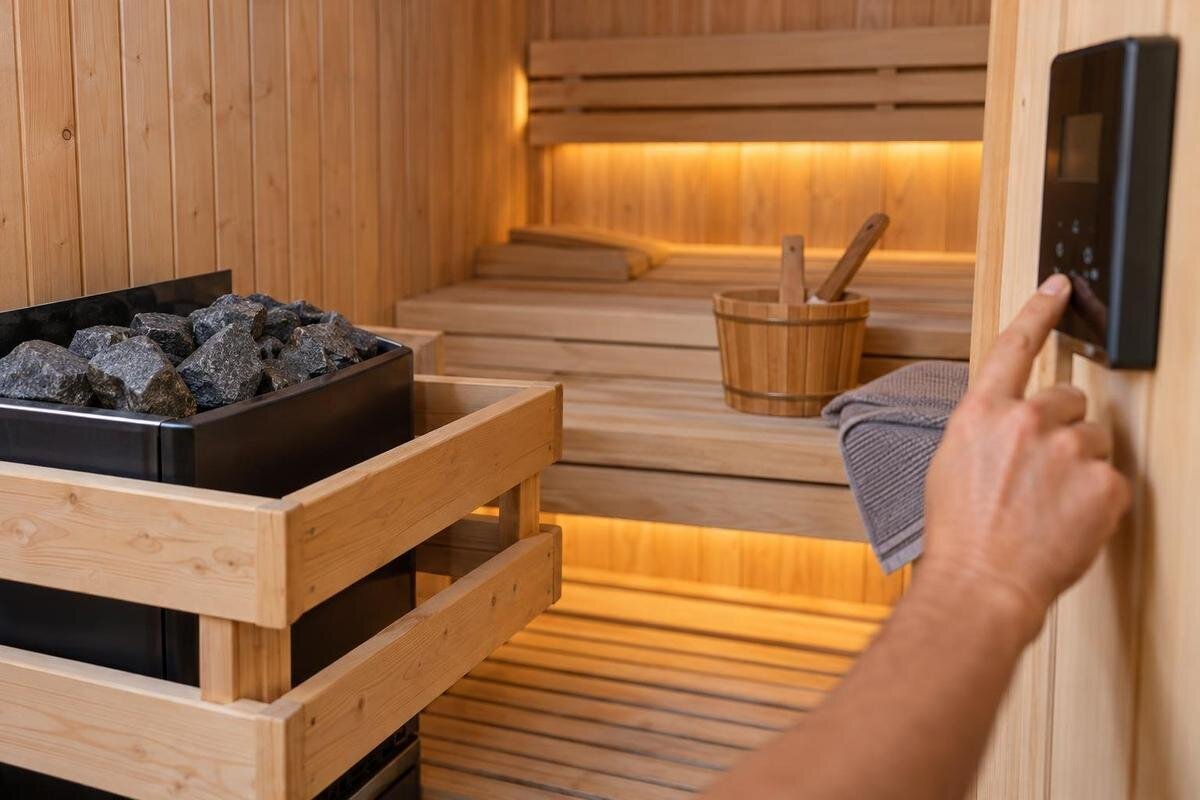
SAUNA RUNNING COSTS
An electric sauna’s session cost depends on the energy it actually uses, not just the heater’s rated power. A more dependable figure comes from recording a meter reading before warm-up and another when the heater is switched off, then multiplying the kWh difference by the applicable per-kWh charge on your electricity tariff. That boundary matters: if you count only the time spent inside, you miss the energy used to bring the sauna up to temperature; if you assume full rated power throughout, you may overstate consumption. The guide below shows how to meter one complete run, use the correct bill rate and turn repeated readings into a practical estimate.
The basic calculation uses kWh, not hours alone
Use this formula: session electricity cost = metered energy used in kWh × applicable electricity price per kWh. If the meter shows a cumulative kWh reading, subtract the start reading from the end reading; if it displays energy for a chosen interval, use that interval figure. Some meters display watt-hours rather than kilowatt-hours, so convert watt-hours to kWh by dividing by 1,000 before applying a per-kWh price. Keep units consistent: a reading of 6.8 kWh is multiplied by a price in euros per kWh, not by a cents figure without conversion. Record the date, start and finish times, tariff and result so you can reproduce the calculation later. The answer covers only that measured interval, not the whole household bill or a lifetime total.
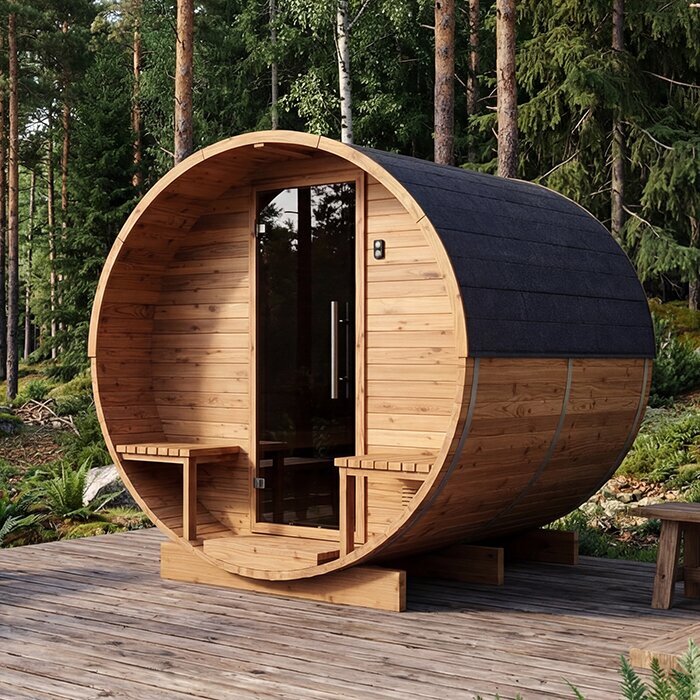
The heater’s rated power is expressed in kilowatts (kW), while the session reading is energy in kilowatt-hours (kWh). Multiplying rated kW by every hour between switch-on and switch-off assumes full rated draw throughout. A temperature control can switch the heating elements on and off, particularly after warm-up, so elapsed time does not reveal the actual energy used. When budgeting for the Thermowood Barrel Sauna LC-260, distinguish the selected heater’s power rating from the energy allowance you use in your calculation. Other electrical loads may also fall inside or outside the meter’s coverage. Label any rating-based result as a planning assumption, not a measured cost, and do not present its decimal places as evidence of precision.
Set the measurement window around a complete session
Choose a clear start and finish before taking readings. Start immediately before the heater is switched on for the session, so the complete preheat is counted, and take the ending reading when the session’s heating is finished and the heater is switched off. If a timer or remote control starts heating before anyone arrives, use the actual start time rather than the arrival time. Beginning measurement only when the sauna is ready leaves the warm-up energy out of the total. The measurement window should cover the full heating period associated with the visit, not simply the minutes a person spends bathing. Use the same start and finish criteria for each comparison.
Decide how to count a visit that includes several bathing rounds. If the sauna stays heated between rounds, cost the complete shared period once; do not assign the same meter difference as a fresh full session to every round. If the heater is switched off and later warms the sauna again, record separate runs or clearly label the combined total. When planning how you would use Sauna HCF-300, describe the whole visit rather than just the time each person expects to spend inside. That gives your budget a consistent definition of a session and prevents double-counting when several people share one heated period.
Record warm-up, bathing and pauses
Warm-up and bathing contribute to the same session total, but keeping track of the stages helps you interpret the reading. During warm-up, the sauna reaches the selected setting; afterwards, energy may still be used to maintain it as the heater responds to its controls and the room’s conditions. Note when bathing begins and whether there are long pauses before switch-off. If your monitoring system provides separate readings for these periods, retain them alongside the complete total rather than substituting one stage for the whole run. Consumption during a pause with the heater left on still belongs to that session, even when nobody is inside.
Record circumstances that might explain a different result, such as whether the cabin began cold or warm, outdoor conditions, ventilation and door openings. These notes help explain variation; they are not correction factors, because there is no universal adjustment to apply to a meter reading. In a session log for the LCF-300 Thermowood Barrel Sauna, keep these observations beside the date, timings and kWh figure. Label an already-warm start clearly rather than treating it as equivalent to heating a cold cabin. A short note made at the time is more useful than trying to reconstruct the conditions when reviewing several readings later.
Choose a meter that measures the sauna load
The strongest reading is one that isolates the sauna’s electrical use for the same start and finish times. A suitable dedicated meter or an existing monitoring system may do this, but check what the device actually measures, whether it reports kWh and how frequently it records. A whole-home meter shows the change in household consumption, not necessarily the sauna’s share: a kettle, water heater or another appliance running in the same interval can be counted too. Unless those loads are separately measured or negligible, the difference is not a dependable sauna reading. A smart-meter app is useful only if its interval data lets you isolate the relevant period and the units are clear.
If the heater is fixed-wired, do not try to fit an ordinary plug-in meter to it or open a circuit to obtain a reading. Ask a qualified electrician to identify a suitable metering method for the installation. State what the meter includes: the heater only, or also any controls, lights or ventilation on the same measured supply. If those auxiliary loads are outside its coverage, describe your result as heater energy rather than total sauna-session electricity. For a planned Sauna S-140 installation, include this distinction in the metering discussion. It will determine how you label the result and whether it can be compared directly with another reading.
Apply the rate that matches the metered time
Use the per-kWh variable price that applies to the time of the session, as shown by your electricity tariff or bill. If the bill quotes a unit rate in cents, convert it to euros before multiplying; 30 cents per kWh is €0.30 per kWh. Check whether the displayed figure already includes the variable components and taxes you intend to count, and apply the same basis throughout. Do not divide the entire bill by an assumed number of kWh when a direct unit rate is available: a bill can contain fixed charges, adjustments or other usage that do not belong to one sauna run. No tariff rate is assumed in this guide.
Where prices change by time band, total session kWh alone cannot show how much energy was used in each band. Use interval readings, if available, and calculate each part separately: kWh in that period multiplied by its applicable unit rate, then add the charges. If the sauna starts under one rate and continues under another, include the split rather than applying whichever price is easiest to find. When only a single total reading is available, an average rate can give a planning estimate, but mark it as approximate and state how you chose the rate. This is useful when comparing sessions held at different times.
Worked example using illustrative figures
Suppose the meter reads 124.60 kWh immediately before preheating and 132.10 kWh after the heater is switched off. The measured session used 132.10 − 124.60 = 7.50 kWh. If, purely for illustration, the applicable variable tariff were €0.30 per kWh, the cost would be 7.50 × €0.30 = €2.25. These are example figures to show the arithmetic, not a current local tariff, a usual consumption level or a forecast for any model. Substitute the readings from your own meter and the unit price from your own tariff. Keep the meter’s full available precision until the multiplication, then round the displayed money figure to cents.
Keep a brief record beside the answer: meter start and end readings, start and finish times, tariff rate, whether the price changed and what kind of run it was. A note such as cold start or already warm can explain why later readings differ. This information also helps catch a missing preheat or a price taken from the wrong time band. If you are preparing a budget for the Thermowood Barrel Sauna HC-150, use the example as a calculation template, not as its consumption forecast. Keep any assumed energy figure clearly separate from readings obtained from the installed setup.
Compare sessions on the same basis
One reading describes one run, not necessarily every future use. Record several representative sessions and compare like with like: the same measurement window, similar starting conditions, control settings, included loads and tariff basis. If you use both cold-start and warm-start sessions, keep them in separate groups rather than blending unlike runs into one average. For a group with a consistent tariff, add the session kWh readings and divide by the number of sessions to find average kWh, then multiply by that rate. Where rates vary, calculate each run’s actual charge first and average the costs. Keep unusual readings in the notes rather than deleting them without explanation.
Do not assume that two electric saunas use the same energy because they share a broad product type, or infer session cost from floor area alone. The selected heater, configuration, controls, starting conditions and time switched on all affect the measurement. When comparing Sauna HC-225 with another option, check whether the figures describe comparable runs rather than simply choosing the lower number. A shorter visit or an already-warm start does not provide the same basis as a complete cold-start session. Identify the source of each figure and keep estimates separate from measurements, so differences in the inputs are not mistaken for differences between products.
Turn measured sessions into a monthly estimate
To estimate a week or month, group runs by type and use the expected number of each, rather than multiplying one average by a generic usage schedule. For instance, calculate cold-start and warm-start costs separately if both feature in your routine, then multiply each average cost by its planned count and add the totals. Make the count an explicit assumption; a change in weekly use can matter over a longer billing period. If your schedule is irregular, use a range of low, typical and high use based on your own pattern, and present the result as a scenario rather than a promise.
Refresh the monthly estimate when the tariff, heater, configuration or routine changes. For a budget covering Sauna N-210, keep the expected session count alongside the average cost used, so you can see whether a change comes from price, consumption or frequency. If you also want a cost per person, divide the electricity charge for one shared heating period by the number of people who used it. This allocates the charge; it does not reduce the energy consumed. If the group uses more than one heating period, include each period before dividing the total. State the tariff period that applies to the projected runs.
Confirm the configuration before buying
Before purchase, separate what is known from what still needs confirmation. The model name identifies a cabin, but a session estimate also needs the selected heater and controls, any other electrical loads to be included and the intended pattern of use. For Sauna N-250, ask what is included in the current local configuration rather than assuming the heater from the cabin name or a similar listing. Write those details beside the tariff and energy assumptions in your comparison. This makes it clear which setup each estimate describes and avoids carrying a figure across to a different configuration without reconsidering its basis.
If the sauna is not installed and cannot yet be metered, prepare a labelled planning estimate from documented inputs, not a measured result. State the assumed energy per run, where that assumption comes from, the tariff used and the measurement period it is meant to represent. Replace the assumption with readings once the chosen setup is in use. This keeps comparisons fair: one candidate may have a trial measurement while another has only an assumption based on rated power or an estimate, and those are not evidence of equal quality. Avoid ranking options by a tiny numerical difference when the underlying inputs are uncertain.
Keep the per-session figure within its limits
A per-session electricity figure answers one narrow question: what the measured run costs at the chosen variable tariff. It does not include the cabin’s purchase, delivery or installation, and it does not automatically include maintenance, repairs, cleaning products, water or any other household expense. Keep those items separate in a wider budget and use relevant quotes or records for them; they cannot be converted into sauna kWh. This distinction matters because a precise meter reading can still be only one part of ownership costs. Label the figure as electricity per measured session rather than simply the total cost of using or owning a sauna.
Fixed daily or monthly electricity charges generally remain on the bill whether or not the sauna is used, so they are not the extra charge caused by one more session. If you want to allocate part of the entire household bill to sauna use, state that separate accounting choice—for example, the share assigned and the number of sessions over which it is spread. Do not present such an allocation as metered marginal cost. The most useful session figure is a clearly bounded kWh reading, priced at the matching variable tariff, with the conditions and any exclusions recorded. That is straightforward to update when your routine or price changes.
Frequently asked questions
Can I multiply the heater’s rated power by the session length?
That gives a calculation based on the assumption that the heater draws its full rated power continuously. A controlled heater may cycle after warm-up, so the result is not a measurement of actual use. Use it only as a clearly labelled planning assumption; a meter reading gives a more reliable session figure.
Should the cost include warm-up?
Yes, if you want the electricity cost of a complete session. Start measuring before the heater begins warming the sauna and finish when the heating for that session ends. Timing only the period spent bathing leaves out the preheat.
Can I use the reading from my household meter?
Only if you can isolate the sauna’s use during the measurement window. A whole-home reading also includes other appliances running at the same time. Use suitable interval data or a meter that measures the sauna load; ask a qualified electrician about metering fixed-wired equipment.
Which electricity rate should I apply?
Use the variable per-kWh rate that applies during the measured session. If your tariff changes by time band, calculate the charge for each band separately when you have interval readings. Keep fixed charges separate from the cost of one additional session.
How can I estimate the cost for a month?
Group measured sessions by type, calculate an average cost for each group and multiply by the number of times you expect to use each one. State the session counts and tariff assumptions. Update the estimate if your routine, setup or rate changes.
A useful per-session figure has a clear boundary: measured kWh from preheat to switch-off, priced at the matching variable rate. Compare similar starting conditions, calculate each tariff band separately where necessary, and label assumptions when direct measurement is not yet possible. With those notes, you can update the budget from actual use rather than treating a heater-rating calculation as a fixed session cost.
