
Greenhouse Power Cuts: A Frost-Protection Backup Plan
Greenhouse heating and winter energy
A power cut in a heated greenhouse is not just a question of whether the heater switches off. The temperature at plant level can differ from the thermostat reading, and the time available to act depends on the structure, weather and plants inside. A useful plan combines an alert you can trust, a crop-specific order of priorities, low-risk ways to slow heat loss, and equipment approved for its intended setting. Make decisions before a cold night and test the warning and response in advance; do not build the plan around a promised temperature or an assumed restoration time.

Why a power cut can become a frost risk
Once the heater stops, the greenhouse continues exchanging heat with its surroundings. The temperature fall depends on outside conditions, exposed glazing, gaps around doors or vents, the greenhouse’s volume and any warmth stored in soil or water. These factors interact, so floor area alone cannot predict how long a particular greenhouse will stay above a plant’s limit. The thermostat may also sit in a warmer spot than a pot on a cold bench or near an exposed edge. Records of minimum and maximum temperatures across different weather conditions give a more useful baseline than a single reading; the heater’s set point is not a guarantee.
Record the greenhouse’s exact dimensions, the heater model and its documented output, thermostat position, glazing, and any manufacturer-stated insulation or ventilation options. Note which heater, controller and power supply serve each area. That information helps a qualified installer or heater supplier assess the actual arrangement instead of guessing from floor area. The Classic aluminium greenhouse range gives a starting point for comparing listed footprints, but a model name or area does not establish heat loss or heater compatibility. Check the precise configuration and keep a sketch showing benches, doors, vents, heaters and likely cold corners.
Place temperature sensors where plants are
Place a minimum-and-maximum thermometer or data logger at the height of the most vulnerable plants. Keep its sensor out of direct sunlight and away from contact with glass, metal or a heater, and follow the maker’s placement instructions. A thermostat reading can miss a cold corner, a draught near a door or lower pots. Before setting an alarm, compare readings in the main growing area and any suspected cold spot; in a long or divided greenhouse, one sensor may not represent every zone. Compare the device with a second thermometer so a faulty reading does not create false reassurance.
Use a low-temperature alert that can reach you when you are away, but do not rely on a phone app as the only warning. A mains-powered hub, router or internet connection can fail along with the heater. Consider a separate battery-powered local alarm and check whether the remote service reports a lost connection as well as falling temperature. The Spacious Greenhouse range lists different greenhouse footprints; in any larger or divided layout, decide whether one sensor covers the growing area or whether another location needs monitoring. Test the alarm, backup batteries, contact details and notification route before the cold season, using the maker’s test procedure rather than deliberately chilling vulnerable plants.
Set alert thresholds around plant needs
Base thresholds on crop-specific guidance rather than a generic greenhouse number. Make an inventory and check reliable growing information for the lowest temperature recommended for each plant, considering its stage, recent propagation and whether it is in a pot. A broad hardiness description may not tell you what a tender plant needs during an overnight cold spell. A published survival minimum may also be lower than the temperature you want to protect against. Record the limit for the most vulnerable group separately, and identify plants that are valuable or difficult to replace. This links an alarm setting to the actual collection.
Set the first alert early enough to leave time to act before the relevant plant limit is reached. Allow for how quickly your greenhouse cools, how long it takes you to get there, the time needed to move pots or start approved equipment, and uncertainty in the sensor. A second, more urgent alert can go to another person if the first is missed. Do not use the heater’s thermostat setting as the alarm point or treat an alert as automatic protection. Review logged readings after cold spells and adjust thresholds if they leave too little time or trigger repeatedly without prompting a useful response.
Rank plants and decide what can be moved
Rank plants by the action they need: those that must be moved or protected first, those that can remain if their recommended temperature limits are respected, and those that need no emergency move. Include seedlings, new cuttings, newly potted plants and container-grown specimens, since small or exposed pots can cool differently from established plants in beds. The ranking can also reflect value: a rare plant or a full tray of young plants may deserve attention before a robust crop. Label pots clearly so a helper can identify priorities without looking up every name in the middle of a power cut.
Choose destinations in advance, such as an indoor room or another location you have actually checked, rather than assuming any shed or garage is frost-free. Group portable pots for quick carrying, keep the route clear and avoid a plan that requires lifting beyond a helper’s ability. If not everything can move, decide which plants can be grouped and protected together, including any that are too heavy to carry. A cover or inner enclosure may slow air movement but is not a heat source or a guarantee. If you are considering a model from the Wall Greenhouse range, its attached format alone does not prove plants will stay warmer; assess the layout and monitor the coldest plant zone.

Slow heat loss without blocking ventilation
During a warning, close doors and intended vents where it is safe to do so, but do not permanently block ventilation or seal the greenhouse so tightly that moisture is trapped. A greenhouse-rated thermal screen or removable inner partition may help limit the area being protected, provided it is designed for that use. Decide how it will fit around the priority plants before an outage, rather than rearranging the growing area in the dark. Keep the route to the door clear and make sure the alarm sensor remains inside the protected plant zone.
Treat insulation as extra time to respond, not as a source of heat or proof that frost cannot reach plants. Keep fleece, blankets and other covers clear of heaters, lamps, sockets and controls; never drape a cover over a heater or obstruct a vent needed for safe operation. Check the maker’s instructions for what happens to automatic vents if power fails rather than assuming they will close. When comparing models in the Limited Edition aluminium greenhouse range, ask about the exact glazing, seals, ventilation and documented thermal details rather than assuming an insulation level from the range name. Try temporary screens on a mild evening and check that doors and alarms still work.
Choose backup heating approved for a greenhouse
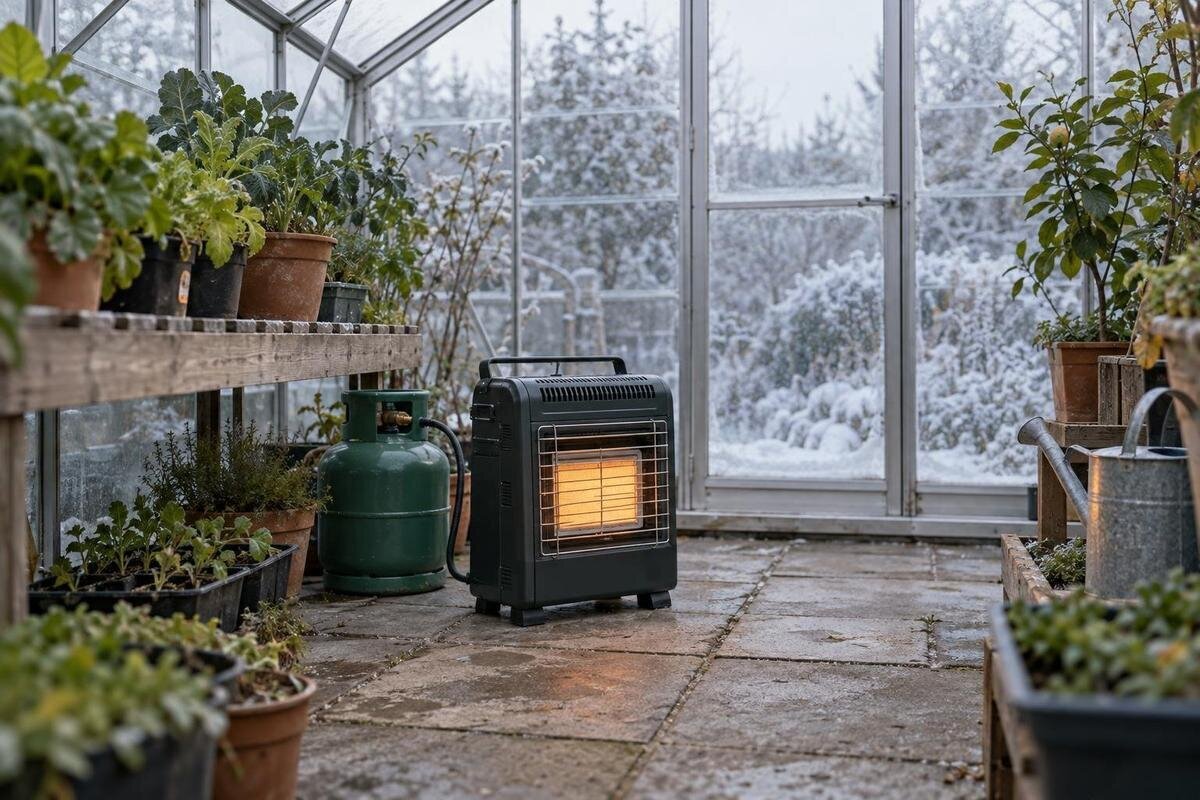
Choose backup heating that the manufacturer expressly permits for greenhouse use and for the conditions in which it will operate. Read the instructions for stated output, control requirements, operating environment and clearances, and confirm whether its thermostat and sensor will function if the usual power or controller fails. Portable does not automatically mean suitable for a damp greenhouse. Fuel-burning appliances need particular caution because they introduce fire and exhaust-gas risks, including carbon monoxide. Do not use a camping heater or run an engine generator inside an enclosed greenhouse or another enclosed space.
Ask what happens when the electricity returns: will the heater restart automatically, retain its settings and respond to an independent thermostat? Check documented output under stated conditions and ask whether it is suitable for the greenhouse’s assessed heat loss; a maximum rating is not a promise of temperature. Confirm how it is started, who can operate it safely, and what inspection it needs. If it requires someone to light or supervise it, include that delay in the plan rather than assuming it will protect an unattended greenhouse. For a T-Model Orangery Greenhouse, obtain specifications for the exact size and configuration before selecting heating equipment.
Check the power supply for the whole system
A backup heater helps only if its energy source, controller and any required fan or pump remain available. A battery unit or uninterruptible power supply (UPS) may be useful for sensors, a router or control electronics, but do not assume it can run a heating element. Check continuous output, start-up demand, compatibility and documented runtime for the actual connected load; runtime varies with equipment and operating conditions. When planning backup power for a model in the Pyramid Greenhouse range, give the electrician the specifications for the exact greenhouse, heater and controls so the assessment covers the complete system.
Ask a qualified electrician to review any mains-backed battery, generator or changeover arrangement, including the circuit serving the heater and the ratings of its controls. Do not improvise a mains connection or attempt to feed a generator into fixed wiring. A generator must be operated and sited as its manufacturer directs, with exhaust kept away from occupied areas and openings; never run it indoors. Be clear about the purpose: keeping alarms alive, protecting one small group of plants, or heating the whole greenhouse are different loads. Check the documented runtime and plan what to do before it expires.
Write down who does what during an outage
Keep a response card where the person on call can read it. Include the alert level, the most vulnerable plant group, where those pots go, the approved equipment and its manufacturer’s start procedure, contact numbers, and any instruction to wait for a qualified operator. Name one person responsible and a backup: an alert sent to someone who cannot respond is not a plan. The written sequence should begin with checking personal safety and confirming the temperature with an independent thermometer. If a neighbour or caretaker may help, walk the route in daylight and show them where the sensor, controls, plant labels and covers are kept.
Store spare batteries, labels and protective covers in a known, dry place that is easy to reach without crossing equipment hazards. If you are considering Limited Edition greenhouses with storage, check the compartment’s stated purpose before including it in your emergency plan. Built-in storage should not be assumed suitable for a heater, fuel, battery or electrical equipment. Follow the storage instructions for each item; keep fuel and flammable materials away from heat sources and store them only as directed. Before a cold spell, check battery status, confirm who is nearby and keep the access route clear.

Inspect the greenhouse and review its specifications
Inspect the greenhouse before the season for cracked or displaced glazing, loose seals, misaligned doors, damaged vent hardware and signs of water near electrical equipment. Arrange repairs using the manufacturer’s parts or a suitably qualified person; do not improvise a structural fix or assume a vent will stay shut in strong wind. Check that controls can be reached, the thermometer can be read and a temporary cover will not obstruct the exit. If the house has more than one temperature zone, mark them on the layout instead of assuming the air is uniform. Recheck sensor positions after changing benches or plant rows.
Specifications help when planning a replacement or an addition. The Prestige greenhouse with metal foundation listing names a model configuration, but that description does not establish insulation, airtightness or heater compatibility. Confirm the exact size, glazing, ventilation, foundation details and any documented options with the supplier, then ask a heating professional to consider the site and the plants you intend to protect. Keep the manuals and model identifiers with the sketch of heaters, sensors and plant zones so someone can answer questions during an interruption.
Check the system after power returns
When power returns, do not assume every part of the system has restarted correctly. Check the greenhouse temperature independently, then confirm that the heater thermostat, timer, alarms and backup supply are in their intended mode. Put doors, vents and temporary screens back to suit current conditions. If a backup appliance has a reset or inspection procedure, follow its manufacturer’s instructions before relying on it again. Remove temporary covers when they are no longer needed and restore suitable ventilation; trapped moisture can create a second problem after the cold risk has passed.
Record when the cut began and ended, the lowest temperature at plant level, which alerts arrived, what actions were taken and how long any backup source actually operated. Note which plants needed moving, whether the route worked and any sensor or equipment fault. Use those observations to revise warning thresholds, the plant order and backup capacity from evidence in your own greenhouse rather than a generic estimate. Replace used batteries, arrange maintenance and rehearse any changed procedure while access is easy. The aim is a clear response, not a promise that every interruption can be managed without loss.
Frequently asked questions
What temperature should trigger a greenhouse frost alarm?
There is no single safe setting for every greenhouse or crop. Base it on reliable guidance for the most vulnerable plants, then set an earlier warning that leaves time to act and allows for sensor uncertainty. Review readings after cold spells. If different plant groups have different needs, use separate thresholds or monitor their areas independently.
Will fleece or an internal screen prevent frost damage?
Not reliably. A suitable cover or screen may slow heat loss or shelter a smaller group, but it does not generate heat or guarantee a minimum temperature. Keep it clear of heaters and electrical equipment, preserve access and ventilation as instructed, and place a thermometer within the protected area. Move the most vulnerable plants if readings approach their limits.
Can a UPS keep a greenhouse heater running?
Do not assume so. A UPS may support sensors or a controller, while a heater can demand much more power and may have a particular start-up requirement. Check continuous output, start-up demand, compatibility and documented runtime for the actual load. Ask a qualified electrician to review any mains connection; do not estimate runtime from battery capacity alone.
Can I use a generator inside the greenhouse during a power cut?
No. Do not operate a generator indoors or inside an enclosed greenhouse; exhaust can contain carbon monoxide. Use it only as its manufacturer directs, with exhaust kept away from occupied areas and openings. Have any connection to greenhouse or building circuits designed by a qualified electrician, and do not improvise a plug or wiring arrangement.
Should I move plants or use backup heat?
Decide in advance by comparing plant needs with measured cold spots and the safe response available. Moving a limited number of portable, high-priority plants to a location you have checked may be simpler than heating the whole greenhouse. For plants that must stay, use equipment approved for its intended setting and continue monitoring temperature.
A workable frost-backup plan does not depend on one heater or one phone alert. It gives you an early warning, a clear order for protecting plants, practical ways to slow heat loss and a safe route to approved backup power or relocation. Keep the equipment instructions and response card accessible, test the alert before it is needed, and use records from each cold spell or power cut to improve the plan. The aim is not to promise a temperature the greenhouse cannot hold, but to make the first decisions clear and protect the plants you have chosen to keep there.
