
Glass Greenhouse or Polytunnel for a Maltese Garden?
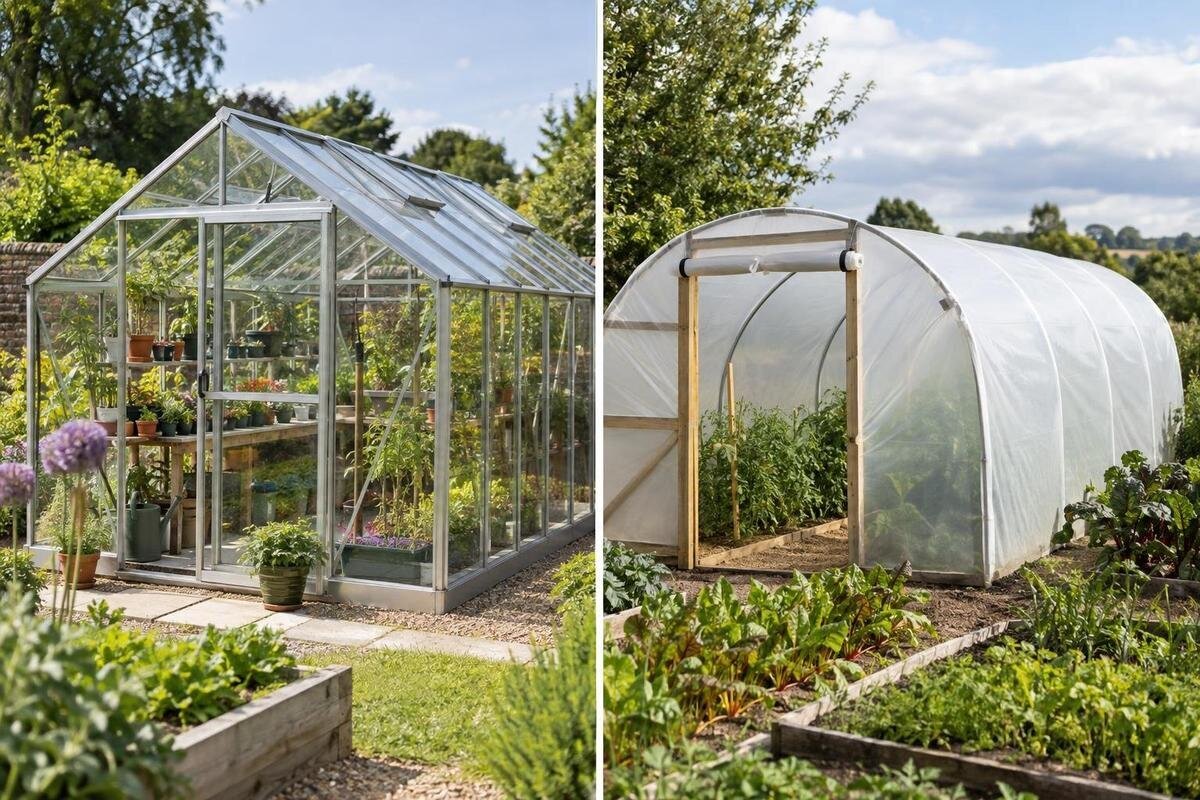
Greenhouse comparison
Glass and film can both create a protected growing space, but they involve different upkeep and repair needs. In a Maltese garden, summer sun makes ventilation and shade part of the choice, while the site itself determines how much wind exposure, clearance and access matter. Choosing between a glass greenhouse and a polytunnel means comparing complete structures, not just their coverings. This guide looks at crop use, permanent placement, day-to-day climate management and replacement needs, so you can assess each design against your garden plans.

How a glass greenhouse differs from a polytunnel
The labels describe broad construction types, not a full performance specification. A glass greenhouse has a rigid frame and glazed panes; a polytunnel is typically a frame covered with flexible film. Within either category, dimensions, frame design, doors, vents, glazing or film, base and fixings can vary. Both create a more sheltered growing area, but the name does not promise a particular temperature, ventilation level, resistance to exposure or lifespan. A polytunnel is not automatically temporary, and a glass greenhouse is not automatically maintenance-free. Permanence and upkeep depend on the model, its installation and how you use it, so confirm the exact build rather than assuming every version is alike.
A like-for-like comparison is more useful than asking which material is simply better. Match the usable footprint and opening arrangements, then check the base, shade options, cleaning and replacement route. For scale, the Aluminium Classic Greenhouse range is listed from 3.77 to 28.08 m². That published area helps with an initial comparison, but does not show clear bed space, door swing or which glazing and vents are included in a particular configuration. Use a plan and the exact specification, and confirm what the quote includes before comparing it with a tunnel.
Crops, layout and seasonal use
Begin with what you want to grow and how you will use the space. Sowing trays, young plants, pots and larger crops do not need the same layout: trays may call for reachable shelves, while planted beds need a clear route through and enough width to tend both sides. A polytunnel’s long footprint may suit continuous rows for some growers; a greenhouse can also be arranged with beds or benches, depending on its dimensions and fittings. Neither shape automatically creates more planting space. Sketch the crop rows, working aisle, potting or storage corner and carrying route through the door. Check that permanent beds will not leave plants awkward to reach.
Then consider the growing calendar. Is the structure mainly for starting plants, shielding crops from rain and wind, or keeping a regular growing area through several seasons? The answer affects which openings and access features matter. In Malta, protection during cooler periods may be one aim, but summer heat can be the more immediate constraint for many crops. Do not assume a tunnel is seasonal or a glass greenhouse is usable all year: that depends on construction and management. The Bloomcabin Prestige Greenhouse range is listed from 3.77 to 28.08 m²; compare the plan for your chosen size with your crop layout, including whether trays or larger pots can pass through the doorway.
Measure the garden and usable growing space
Measure the site and draw the whole structure rather than fitting a rectangle into space left between beds. Include room for the door to open, a practical route to both sides, any clearance the maker requires, and access for cleaning, repairs and assembly. Mark paths, water access and existing obstacles. A greenhouse that fits on paper may still be awkward if its doorway opens onto a narrow path or its sides cannot be reached. Compare internal usable area with external dimensions; the frame and end space can affect planting room. A sketch of beds and an aisle makes those limits easier to see before you choose.
Observe sun and shade at different times, including shadows from buildings, boundary walls and trees. Notice where rainwater runs or gathers after wet weather, and consider how nearby planting or planned shade could change the light during your growing season. A shaded spot may limit light available to crops, while a tightly enclosed corner may alter airflow. Conditions vary between gardens in Malta, so do not choose solely from a national climate description. If a wall-side layout is genuinely an option, the Wall Greenhouse range is listed from 3.69 to 14.34 m². Its plan and access are not directly comparable with a free-standing tunnel, so assess that arrangement separately.
Plan ventilation and shade for Malta’s summer
Both glass and film admit daylight; when the structure is closed, the enclosed space can warm quickly. In a Maltese summer, ventilation and planned shade deserve attention before you choose a covering. A rigid enclosure is not automatically cooler, and a film-covered tunnel is not automatically better ventilated. Plants may suffer if openings are too small, poorly placed or left closed. A vent only helps when it can be opened as needed, so think about who will operate it during hot spells or when you are away. Nearby walls may block or redirect airflow; an opening count alone will not describe what happens at the site.
Compare the location and operation of every door, roof vent, side opening or other vent offered. Check whether the selected configuration includes these features or treats them as options, and ask what ventilation is intended for its size and layout. When comparing a tunnel with one of the Limited Edition Aluminium Greenhouses, record the openings included in each quote rather than judging ventilation from the photographs. If you plan to add insect mesh or shade, check compatibility and whether it may affect airflow or light. Confirm that controls are reachable and that you can operate the openings as your crops require.

Check wind exposure, fixing and local requirements
A garden sheltered by surrounding buildings is not the same as an open terrace or coastal plot. Neither panes nor flexible film tell you how the complete structure will behave there; frame design, joints, how the cover is secured, size and installation all matter. If the site is exposed, request the manufacturer’s guidance and any published information about wind exposure for the exact model. Do not choose on a general claim that tunnels flex or glass structures are heavier: neither comparison establishes how a particular design is rated. Share the garden’s exposure with the supplier or installer, including nearby buildings that may affect the site.
Ask what base or anchoring arrangement is required, whether it is included, and whether the ground and drainage at the intended location are suitable. If you are near the coast, ask whether the specified frame, fixings and finish need particular care for that exposure; do not assume all materials behave alike. These are questions about the complete installation, not a reason to improvise fixings or rely on a product photograph. A qualified installer or other relevant professional can assess the site where needed. Check applicable local planning or property requirements with the relevant authority before committing to a permanent structure.
Consider rain, humidity and crop protection
Covering the soil from direct rain does not control moisture around leaves or within an enclosure. Both structures can develop humid conditions, and condensation may appear where moist air meets a cooler surface. Air movement, watering, plant spacing and the time doors or vents remain open all contribute. If your priority is avoiding damp foliage or protecting crops in a wet spell, consider how the design ventilates during ordinary use and where air can move through it. Do not infer humidity control from whether the cover is glass or film, or assume that a covered space will remain completely dry.
Think separately about pest exclusion and rain. An enclosure is not automatically insect-proof: doors, joins and ventilation openings may leave routes in, while mesh, if used, can change airflow. Check how runoff is directed and whether plants remain protected when openings are used; roof cover and drainage are separate questions. If you intend to store tools inside, inspect the exact layout of a model such as Aluminium Greenhouses with Storage. Its name alone does not show how much floor area remains for crops, so separate the space you need for storage from the area you intend to grow in.
Allow for cleaning and routine checks
Glass panes and frames need cleaning to maintain light transmission, along with checks for cracks, loose fittings, failing seals or debris around openings. A film cover needs checks for punctures, tears, rubbing points, loose edges and its attachment to the frame. These are different routines, not a simple low-maintenance or high-maintenance ranking. Follow the maker’s advice on cleaners, tools and inspection intervals; an unsuitable product or abrasive method can damage a surface. For either type, inspect the frame, doors and fastenings, and deal with damage before it spreads. Include these tasks when deciding how much upkeep you are willing to undertake.
Consider maintenance access separately from everyday access to the crops. Can you reach the surfaces that need washing and the fittings that need inspecting? If the structure sits against a boundary or behind planting, cleaning and repair access may be limited even when the footprint fits. Check how high vents can be reached and operated, rather than assuming that a clear central aisle is enough. Ask the manufacturer which tasks are routine and which need specialist help. This gives you a more useful picture of the work involved than describing either glass or film as easy to maintain.
Plan for replacement panes, film and parts
Replacement is one of the clearest differences to investigate before purchase. With a glazed greenhouse, ask whether a damaged pane, seal or fixing can be replaced separately and how the correct size and specification are identified. With a polytunnel, ask whether a cover can be patched, replaced in sections or is supplied only as a complete cover. The answer depends on the design and the damage; there is no blanket rule that every pane is separately available or every film tear can be repaired. The frame must also suit the replacement part, so check compatibility rather than relying on a generic size.
Ask how replacement parts are identified, who supplies them and whether fitting requires a specialist. If you are considering the T-Model Orangery Greenhouse, listed from 16.52 to 30 m², make those enquiries for the exact size and configuration in your quote. For a tunnel, ask the maker about the cover’s stated service life and replacement guidance: sunlight and handling can affect film over time, but the name polytunnel does not establish a renewal interval. Find out how used film or broken glass should be handled and whether a local disposal or recycling route exists. Include both fitting and disposal when comparing replacement costs.

Compare whole-life cost and appearance
A polytunnel may look less formal, and a glass greenhouse may appeal as a permanent garden feature, but appearance is personal and depends on shape, frame, glazing and surroundings. Price is equally model-specific. Compare itemised quotes for a similar usable area, including the structure, base, doors and vents, delivery, installation, optional shade or mesh, and replacement parts. Check that the proposed sizes are genuinely comparable: the Spacious Greenhouse listing covers 47 to 70 m², for example. Comparing one of these sizes with a much smaller tunnel would not tell you which construction type offers better value for the space you need.
Set the initial price beside the maintenance and replacement costs you expect over your planned period of use. Keep quoted costs separate from estimates, and note any items for which you do not yet have a price. A future cover replacement and a possible pane repair are different expenses; neither should be treated as a fixed annual charge without a basis for doing so. The same floor area also need not mean the same complete cost if the designs require different bases or options. A lower purchase price is useful only when the complete package meets your growing and maintenance needs.
Comparing your shortlisted designs
Before choosing, make a two-column comparison for the same site and crop plan. Record the clear growing area, height and layout needed, openings, shade plan, base and fixing advice, access for maintenance, replacement route and complete quoted cost. Use drawings rather than catalogue photographs, and check what each configuration includes. For instance, the Pyramid Greenhouse listing spans 5.53 to 18.9 m²; its published area helps compare scale, but shape and internal clearances still need checking against beds and paths. Do not compare a tunnel’s full outer dimensions with a greenhouse’s internal planting area.
A polytunnel may fit when its film-covered format, bed layout and future cover care match your priorities and the site can accommodate the specified structure. A glass greenhouse may fit when a fixed, pane-based building and its appearance matter, and you are prepared for glazing care and replacement planning. If neither design gives a clear answer on ventilation, shade or exposure, pause until the exact configuration is specified. When the choices remain close, consider which repair or routine you would be more willing to manage, and who will look after the structure when you are away.
Frequently asked questions
Which option stays cooler in a Maltese summer?
Neither covering guarantees a cooler growing space. Both admit daylight and can trap heat when closed; the opening layout, shade, airflow and day-to-day management all matter. Compare ventilation for the exact design and the conditions at your site.
Is a polytunnel always the cheaper option?
No. Size, frame, cover, base, doors and vents, delivery, installation and future cover replacement can all affect the total. Compare itemised quotes for a similar usable area, and include likely maintenance and replacement costs in your assessment.
Does a polytunnel have to be temporary?
No. The name alone does not establish how long a particular structure is intended to remain in place or whether it can be moved. Check its fixing requirements, cover care and replacement plan, and confirm that the chosen design suits your site.
Can I replace one glass pane or part of a tunnel cover?
That depends on the system and the damage. Ask whether compatible panes, seals, film sections or complete covers are available, and how repairs should be handled. Do not assume that every pane is separately supplied or that every film tear can be patched.
Do I need permission or professional advice?
Site conditions and applicable requirements depend on the property and structure. Check relevant planning or property rules with the appropriate local authority, and consult a qualified professional about exposure, ground and fixing needs where necessary. A product photograph or size label cannot establish these details.
In a Maltese garden, neither covering removes the need to manage heat. Choose the structure that gives your crops usable space and suitable openings, with an appearance and upkeep routine you can live with. Glass involves care of panes, frames and fittings; a polytunnel involves care of its film and a plan for eventual cover renewal. Comparing those practical commitments alongside the complete cost is more useful than treating either material as the automatic winner.
