
Can a Greenhouse Have a Glass Roof and Polycarbonate Sides?
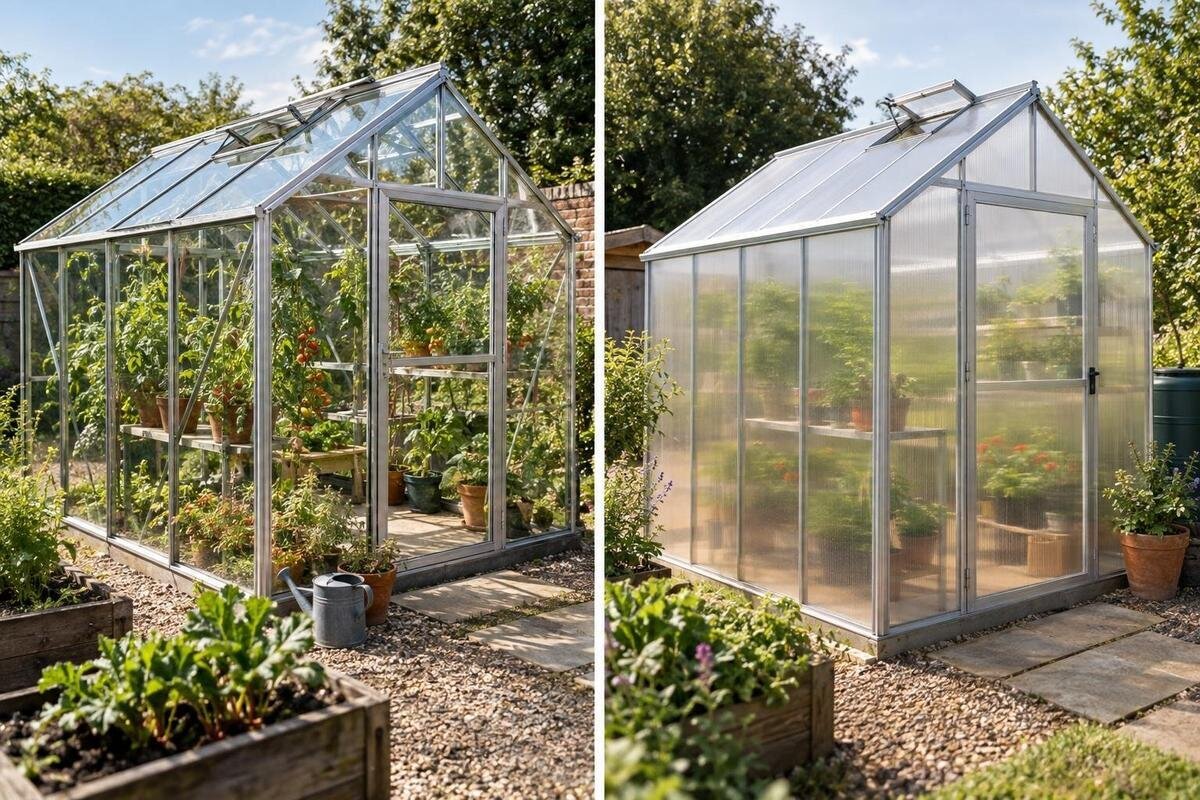
Greenhouse glazing guide
A greenhouse can combine a glass roof with polycarbonate sides, but the manufacturer must specify that arrangement for the exact model. The frame, seals and panel details need to suit both materials. The useful question is not simply whether each material appears in the catalogue, but whether they are offered together in a documented configuration for the greenhouse you intend to buy.

What to check before buying 1
When glass roofing and polycarbonate sides can be combined
Yes. A greenhouse can have a glass roof and polycarbonate side walls when the manufacturer designs and specifies that exact combination. The frame, glazing bars, retainers, seals, edge supports and assembly details must suit the panels assigned to each part of the enclosure. A catalogue that offers both glass and polycarbonate may still list them only as separate, complete configurations. Availability of each material on its own is not proof that the two are approved together, and a photograph cannot establish compatibility. The answer may also change between models, sizes or versions within one range.
A mixed layout may be worth exploring if you have a specific reason, such as a preferred appearance or a particular balance of visibility and enclosure. Those aims do not establish that the mix will deliver a practical benefit, however. Ask about the exact greenhouse model and size, then ask which roof material and side material are supplied together. If the manufacturer’s option list does not show that pairing, request written confirmation before ordering. If the maker does not support it, choose a listed configuration rather than replacing panels after delivery. Also clarify whether sides means the long walls only or every vertical face.
Why a panel swap can change how the frame works
Two panels can fit the same opening on paper and still require different support. Glass and polycarbonate vary in thickness, weight, stiffness, edge treatment and movement as temperature changes. Polycarbonate also comes in different constructions, so a solid sheet and a multiwall panel are not equivalent specifications. These differences affect how an infill panel is held, where it needs clearance and which seals or retainers suit it. Ask for the exact panel descriptions rather than relying on the broad labels glass and polycarbonate. A general material comparison cannot establish whether the proposed sheets suit this greenhouse’s frame.
The frame is designed around its specified infill, not merely the outside dimensions. Roof bars, side channels, gaskets and retaining profiles may be specific to the selected panel, while roof and wall panels have different support and edge details. A sheet trimmed to match an opening is not necessarily retained or sealed as intended. The Aluminium Greenhouses listing helps identify a model family; use the exact model and size when checking its glazing schedule. Even panels with similar widths may have different edges or clearance requirements, so a measurement alone does not show that a replacement belongs in the frame.
What to check before buying 2
Roof and side panels have different roles
Roof glazing sits on sloping planes and meets details such as the ridge and eaves. It needs its own panel support and water-management details, while side panels sit in vertical channels and meet corners, doors, vents or a base. A design that accepts polycarbonate on the walls does not automatically accept it on the roof, and the reverse is also true. The manufacturer’s drawing should show exactly where the materials meet. For a named family such as the Pyramid Greenhouse, check the drawing for the specific model rather than inferring panel options from the name or shape.
Be precise about what counts as a side. Long walls, gable ends, doors and opening vents may not be treated alike in a glazing schedule. An option described as polycarbonate sides might cover the long walls but not every end panel or opening; do not assume either way. Ask the supplier to identify each vertical panel on an elevation, including anything that moves or opens. This helps you see whether the proposed mix applies consistently across the greenhouse and whether the door and vent arrangements are part of the same specification.
Compare light information rather than material labels
Light enters through the roof and walls, so changing one surface may have a different effect from what you expect. The light transmitted by glass depends on its exact type, finish and any coating; polycarbonate also varies by construction and finish. Some sheet types diffuse light differently from clear panels, but the product information is more useful than the material name alone. Framing, dirt, nearby shade and the greenhouse’s position also affect the light reaching plants. Consider what you grow and whether its growing requirements call for direct or more diffuse light, without assuming that one glazing combination is best for every plant.
Ask for comparable information for the actual glass and polycarbonate being offered, and find out whether it describes the material alone or the assembled glazing. A drawing for the chosen size can help you compare how much of the roof and walls uses each panel type. For context, the Bloomcabin Prestige Greenhouse is listed in sizes from 3.77 to 28.08 m²; that range does not show the glazed area or available panel combinations. Check the layout for the particular size you are considering instead of drawing conclusions from the model name or total floor area.

What to check before buying 3
Thermal performance and ventilation are separate questions
Do not use transparency as a shortcut for judging how warm a greenhouse will be. Glass and polycarbonate can have different thermal properties, and the result depends on the exact panel construction, thickness, frame and seals. Multiwall polycarbonate has enclosed spaces within the sheet, so it behaves differently from a solid sheet; that fact alone does not establish the performance of a complete greenhouse. If heat retention matters to your choice, ask for the manufacturer’s information for the specified panels and overall configuration. Avoid comparing unlike products or assuming that a mixed roof and wall arrangement will produce a particular temperature.
Ventilation is another part of the specification. The location and operation of doors, roof vents and other openings affect how air moves; changing a fixed wall panel does not create ventilation by itself. Condensation can occur on glass or polycarbonate, depending on moisture, surface temperature and airflow. Ask how the proposed panel arrangement relates to the supplied openings and where condensation or water within a panel is managed. For a Wall Greenhouse, use the drawing for the exact lean-to layout to check the positions of openings and junctions rather than inferring them from the product name.
Check the joints, seals and replacement details
The places where panels meet deserve particular attention. A roof-to-wall transition, eaves, corners and gable edges may use different seals, profiles or closure details. Polycarbonate generally needs allowance for more thermal movement than glass, so the manufacturer’s specified fixing and clearance details matter. Do not assume that a generic sealant, filler or clip will make two materials work together. Ask for the approved detail for every transition and find out how the design directs water away from the joints. These are questions about the supplied system, not a reason to improvise a repair or modification.
It is also sensible to ask what happens if a panel needs replacing. Find out whether replacement parts are identified by model and panel position, and whether a later replacement must match the original type and thickness. The Limited Edition Aluminium Greenhouses listing identifies a model family, but a family name by itself does not specify a replacement panel or fixing. Keep the manufacturer’s instructions and any panel schedule with your greenhouse records. Do not cut, drill or adapt a sheet to make it fit unless the manufacturer has supplied instructions for that exact configuration.
What to check before buying 4
What the written specification should confirm
Ask for a drawing and a glazing schedule that identify the exact model, size and version you intend to order. The drawing should distinguish the roof from the long sides and end walls, and identify any panels in doors or vents. The schedule should state which panel type goes in each position, rather than using a general phrase such as mixed glazing. For example, the Aluminium Greenhouses with Storage – Limited Edition listing names a particular variant; make sure any confirmation refers to the same version and selected size, not just a broad product family.
The written answer should confirm that the frame, panel retention, seals and assembly instructions correspond to the proposed mix. Ask what type of glass and polycarbonate are included, and whether the option changes the supplied openings or other parts. Read the description alongside the drawing: a general reference to glass roofing should not leave you guessing about the roof vents, for example. If two documents describe the same panel differently, ask the supplier to resolve the wording rather than choosing whichever description you prefer. For an existing greenhouse, provide the model identification and the information available about its current panels, making clear which panels you want to retain and which you want to change. Keep the response with the order documents so that the agreed arrangement remains clear. A verbal assurance or a drawing for a different model may not resolve what will actually be supplied.
Decide what the mixed glazing needs to achieve
Before comparing materials, put the reason for the mix into practical terms. Is the priority the roof’s appearance, visibility through the walls or a particular requirement for the growing space? Separate preferences you can judge visually from performance questions that need product information. If appearance matters most, consider whether you like the proposed combination on both the roof and the vertical faces, including doors and end walls. If the aim concerns light, compare the specified transmission alongside the greenhouse’s position and your growing plan. For heat retention, use information for the complete arrangement rather than a description of one sheet. Where you have several aims, decide which matters most and which would simply be welcome. This gives you a useful basis for comparing a supported mixed option with a standard configuration. Do not assume that using two materials automatically delivers the best qualities of each, or that a more complicated specification is a better match for your needs.
Think about the size and layout of the structure as well as the glazing. The Spacious Greenhouse listing gives a size range from 47 to 70 m²; for a greenhouse of that scale, the exact drawing is especially useful for seeing which roof and wall surfaces are included in a proposed option. The listed floor area does not establish how much glazing is used or whether mixed glazing is available. Compare the confirmed configuration with your growing plan and the space you can allocate before treating the material combination as a deciding feature.

What to check before buying 5
Compare complete models on a like-for-like basis
When comparing two options, keep the model and size as consistent as possible. A glass-roof version of one greenhouse is not a like-for-like comparison with a smaller polycarbonate model of another shape. Set the descriptions side by side and compare the panel locations, glazing types, openings and frame arrangement for the chosen size. Distinguish an actual difference from missing information: if one quotation names the glass type and the other only says glass, you cannot yet tell whether the panels differ. Likewise, check whether an apparent glazing difference is accompanied by a different door or vent arrangement. If the manufacturer offers an all-glass or all-polycarbonate alternative alongside a mixed option, ask which parts change and which remain the same. Where you must compare different models, note those differences explicitly rather than attributing every advantage to the glazing material. This keeps the decision focused on what each complete greenhouse offers and whether the mixed specification answers your particular need.
Use product listings to identify the model and footprint you want to discuss, not to infer its glazing. The T-Model Orangery Greenhouse is listed in sizes from 16.52 to 30 m²; select the size that suits your plans, then request the corresponding drawing and panel schedule. Area information helps with shortlisting, but it does not describe the material on each face. The same principle applies to any model family: check the specification for the exact version rather than assuming that an option transfers between sizes or designs.
Before ordering or changing an existing greenhouse
For a new purchase, check that the order description, drawing and written confirmation all identify the same model, size and glazing arrangement. Make sure the meaning of polycarbonate sides is clear, including the gables, doors and vents. Confirm which panel types are supplied, where they go and which instructions apply. Before accepting a revised quotation, check whether the glazing description has changed along with any other options you selected. Keep the final version clearly identified rather than relying on an earlier email describing a different arrangement. When the greenhouse arrives, use the supplied panel schedule or parts list to compare the delivery with the order before assembly begins. A panel you cannot identify should be queried, not assigned to an opening by guesswork. If the combination is not offered or confirmed, do not order replacement sheets on the assumption that they will fit; choose a configuration specified for that greenhouse.
For an existing structure, contact the manufacturer or an installer qualified to assess that model before changing any panels. A replacement that appears to fit can still differ in thickness, retention, movement clearance or sealing. If delivered parts do not match the documented option, pause and ask the supplier to resolve the difference before proceeding with assembly. Keep the final drawings and instructions available for future maintenance. That gives you a clear record of what the greenhouse was designed to contain, rather than leaving later repairs to rely on guesswork.
Frequently asked questions
Can I fit polycarbonate sides to a greenhouse with a glass roof?
Only if the manufacturer specifies that combination for your exact model and size. Matching the opening dimensions is not enough: the panels, frame, fixings and seals must be designed to work together. Ask for written confirmation rather than treating a panel swap as a standard option.
Will a glass roof always give my plants more light?
Not necessarily. The actual light entering the greenhouse depends on the specified glass, any coatings or finishes, the polycarbonate type, the frame and external shade. Compare information for the exact panels and look at the glazing layout for the chosen size; the material names alone do not predict growing conditions.
Does polycarbonate automatically keep a greenhouse warmer?
No. Performance varies with the sheet’s construction and thickness, the frame and how well the enclosure is sealed. Multiwall polycarbonate behaves differently from a solid sheet, but you still need the manufacturer’s information for the proposed panels and complete greenhouse.
Do polycarbonate sides include the gable ends and vents?
That depends on how the manufacturer defines the option. Ask whether it covers the long walls, end walls, doors and opening vents, and have the answer shown on a drawing or panel schedule. A general description such as polycarbonate sides may not identify every vertical panel.
What should a supplier confirm in writing?
Ask them to name the exact model and size, identify the glass and polycarbonate types and show where each goes. The confirmation should also match the frame, seals, openings and assembly instructions to that configuration. Keep the drawing and specification with your order documents.
A glass roof with polycarbonate sides is a valid option only when it is designed and documented as a complete greenhouse configuration. Confirm which panels go in the roof, walls, gables and openings, and match the frame, seals and instructions to the exact model and size. If the manufacturer has not confirmed the combination, treat it as unsupported and choose from the configurations specified for that greenhouse.
