
What Could a Greenhouse Add to Family Meals?
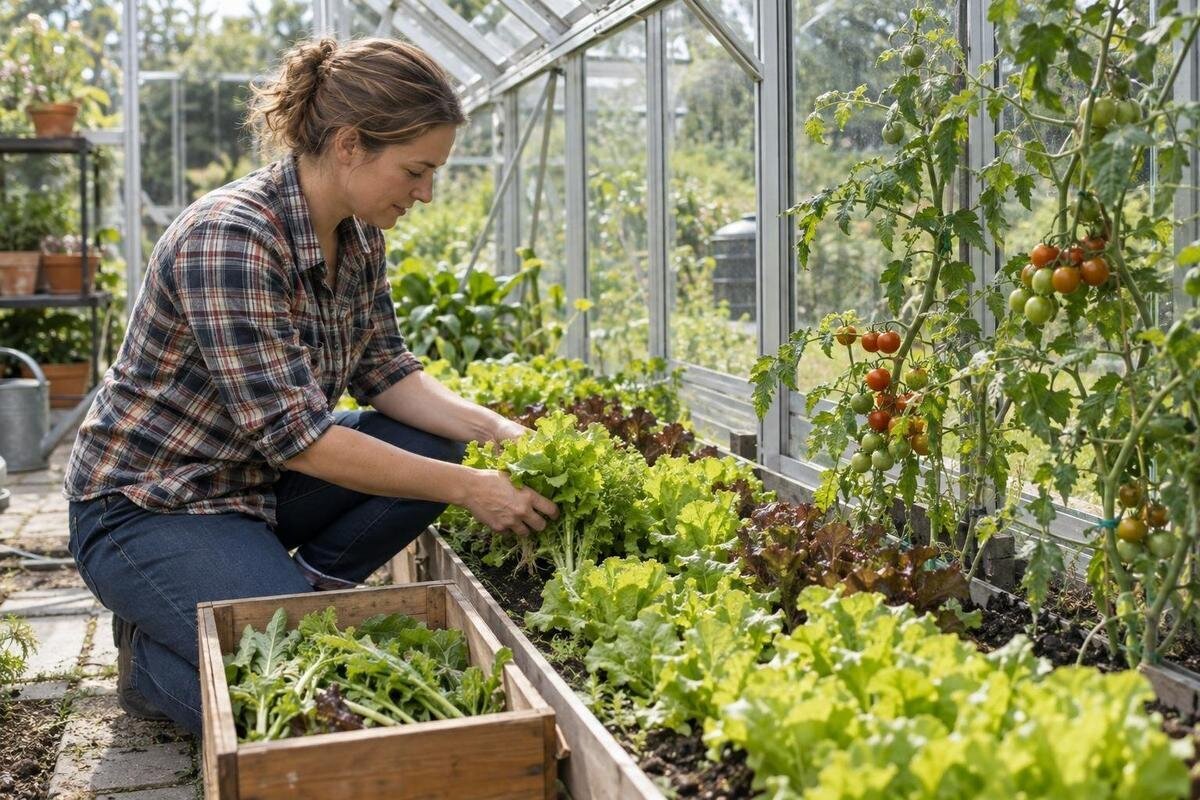
Greenhouse growing for family meals
A greenhouse can make a noticeable contribution to family meals, but it is more realistic to plan around a few familiar ingredients than to expect it to feed the whole household. The useful question is not simply how large the structure is: it is whether the crops you eat can fit the site, seasonal conditions and time you have. A short record of shopping, meals, harvests and care can turn that question into a practical plan.

What counts as a useful contribution?
Yes, a greenhouse can add food to the household table, especially fresh ingredients you use often. Treat it as a source of selected produce, not a promise of self-sufficiency. The amount you harvest depends on the crops, the growing conditions, the area you use, the time you can give them and how well harvests match meals. A greenhouse does not automatically replace staple foods or everything on a weekly shopping list. Set a practical aim, such as supplying herbs for regular dishes or some salad ingredients during part of the year. The aim should reflect what your household eats, rather than a general claim about how much a greenhouse can produce.
Define what success would mean for your household before sowing. Supplying herbs for several regular dishes is a different aim from growing enough vegetables for a daily side dish. Decide which ingredients matter most and during which parts of the year you would like to harvest them. Include the amount you can realistically prepare and eat: a crop is not contributing to meals simply because it is ready to pick. Agree whether occasional harvests would be satisfying or whether you want a more regular supply of a few favourites. This gives you a clear purpose for the growing space without making every crop responsible for replacing part of the weekly shop.
Choose crops from familiar meals
Look at two ordinary weeks of menus and shopping receipts. Note which vegetables and herbs appear repeatedly, how much the household buys, and whether it usually finishes them. Mark whether each crop is eaten raw or cooked and which dishes use it. Ask household members what they actually want to eat; enthusiasm for an unusual vegetable at planting time does not mean it will become part of dinner. A short list of familiar favourites is easier to plan around than many one-off experiments. Give priority to ingredients that suit your meals and can be picked close to the time you want to use them.
Use the shortlist to draw an approximate layout before choosing a footprint. The Aluminium Greenhouses listing covers sizes from 3.77 m² to 28.08 m²; those figures are not a measure of bed space or food output. Mark out space for the intended crops, containers and a path that allows you to reach them. Leave room near the entrance and to inspect each crop. Then compare the sketch with the dimensions of the actual configuration. If space is tight, remove a crop that is seldom eaten rather than squeezing too many plants together. If extra space remains, you do not have to plant it all immediately.
Match crop choices to the site and season
Crop timing depends on more than the month printed on a seed packet. A greenhouse changes exposure, but it does not remove seasonal limits; conditions inside may be hotter, drier or more variable than you expect. Observe the site at different times and note the sun, shade and access to water. For a sunny site in Malta, factor summer heat into the plan and check what ventilation or shading arrangements a chosen structure can provide. Do not assume that a crop which grows well outdoors will automatically do better under cover. Conditions can vary around the site as well as through the year.
Make a simple calendar for each crop: likely sowing period, transplanting if relevant, first harvest, main harvest and any expected pause. Use local growing guidance and seed supplier instructions for timing, then adjust your plan from what you observe. The Wall Greenhouse listing includes sizes from 3.69 m² to 14.34 m²; its name and size do not establish whether a particular wall location gets suitable light or air flow. Check the site and the specific product layout and opening details. Include outdoor beds or pots as alternatives where they suit a crop better, and use the greenhouse for the growing periods it can genuinely support.
Plan for harvests, gaps and gluts
A well-planned crop list may still not supply the same ingredient every week. Some plants produce gradually; others have a concentrated picking period, and sowing too much at once can leave a glut followed by a gap. Where crop guidance allows, stagger sowings or combine crops with different harvest windows. Keep each sowing small enough for the household to use, and note when a bed or container becomes free for the next crop. A sequence can spread harvests, but it cannot guarantee continuous supply. Plan meals and shopping around likely gaps rather than counting an expected harvest before it arrives.
Draw the expected harvest windows beside the meal plan. If one crop finishes before its replacement is ready, decide whether to buy that ingredient, use a different recipe or choose another crop next time. The Pyramid Greenhouse listing gives sizes from 5.53 m² to 18.9 m². When sketching a succession of crops within your chosen size, show where later sowings will go while earlier plants are still in place. Allow for the period between clearing a crop and the next harvest, rather than treating a newly planted space as an immediate source of food. Aim for useful harvests during the periods that matter to your household, with shopping covering the intervals.

Measure what reaches the kitchen
Estimate the contribution from the household's real use, not a generic yield figure. For each crop, write down how often it appears in meals and the quantity usually bought. Then choose a consistent way to compare it with harvests, such as portions, meal uses or grams. For example, if salad is served at four meals in a week and your own leaves make it into two, record two meal uses; do not count all four as covered. If a small harvest only adds a handful to a dish, record that accurately. This illustrative method makes progress visible without pretending that a handful replaces a full shopping quantity.
Once growing begins, log each crop separately: sowing date, first pick, amount harvested, amount eaten and any surplus left unused. Include failed sowings and weeks when you still bought the full amount. The Bloomcabin Prestige Greenhouse is listed in sizes from 3.77 m² to 28.08 m², but that footprint range gives no estimate of servings. Neither a model name nor area predicts a household's crop yield. Treat your first season as evidence gathering. Afterwards, compare actual output with normal demand and decide which ingredients are worth growing again. A measured partial contribution is more useful for planning than an unsupported percentage.
Allow for paths and access when sizing the growing area
Total floor area is not the same as planting area. Paths, beds, pots, room to reach plants and any work surface all take space. Draw the layout using the dimensions for the configuration you are considering, and include access to the door and the furthest plants. A dense plan that cannot be tended is not useful. If you grow in containers, count their footprint and the room needed to water or move them. Leave a clear route for carrying supplies and a harvest basket without brushing through crops. A structure that fits the plot but leaves no practical way to work can undermine the meal plan.
Compare your crop map with the exact size and layout of any option. The T-Model Orangery Greenhouse listing covers sizes from 16.52 m² to 30 m². Use the plan for the configuration you are considering to check each route through the growing space. Can you reach the furthest container when the surrounding crops are fully grown? Can you tend one bed without moving pots from the path? Mark any awkward corners and revise the planting layout before deciding how many crops to include. Keep some space unplanted if that makes access easier. The aim is a workable arrangement for the whole growing period, not simply a plan that accommodates every pot on planting day.
Make the care routine fit everyday life
Food growing involves a repeating routine, not just planting day. Depending on crop and season, tasks may include sowing, potting on, watering, adjusting ventilation, tying or pruning, checking plants, harvesting and clearing spent crops. Do not assume the schedule will be the same all year: hot spells and active growth can change how often you need to look in. Write down which days you can visit and which tasks cannot wait until the weekend. During the first weeks, record the time spent on different jobs, including sowing and clearing. An honest log is more useful than guessing how much time a future greenhouse will take.
The Spacious Greenhouse listing gives a size range of 47 m² to 70 m². Use your intended crop map to work out which tasks a planted area of that size would involve, rather than assuming you need to fill it. Separate regular checks from jobs that can be planned for a free afternoon, such as sowing or clearing a finished crop. Include time to pick and bring produce into the kitchen, not just to keep plants growing. Start with fewer crops than the space could hold, then use your task log to decide whether there is room in the week for more. Expand only when the existing routine fits comfortably around other commitments.
Plan for water and the supplies you will use
Water and practical supplies belong in the food plan because missed care can disrupt an expected harvest. Check how water will reach the growing area, how far you would need to carry it and how you will notice when plants need attention. The amount and frequency vary with crop, container, season and conditions, so avoid relying on a fixed schedule without checking the plants and relevant crop guidance. List the tools and consumables you actually expect to use, and decide where to keep them. Keeping ordinary tasks simple can make the routine easier to maintain; there is no need to buy equipment for every crop you might try one day.
The Aluminium Greenhouses with Storage – Limited Edition listing identifies a greenhouse with built-in storage and includes sizes from 5.52 m² to 28.08 m². It does not give the storage dimensions or show how a particular configuration affects clear growing space, so check the specific plan rather than assuming the whole floor area is available for crops. Decide what needs to be close at hand, such as labels, hand tools, ties or containers, and count it in the layout. If supplies are kept elsewhere, consider the extra trips and whether they could make regular watering or harvesting less convenient.

Account for busy weeks and time away
Leave room in the plan for weeks when the household is away, busy or short of time. A greenhouse does not look after itself, and missed care can affect the harvest you expected to use in meals. Decide in advance who could check the plants when you cannot, what simple instructions they would need and which crops require more frequent attention. For longer absences, reduce the number of crops that need close tending or arrange reliable help. Do not base household food planning on an unconfirmed harvest; continue buying key ingredients until your own production proves dependable.
The Limited Edition Aluminium Greenhouses range is listed from 3.77 m² to 28.08 m². When comparing configurations, consider how someone covering for you would reach the planted areas and identify what needs attention. Keep care notes specific to the crops actually growing, including what is ready to harvest and where supplies are kept. Agree what should happen to produce picked while you are away: whether it will be used by the person helping or kept for your return. Before a busy period, check that the arrangement still matches the planting plan. If reliable cover is not available, adjust the plan rather than relying on care that no one has agreed to provide.
Use the first season to improve the next plan
Review the season as a whole, using the harvest and care records together. Look for crops that reached the kitchen regularly without taking more time than you could spare. Distinguish between produce that was not eaten because the household disliked it and produce that arrived in quantities too large to use. Those problems call for different changes: replacing a crop in one case, reducing or staggering sowings in the other. Compare ordinary weeks as well as the best harvest week. Note whether gaps coincided with a lack of growing space, an unsuccessful sowing or a period when you could not give the plants enough attention.
At season's end, keep crops that matched household tastes and fitted your schedule, and revise those that used space or attention without adding useful meals. You might change sowing dates, grow a smaller amount, try a different crop or leave room for another use. Compare the actual contribution with your original target and decide whether you want more fresh produce, a longer harvest window or less work. A greenhouse is helping when its harvest fits real meals and its care fits real life, even if the household still relies on shops for most of its food.
Frequently asked questions
Can a greenhouse make a household self-sufficient?
Not usually. A greenhouse may supply some fresh produce, but self-sufficiency depends on household diet, growing area, time and successful crops across the year. A more practical aim is to grow selected ingredients for defined periods, while keeping a realistic shopping plan for the rest.
Which crops are most useful for family meals?
Begin with ingredients your household buys and uses often. Herbs, salad leaves, tomatoes, peppers or cucumbers may suit your plans if they fit the site and season. No crop is useful if the family will not eat it or it needs more attention than you can give.
Does a greenhouse provide vegetables all year round in Malta?
There is no guarantee. A greenhouse changes exposure but does not remove seasonal limits, and a sunny interior can become hot. Use local sowing guidance and check the chosen structure's ventilation and shading arrangements against your site. Plan for breaks in supply rather than promising every ingredient year-round.
How can I estimate how much food a greenhouse will produce?
Track what you harvest and use, then compare it with the household's usual shopping and meals for the same weeks. Count a garnish as a garnish, not a full serving. After a growing season, you will have a more useful estimate than a yield guess based on greenhouse area.
How much time should I allow for greenhouse growing?
There is no universal amount. Tasks vary with the crops, area, weather and stage of growth. Record time spent sowing, checking, watering, tending and harvesting, including during busy periods. If the routine does not fit, reduce the planting plan before adding more crops.
Ultimately, a greenhouse can help a household grow more of the produce it already uses, but it should be judged by useful harvests rather than a promise of independence. Start with a short list of familiar ingredients, account for the site's seasons and hot spells, and leave enough space and time for regular care. Track what reaches the kitchen and which meals it serves. At the end of a season, repeat the crops that fitted your menus and routine, adjust those that did not, and keep buying the foods your greenhouse cannot reliably supply. That is a realistic route to more homegrown food without expecting one structure to replace the whole shopping basket.
