
Why Young Greenhouse Cucumbers Yellow Before They Grow
Greenhouse crop guide
Seeing a tiny cucumber turn yellow before it grows is usually a sign that the plant has stopped developing that particular fruit, but colour alone does not identify the cause. The most useful clues are whether there was a small ovary behind the flower, whether other fruits are enlarging, and what changed in the greenhouse in the previous few days. Pollination is one possibility; cultivar, fruit load, temperature and root moisture also matter. Inspect the whole plant before changing watering or applying more fertiliser.

Why a tiny cucumber turns yellow
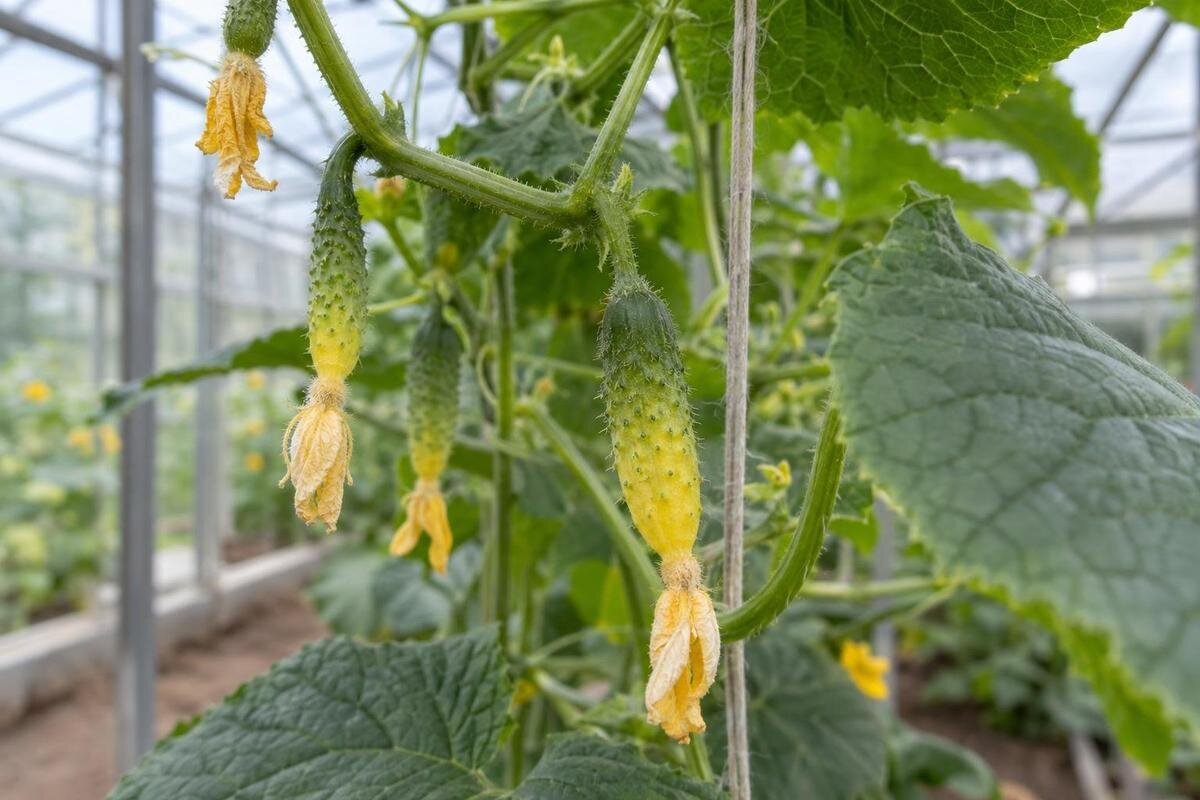
With cucumbers, the state of the flower is not enough to judge fruit set. A female flower has a tiny cucumber-shaped ovary immediately behind its petals; a male flower has no swollen ovary and sits on a slim stalk. The female flower can wither and fall after it has finished while its ovary continues to enlarge. Male flowers also fade naturally after releasing pollen. Look at the small fruit behind the petals, not just at a fallen flower: the flower's fading is normal, whereas a shrinking ovary needs investigation.
Fruit abortion is more likely when the tiny ovary itself turns pale yellow, stops growing, then shrivels or drops. A fruit that has already enlarged but turns yellow later is a different clue: check the cultivar's normal harvest colour and size, and whether it has been left too long on the vine. Some cultivars produce yellow fruit when ripe. Do not diagnose from colour alone; note whether the fruit is firm or soft, whether the leaves have changed, and whether several fruits are affected. These details help separate failed fruit set from ordinary flower ageing, over-maturity or a wider plant problem.
Where and when young fruits fail
Count where the losses occur. One failed fruit among several enlarging cucumbers can be ordinary variation; several yellowing ovaries on one plant may point towards that plant's vigour, root condition or fruit load. If plants along one end of a bed are affected, compare that area with the rest of the greenhouse for shade, heat, airflow or watering differences. If fruit loss occurs across the crop at once, look for a shared change such as a hot spell, a cool night or a recent watering or feeding change. These patterns guide your checks, but none proves a single cause.
Write down the cultivar, the date each affected flower opened, which plant it was on, and whether its ovary grew before yellowing. Take a close photo of the flower and attached fruit, plus a wider view of the plant; repeat the photos from a similar distance after a few days. Give each plant a simple label so that you can follow the same fruit rather than accidentally comparing different ovaries. Note the number of other fruits developing, recent harvests, greenhouse temperatures and any watering or feeding changes. Record observations for unaffected plants too, using the same details and dates. Distinguish what you observed from what you suspect: 'three ovaries yellowed after a hot day' is more useful than recording 'heat damage' as an established diagnosis. This makes comparisons more useful and helps avoid blaming the last thing you changed when several conditions may have shifted together.
Confirm whether the cultivar needs pollination
Some cucumber cultivars are parthenocarpic: they can form fruit without pollination. Others require pollen to reach the female flower before the ovary develops normally. Both kinds may be grown under cover, so the word greenhouse in a seed description is not enough to establish the requirement. Check the seed packet or the cultivar notes from the supplier, including whether a pollinating companion is needed. If you inherited plants without labels, ask the supplier or a horticultural adviser before treating pollination as the cause.
Female flowers can be identified by the small ovary behind them; male flowers lack it. Do not assume every female flower needs a bee, and do not hand-pollinate a parthenocarpic cultivar as a general experiment. In some parthenocarpic types, unwanted pollination can lead to seeded or misshapen fruit. Where you grow several cultivars, label them separately and record which ones lose fruit; a shared greenhouse does not mean they share pollination requirements. For a new growing layout, the Classic aluminium greenhouse range covers 3.77–28.08 m². Mark cultivar positions on your proposed plan, just as you would in an existing greenhouse, so that observations remain tied to the right plants. Floor area helps describe the space, but the seed supplier's cultivar notes should determine your approach to pollination. Confirm any unclear wording before intervening.
When pollination failure fits the symptoms
Pollination failure is more plausible when the cultivar needs pollen and female ovaries yellow soon after flowering, while the rest of the plant looks reasonably vigorous. Check whether male flowers are open at the same time and whether insects are visiting. A greenhouse can limit insect access when openings are closed; poor flowering conditions may also reduce successful fruit set. A lack of bees is not enough to diagnose the problem if the cucumber is parthenocarpic, or if fruit loss is accompanied by clear signs of heat or root stress.
For a pollination-dependent cultivar with poor insect access, you can transfer pollen from a freshly opened male flower to the centre of a female flower with a clean, soft brush, or gently touch the flower centres together. Take care not to damage the flowers. Mark the flower you treated and record the date, then watch whether its ovary enlarges rather than judging success from the petals. Keep these observations separate from those of untreated flowers. When considering a Lean-to wall greenhouse, examine how its doors and vents would be used in your intended position; the model name alone does not describe pollinator access. In an existing structure, observe insect movement while flowers are open and note whether openings are closed at those times. This makes the access check relevant to the flowers that are actually failing.

A heavy fruit load can strain a young plant
Cucumbers can set more fruit than a young, weak or stressed plant can maintain. The vine may then stop developing some of its newest ovaries, particularly when several fruits are swelling at once and leaf growth is limited. Compare each plant's active fruit count with its size, leaf colour and fresh growth rather than treating one yellow cucumber as proof of overload. A small vine carrying several large fruits presents different clues from a vigorous plant with healthy leaves and one failed ovary. Recent transplanting or a pause in growth can also affect how well a plant supports new fruit.
Harvest cucumbers at the size recommended for their cultivar instead of leaving them to become over-mature; this avoids keeping an old fruit on the vine for longer than necessary. Do not strip off every small ovary or add fertiliser automatically. In your crop record, distinguish fruits that are actively enlarging from tiny ovaries that have not progressed, rather than treating every visible ovary as an equal demand on the plant. Compare fruit development with fresh leaf growth over the same period. When planning planting space, the Limited Edition aluminium greenhouse range spans 3.77–28.08 m², but that is not a planting-capacity guide. Sketch the vines and their growing space rather than estimating capacity from floor area alone. Assess crop load plant by plant, and avoid changing pruning or training at the same time as other care.
Check temperature changes and airflow
Very hot days, cool nights and abrupt shifts between them can interfere with flowering, pollen function and early fruit growth. Temperatures can vary within a greenhouse, so plants near a sunny wall may experience different conditions from those nearer a door or vent. A reading from one convenient spot can miss a local spike. Note the daily high and low at approximately plant height, especially while new flowers and ovaries are failing. If you are measuring air temperature, keep the thermometer out of direct sunlight. A pattern after temperature changes is useful evidence, not proof of one cause.
Ventilation can limit heat build-up, but opening a greenhouse does not correct every cause of fruit loss; outside air, shade and the temperature difference also matter. Avoid a sharp cold draught onto tender plants when conditions change quickly. Note which openings you adjust and when, so that you can compare subsequent readings rather than repeatedly changing several vents without a record. The T-Model Orangery Greenhouse offers area options from 16.52 to 30 m². When comparing layouts, consider where the crop would sit relative to openings and where you could measure conditions at plant height. Floor area alone cannot show how evenly a growing space heats. In your current greenhouse, compare affected and unaffected positions at similar times; readings taken at different times may simply reflect the day's changing conditions.
Check moisture at the roots
Both dry roots and roots sitting in water can interrupt growth. A dry surface may hide moisture lower down, while wet, poorly drained growing medium can leave roots short of air and unable to function normally. The plant may wilt, pause or shed developing fruit under either kind of stress; extra water helps only when the root zone is actually dry. In containers, one pot may dry faster than another because of plant size, position or volume, so a check at the doorway does not represent the whole crop. Consider whether the affected plants are in the same bed or container group.
Check moisture at root depth in several affected and unaffected spots, and make sure containers can drain freely. Use the condition of the growing medium, not a fixed calendar alone, to decide whether watering is due; aim for steadier moisture rather than repeated soaking and drying. Note whether a reading was taken before or after watering, so that later comparisons are meaningful. Recheck when the greenhouse becomes hotter or brighter instead of assuming yesterday's reading still applies. The Pyramid greenhouse range spans 5.53–18.9 m². For a proposed layout, mark each bed or container and how you would reach it for watering and moisture checks. In any size of greenhouse, an easy-to-reach pot should not become the only one you inspect while less accessible plants are overlooked.
Check feeding before adding fertiliser
Yellowing of a tiny cucumber alone does not identify a nitrogen, potassium or other deficiency. Nutrient problems often affect the wider plant too, such as changes in leaf colour, growth or the condition of new shoots, while root damage and irregular moisture can produce similar signs. Excess nitrogen can encourage leafy growth at the expense of balanced fruiting, and accumulated soluble salts can stress roots. These possibilities need checking; a high-potash feed or general-purpose fertiliser applied because one ovary is yellow may make an imbalance worse.
Review what was applied, when and at what dilution, then inspect the leaves and root-zone conditions. If symptoms continue, use a suitable soil or growing-medium test and follow crop-specific guidance rather than guessing from fruit colour. Keep a written feeding record so a repeat dose is not given by mistake. Include the product name and which plants received it; 'fed the greenhouse' is too vague if separate beds or containers received different treatments. Keep the original packaging available so that you can check the directions instead of relying on memory. For a separate storage requirement, the Limited Edition greenhouse with built-in storage is a model to compare. Check its storage arrangement against the packaging instructions for anything you intend to keep there; the presence of storage does not establish suitability for every garden product.

Look for signs beyond fruit abortion
A soft, water-soaked area, visible decay, mould, an injured stalk or distinct marks on the skin calls for a closer check. So do leaf spots, unusual stem changes, webbing or visible insects. These signs can have several causes, and a photograph cannot confirm a particular disease or pest. If only the small ovary yellows while the rest of the plant stays sound, the issue may be fruit set or stress; if whole sections of the plant deteriorate, widen the investigation. Compare several fruits and leaves rather than relying on one close-up.
Photograph both the affected tissue and the whole plant, and note whether the problem is spreading. Avoid spraying or applying a treatment on colour alone; identify the problem first and follow the label for any product you use. Use your wider photographs to show where damaged fruit sits on the vine, rather than sending only a close-up with no indication of the plant's condition. If stems are affected, symptoms spread or the crop continues to decline, seek a local horticultural or plant-health assessment with the cultivar, photos and care records. Access for inspection also matters when comparing a structure such as the Prestige greenhouse. Sketch enough access around the proposed crop to examine leaves, stems and fruit without overlooking plants at the back. This is a layout consideration, not a treatment for existing symptoms.
Map conditions around the greenhouse
Use the greenhouse layout to test environmental clues, not as a diagnosis in itself. Mark where affected and unaffected plants sit relative to doors, vents, walls, shade and irrigation points. Compare readings or observations at those positions: a repeated pattern beside one side of the structure may justify checking light, airflow or watering distribution, while fruit loss spread throughout the crop points to a broader factor. Do not assume that a wall or slope alone explains the problem; inspect how conditions actually vary during the day and compare more than one plant in each area.
Make one manageable adjustment at a time, such as improving consistency of root moisture or reducing a measured heat build-up, then observe new flowers and fruit. An ovary that has already yellowed and shrivelled is unlikely to recover, so judge a change by later fruit set, not by that failed fruit. Record when you made the adjustment and which flowers opened afterwards, keeping earlier losses separate from new observations. The Spacious Orangerie greenhouse range covers area options from 47 to 70 m². If you are considering more growing space, use your existing crop map to identify what needs to improve in the layout rather than assuming a larger structure will solve uneven conditions. Even a large listed area does not guarantee even temperature or airflow. Let the pattern in your crop records guide whether a structural change is worth considering.
Frequently asked questions
Why are tiny cucumbers turning yellow and dropping?
The small fruit may have stopped developing after unsuccessful fruit set. Pollination needs, a heavy fruit load, temperature changes and root stress can all contribute. Check whether the ovary itself is yellowing and shrinking, then compare affected plants with healthy ones before changing care.
Do greenhouse cucumbers need bees?
Not all varieties do. Parthenocarpic cultivars can set fruit without pollination, while other cultivars need pollen. Check the seed packet or supplier's growing notes; a greenhouse-grown cucumber is not necessarily a pollination-dependent one.
Should I hand-pollinate every female flower?
No. Hand-pollination is only worth considering for a cultivar that needs pollen and has poor access to pollinating insects. For a parthenocarpic type it is unnecessary, and pollination can affect fruit form in some cultivars.
Should I water or feed more when small fruits yellow?
Not without checking first. Dry roots and waterlogged roots can both stress a plant, while extra fertiliser will not correct failed pollination and may worsen an imbalance. Check moisture at root depth and review the wider plant and feeding history.
When should I suspect something beyond fruit abortion?
Investigate further if yellowing fruit is soft, spotted or decaying, if stems or leaves show unusual changes, or if the whole crop is declining. Take clear photos and note the cultivar and growing conditions; seek a local plant-health assessment if the problem spreads.
Repeated early yellowing is a reason to look for the event that preceded it, not to apply every possible remedy. Identify female flowers, confirm the cultivar's pollination needs, record how much fruit is developing, and check moisture and temperature where affected plants sit. Change one manageable factor at a time and watch new flowers rather than expecting an aborted ovary to recover. If fruit is soft or spotted, leaves or stems show unusual changes, or the pattern keeps worsening despite stable conditions, a plant-health assessment will be more useful when you can share clear photos and your growing notes.
