
Keeping a Greenhouse Growing Diary That Improves Next Year’s Plan
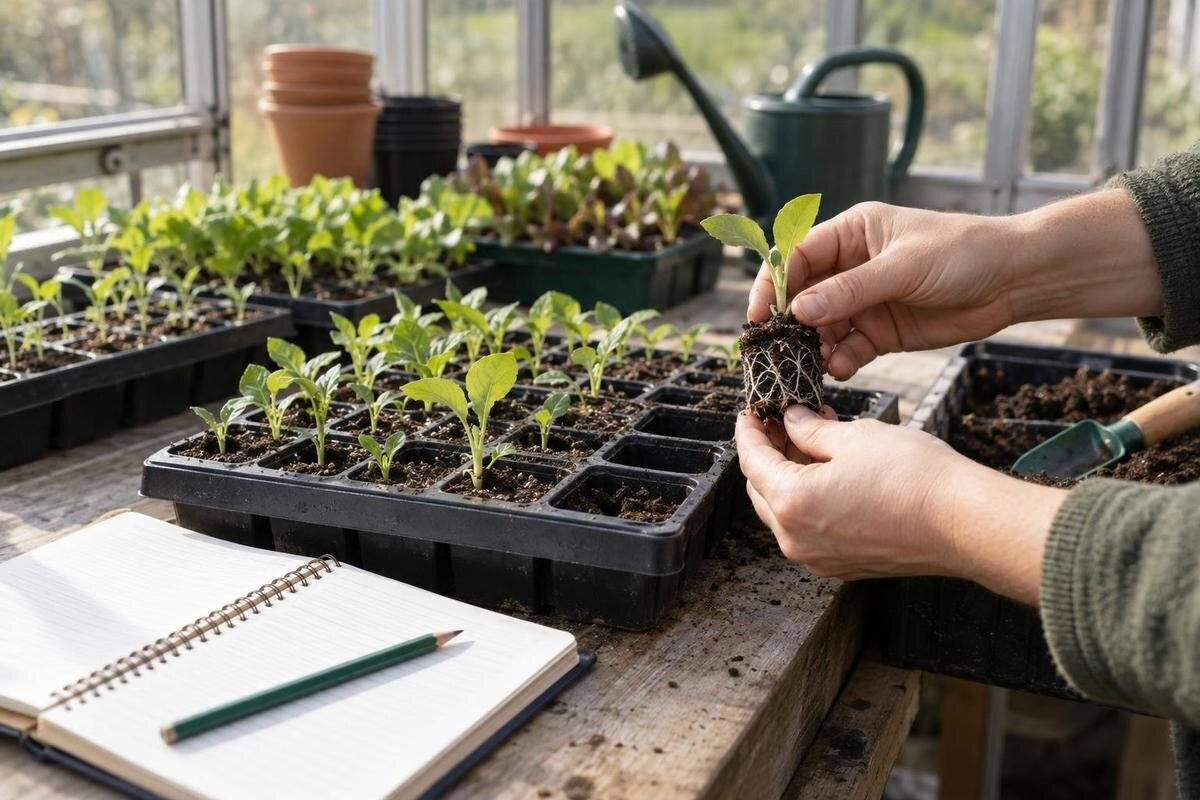
Greenhouse growing guide
A greenhouse diary is useful when it lets you explain why one sowing occupied a bench for weeks, produced a consistent batch or demanded more attention than planned. The aim is not to write down everything that happens. Record enough about each batch—dates, quantities, growing conditions, actions, outcome, space and time—to compare like with like. At season’s end, those notes can turn a vague impression into a specific change for next year.

What a growing diary should help you decide
A diary earns its place when it answers a decision you will face again: which sowing date gave you plants ready when needed, which batches overlapped, or which routine took more work than expected? A date alone cannot answer these questions. It needs to sit beside what was sown, how much, what happened afterwards and how the result was judged. Link each batch from sowing to its final destination so you can see where time and space were committed. Use the record to understand your own sequence, not as proof that the same timing will suit every crop or season. Its purpose is to improve a decision, not to make the notebook longer.
Keep observations, actions and conclusions separate. A high reading at 10.00 in the back corner is an observation; opening a vent at 10.15 is an action; a tray drying faster is an outcome; the position may have contributed is a hypothesis. That distinction prevents a guess from becoming a supposed fact in next year’s plan. If a problem appears once, mark it as a one-off to investigate; if it recurs across comparable batches, it deserves more weight. Include the evidence behind each judgement—counts, weights, dates or a short description—so you can revisit it without relying on memory. Note unknowns as unknowns.
Set up a record for each batch
Choose a format you can complete while the work is fresh: a ruled notebook, printed batch cards or a spreadsheet can all work if they use the same headings. Give every batch a short ID and repeat it on the tray label and space map. For illustration only, an entry might read: batch 2026-03-01; 20 seeds sown on 4 March; 16 emerged by 14 March; bench A; 15 minutes spent sowing. These are example entries, not crop targets. Keep a season index listing each ID, crop, sowing date and current status. Indexing by month or crop helps you find a batch without copying all its notes. The index shows overlapping batches; the full record holds the detail.
Copy this sequence of headings: batch ID; crop and cultivar; seed or cutting source and lot; sowing date and quantity; tray or container; location; dated conditions and actions; emergence count; potting-on or transfer dates; losses; harvest dates and amount; labour minutes; space occupied; notes for next time. Add units and define abbreviations once. Use not recorded rather than entering zero when you did not measure something, and label estimates as estimates. If several people share the work, agree on the headings and units so that entries can be compared. A consistent, partly complete record is more useful than a different format for every batch.
Map greenhouse space and batch locations
Draw a simple plan of the growing area and name each bench, shelf or floor zone so a batch can be located consistently. Note the usable surface of each growing level, not only the building’s overall footprint. Mark entrances, fixed fittings, work areas and routes you need to keep clear; a sketch need not be to scale if you label its measurements. Treat each shelf as a separate zone rather than assuming all the space above a bench is interchangeable. When the layout changes, date the revision. Your records can then distinguish crowding in one corner from a general shortage of growing area.
Give each area a code and record the batch’s start and end dates there, along with the approximate bench length or number of tray spaces used. For a broad footprint reference, Aluminium Greenhouses with Storage – Limited Edition is listed from 5.52 to 28.08 m². That published area cannot tell you how much bench surface remains in a particular layout, so compare the selected option with your own measured sketch. If trays move between areas, record the move and its date; otherwise the diary may suggest a batch occupied one position throughout when it did not. This makes it easier to see which zones were busy at the same time and which stayed unused.
Record sowing dates and milestones
Record the calendar date and year, not just early spring, and note the amount sown: number of seeds, plugs or cuttings, as appropriate. Include the crop and cultivar, supplier or source, seed-lot details if available, container or tray format, and intended destination. Keep the plan and the event distinct: write the date you meant to sow as well as the actual date. For bought-in young plants, make clear that the entry is a purchase or arrival rather than a sowing. If you follow crop-specific guidance, note the stage or check date you used rather than treating one calendar date as universal.
Add milestones as they occur: first emergence, the count date, potting-on, a move to another zone, planting out or first harvest. Put a planned date beside the actual one so delays are visible, then give the reason only when you know it. Record a missed work session as an event; label an uncertain explanation as a hypothesis. If overlapping batches prompt you to compare greenhouse sizes, the Bloomcabin Prestige Greenhouse listing gives an area range from 3.77 to 28.08 m². Keep the exact option under consideration beside your calendar and bench map. This lets you compare the proposed layout with the weeks when batches were waiting for space.

Log growing conditions consistently
Choose a small set of conditions that could help explain the result, then record them in a repeatable way. Depending on what you can measure, that might include a temperature reading, relative humidity, watering amount or a note about shade or ventilation. Write the time, location and unit with each reading; 25 is not useful if you cannot tell whether it means degrees or which part of the greenhouse it describes. Keep the same measurement points where practical, and note a changed sensor position rather than silently comparing different locations. A single reading is a snapshot, so label it as such.
Record actions with their date and reason: watering, moving a tray, adding shade or changing ventilation are events, not just background conditions. Do not fill the page with readings that never affect a decision; one clear observation at a consistent time can be more useful than scattered guesses. Identify the greenhouse and growing zone in the season header too, especially if your records cover more than one structure. For reference, the Spacious Greenhouse listing covers sizes from 47 to 70 m². Record the exact option rather than the catalogue range, and keep readings attached to their measurement locations. This preserves the context when you compare entries from different spaces or seasons.
Track emergence, potting-on and losses
An emergence figure is interpretable only when the starting quantity and date of the count are known. Record how many were sown, how many emerged by the chosen check date and how many were lost later; keep these stages separate. If you calculate a percentage, divide the number emerged by the number sown, multiply by 100 and state the check date. Keep the original counts as well as the calculation so you can check it later. A tray that has not yet been checked is not a failed batch, so leave its status pending rather than entering a zero.
At potting-on or transfer, record how many plants moved, how many were discarded and why, where known. Note whether plants were ready, small, uneven or damaged, using descriptions you can apply consistently. Also record any wait for an available bench or any tray placed temporarily elsewhere. These details help distinguish a space shortage from delays associated with timing, watering, seed quality or handling. If you are also comparing structures, the Aluminium Greenhouses listing covers 3.77 to 28.08 m². Keep that size comparison separate from the batch outcome: use the dated transfer counts and location notes to describe what happened, rather than attributing success or losses to the greenhouse model.
Record harvest quantities and quality
Record each picking or usable batch separately, with a date and a unit you can repeat: kilograms, number of fruits, bunches, trays or another practical measure. Note whether the amount was eaten, stored, shared or discarded, and describe the quality standard you actually used. If weighing every harvest is unrealistic, use a consistent count or container measure and explain it. Record discarded or unharvested produce separately rather than letting it disappear from the account. A season total is less informative than a sequence showing when output began, peaked or stopped.
Compare like with like. A crop grown for longer or across a larger bench may produce more in total without using space or time efficiently. Calculate yield against the area actually occupied if you have measured it, and keep the method and area units beside the result. For example, when reviewing a layout against the Wall Greenhouse range of 3.69 to 14.34 m², distinguish the building footprint from the crop’s occupied bench area. Only the latter belongs in a bench-yield calculation. Preserve that area for each batch alongside its harvest dates, so next year’s comparison uses the same basis rather than a different measure of space.
Record labour and occupied space
Labour matters because a productive batch can still make an unrealistic schedule if it needs repeated attention. Log minutes for the main tasks—sowing, watering, potting-on, moving, harvest and cleaning—using the same level of detail for each batch. A rough time recorded on the day is more useful than a confident estimate months later. Decide what the figure includes, such as preparation or clearing up, and use that definition consistently. If two people share work, record total person-minutes or state whose time is included. Separate routine care from one-off setup or repair work so an unusual job does not distort the crop comparison.
Track the period a batch occupies a bench as well as the surface it uses; together, these figures show whether capacity was tied up by a slow-moving batch or by several sowings peaking together. A simple calendar showing occupied zones by week can reveal the overlap. Add consumables or water only if you can record them consistently and expect to use the information. When considering a different footprint, Limited Edition Aluminium Greenhouses are listed from 3.77 to 28.08 m². Compare a selected size with your mapped work area and occupied weeks. Keep task time alongside that comparison to see whether the constraint was room for plants, time to care for them, or both.

Review patterns in the season’s records
Review the diary while the season is still fresh. Compare planned and actual dates, quantities sown, emergence, time in each zone, harvested amount and labour. Look for patterns across batches with similar handling or conditions, and separate those from a single exceptional event. Check whether a poor result was followed by a specific change, because batches managed in different ways are not a clean comparison. If records are patchy, note how complete they are rather than letting one detailed batch stand for the whole season. The review should reflect the quality of the evidence as well as the outcome.
Write a short review under three headings: keep, change and test. Keep is for routines that repeatedly worked; change is for a clear bottleneck, such as batches waiting for space; test is for an explanation you cannot yet prove. If the review identifies repeated crowding, the T-Model Orangery Greenhouse range of 16.52 to 30 m² can be included in a footprint comparison. State which recorded overlap prompted that comparison and which zones were affected. A product name is not an explanation for the result. Add one line about what evidence would confirm or disprove each proposed change, so the review leads to a question you can investigate.
Turn the review into next year’s plan
Build next year’s calendar from the results, not from a copied date alone. Retain timings that repeatedly met your target, shift a sowing only when the record gives a reason, and reserve a small trial for uncertain changes. Use relevant crop-specific guidance for stage requirements, then work backwards from the intended transfer or harvest date. Put planned sowings on one calendar and mark the weeks when each batch will occupy a bench; this reveals clashes before they happen. Include work sessions as well as plant dates if labour was the constraint. Changing one factor at a time makes the result of a trial easier to interpret.
Decide what needs to be in place before sowing: tray spaces, a bench zone, time for potting-on and a destination for finished plants. If your notes show that the greenhouse footprint itself deserves comparison, the Pyramid Greenhouse listing gives an area range from 5.53 to 18.9 m². Put the exact option and proposed layout alongside the batch calendar, rather than choosing by area alone. Finish with a short trial plan stating what you will change, what will remain the same, what you will count and when you will review it. Keep this plan with the new season’s batch records so the eventual result can be compared with the original intention.
Frequently asked questions
What should I record for every sowing?
At minimum, note the batch ID, crop and cultivar, source, quantity, sowing date, container, location, important observations and actions, milestone counts, harvest, space used and labour. If time is limited, preserve the date, amount sown, outcome and the decision you want to revisit.
Do I need to write in the diary every day?
No. Record often enough to capture changes that matter to your decisions, and use a consistent interval for readings you want to compare. Always note exact dates for sowing, moves, actions, counts and harvest; avoid reconstructing routine observations from memory.
How do I calculate an emergence percentage?
Divide the number emerged by the number sown, then multiply by 100. Record the original count and the date you checked. The percentage describes that batch at that point; it is not a universal target for every crop.
What if I missed a week of entries?
Mark the gap as missing. If you add an estimate, label it as an estimate and explain its basis. Do not enter a guessed reading as a measurement. A clearly incomplete record is more useful than a tidy but invented sequence.
How can a diary show whether I need more greenhouse space?
Compare your space map with the dates and bench areas occupied by overlapping batches. Repeated waiting, temporary stacking or postponed sowings may point to a capacity issue, while one crowded week may have another cause. Total building area alone does not show usable bench space.
At the end of the season, choose one or two changes that your records actually support and one small question to test. Keep the same batch identification system, map codes and units next year so the comparison remains useful. The goal is not a perfect archive; it is a dependable account of what was sown, what happened, how much was harvested and how much space and work each batch required. That is enough to make a more realistic growing calendar.
