
Greenhouse Glass Cracking Again: Installer Checks to Arrange
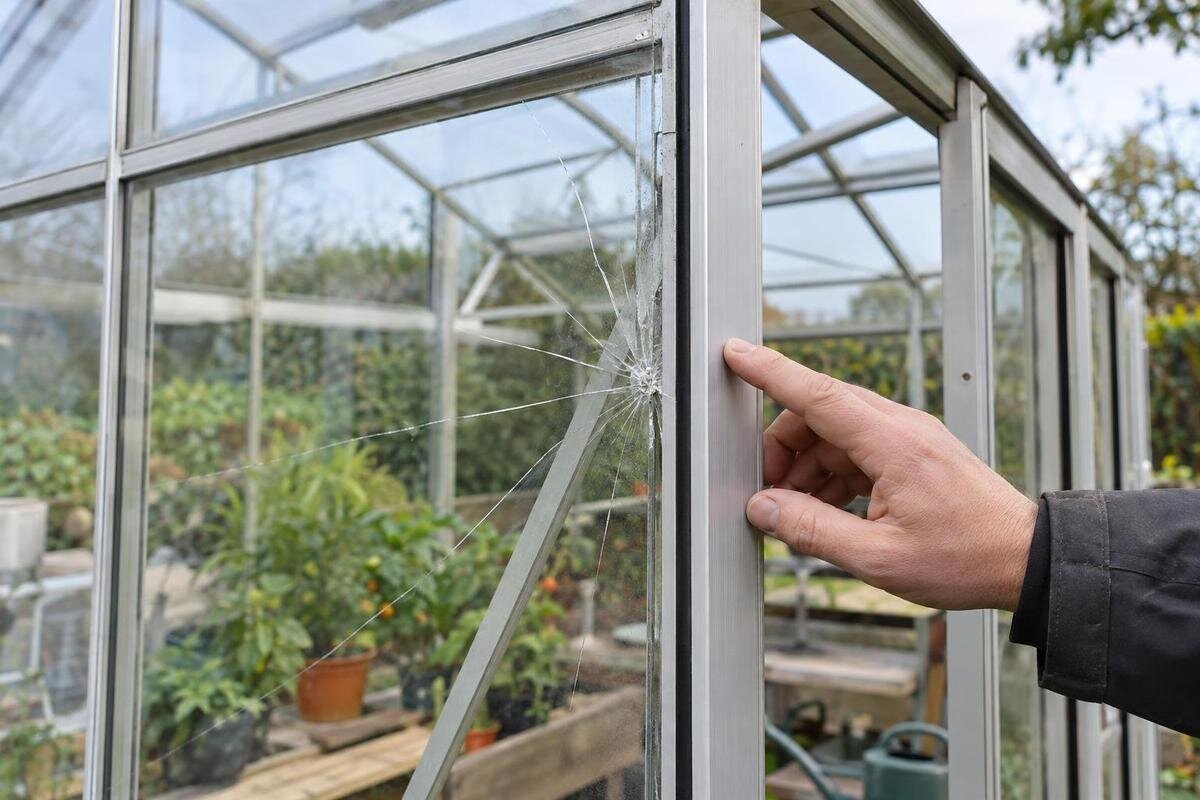
Greenhouse glazing repair
Repeated greenhouse glass breakage deserves more than a like-for-like pane order. When a replacement cracks again, or similar damage appears in another opening, the cause may involve frame alignment, base support, how the pane is retained, temperature-related movement or an impact. These are possibilities, not diagnoses from a photograph alone. A qualified greenhouse installer should review the affected opening in context, compare it with the manufacturer's instructions and explain whether the remedy is a compatible pane, work on surrounding parts or a wider replacement decision.

Why a repeated break needs a wider diagnosis
A second crack does not automatically mean that the replacement pane was faulty. The new pane may be exposed to the same frame distortion, uneven support, incorrect retention or source of impact; alternatively, the later break may be unrelated. The first distinction is whether damage returned in precisely the same opening, appeared in a neighbouring pane or occurred elsewhere. Record which pane was replaced and when, then ask the installer to compare that history with the surrounding frame and glazing. Recurrence is a reason to investigate the whole opening, not evidence on its own that a particular person or component is at fault.
Keep people and pets away from broken or unstable glazing. Do not touch, lift, tape or remove fragments, and do not climb or reach over damaged glass to inspect it. If a pane seems likely to fall, stay clear and arrange prompt help from a qualified installer. When booking, explain that the break has happened more than once and ask for an assessment of the frame, support and glazing retention, not just a replacement pane measurement. This sets the purpose of the visit without prejudging the cause.
Record where and when each pane failed
Take an overall photograph from a safe position, then a closer image only if you can do so without approaching unstable glass, climbing or touching it. Include enough of the greenhouse to show which roof or wall panel is affected. A simple sketch with the panel marked can remove ambiguity, especially if several panes have been replaced. Photograph neighbouring panes and the frame around the opening only where they are visible safely. Do not put a ruler against glass, move a frame member or try to photograph a crack from behind a broken pane. The aim is to show location and visible condition, not to prove what caused the break.
Make a brief timeline: when the damage was first noticed, when the earlier pane was fitted and whether the repeat happened soon afterwards or much later. Note any events you know about, such as maintenance, nearby work, a door or vent being used, or an object striking the greenhouse. Record conditions you observed, but do not treat a hot day or a particular crack pattern as a diagnosis. Keep invoices, model details and notes from previous repairs together so the installer can distinguish a repeated fault at one opening from separate damage at different points.
Inspect the frame for alignment and movement
Ask the installer to assess the frame as an assembly, not just the damaged bay. They can compare corners, joints, uprights and roof members for visible displacement or bends, check alignment against the drawings for the model, and look for changes in gaps around doors, vents or panels. A door or vent that binds may be relevant, but it does not by itself prove the frame caused the crack. The point is to see whether the glazing is held in the geometry intended for that greenhouse. A shifted or distorted section can change where a pane bears or how its retaining parts contact it, so surrounding members matter.
The inspection should include the connected sections around the failed opening and any places where the frame appears to have moved since the earlier repair. Ask whether the installer found an alignment issue, suspects one or could not confirm one, and what they compared with the manufacturer's drawings. If they recommend replacing the structure rather than repairing the frame, ask which findings support that recommendation. The Limited Edition Aluminium Greenhouses range, listed from 3.77 to 28.08 m², is one option to discuss at that stage. Compare the proposed replacement with the existing installation; the listed area alone does not establish compatibility with its base or glazing.
Check the base and support beneath the frame
Even if the frame itself appears intact, movement or gaps at its support can affect how the assembled structure sits. The installer should compare the base arrangement with the manual or drawings for the exact model and check whether frame-to-base contact, visible gaps, signs of movement and changes in the supporting surface are consistent with those instructions. The aim is not to impose a universal rule that every greenhouse needs a particular type of base or a particular correction. Support requirements differ by design and installation; adding shims, changing fixings or altering the base without an assessment can introduce another problem.
Tell the installer about any known resurfacing, groundworks, settlement, impact or changes near the greenhouse, and roughly when they happened. That history may help them judge whether a change coincides with the first or later breaks. Do not dig around the structure or attempt to level or reinforce it before the visit. If replacement is proposed, keep the support assessment separate from the choice of greenhouse size. For example, the T-Model Orangery Greenhouse is listed from 16.52 to 30 m², but that area range is not a foundation specification. Ask how the proposed layout and its support requirements compare with the installation being assessed.

Review how the pane is fitted and retained
A frame can look straight while a pane is still the wrong specification or incorrectly seated. The installer should check the glass against the model's documentation and inspect the edge support, retainers, glazing channels, seals or gaskets where used, and the clearances around the pane. They can look for uneven gaps or places where glass appears to bear against the frame. The details vary between greenhouse models, so a pane or retaining component that looks similar is not necessarily interchangeable. A tight fit, unsupported edge or damaged retaining part is a question for professional inspection, not something to correct by pushing the glass or adding packing.
Ask whether the previous and current panes match the manufacturer's instructions and whether the retention around the opening is consistent with them. The installer should explain whether the suspected problem concerns the pane specification, its seating, the retaining components or the surrounding frame. This distinction matters when deciding what the repair must include. Do not order from the appearance of a fragment or try to measure broken glass. If a different structure such as the Pyramid Greenhouse, listed from 5.53 to 18.9 m², is being considered instead, treat that as a separate purchase decision. Its catalogue dimensions do not identify compatible glazing for the greenhouse you already own.
Check glazing clearances and temperature-related movement
Glass and frame components can respond differently to temperature changes, and the greenhouse design should allow for the movement intended by its manufacturer. If the fit is too tight, a retaining part is damaged or the frame is distorted, temperature-related movement could interact with those conditions. That does not mean a warm spell alone proves the cause. The installer should inspect the actual fit and clearances against the model-specific guidance and consider whether the affected pane experiences different local conditions from neighbouring panels.
Share the timing of each break and note any circumstances you observed, such as direct sun followed by shade, a change in ventilation, cleaning or nearby work. These details are clues to consider, not proof. Do not deliberately heat, cool or wet the glass as a test, or alter its retainers. If you are also considering the Aluminium Greenhouses with Storage – Limited Edition range as a replacement, its listed areas run from 5.52 to 28.08 m². Keep the temperature-related findings in the repair discussion: the catalogue area cannot tell you whether glazing clearances contributed to the damage. Those clearances need to be assessed against the documentation for the affected model.
Look for impact and contact around the greenhouse
A pane can be damaged by a local impact or repeated contact as well as by conditions within the frame. Possible events include a tool or object striking the glass, nearby maintenance, a branch touching it or an item being moved through the greenhouse. These are examples to report, not conclusions to draw from the shape of a crack. The installer can assess the opening and its surroundings from a safe position and look for visible signs that help distinguish an impact from a recurring fit or support issue.
Think back to any work, deliveries or changes near the damaged area and tell the installer what you know without assigning blame. Do not climb to investigate a branch or move an object beside unstable glass. Ask whether there is evidence of contact at this opening and whether that explanation fits the history of both breaks. If you are comparing replacement options, including the Bloomcabin Prestige Greenhouse, listed from 3.77 to 28.08 m², keep that question separate from the product choice. A different greenhouse would not by itself remove a nearby source of impact. The inspection should explain whether external contact remains a concern at the intended location.
Include neighbouring panes, doors and vents in the inspection
The installer should look beyond the broken panel for related signs: damage to nearby panes, shifted retainers, displaced frame sections or changes in how adjoining parts meet. One isolated break may have a different explanation from several panes failing close together, but the pattern alone is not enough to identify the cause. Doors, windows and vents can also provide useful context if they no longer align or appear to bind. Do not force them open or operate them around damaged glazing; let the installer assess their condition safely.
Ask whether the inspection will cover the connected frame and neighbouring glazing, rather than only the opening where another pane is needed. The findings should distinguish damage confined to one bay from signs affecting several connected sections. Where a door or vent also binds, ask whether the installer considers it related to the glazing problem or a separate issue. For a complete replacement enquiry involving the Spacious Greenhouse, the listed area range is 47 to 70 m². Record the intended footprint separately from the extent of the present damage, so the discussion remains clear about what needs repair and what a proposed replacement would change.

Use the exact model and manual before ordering parts
Give the installer any order confirmation, model name, manual, technical drawing and part identifier from earlier repairs. If you know when the greenhouse was installed or when a pane was replaced, include that information, but do not guess if you are unsure. A product name or a visual resemblance may not identify the exact glazing fitted to an existing structure. The Aluminium Greenhouses product page lists a Classic greenhouse range from 3.77 to 28.08 m², but a model name and area range are not a spare-part identifier for a particular greenhouse.
Ask the installer to use the manufacturer's documentation and exact spare-part information to confirm the pane and retaining components required. If the model is unclear, say so; the next useful step may be to identify it from purchase records or product documentation rather than ordering by approximate appearance. Ask the installer to note what has been confirmed, what remains uncertain and whether another inspection is needed. This keeps the parts decision tied to the investigation of the repeated break, instead of treating it as a routine reordering exercise.
Agree what a repair or replacement would address
Before deciding on another pane, ask the installer to summarise the findings: which conditions they observed, what cause they consider most likely and what remains uncertain. The summary should say whether they assessed alignment, support, pane fit, retention and nearby glazing, and whether the proposed work addresses the suspected cause as well as replacing glass. If the installer cannot identify a cause, ask what further information or assessment would help. A clear explanation makes it easier to distinguish a one-off impact from a condition that could affect another pane.
Replacing the whole greenhouse is not automatic; it is a separate option if the installer finds that the frame, support or compatible parts cannot sensibly be repaired. Ask which parts of the existing installation would remain and which would need reassessment under the proposal. If a Wall Greenhouse, listed from 3.69 to 14.34 m², is among the options, its intended footprint and site requirements belong in that comparison. The useful question is not simply whether a new model is available, but whether the proposed work addresses the condition linked to the repeated damage. A change of model alone is not an explanation of why the glass cracked.
Frequently asked questions
Does a second crack prove that the replacement pane was defective?
No. The replacement may have been affected by the same frame alignment, support or retention issue as the previous pane, but a separate impact or unrelated event is also possible. An installer needs to compare the break location and surrounding structure before drawing a conclusion.
Can the shape of a crack show what caused it?
A photograph may help document the damage, but the visible crack pattern alone is not a reliable diagnosis. Take pictures only from a safe position, without touching the pane or approaching unstable glass, and ask the installer to examine the opening and its surroundings.
Should I order another pane before the installer visits?
It is usually better to confirm the exact model, glazing specification and part identifier first, and to check why the previous pane failed. Do not handle broken glass or try to measure a fragment. The installer can advise what replacement, if any, matches the manufacturer's documentation.
Could temperature changes be involved?
They may be one factor, particularly if the fit or retaining system does not allow for the movement intended by the design. A hot or cool spell does not prove that this is the cause. Share the timing with the installer and ask them to compare the pane's fit with the model-specific instructions.
What should the installer explain after the inspection?
Ask which conditions they observed, what cause they consider most likely and what remains uncertain. The summary should say whether the frame, base support, glazing fit and nearby panels were assessed, and whether the proposed repair addresses the suspected cause as well as replacing the pane.
The important question is not only which pane failed, but what condition may have affected it again. Comparing the damage history with frame alignment, support, glazing fit, temperature-related movement and possible impact gives the installer a basis for distinguishing a one-off event from a recurring issue. The findings, including any remaining uncertainty, should guide the choice of replacement pane or wider repair, so the work addresses the suspected cause rather than simply repeating the previous order.
