
Greenhouse Disinfection After a Major Disease Outbreak
Plant health
After a serious plant disease outbreak, routine washing is not enough to decide whether a greenhouse is safe to use again. First identify the likely pathogen and the places it could persist; then remove contaminated material, clean surfaces and select only a treatment suited to that organism and the greenhouse’s actual materials. Soil, irrigation, tools and porous items may need different measures. A careful sequence reduces the chance that the clean-up itself spreads the problem.

01
Contain the affected area before cleaning
Close the affected growing area and pause movement of plants, cuttings, potting compost, growing medium, trays, tools and hoses between it and healthy crops. Mark a clean route and a dirty route so loose material does not cross unaffected beds. If irrigation water or a shared drain may be involved, note it rather than flushing it as a first response. Keep unnecessary visitors out and use separation or protective measures advised by a plant-health professional. Avoid shaking plants, sweeping dry debris vigorously or using a jet that could scatter contaminated droplets or soil. Place an identified collection tub at the boundary for used gloves or tools; do not set them on a clean bench. The immediate goal is to limit transfer while the cause is investigated, not to make the greenhouse look tidy.
Photograph symptoms and nearby plants in place; take both a whole-plant or bench view and a close-up. Record crop type, when signs first appeared, which rows or batches are affected, recent watering, new stock and any treatments already used. A rough plan marking beds, benches, doors and water points may reveal a pattern that photographs alone miss. Keep dates with the notes, and do not move plant samples until a diagnostic service explains how to collect and package them. Incorrect handling can spread material or make a sample less useful. Similar leaf spots, wilting or rot can have different causes, so an early guess should not decide the disinfectant or disposal method.
Identify the pathogen and its likely reservoirs
Contact a plant diagnostic laboratory, horticultural adviser or relevant plant-health service, especially if the problem is spreading quickly or several crops are affected. Share clear photographs and a concise history, then ask whether an inspection or sample is needed. Fungal diseases, oomycete diseases, bacterial infections, viruses, nematode problems and diseases spread by insect vectors may require different controls; products described broadly as disinfectants are not interchangeable. Diagnosis matters because an organism may persist on crop debris, roots, weeds, growing media, water, tools or particular surfaces, and the key reservoir is not always the most visible symptom. Note whether affected plants arrived together or share a water route; that context can help direct the investigation.
Before cleaning, ask for the organism’s confirmed or best-supported identity, its likely survival sites, the items that must be removed, and which greenhouse surfaces can be treated. Check what product type and application conditions are recommended, including protective measures, rinsing, drying, waste handling and post-treatment monitoring. Ask whether testing or a host-free interval is useful before planting again; these steps are not automatically required in every case. If identification remains uncertain, keep the area contained and request a clear provisional plan rather than escalating to a stronger or broader chemical by guesswork. A written sequence helps everyone involved distinguish removal, washing, treatment and any later verification.
02
Decide what can be kept, repaired or replaced
After diagnosis, map the greenhouse into crop contents, movable equipment, fixed fittings and structure. Some items may be cleanable; others may need removal, replacement or assessment because their surface is damaged, porous or hard to reach. Note which areas are accessible and which sit behind benches or under shelves; this helps distinguish a cleaning issue from a repair issue. Ask the adviser which category applies before dismantling anything. The frame and glazing are not automatically the disease reservoir, and discarding the whole enclosure is no substitute for dealing with affected plants, soil, drainage or water. If access would require handling broken glass, removing panes, altering a frame or working at height, ask a qualified installer to assess it rather than attempting a structural change.
Keep the make, model, serial details and manual for the existing structure. When a clip, seal, panel or other part is implicated, send the supplier its exact identifier, an overall photograph, a close-up and any relevant measurements; ask whether an approved replacement exists instead of adapting a substitute. If a horticultural adviser and installer conclude that full replacement is justified, you could include Limited Edition Aluminium Greenhouses in your comparison. Request model-specific material and care information: the catalogue page alone does not establish disease-control suitability, site fit or compatibility with a proposed treatment.
Remove crop debris without spreading it
Before surface treatment, remove affected plants, roots, fallen leaves, fruit, weeds, twine, labels and other loose organic material according to the diagnosis. Keep suspect waste contained and follow the disposal route recommended by a local plant-health adviser; do not put it on a compost heap or move it to another bed unless advice for the identified problem says that is safe. Work towards the exit without carrying debris through clean areas. Keep a separate container for items to retain, so cleanable pots and tools do not get mixed with waste. Ask whether root-bearing material, potting compost and supports need separate handling.
Handle dry residue gently: avoid shaking plants, brushing debris into the air or washing it into cracks and drains. Remove roots from pots only in a way that prevents soil spilling across the floor, and keep contaminated items out of the clean staging area. Record what has been discarded and what is awaiting assessment. Keep this waste-handling plan separate from any replacement purchase. If you are considering the T-Model Orangery Greenhouse, contaminated crop material still needs the same disease-specific assessment and disposal plan before a new structure is brought into use.

03
Clean surfaces before applying a disinfectant
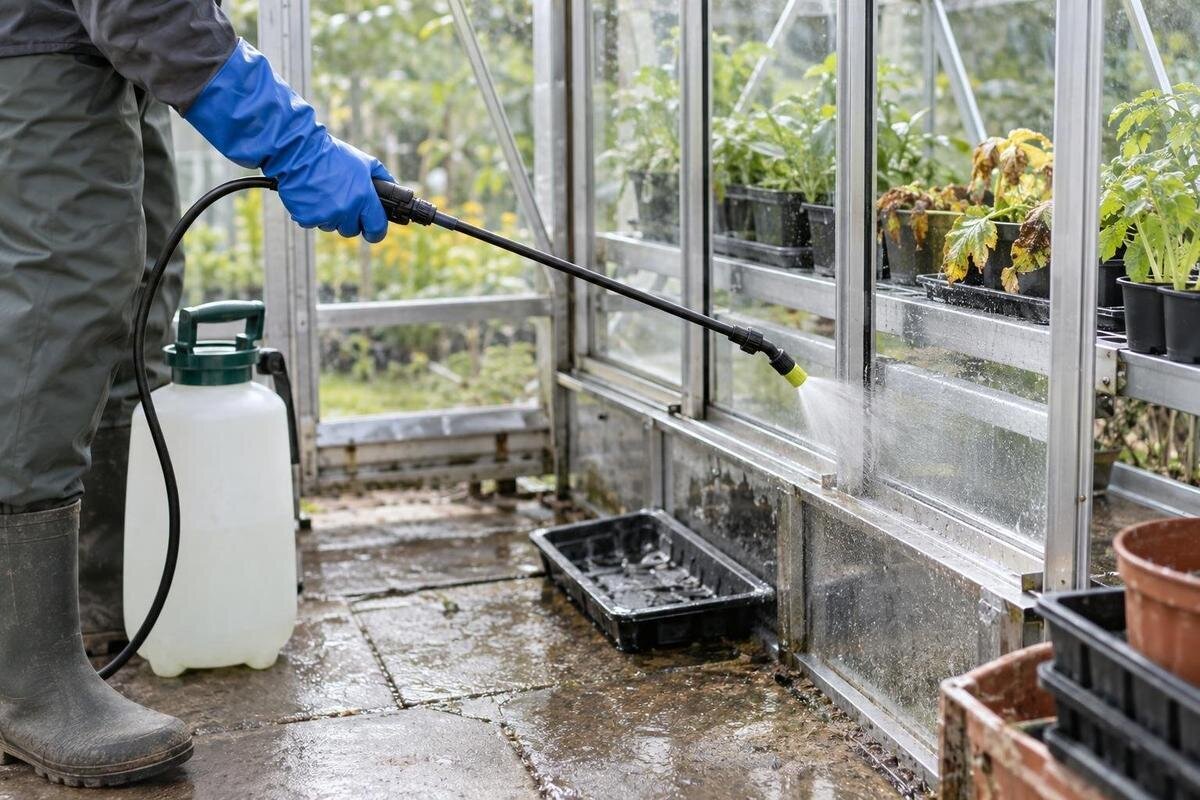
Once loose matter is removed, clean surfaces using a method permitted for the actual greenhouse components. Cleaning lifts soil, sap and other residues that can interfere with treatment; it is a distinct step from disinfection. Use low-splash methods and collect or direct wash water as plant-health and environmental guidance allows. Do not assume a high-pressure hose, abrasive pad or household cleaner is appropriate: it could spread residue, damage a finish or leave a film that affects the next treatment. Check the manufacturer’s care instructions for the frame, glazing, benches and seals before selecting a detergent or tool. Use separate cloths and brushes for clean and contaminated zones, or manage them as directed in the hygiene plan.
Pay attention to joints, bench undersides, door tracks, gutters, corners and cracks where debris can remain, but do not force tools into seals or dismantle structural parts. If a surface cannot be reached or cleaned without unsafe glass handling, note it and ask an installer or adviser how to proceed. Access for cleaning also belongs in a replacement enquiry. If you are considering a Pyramid Greenhouse, ask about access to its components and request the relevant care instructions. Do not assume that the tools or cleaning method used on your current greenhouse will suit a different model.
Match the treatment to the pathogen and materials
Choose a disinfectant only after the organism and target surface are known. Read the complete label and current horticultural guidance for the stated target, intended use and application conditions, including dilution or ready-to-use directions, temperature, pre-cleaning, contact time, ventilation and personal protective equipment where specified. Follow those instructions exactly. A general claim that a product kills germs does not prove activity against a particular plant pathogen or suitability for greenhouse use. A product belongs in the plan only when its label and current advice support the intended target and setting. If they do not, ask a qualified adviser for an appropriate alternative rather than increasing the concentration or extending the process by guesswork. Never mix products.
Compatibility is separate from efficacy. A treatment effective against the target organism may also harm a coating, plastic glazing, metal, timber, rubber seal, paint or irrigation component. Check the exact material and any manufacturer restrictions before use, including whether rinsing is needed and how wastewater should be managed. For a replacement option such as Aluminium Greenhouses with Storage – Limited Edition, request care guidance covering both the growing area and storage space. Compare that guidance with the proposed treatment rather than inferring compatibility from the product name or photograph.
04
Treat tools, containers and water equipment separately
Treat tools and reusable equipment as separate reservoirs. Remove visible soil and organic matter in a contained, low-splash way, then follow guidance specific to the item and pathogen for cleaning or disinfection. Handles, blades, trays, pots, seedling modules, clips, stakes, ties and benches may differ in material and contact with plants; one soak or spray is not a universal method. Discard or replace items that cannot be cleaned adequately only when the adviser recommends it, and keep treated items in the clean zone so they do not touch contaminated surfaces again. Store them only after any required drying or other final step.
Irrigation lines, tanks, filters, pumps and hoses need their own plan because internal surfaces and water pathways are not treated like a workbench. Never put a surface disinfectant into a water system or flush it through plants unless both the product instructions and qualified guidance specifically support that use. Ask what to do with water already in the system and where treated water or wastewater can safely go. If a replacement such as the Bloomcabin Prestige Greenhouse is being considered, list which existing tools, hoses and water equipment you intend to retain. Each still needs assessment before being used again.
Assess soil, growing media and the greenhouse floor
Potting mix, soil in pots, root balls and in-ground beds may harbour a pathogen even after visible plant debris is gone. Do not reuse suspect growing medium, tip it into other beds or add it to compost unless pathogen-specific advice says that is acceptable. Ask whether affected containers can be emptied and cleaned, whether the medium needs disposal or another action, and how to contain it during removal. Keep the route from pot to waste container controlled; spilled soil can undo careful surface cleaning. Do not improvise heat, chemical or washing treatments for growing media, because appropriate methods depend on the organism and substrate.
Treat the floor, cracks, drains, ground beneath benches and outdoor soil separately from glazing or frame surfaces. A disinfectant intended for hard surfaces does not automatically treat soil, and applying a surface cleaner to a bed may harm plants or affect water without controlling the pathogen. For soilborne disease, ask whether sampling, removal, a crop break or another locally suitable measure is indicated; there is no universal solution. Include nearby runoff or gutters in the assessment if water may have carried debris there. If you are comparing replacement options in the Spacious Greenhouse range, keep the affected bed and floor in the recovery plan: replacing the enclosure does not remediate them.

05
Follow application conditions and verify before reopening
Plan the application so treated areas do not become contaminated again. Follow the label’s coverage and contact conditions, including whether a surface must remain wet for a stated period; do not assume that more product, a longer time or a repeat application improves the result. Rinse only where instructions require it, and meet any stated drying, ventilation or re-entry conditions before placing plants, tools or people back into the area. Use specified protective equipment and keep children, pets and unprotected people away as directed. Avoid discharging rinse water into beds, drains or a shared supply unless the guidance permits it.
A clean appearance is not proof that a pathogen has been eliminated. Ask whether the case needs a follow-up inspection, sampling, repeat treatment, host-free period or monitoring; the right check depends on the diagnosis and treatment. Record the treatment name, date, target areas and relevant application conditions, together with any follow-up steps the adviser specifies. If poor access or a damaged structure makes correct treatment impractical, seek installer advice. When considering a replacement from the Aluminium Greenhouses range, explain which areas could not be treated and why, so the enquiry addresses the practical problem rather than appearance alone.
Reopen in stages and prevent a repeat
Before new plants return, confirm that the prescribed clean-up is complete and any re-entry or rinsing conditions have been met. Start with healthy planting material and clean, suitable containers or fresh growing medium where disease guidance calls for them. Keep incoming plants apart long enough to inspect them if an adviser recommends it, and use separate tools or a one-way workflow for suspect and healthy stock. Remove weeds and volunteer plants that could host the identified pathogen, and keep water, footwear and hands from carrying residue back into the cleared area. Follow the hygiene measures that match the confirmed disease.
Keep a short outbreak record with the greenhouse manual: diagnosis, affected locations, items removed or retained, treatment and source of advice, part numbers replaced, and what to watch for after replanting. Set a review date based on horticultural guidance rather than assuming one successful wash ends the risk. If your recovery plan includes a Wall Greenhouse, add its component details and care instructions to those records, and verify site fit with the supplier. Retain the outbreak history even if the enclosure changes; the prevention routine must still address the identified disease and any equipment or growing areas kept in use.
Frequently asked questions
Is washing alone enough after a serious outbreak?
Washing can remove soil and debris, but a clean appearance does not show that a particular pathogen has been inactivated or that tools, growing media and water routes are clear. Follow advice for the identified disease and use any recommended monitoring or testing before bringing plants back.
Can I use the same disinfectant on every greenhouse surface?
Not safely by assumption. A treatment may be effective against one organism but unsuitable for a particular glazing, frame, seal or bench material. Check the product instructions, current horticultural guidance and the greenhouse manufacturer’s care information for the exact surfaces involved.
Can I put affected plants on the compost heap?
Do not assume that is safe. Some disease material can remain viable in plant waste or growing media. Ask a plant-health adviser how to contain and dispose of the affected material, and compost it only if the advice for the identified problem allows it.
Will a surface disinfectant treat the soil or irrigation system?
Not necessarily. Soil, potting compost, tanks and irrigation lines are different environments from a hard surface, and each may need its own assessment. Do not put a surface product into a water system or apply it to soil unless its instructions and qualified guidance support that use.
When can I bring plants back into the greenhouse?
Wait until the specified treatment, rinsing, drying and re-entry conditions have been met. Ask whether the diagnosis calls for monitoring, sampling or another check before replanting. There is no single waiting period that suits every pathogen and treatment.
Plan the clean-up around all the places the pathogen could persist, not just the greenhouse frame. Diagnosis determines which crop waste, growing media, equipment, water routes and surfaces need attention, while product labels and manufacturer guidance determine which treatments are suitable for each material. Keep the plan and part records with the greenhouse manual. Reopen only when the recommended treatment and follow-up checks are complete; if uncertainty remains, seek expert advice rather than repeating a treatment without a clear purpose.
