
Growing Kohlrabi in a Maltese Greenhouse
Greenhouse growing guide
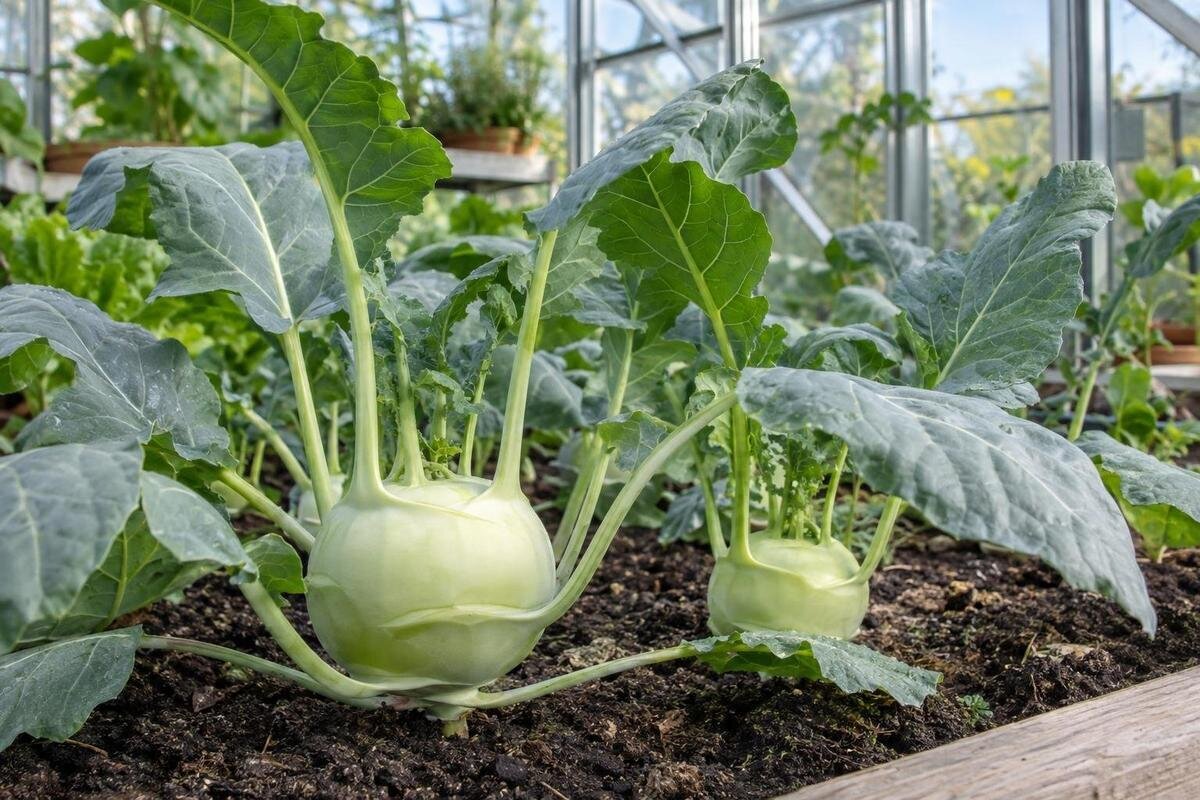
Kohlrabi is at its best when its swollen stems grow steadily in cool conditions. In Malta, a greenhouse can extend the growing season during the cooler months, but it does not make summer heat suitable for this crop. Sow in small batches, leave room for each stem to swell and harvest while it is still compact. The main challenge is keeping conditions moderate and moisture even while sharing the greenhouse with other vegetables.

Kohlrabi in Malta’s cooler growing season
Kohlrabi is a brassica grown for the swollen stem that forms just above the soil, rather than for its roots. It develops best when growth is steady and conditions are cool to mild; prolonged warmth and dryness can leave stems coarse or woody. This makes it a better match for the cooler part of a Maltese greenhouse calendar than for the hottest months. Growing under cover can protect plants from weather and extend the growing season, but the greenhouse is not automatically cool. On a sunny winter day, the air may warm quickly, so readings near the plants matter more than the season’s name.
An unheated structure offers shelter, not a controlled temperature. It can gain heat rapidly by day and cool substantially at night, so it does not guarantee ideal conditions or remove the need to watch the weather and the plants. Before sowing a large bed, try a small row and note how long it takes to reach harvest in your greenhouse. If temperatures rise during establishment, ventilation and regular moisture become important; if cooler conditions slow growth, allow more time before the next batch. Those observations make later sowings more dependable than relying on a fixed calendar.
Use greenhouse temperatures to set the sowing window
In Malta, begin planning as outdoor heat eases, and keep sowing only while the greenhouse remains cool enough for steady growth. A late-summer sowing may need careful ventilation; if afternoons are still very hot, waiting for cooler conditions is usually more useful than trying to compensate with extra water. Continue through the milder part of the year in small batches, then reassess as spring warmth returns. Exact dates depend on the greenhouse’s exposure, ventilation, site and whether it is heated. A maximum–minimum thermometer inside the growing area is more useful than a rigid month-by-month rule.
Make a simple calendar using the sowing date, the variety’s stated time to maturity and your first harvest, then reserve space for the next batch before the first is cleared. Plan beds and walking space separately rather than relying on total floor area. The T-Model Orangery Greenhouse is listed in footprints from 16.52 to 30 m²; compare the chosen version’s plan with the space needed for other crops and access routes before assigning kohlrabi a bed. The listed area alone does not tell you how much uninterrupted growing space remains. Record the actual harvest date alongside your estimate so you can adjust later sowings to the conditions in your greenhouse.
Sow small batches for a longer harvest
One large sowing can mature all at once, giving you more kohlrabi than you can use while leaving no younger plants for a later harvest. Instead, sow a short row or a modest number of modules every two or three weeks, provided temperatures suit the crop. Stop or pause when the next few weeks are likely to be too hot or when there is no clear bed space for the next batch. This spreads the harvest, gives you a chance to adjust the timing after the first crop and helps avoid an unwanted surplus. The interval is a planning guide, not a guarantee of regular harvests: batches may overlap as growth slows in cooler weather.
For each sowing, estimate how many plants you will use rather than sowing a full packet. Add a few extra seeds for uneven germination, then thin seedlings to the number your bed can support. If the greenhouse also holds lettuce, herbs or other winter vegetables, put their positions and harvest dates on the same calendar; seedlings should not have to wait in a tray until space appears. The Pyramid Greenhouse is listed in sizes from 5.53 to 18.9 m². Compare the selected layout with the space needed for successive sowings, paths and existing crops before deciding how many plants to raise.
Choose direct sowing or modules to suit the available space
Direct sowing is practical in a prepared bed when the soil is workable and the greenhouse is not too warm. Sow shallowly according to the seed packet, keep the surface moist while seeds germinate, and thin seedlings while they are small so the remaining plants do not compete. This avoids transplant disturbance, but it uses bed space from the outset and makes it harder to clear an area for another crop. Mark the row so it is easy to distinguish from nearby seedlings, and keep the bed evenly moist while plants establish.
Module sowing is useful when beds are still occupied or when you want a measured number of plants for the next succession. Sow according to packet directions and transplant while seedlings are young and sturdy, moving the root plug with minimal disturbance. If conditions differ between the seedling area and the final bed, let seedlings adjust gradually, but avoid leaving them in cramped modules while waiting for space. When planning a greenhouse with separate storage, distinguish that space from the bed area you can actually plant. The Limited Edition greenhouse range with storage is listed from 5.52 to 28.08 m²; check how the selected layout divides the available space.

Give each plant room for its swollen stem
Although the harvested part looks like a bulb, it is a swollen stem, and each plant needs light, air and room around its crown. Crowded plants tend to produce smaller stems and are harder to inspect or harvest cleanly. For many standard cultivars, a practical starting point is about 20–25 cm between plants and 30–45 cm between rows. Use the seed packet if it recommends different spacing, particularly for large cultivars or baby-stem harvests. Leave room to reach the row without stepping into the bed; the tightest possible layout is rarely the most useful once access is included.
Mark the bed before planting, then count the positions that fit within the usable growing surface. The Bloomcabin Prestige Greenhouse is listed in sizes from 3.77 to 28.08 m², but do not turn its total footprint directly into a plant count: check the selected plan, any areas that cannot be planted and the path width first. A row needs room along its length as well as space between rows, and nearby crops may shade or crowd kohlrabi. If a cultivar is labelled large, use its recommended spacing and accept fewer plants rather than squeezing them together.
Prepare a bed that holds moisture without becoming waterlogged
Use fertile, well-drained soil with a crumbly surface for sowing or planting. Remove stones and loosen compacted patches so water can reach the developing roots evenly. Add well-rotted compost before planting if the bed needs organic matter; avoid placing fresh material directly around young plants. The aim is steady growth, not a sudden flush of leaves at the expense of the swollen stem. If you grow in containers or raised beds, check that the depth and drainage suit the growing medium and the way you plan to water.
Water before sowing or planting if the bed is dry, then keep the root zone consistently moist as plants establish and stems swell. A dry spell followed by heavy watering can disrupt growth and encourage splitting, while permanently wet soil can deprive roots of air. Check below the surface rather than judging only by the top layer, which can dry quickly in greenhouse air. The Spacious Greenhouse is listed in sizes from 47 to 70 m². When planning a larger multi-crop structure, allow for beds, paths and watering access throughout the crop rotation rather than assigning the whole area to one short succession.
Keep heat and airflow under control
Check temperatures near the leaves, not only at the roof, and open vents or doors when sunshine pushes the interior well above the outdoor temperature. Adjust openings as conditions change, following the structure’s instructions and the weather at your site; there is no single ventilation schedule for every greenhouse. Air movement helps avoid hot, stagnant conditions around a dense canopy. Do not place kohlrabi in the hottest corner or among taller plants that block light and airflow. Watch the plants as well: stems that stop swelling, become coarse or develop a flower stalk are reasons to review conditions and the sowing window.
When comparing greenhouses, look at the ventilation arrangements as well as the growing area. The Aluminium Greenhouses range is listed in sizes from 3.77 to 28.08 m², but neither the frame material nor the footprint tells you how cool the interior will stay. Check where the openings are positioned and whether those arrangements suit your site. An unheated greenhouse may shelter plants from wind and rain, but it does not maintain a constant temperature or guarantee warmth overnight. In Malta’s bright conditions, ventilation during sunny spells matters even in the cooler season, and a thermometer helps distinguish a short warm afternoon from a sustained unsuitable spell.
Protect kohlrabi from brassica pests and disease
A greenhouse is not pest-free. Inspect the undersides of leaves and the growing centre for caterpillars, aphids and feeding damage, especially while each new batch is establishing. Remove caterpillars by hand where practical, and clear weeds and plant debris that can harbour pests. Insect mesh can reduce access for some flying pests, but fit it before they reach the plants and check that it does not trap insects inside, create excessive shade or block airflow. Identify a problem before choosing a treatment, and follow product directions if you use one.
Where bed space allows, rotate kohlrabi with crops outside the cabbage family; growing brassicas repeatedly in the same ground can increase the risk of some soil-related problems and pests. In a small greenhouse, that may mean using another bed or growing non-brassicas in the same area for a period. Allow for this when planning the planting area in a compact structure. The Wall Greenhouse range is listed from 3.69 to 14.34 m²; check whether the chosen layout gives you room to alternate crops, as well as suitable light and ventilation at your site. Keep tools and containers clean between crops, particularly if clubroot or another persistent problem has occurred.

Harvest stems while they are still tender
Check the swollen stem just above soil level rather than waiting for a particular number of leaves. Harvest when it is firm and has reached a useful size for the variety, while still compact. Many common types are tender at around 5–8 cm across, but follow the seed packet if it gives a different target. In warm weather, the crop can grow quickly, so inspect it every few days as it nears maturity. Cut each stem at ground level with a clean knife, and remove leaves that would otherwise crowd the next crop.
Use the first harvest to calibrate later sowings: note the date, approximate stem size and whether the texture was crisp or fibrous. If stems are woody, review heat, uneven moisture, crowding and picking time before planting more; changing one factor at a time makes the cause easier to identify. When comparing the Limited Edition Aluminium Greenhouses, listed in sizes from 3.77 to 28.08 m², consider whether the selected layout leaves access for picking and room for the next batch. Do not wait for the whole row to reach the same size; harvest ready stems individually.
Fit kohlrabi around the greenhouse’s other crops
Treat kohlrabi as a defined cool-season slot on the existing crop calendar. It should not have to compete with tall, dense plants for light, and its planned harvest should not clash with a bed you need to clear for another crop. On a simple sketch, mark sowing dates, likely harvest windows, bed width, paths, nearby crops and when the space is needed again. If the greenhouse stays full of warm-season crops through the hot months, use an open winter window rather than trying to force kohlrabi into summer shade or heat. A crop diary also helps you compare results without assuming the weather will repeat.
Decide whether kohlrabi deserves a whole bed, a short row at the end of one, or just a trial batch. Base that choice on how much you will use and how many plants fit at the recommended spacing. Keep the first sowing small if you have not grown it in that greenhouse before. After harvest, clear the plants, check the bed and update your calendar; the next sowing should depend on available space and likely temperatures. The most useful plan is one you can water, ventilate and harvest on time. An unheated structure can extend the cool-season opportunity, but it cannot remove Malta’s heat limitation.
Frequently asked questions
When should I sow kohlrabi in a Maltese greenhouse?
Use the cooler part of the year, starting as outdoor heat eases and continuing while greenhouse temperatures stay moderate. Sunny days can warm a greenhouse quickly, so use a thermometer rather than relying on a fixed date. Pause sowing during sustained hot spells, and reassess as spring warmth returns.
How far apart should kohlrabi plants be?
For many standard cultivars, allow about 20–25 cm between plants and 30–45 cm between rows. Follow the seed packet if it gives different spacing, particularly for large cultivars or baby-stem harvests. Include paths and room to reach the crop when planning the bed.
Can I grow kohlrabi in an unheated greenhouse?
Yes, if the season and conditions suit it. An unheated greenhouse can shelter plants, but it does not maintain a steady temperature: it may heat up in sunshine and cool at night. Monitor conditions and do not rely on the cover to make hot weather suitable.
When is kohlrabi ready to harvest?
Harvest when the swollen stem is firm and has reached a useful size for its variety, while it is still compact. Many common types are tender at about 5–8 cm across, but check the seed packet. In warm weather, inspect plants frequently because stems can grow quickly.
Why has my kohlrabi become woody or split?
Heat, uneven moisture, crowded plants or leaving stems too long before harvest can all contribute to poor texture or splitting. Review the crop’s conditions rather than assuming one cause: check recent temperatures, watering, spacing and picking dates. Adjust the next small sowing and compare the result.
Good greenhouse kohlrabi in Malta comes down to timing and restraint: sow while conditions are cool, repeat small batches only as space allows, and keep the soil evenly moist without crowding the bed. Ventilate on warm days, inspect brassica leaves regularly and harvest stems while they are still compact and tender. Use the first crop as a local trial; its actual growth time and quality are the best guide for adjusting the next cool-season sowing.
